
5 Midwest Cities With The Best Public Transportation
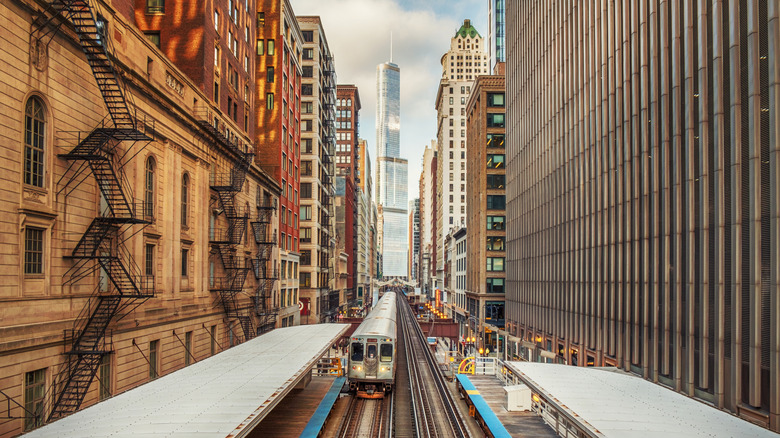
When talking about public transit in the United States, the East Coast gets the most credit. Cities like New York City and Washington, D.C., are often called the best places for public transit in the country. Conversations like these completely overlook the Midwest, or at best only mention Chicago. But besides Chicago (which is one of the best cities for living completely without a car), several other Midwestern cities can be found in AllTransit's Top 25 list of the best cities for public transportation in the country.
This wasn't always the case. Several Midwestern cities have seen a notable improvement in public transportation options in recent years, thanks to an increase in Bus Rapid Transit (BRT) in cities like Cleveland, Grand Rapids, Indianapolis, and Milwaukee. The benefits of public transportation are numerous, including improving walkability (and therefore community health), lowering pollution, and reducing traffic. According to a 2025 report from the Federal Transit Administration, public transportation ridership grew by over 17% from 2022 to 2023. So, if you want to travel to a Midwestern city where you can get around and explore with public transit, below are the five Midwest cities with the best public transportation systems.
Chicago, Illinois
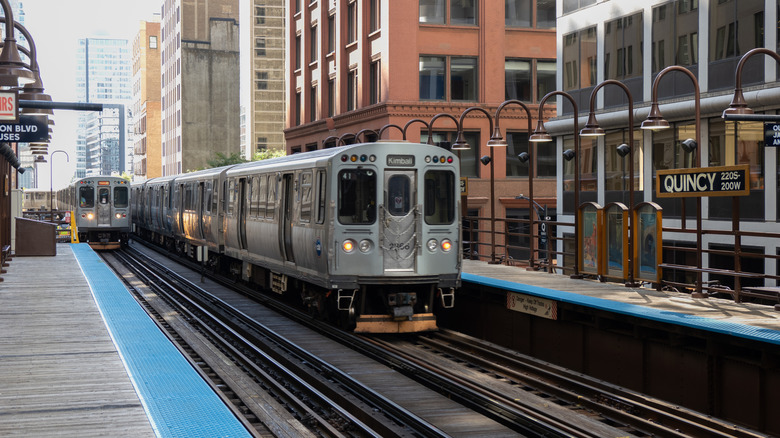
No surprise here: The best Midwest city for public transportation is Chicago. The Windy City has an AllTransit score of 9.2, making it the best in the Midwest and number four in the country, behind New York City, San Francisco, and Jersey City (and above Washington, D.C., which comes in at fifth place). According to AllTransit data, 98.2% of jobs in Chicago are located within half a mile of transit, and 99.8% of workers live within half a mile of transit. Plus, over a quarter of Chicago residents use public transit to commute.
Chicago's public transit options include 127 bus routes and eight L train lines. In late 2025, the Chicago Transit Board approved a budget that includes no fare increases, no service cuts and no layoffs for 2026, with plans to enhance services, increase security presence, and expand cleaning. "Getting to this point is the culmination of our commitment to delivering the kind of transformational public transit service that our region has never experienced before," said CTA Acting President Nora Leerhsen in a statement. This is not only good news for residents who rely on the public transit system in the city but will also positively affect travelers who want an easier way to get around and see the sights. But, before you go, make sure you know this seemingly polite train etiquette rule that Chicago locals actually hate to see.
Minneapolis, Minnesota
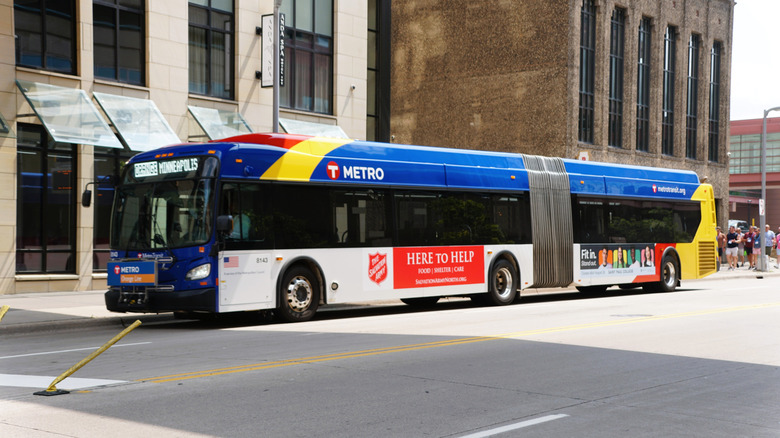
Minneapolis, the larger city in the Twin Cities, comes in at number two in the Midwest and number 12 in the United States for public transportation, ranking just above Pittsburgh and just below Baltimore. With an AllTransit score of 8.1, it will be decently easy to get around the city without a car. In fact, 100% of jobs are located within half a mile of transit and 99.8% of workers live within half a mile of transit. On top of this, 11.01% of commuters use public transit, making Minneapolis one of just two Midwestern cities to get over the 10% mark.
Like St. Paul, Minneapolis' public transit includes buses (such as rapid buses), light rail, and commuter trains via the city's Metro Transit system. In 2023, Metro Transit introduced Network Now, an ambitious plan to increase service through 2027. The plan includes bringing back express routes cut during the pandemic, improving the frequency of 16 local and express routes, and improving accessibility. For example, in June 2025, the new Metro B Line replaced the former Route 21, offering buses every 10 minutes, rapid boarding, and longer intervals between stops.
Cleveland, Ohio
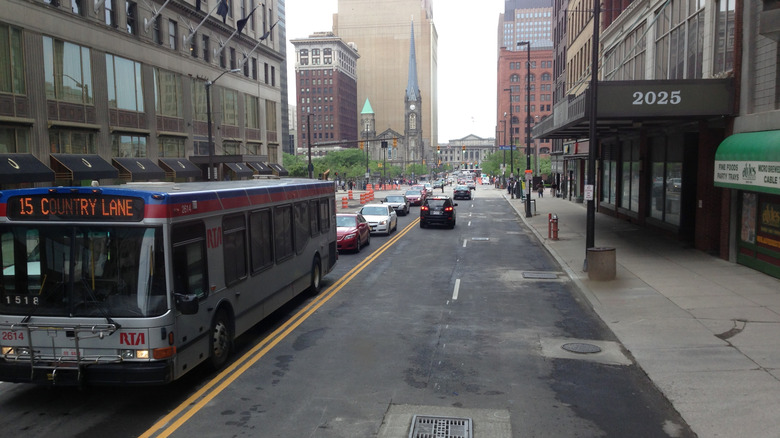
It's official: Cleveland, Ohio is the third-best city in the Midwest for public transit. Its AllTransit score is 7.6, putting it one spot above Milwaukee and one spot below Los Angeles on the national list. AllTransit data shows that 97.6% of Cleveland jobs are located within half a mile of transit, and 98.5% of workers live within half a mile of transit. However, only 8.28% of commuters use public transit regularly.
The Greater Cleveland Regional Transit Authority (GCRTA) offers bus, train, and trolley lines throughout the city. However, it is expected that 2026 will be a mixed bag for the city: The GCRTA is set to add its first new railcars since the 80s, but a strained budget indicates that service cuts are likely coming in summer 2026. "Folks rely on transit to get to work, to get to school, to get to the doctor's office, to buy groceries, to just see family and friends," Chris Martin of Clevelanders for Public Transit told Ideastream Public Media in December of 2025. "So, any reduction in service, any reduction in the ability for people to go about living their lives is devastating."
Milwaukee, Wisconsin
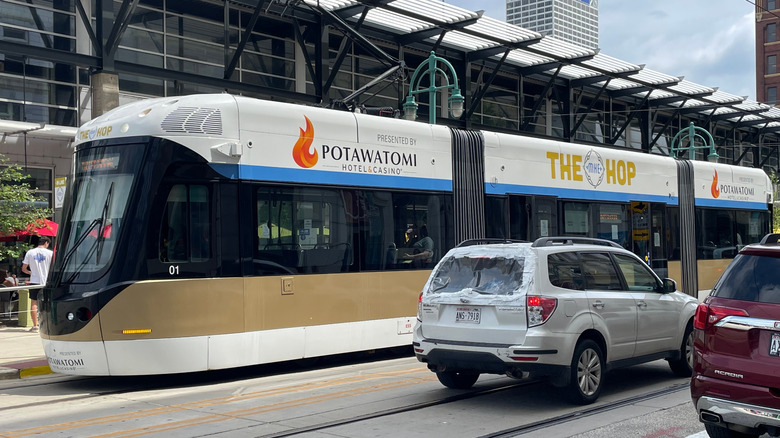
Next up is Milwaukee, Wisconsin, with an AllTransit score of 7.6. This puts the city one spot above St. Paul and two spots below Los Angeles, California on the national list. Similar to Cleveland, Milwaukee's public transit covers the vast majority of the city — 98.6% of jobs are located within half a mile of transit, and 98.9% of workers live within half a mile of transit. Yet the majority of people prefer to drive. The data shows that only 6.18% of commuters use public transportation in the city.
The Milwaukee County Transit System (MCTS) operates buses as well as a streetcar system known as "the Hop," which runs through downtown Milwaukee and is free to ride. While the Hop is free, buses are not. Currently, the city's riders are dealing with a price hike that debuted in January 2026, when prices rose from $2 to $2.75 per ride and fare caps rose from $75 per month to $99 per month.
St. Paul, Minnesota
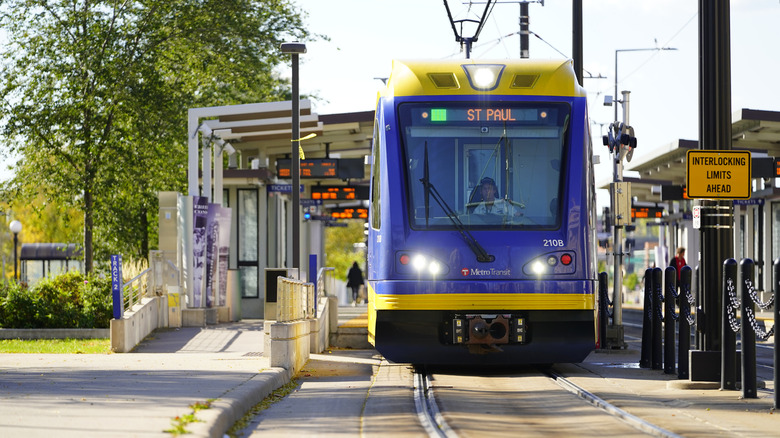
Coming in at number five in the Midwest is St. Paul, Minnesota, with an AllTransit score of 7.5, putting it just above Atlanta, Georgia, on the national list. Public transportation options are well-placed throughout the city, with 99.2% of jobs located within a half-mile of transit and 98.9% of workers living within a mile of transit. Residents and visitors can take Metro Transit buses (including rapid buses), light rail, and commuter trains to get around the city. However, most commuters choose to drive instead; AllTrips shows that just 8.84% of commuters use public transit.
While acknowledging that their public transit is some of the best in the region, some residents are vocal about wanting improvements, particularly opening new routes, improving already-existing facilities, and increasing route frequencies. Currently, many bus routes stop before midnight. Also, outside of peak hours, riders might have to wait more than half an hour for their bus to arrive. Still, ridership is on the rise: A 2025 report showed that ridership increased by 6% between 2023 and 2024, showing growth for the third consecutive year. "People are voting with their feet, and they're telling us they value the kind of frequent and reliable service we're providing in our METRO corridors," Council Chair Charlie Zelle said in a statement. "The ongoing effort to expand our METRO network promises to build on the successes we're already seeing."
Methodology

This list is ranked based on each city's AllTransit Performance Score, which examines connectivity, access to jobs, and frequency of service when providing an overall score for each city in the United States. For the purpose of this list, we limited consideration to cities with at least 250,000 residents located within the area typically defined as the Midwest. We then referred to local government websites of each city to check the different types of public transit available to both residents and travelers, and referred to news organizations and official statements on any planned budget increases or updates to the transit systems in the near future.
Don't see your favorite Midwestern city on this list? Just outside the top five were more cities with decent public transit including Madison, Wisconsin (with an AllTransit score of 7.4); Cincinnati, Ohio (with a score of 7.3); and Detroit, Michigan (with a score of 6.1).