
Europe's Deepest Lake Is A Crystal-Clear Beauty In Norway To Fish And Hike With A Mountain Backdrop
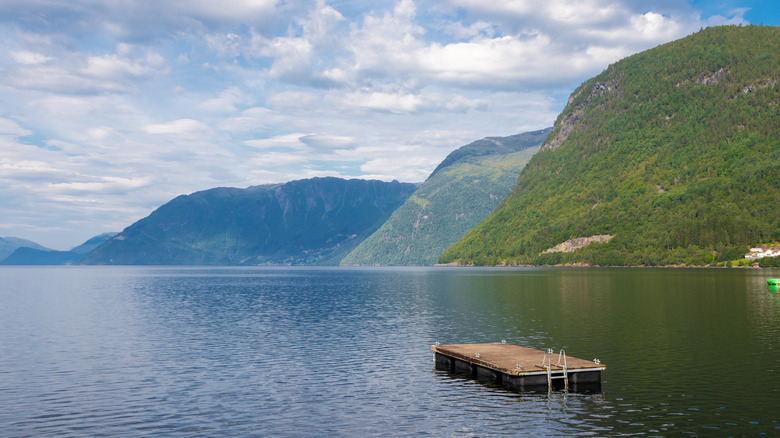
While vacationing in Mediterranean Europe is a dream for many, exploring Norway's stunning fjords offers something truly extraordinary. One of the most stunning is Nordfjorden, which is also the sixth longest fjord in the country. Only a short distance from its northern branch hides the deepest lake in Europe: Hornindalsvatnet. This postcard-worthy gem plunges 1,686 feet into the deep end — for reference, the Empire State Building would be entirely submerged in the lake.
It's not only the depth that makes Hornindalsvatnet a breathtaking site; the lake is also one of the clearest in Norway. With water so transparent that it reflects the rugged terrain of the Sunnmøre Alps, you can't help but throw a rock into the lake just to see if the surface will break like a mirror. The reason why it's so crystal-clear is, unlike other lakes in the country that are fed by glacial rivers, Hornindalsvatnet is mainly nourished by snow, which is what keeps it pure. Whether it's the pristineness luring you or the mighty Hornindalsrokken and Gulkoppen peaaks calling your name, there's a lot to do here. From fishing and boating to hiking the mountainous trails, Hornindalsvatnet can turn a fun Eurotrip into a profound experience.
As a bonus, Norway is a well-coordinated country that makes travel more rewarding, according to Rick Steves' protégé. However, you must be prepared for a long journey to reach Hornindalsvatnet. After landing in either Oslo Gardermoen Airport or Bergen Airport, you can rent a car from Oslo (6.5 hours away) or Bergen (five hours away). Another option is taking the bus from Oslo, which is a long, nine-hour trip with no changes, or the 6.5-hour bus ride from Bergen (also no changes).
Fish and boat across Norway's Hornindalsvatnet
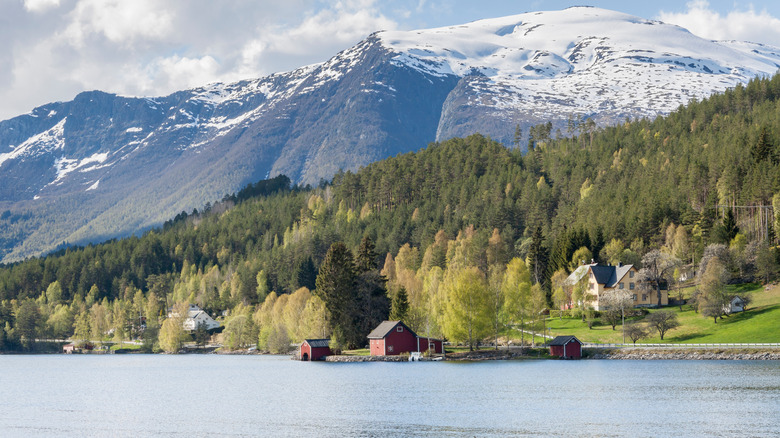
Despite the distance required to reach the lake, Hornindalsvatnet's beauty is worth the effort. With 19 square miles of surface, anglers in particular are drawn to this glacial body of water, which teems with several species. The most common catches here are brown and lake trout, but there are also char and eel. For better fishing results, it's best to set your rod on the western shore along the Eidselva River, which pours out of the lake — you might even reel in some salmon. Fly fishing enthusiasts can also hit the water here.
Keep in mind that Norway has strict fishing rules, with the most basic being that all anglers need to have a valid fishing license or a ticket, and a rivercard. While you can drop a line any time of the year, the salmon and sea otter fishing window is between May and September, with only spinners, wobblers, lures, and flies allowed as bait. You can cast a line either from the shore or launch your boat into the water.
You don't need to have fishing equipment with you to enjoy the water. You can drift on a boat or glide on a kayak or canoe. There are several beginner-friendly kayaking trips you can book that take you to both the fjords and the lake. Not only that, but the surrounding area remains relatively untouched. One traveler described the scenery as a snowy one that offered "wonderful surreal images." Unfortunately, Hornindalsvatnet is too cold for diving — only those with special permits and certifications can do so. If your heart is truly set on exploring what lies under the water, you can snorkel with wild orcas on Northern Norway's Atlantic coast instead.
Admiring Hornindalsvatnet from the hiking trails
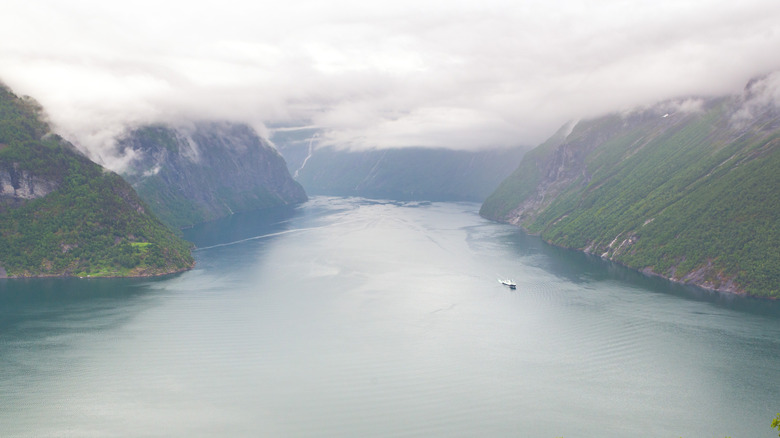
Being in the heart of Hornindalsvatnet is one thing; seeing it from the mountains is a whole other story. There are several hiking trails you can follow for an alpine adventure like no other. These treks, though, aren't for the faint of heart. To marvel at Hornindalsvatnet from its eastern banks, take the Øyenibba trail. Stretching for 6.7 miles, this out-and-back path climbs up to 2,631 feet, so you know the views are going to be spectacular. This hike takes an average of 5.5 hours to complete, with resting spots along the way.
Another way to traverse this path is by following Øyenibba as Loop Hike from Kjøsapollen. This challenging route extends the expedition to 8.7 miles with a steeper ascent of up to 2,795 feet. Despite the rigorous hike, the panoramic vistas of Hornindalsvatnet are simply stunning. Make sure to set aside six hours for this hike. To view the northeast shores of the lake, the out-and-back Otredalsfjellet trail is the path to take. Guiding you on a strenuous 7-mile journey, this hike will have you ascending 3,835 vertical feet in approximately seven hours.
Meanwhile, those who wish to tackle the Sykkeltur fra Mogrenda til Åheim should opt for biking. Spanning a whopping 35 miles, this point-to-point track snakes through the Nordfjorden area before bringing you to Hornindalsvatnet's western bank. Since this is a paved road, scenic drives are a popular way of soaking in the fjord's natural beauty and ultimately ending the ride at Hornindalsvatnet. For the best weather and road conditions, complete this route between April and October. Wintertime travelers, on the other hand, can switch up their itinerary to visit the most magical Arctic destinations to experience polar night, many of which are in Norway.