
10 Rules Every Tourist Needs To Know Before Visiting Fiji
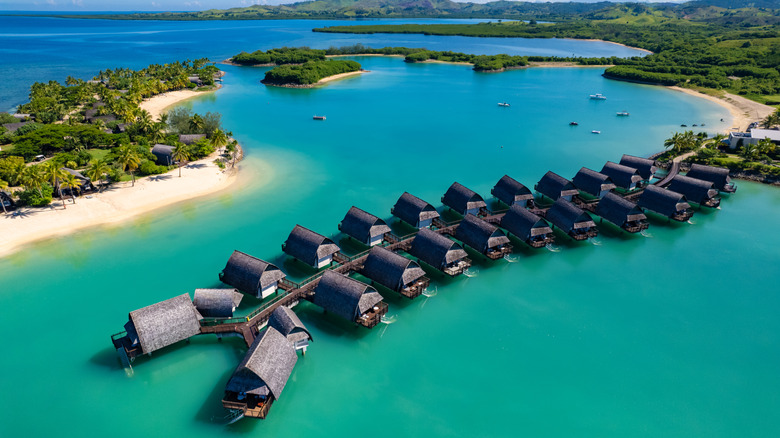
There's more than ample reasoning for Fiji having a reputation as a kind of traveler's heaven on Earth. Flung out across the brilliant blue of the South Pacific in the form of over 300 islands and 540 islets, Fiji is a country ideally-positioned for sun-seekers, honeymooners, and hardcore scuba enthusiasts alike. Naturally, since it's a common bucket list destination, it's easy to think that you already know everything you need to know ahead of a visit. Sun, sand, and surf, right?
Fiji does indeed offer those things, and in impressive style. But contrary to its widely-held image as a tropical paradise made for cavorting on the beach, it's also much more than just a nation of all-inclusive resorts. Fiji often falls victim to the broader South Pacific island curse of oversimplification, reduced in travelers' minds to a postcard of paradise without much regard for its complexities. Therefore, having the best possible trip to Fiji means reading up on the destination so you won't fall into the same traps.
This shouldn't scare you: Fiji is undeniably a beautiful and largely safe country. But there's much more to it than its beautiful seascapes. There are logistical hiccups to be aware of, and it always takes a little research to avoid committing a cultural faux pas. So before you set out for your Fijian adventure, these are ten things you should keep in mind. If these 10 don't make you feel thoroughly prepared, here are also a few additional helpful things you need to know before a vacation to Fiji — so you can avoid any surprises.
Remember that you're on 'island time'
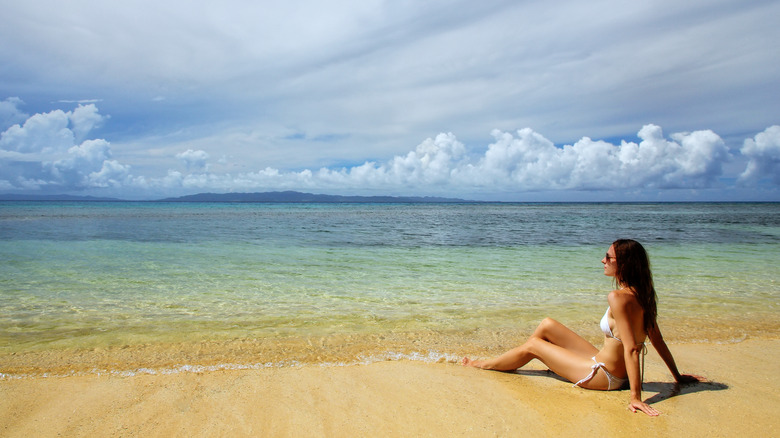
It's not only because of its beaches that Fiji is a great place to unwind. It's also blessed with a well-nigh unbeatable natural setting, and its culture is one that deeply values time. It's something to be savored and enjoyed, not managed and wrestled into submission like it so often is in Western countries. Sounds incredible, doesn't it? Visit Fiji and you'll find that things unfold slowly here, and relaxing and enjoying the moment are essential components of local life.
If you're a Type-A traveler, though, this might sound like your worst nightmare — and you're probably the one who needs this warning the most: Don't expect anything to happen quickly in Fiji. You're on island time here, and things are going to happen when they happen. To cope, treat time-anchored plans as flexible and don't expect accurate estimates of how long things will take.
"Fiji Time" is a concept so widespread and even beloved, in fact, that it's the title of the Fiji Airways in-flight magazine. So, be ready for a slow and relaxed pace where things may not get done right away. Punctuality is not emphasized and the Fijian view of time isn't profit-oriented like the one you might be used to, depending on where you're from. While that is a beautiful thing in its own right, it might drive you crazy. Our best advice: Pack your patience, and use that extra time to come to an appreciation of the beauty and value of this way of thinking in a time-is-money world.
Don't come to a village empty-handed
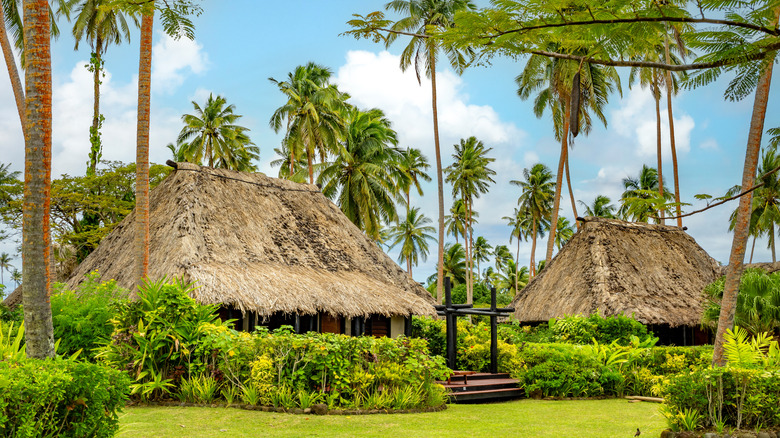
In many more rural areas of Fiji, traditional Fijian customs are alive and well, and many travelers opt to visit a Fijian village to experience the country's thriving culture firsthand. This is undeniably a rich cultural experience and worth pursuing to increase your understanding of the country you're visiting, but there are a couple of etiquette pointers it's important to keep in mind if you do decide to make a village visit, so we'll be covering those in the next few list items. The first you'll want to know, as it arguably requires the most planning, is that it's customary to bring a gift with you when visiting a traditional village.
These gifts, called "sevusevu," need not be elaborate. The most typical gift is the root or powdered form of yaquona (more commonly called kava) — the national drink of Fiji and a hugely significant element of traditional culture. But you'll also likely find that small gifts of food or children's items like toys and school supplies are received appreciatively. It would be uncouth to turn up empty-handed, so if you're planning on visiting a village, plan well in advance to bring or purchase gifts ahead of your visit. It's the most polite way to express your gratitude for having been welcomed into the everyday life of the locals.
Cover up but skip the hat
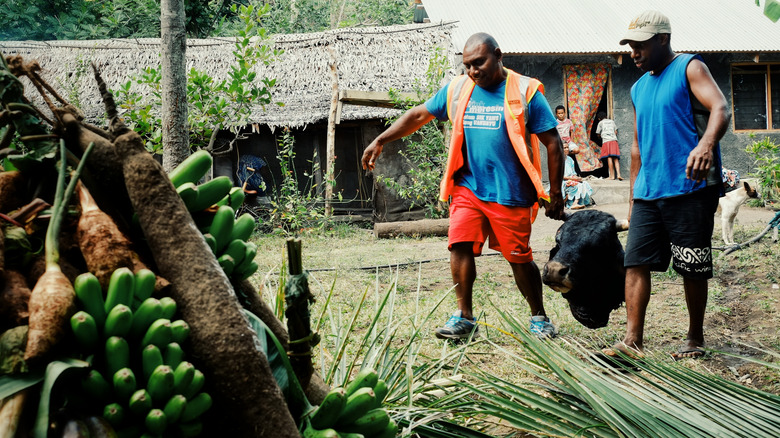
One other custom to be sure you carefully observe when you visit a Fijian village is dressing modestly. Though there's no set definition of what "modest" means in this context, covering your shoulders and knees is a best practice, and it's a plus if you can find a Fijian sarong (called a sulu) to wear around your waist. It's one thing to walk around an all-inclusive resort in your swimming attire, but when visiting a village, dress standards are much more conservative for men and women, and it's not going to come across very well if you assume that typical tropical attire is appropriate and dress accordingly. So, it's most respectful to cover up where possible.
The one thing you won't want to cover up, that being said, is your head. Visitors will be expected to take off hats and sunglasses as a gesture of respect, and it's also standard practice to carry any bags you have in front of you. These customs are easy to miss if you haven't done your research but could cause offense, especially as you're being welcomed into a functional space where locals live their daily lives. Remember to observe these practices when you enter a village to communicate your respect as a guest.
Remember that every island is different
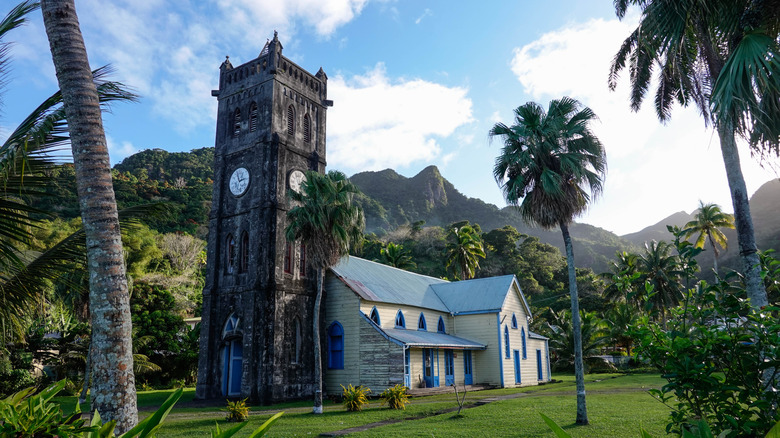
Again, Fiji consists of over 300 islands, and obviously, you're not going to visit every last one of them. Since only about one-third of the islands are actually inhabited, it goes without saying that some of those 300-plus islands are definitely more accessible and popular than others. Each island, however, has something different to offer, and with a Fijian island suitable for every travel style, you might well miss out on an experience you would love if you default to the islands that are most popular or accessible.
International flights to Fiji invariably land on the "main" island of Viti Levu, where the capital of Suva and the airport hub of Nadi are located, and it's by far the most urbanized. A helpful comparison if you've visited Hawaii: Viti Levu is a bit like the Fiji equivalent of Oahu. But do explore what the islands have to offer outside of the one island you're pretty much guaranteed to visit — even if only in transit. Although a little off-the-beaten path, Kadavu is easily accessible from Viti Levu by plane and boasts some of Fiji's best opportunities for wildlife-watching. Or, the Mamanuca Islands offer a much more serene beach resort experience than you'll find on Viti Levu. Alternatively, Ovalau is home to Fiji's only UNESCO World Heritage Site — the list goes on.
All of this is to say that you may be limiting yourself if you don't research what the whole of Fiji has to offer before you decide on your itinerary. Read up on the country's geography and then consider a visit to another island or two to get a taste of the quieter, less-developed, or more adventurous side of the islands where you can find the best walks and hiking trails in Fiji.
Take care with tap water

Experienced travelers will likely know that tap water is an iffy gamble when you're traveling abroad. Different countries have different filtration systems and infrastructures, which can result in tap water containing certain bacteria, parasites, or chemicals that can upset the stomach — and Fiji may or may not be one of these places. This one is a little bit complicated, but the basic takeaway is that you'll want to have ways to hydrate safely without drinking tap water on hand since not all areas of Fiji have tap water that's generally safe to drink. If you're too health- or eco-conscious for single-use containers, here are a variety of strategies you can use to stay safe overseas without drinking out of harmful plastic water bottles.
Now, as to the specifics of drinking tap water in Fiji: Within major cities, it's probably okay. Large resorts targeted at foreign guests tend to be safe, too. But there are always question marks here, since water treatment quality can be inconsistent, and you definitely won't want to risk drinking tap water in rural areas where the sources and quality of water can vary. Locals who drink this water every day have certain immunities built up, and you don't, so if you don't want to end up spending part of your trip feeling icky, it's best to stick to filtered or bottled water while outside of the major cities whenever you can.
Know local gestures
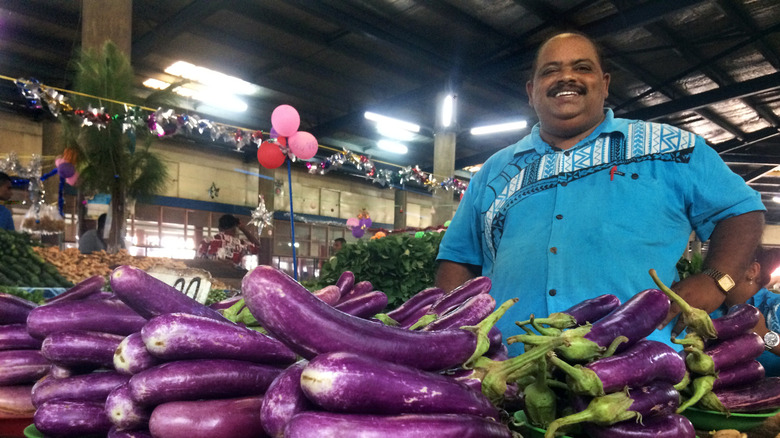
Body language and gestures aren't nearly as universal as you might think — anyone who's learned the hard way that the "thumbs-up" gesture is essentially the same as giving someone the middle finger in many countries will know this. But the problem you may run into with gestures in Fiji isn't necessarily one of accidental offense. Rather, there's one very common and innocuous Fijian gesture with a meaning that isn't too intuitive outside of Fiji that might simply confuse you the first time you see it. As you'll see, it's both common and extremely communicative, so it's critical for clear communication to know what that gesture is.
If you ask a Fijian local a question, they may simply respond by raising their eyebrows. But it would be a mistake to take this gesture to mean they didn't understand your question. If you see it, don't ask again — they understood and answered. What you saw was actually a casual gesture that indicates agreement or a positive answer, so that eyebrow-raise meant "yes." While it's a very small cultural difference, it could lead to major confusion if you don't realize that it is a form of communication in and of itself.
Skip the tip

Although it might be unthinkable not to tip your server at a restaurant in some countries, Fiji isn't one of them. At least at restaurants, tipping simply isn't expected. It's also not necessarily a faux pas to leave a tip when you've received unusually great service, but whether or not to do that is entirely up to you. While it's slightly more standard to tip a modest amount for tours, massages, and other like services, it's still not a must.
Keep in mind if you do plan to leave a tip that it should be in local currency. In Fiji, that means the Fijian dollar. Tipping in your country's legal tender will likely leave the person you tip with a wad of cash they can't use, so if you do plan to tip, make sure you stop at a local ATM or currency exchange when you arrive in Fiji to stock up on cash. This can also come in handy at restaurants that operate a staff fund, which is like a tip jar that's distributed evenly among the staff. This is a more common practice for compensating service workers that you will likely have the opportunity to utilize if you really want to leave a tip.
Expect Sunday closures
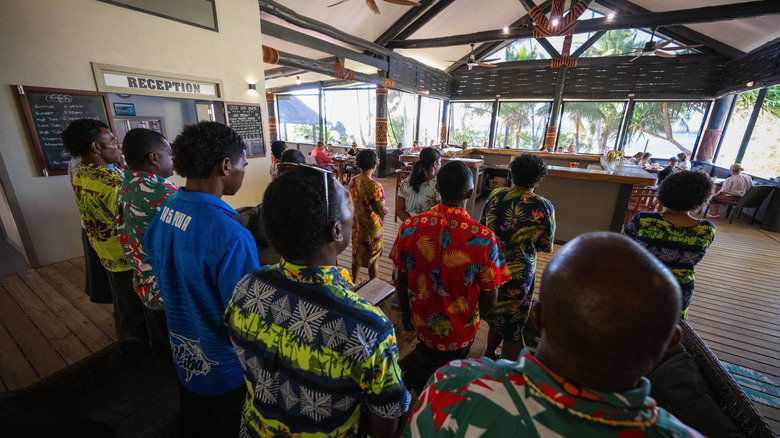
Although Fiji is a multicultural country and several religions are commonly practiced on the islands, you'll likely find that the majority of the population outside of major cities is Christian. This is relevant to you as a tourist for one primary reason: Sundays mean lots of closures. Sunday worship services are a major community event in many areas, and that means people aren't working. This, of course, makes Sundays in Fiji the perfect time to rest and reflect, as the locals do. It also means it's instrumental to plan for Sundays knowing that most businesses are likely to be closed.
One foolproof solution to this problem is to make Sunday your beach day. If you're looking forward to getting some time to hang on a gorgeous white-sand beach (and you're in Fiji, so who isn't?), it makes total sense to schedule that time on a Sunday when most other things aren't open anyway. No matter what you plan, make sure that you're accounting for Sunday closures when you plan your Fiji itinerary so as not to wind up having to change your plans at the last minute.
Bring your bug spray

Traveling to a tropical country like Fiji, experienced travelers might wonder if mosquito-borne illness is something they should be worried about. Although some illnesses aren't present in the Fijian mosquito population, others are, and you'll definitely run across enough bugs to be glad if you've brought some potent bug spray with you.
According to the Centers for Disease Control, healthy adult travelers should exercise normal precautions and be up-to-date on all routine vaccines, including the measles-mumps-rubella (MMR) vaccine. In addition, the typhoid vaccine is recommended, especially if you're traveling to a small city or a rural area. Luckily, malaria is not a concern on these islands, but there are some diseases, like Zika and dengue fever, that cannot be vaccinated against. These are of potential concern for visitors to Fiji, which is why the CDC has alerted travelers against this health risk. While it's likely you'll come through your trip without any health scares, the presence of those diseases in Fiji's mosquito population means it's best to be vigilant about bug bites.
To that end, the CDC recommends packing an EPA-approved mosquito repellent from its running list and wearing clothing that protects your skin. If you can't stomach the idea of covering your arms and legs while lounging on the beach, make sure to regularly apply bug spray and be vigilant: It's best not to let yourself be bitten.
Go beyond the resort
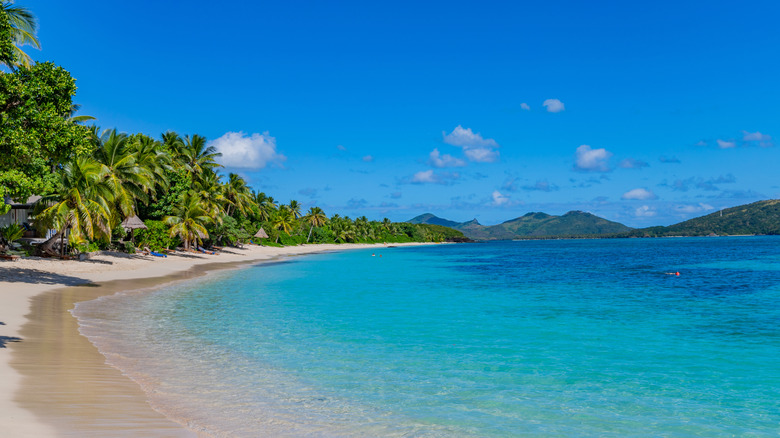
There's an oft-told story about tropical destinations that make it big in the tourism industry. Blessed with natural beauty and a balmy climate, these places attract travelers in droves, and enterprising locals — or outside investors who recognize the profit potential — get to work creating a place for them to find all the comforts of home in a setting that looks (and often feels) like paradise. Soon, all-inclusive resorts are popping up everywhere. Tourists can hop off the plane, head right to their beachside hotel, and bask in the beautiful setting with a cocktail in hand until it's time to go home. And for many tourists, that's all they're really looking for.
Fiji is far from the only country that has seen some version of that story unfold, but it's certainly one of the more prominent. That's why our last must-know tip for travelers to Fiji is that curious travelers will be most rewarded if they break from the all-inclusive-resort to experience a different, more authentic side of Fiji.
It's likely that at some point in your trip you'll end up on the "resort" side of Fiji, which is developed for tourism with convenient amenities. And there's plenty of incentive to stay somewhere that's designed for easy visiting. But such developments don't show you the richness of Fijian culture in all its nuance; they don't tend to create authentic connections. So don't hunker down at your all-inclusive. Visit outlying islands and traditional villages to experience local kava ceremonies. Go to local markets and talk to people wherever they're willing. Take public transit if it's available to you. You've come a long way to be here, so do your best to understand what Fiji, beneath all the beach-resort trappings, is really all about.