
New York City's Lush Neighborhood Is Hidden Away In Hills You Could Mistake For San Francisco
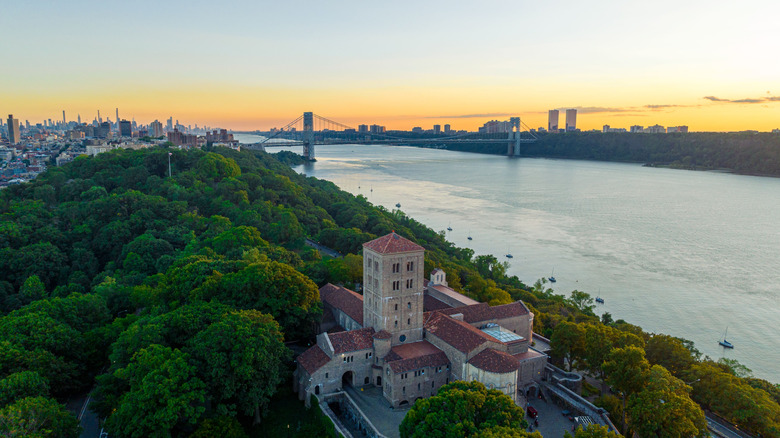
If asked to picture a hilly city in the United States, some might think of the coastal canyons and mountain vistas of Los Angeles, or Pittsburgh's unique public transportation system that offers sky-high river views from funicular trains. Few would think of New York City. And while it's true that much of Manhattan is flat, there's a nearby area with bluffs so high that they could be mistaken for the steep hills of San Francisco. Welcome to Fort George, a lush neighborhood tucked away in the rugged terrain of the island's northern heights.
The area takes its name from the fortification that perched on a high ridge during the Revolutionary War. Strategically built for optimal views over the river valley below, Fort George was dismantled after the war. Later, starting in 1811, large sections of the island were flattened to make way for the Manhattan "grid" we know today. But the northern heights were left alone, serving as a breezy escape for New Yorkers wealthy enough to build summer homes high up in the hills. More locals became familiar with the region's dramatic topography in the late 19th century, when the Fort George Amusement Park, nicknamed "Harlem's Coney Island," brought the public to its roller coasters, carousels, and skating rink via the Third Avenue Trolley.
In the early 1900s, the steep hills also hosted a car race called the Fort George Hill Climb. "How fast can your car make the ascent of Fort George Hill?" read a 1908 notice in the New York Herald. "The hill is 1,900 feet from base to crown, with a grade ranging from ten to thirteen per cent and averaging about eleven per cent." If you love learning about New York City's past, For George is an excellent neighborhood to explore, and it also happens to be home to one of the city's best art museums.
Hike the hills of Manhattan's Fort George
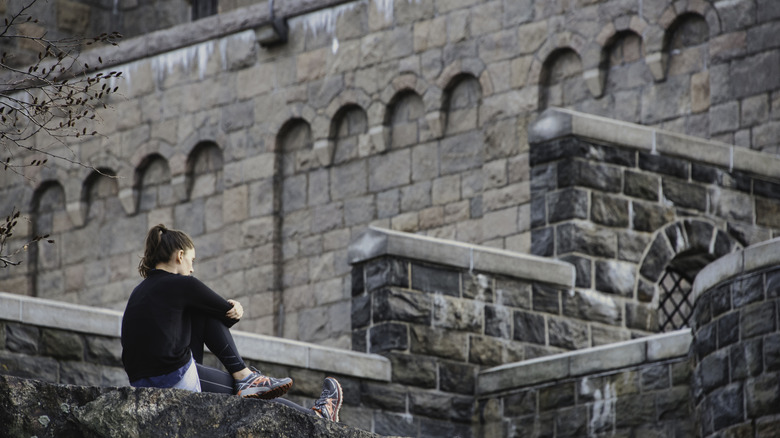
Today's Fort George, officially part of Washington Heights, is largely residential. Apart from art deco architecture dating back to the early 20th century, there are a few highlights to look for while wandering its hilly landscapes. The first is the Met Cloisters, part of the Metropolitan Museum of Art. Medieval charm meets river views at this New York City landmark set amid the cliffs of Fort Tryon Park. A replica of a European monastery featuring authentic Gothic and Romanesque cloisters (ornate covered walkways), the museum showcases an impressive collection of medieval art, including the famous Unicorn Tapestries. The Met Cloisters is open from 10 a.m. to 4:30 p.m. every day but Wednesday, and admission is $30 for adults and free for children 12 and under.
After spending some time at the Cloisters, take some time toexplore the surrounding Fort Tryon Park. The land, located at one of the highest points in Manhattan, was gifted to the city by John D. Rockefeller Jr. in 1931. Today, it's an outdoor wonderland with steep stone staircases, grassy slopes, and 8 miles of walking trails.
Go for a stroll on the Alpine Garden Trail or the forested Overlook Path, both about half a mile long, check out the horticultural displays at the 3-acre Heather Garden — one of the largest in New York that's open to the public — and take in views over the Hudson River below. On a clear day, you can see the George Washington Bridge from this elevated perspective. While you're discovering off-the-beaten-path green spaces, consider a trip to Pelham Bay Park in the Bronx: more than triple the size of Central Park, it's New York's largest park.