
5 Countries Where $2,000 A Month Is Enough To Retire In Comfort
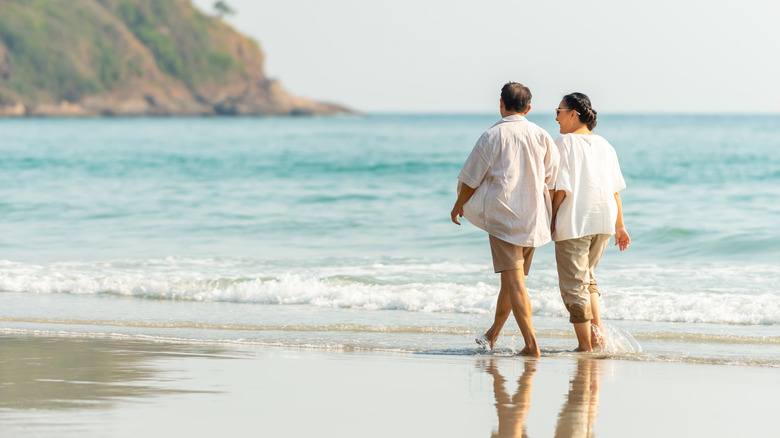
One of the major concerns for retirees in the U.S. is how to keep their finances in check now that they're no longer earning a regular income. There are plenty of causes for such consternation: rising consumer price indexes, pension funds drying up, market shocks, inflation eroding their assets, and the reality of increased healthcare costs. Is it any wonder, then, that people consider moving to countries where they can have comfortable, amenable lifestyles for less than $2,000 a month?
In late 2024, SurveyMonkey found that a full third of surveyed retirees had relocated, motivated by lower living costs and the desire to be closer to family. If you're considering your own affordable relocation — and you want to move abroad — you could start by looking into retirement tax-break countries like Greece, Thailand, and Ecuador. Perhaps you're drawn to the simplicities of island life? Then Antigua and Barbuda, two of the more affordable Caribbean islands for retirement, might be a better fit. Or maybe you'd feel most financially secure in countries with low pension income thresholds, like Costa Rica, Portugal, and the Philippines.
According to financial services company Empower, the median retirement income for U.S. households aged 65 and over is around $57,000, or $4,750 per month. So even if you're pulling in below the average, a post-career life in one of the following five locations could be a reality. Aside from financial and family incentives, the drivers for retirement relocation will differ from person to person: some will envision a quiet life slurping cocktails on the beach, others see retirement as their next great adventure. The destinations below, therefore, are not just affordable but also cater to various lifestyles.
Costa Rica

Costa Rica has become a popular — some have argued too popular — travel destination in recent years, primarily because of its dramatic landscapes, protected rainforests, Pacific Ocean beaches, and world-class eco-tourism opportunities. The tropical, never-too-cold temperatures don't hurt its case either. If that sounds like the kind of place you want to live out the autumn of your years, well, you might be surprised how achievable that goal is.
A Costa Rica retirement visa, known as a Pensionado Residency, is a temporary residence permit for foreign nationals bringing in a retirement income of $1,000 per month, a figure that would be covered by the average Social Security check in every U.S. state. The visa, which also requires a $250 application fee and some smaller admin costs, allows you to live in Costa Rica for 2 years, after which it can be renewed. Following your third year, you can apply for permanent residency. Retirement visa holders can also open a bank account, import possessions and vehicles duty-free, and register with the country's Caja healthcare system. Considered one of the world's best, Caja users get full access to hospital treatments, doctor's visits, and prescriptions in return for monthly contributions of around 7% to 11% of their monthly earnings.
Costa Rica operates on Central Standard Time, which aligns with states such as Louisiana, Texas, Oklahoma, and Minnesota. And you can fly direct from the Costa Rican capital, San José, to various American cities, including Los Angeles, Miami, and Fort Lauderdale. This makes travel and communication with friends and family in the U.S. more convenient than moving further afield.
Czechia

Czechia, also known as the Czech Republic, has a lot going for it. The central European country is full of striking medieval architecture, colorful castles, storybook towns and villages, and forests plucked straight from a Brothers Grimm folktale. Never mind that its handsome capital city, Prague, is also considered the beer capital of Europe.
While Czechia doesn't yet offer an ad hoc retirement visa, you can apply for a study visa, which costs 2,500 CZK ($123 at the time of writing), provided you enroll in Czech language classes. This means there's no pension income threshold you need to meet. After a year on this visa, to remain in Czechia, you will need a long-term residence permit for the purposes of studies (also 2,500 CZK). You must continue said studies to be eligible. If you like the country enough to make your stay permanent, those classes will come in handy as fluency in Czech is a requirement.
Numbeo estimates the average cost of living in Prague at just under $1,000 per month for a single person, excluding rent, which can add another $1,000. A couple with decent retirement incomes could therefore have comfortable (if unostentatious) lives in the Czech capital. That said, there are cheaper places where you could keep well below a $2,000 monthly budget, like Olomouc, a gorgeous, under-the-radar city that's much more affordable than Prague, or Děčín, where you can have a cozy semi-rural lifestyle in the gateway to Bohemian Switzerland. Furthermore, the Czech healthcare system is of a high standard, with good English-language services. Temporary residents will require private medical insurance, but the cost is dependent on your age, lifestyle, and any underlying conditions. If you become a permanent resident with no taxable income, your public health insurance contributions will be 3,024 CZK ($148) per month.
Ecuador

Straddling the Equator from which it takes its name, Ecuador is quite affordable for U.S. retirees. Social Security and foreign pensions usually aren't taxed in Ecuador, and it has a relatively low cost of living — as much as 60% lower than the U.S. average. Of course, it's an attractive corner of South America, too, with a majestic avenue of volcanoes running through the Ecuadorian Andes; a capital city, Quito, that fuses Incan culture with Spanish colonial architecture; and the biodiverse Galapagos Islands lying some 600 miles off the mainland.
U.S. citizens can apply for an Ecuador retirement visa, also known as a Jubilado Visa. This permits you to stay in Ecuador for up to 2 years, after which you can extend the visa or apply for permanent residency. The visa even lets you start a business, do contract work, and purchase properties, though in each case you may be subjected to local taxes. To be eligible, you'll need to prove that your monthly income from Social Security or other forms of pension income is three times the basic Ecuadorian wage, meaning $1,410 per month. Plus, there's a one-off, combined fee of $320 for visa application and issuance.
The healthcare system in Ecuador is a mixture of public and private institutions. Residents are entitled to public healthcare, though wait times can be long and resources are often constrained. If you want to receive private medical treatment, Ecuador offers good value: general practitioner visits typically cost $25 to $50, while specialist consultations are $30 to $60. You can opt for a private insurer, or, to mitigate costs, enroll with Ecuador's public insurer, IESS. Your monthly IESS premium will be based on your declared pension income.
Portugal
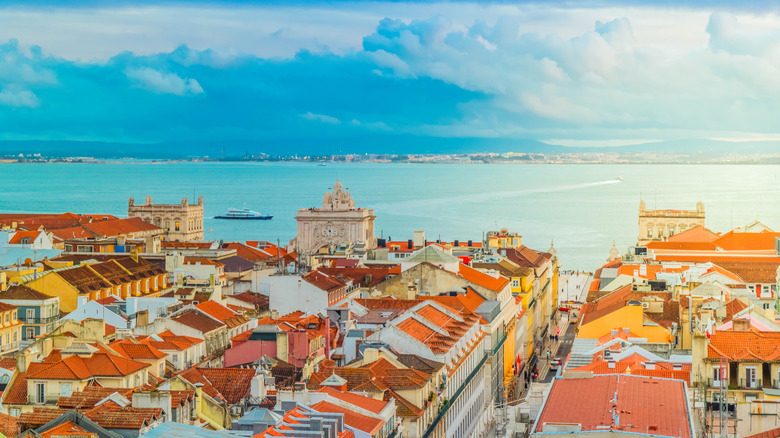
Not that long ago, Portugal was the forgotten child of southern European destinations, with travelers instead heading for the Balearics in Spain, France's Côte d'Azur, Italy's Amalfi Coast, or the Greek Cyclades. But travel in Portugal is now booming, as outsiders catch on to the country's many virtues. It's not just the medieval architecture and magnificent cathedrals in its cities, or the ancient Roman ruins and world-class wineries hidden within the sun-drenched countryside. It's a livable, easy-to-love kind of place. Lisbon, the capital, is considered the happiest holiday destination in the world, while Portugal as a whole tends to fare well in expat quality-of-life surveys.
If that sounds appealing, the Portugal retirement visa could be within reach. Called a D7 visa, it's applicable to anyone moving to Portugal on a passive income, including retirees. To be eligible, you need to prove that you earn at least €920 per month ($1,085), about the same as Portugal's minimum wage. If your D7 application is approved, you can live in Portugal for 2 years, after which the visa must be renewed. Once you meet the 5-year threshold, you can apply for permanent residency or even citizenship, which would enable barrier-free travel and retirement rights throughout Europe. To become naturalized, you'll need to meet certain criteria, like A2 Portuguese language proficiency, meaning basic speaking and comprehension skills, and have a clean criminal record.
For the first year of your D7 visa, you'll need private health insurance, after which you can register with Portugal's National Health Service, called the SNS. It's heavily subsidized and entirely free for over-65s. Life in Portugal is generally affordable, too. The average net monthly salary is around $1,200, so you should be able to live comfortably within your means on a budget of $2,000.
The Philippines
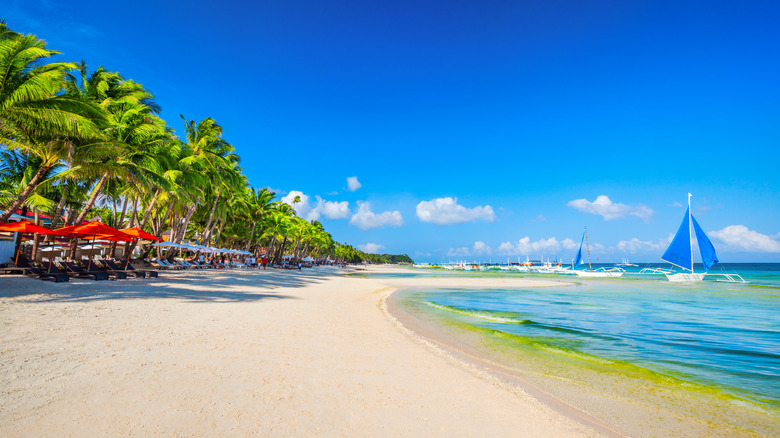
The Philippines is home to one of the world's largest cities: its sprawling, sticky, and jungly capital, Manila, where more than 24 million people reside. But if you're thinking of retiring here, there's a good chance the islands will offer a more appealing pace of life, whether it's the paradisiacal beaches of Boracay, the dive-friendly islands of Cebu Province, or surf havens like Siargao and Coron. Moreover, English is an official language in the Philippines, so you don't have to worry about acquiring a second tongue later in life.
If you want to retire in the Philippines, apply for the Special Resident Retiree's Visa (SRRV), which was introduced to attract foreign nationals and former Filipino citizens to the country. The passive income threshold to retire in the Philippines is quite low, $800 per month ($1,000 with dependents). The SRRV allows indefinite stay, unlimited re-entry, and work, study, and investment privileges. But there is a caveat: You'll have to make a $15,000 "time deposit" into an approved Philippines bank account, which you can then use for investment purposes, including purchasing a condominium. If you are a retired U.S. military personnel, your time deposit threshold is much lower, usually between $1,500 and $6,000. It's also worth noting that as a foreigner, you can't own land in the Philippines, only condominiums.
The cost of living is reasonable in the Philippines: $2,000 a month is enough to provide a high quality of life in most parts of the country. The cost of private health care is also minute compared to the U.S. — if you opt for a private health insurer, you'll pay around $700 per year. There is a public health program, but it's primarily reserved for citizens. Also be aware, if you're living in a rural destination, you'll have limited access to medical services.
Methodology

To compile this list, it was important to define what retiring in comfort for under $2,000 meant. Two things needed to be established: Which countries offered retirement visas to U.S. citizens, and which of those also had passive or pension income thresholds well below $2,000?
The only outlier here was Czechia, which had no income threshold, yet offered an oblique way of retiring in the country through its study visa program. Data on visa requirements and income thresholds was gleaned from official government and consulate websites, and supplemented with information from online expat resources, like Citizen Remote and Immigration Advice Services.
Also important was to ensure that $2,000 a month was ample to live a comfortable lifestyle in these destinations. For this, we looked at cost-of-living metrics from sites like Numbeo, including rent and healthcare expenditure, as well as basic income rates. And we wanted to give some geographical and cultural diversity, so you could weigh up the benefits of retiring on an island in the Philippines, rural Czechia, or a Portuguese city. Once the list was finalized, the countries were arranged in alphabetical order to avoid applying any arbitrary ranking metrics.