
Florida's Most Diverse Cities With Inclusive Communities And Vibrant Cultures
Florida residents paint the cities with vibrant cultures and fuse together open-minded neighbors of all different backgrounds. Four wildly different destinations where deep-rooted coexistence is present include Wilton Manors, Sunrise, St. Petersburg, and Orlando. These cities are shaped by the unique people who call them home, and you can even see their influence throughout the state — may it be flags hung up on walls or murals painted along city streets. With more than 23.4 million people living in the Sunshine State, we found that these four cities are not only a melting pot of global footprints, but — from the tip of South Florida to the state's Panhandle — they are the most diverse and inclusive towns.
Some of these cities are known for their LGBTQ+ presence, as Florida ranked 11th in the country for same-sex couples per 1,000 households, reported by the U.S. Census Snapshot of 2020 (via UCLA School of Law Williams Institute) — that number reached more than 96,600 couples in the Sunshine State. Others are known for their international existence, as some cities boast larger ethnic populations than many other Florida suburbs.
Our research included places with population diversity, predominantly LGBTQ+ neighborhoods, statistics from federal organizations, and livability. Some of the research was also taken from personal experience, as I am a Florida native who lived nearby and visited a few of these towns. Whether it's supporting a small business or attending a community event, these four Florida suburbs are exemplary locations that make people feel right at home, even when they don't feel recognized.
Wilton Manors (Fort Lauderdale)
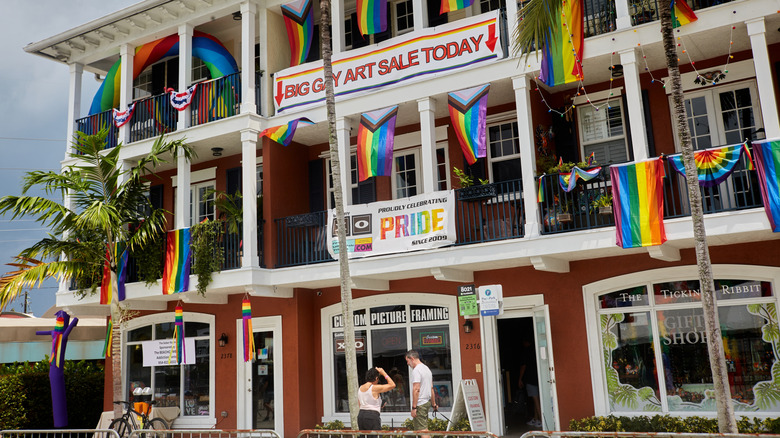
A walk down the streets of Wilton Manors will show you who lives in the area. Rainbow flags fly proudly outside homes and businesses near a rainbow-painted bridge that reads "Love Wins." The LGBTQ+ community dominates Wilton Manors, which is just a 10-minute drive north of Fort Lauderdale and a 15-minute drive to "The Hottest U.S. Gay Beach," Sebastian Street Beach. This inclusive city was even named "The Second Gayest City" in America in 2010, with the use of data from the U.S. Census Bureau. The city stayed consistent 10 years later, showing a high concentration of same-sex couples per 1,000 households (via the Williams Institute). Aside from the staggering statistics, the city was also the first in Florida to elect an all LGBTQ+ city commission.
Sitting next to popular destinations, like Fort Lauderdale, Wilton Manors sometimes flies under the radar, but it quietly became one of the most livable in the state. As a Florida native who lived 15 minutes down the road from the neighborhood, I can attest to its cozy pocket of happiness. Once through the city limits, queer culture is splashed along city streets, promoted in their businesses, and decorated about in their "island-city" quirky establishments. They also host an annual Stonewall Pride festival in June, encouraging local LGBTQ+ companies, performers, and allies to celebrate. No matter your ethnicity or sexuality, in Wilton, "love wins."
Sunrise
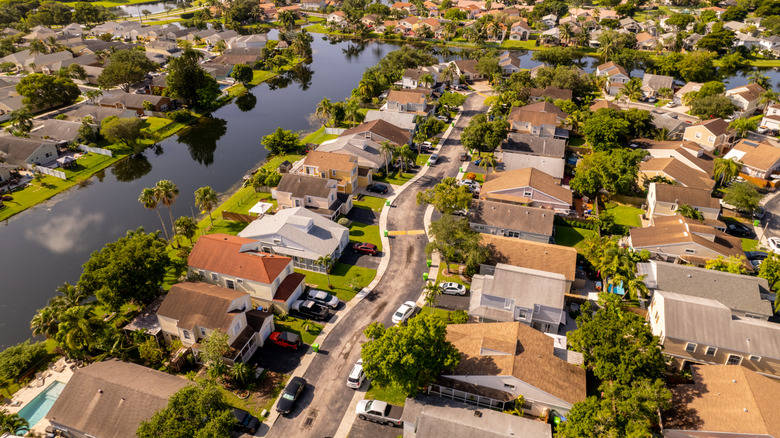
Not too far from Wilton Manors (a 25-minute drive west), you'll discover Sunrise, which was named the most diverse city in Florida by Home Area. The study gathered information from the U.S. Census Bureau, looking at populations of 60,000 people or more — Sunrise has over 100,100, and more than 60% are minorities. It looks as follows: Black residents at 33.5%, Asian at 4.7%, two or more races reported at 24.7%, and Hispanic or Latino at 36%. By population alone, the streets are radiating with a worldwide influence and cultural impact.
The city's entertainment scene brings a global crowd. The Amerant Bank Arena, where major concerts and sporting events are hosted, is located in Sunrise, introducing new visitors to the area nightly. It also sits across the internationally renowned shopping mall, Sawgrass Mills — the largest single-story outlet mall in the U.S., drawing in national attention. Additionally, HBO Latin America Group Data Center is housed in town, allowing for multiculturally televised representation.
Beyond entertainment, Sunrise is a family-friendly place to live. The city hosts a plethora of events, like the Community Resource Fair, where they introduce the Sunrise Police Department to little ones, and the Village Art Bites: Food Trucks, which showcases Caribbean food and other cultural cuisines. Sunrise is not only a place where you'll feel connected to your roots, but you'll feel a part of something bigger than yourself.
St. Petersburg
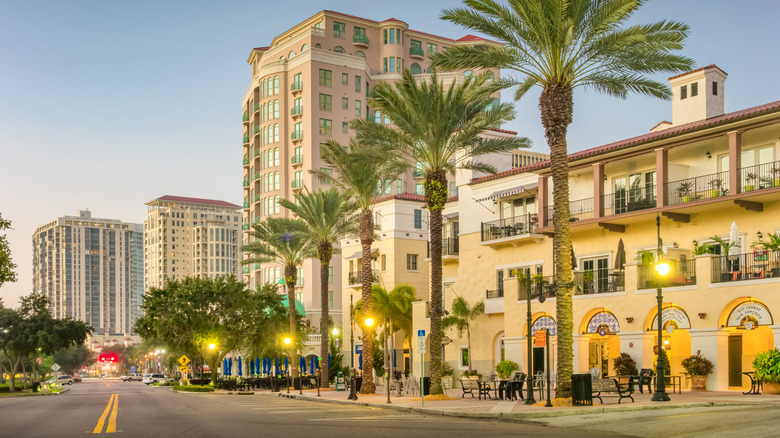
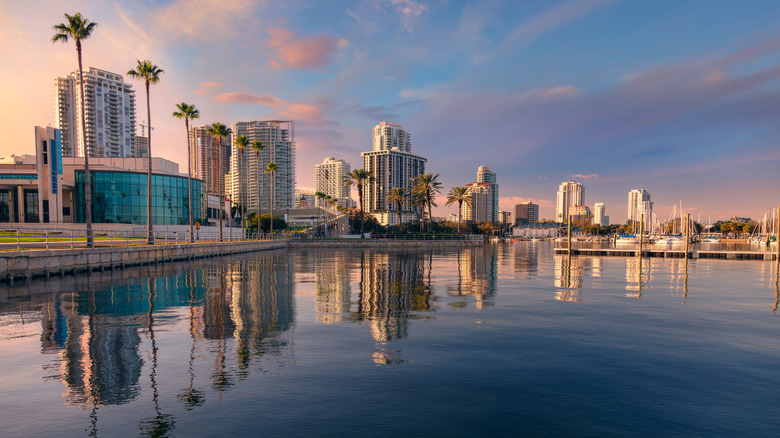
On Florida's West Coast, a 25-minute drive southwest of Tampa, is the colorful beach town of St. Petersburg. With sparkling Gulf waters along award-winning beaches and a buzzing downtown, St. Pete's quality of life is pretty high, and its residents seem to abide by one word: coexistence. In fact, the city has grown to have the largest Pride festival in Florida, and it's run for more than 20 years.
It's filled with inclusive neighborhoods with a high LGBTQ+ concentration. The Grand Central District is considered one of the most prominent of the "gayborhoods" and has a large rainbow-painted crosswalk. This area is a hub for many LGBTQ+ owned businesses, as well. Just down the street is Historic Kenwood, a more resident-focused and traditional area with homes built from the early 1900s. It has an artist enclave, allowing for creative expression. Travel bloggers The Globetrotter Guys recommend gay-friendly establishments, like the Mari Jean Hotel and The Wet Spot, which is a gay pool bar and day club. St. Pete makes all feel welcomed, as the Globetrotter Guys even mention that the gay culture is a core part of St. Pete's society.
Orlando
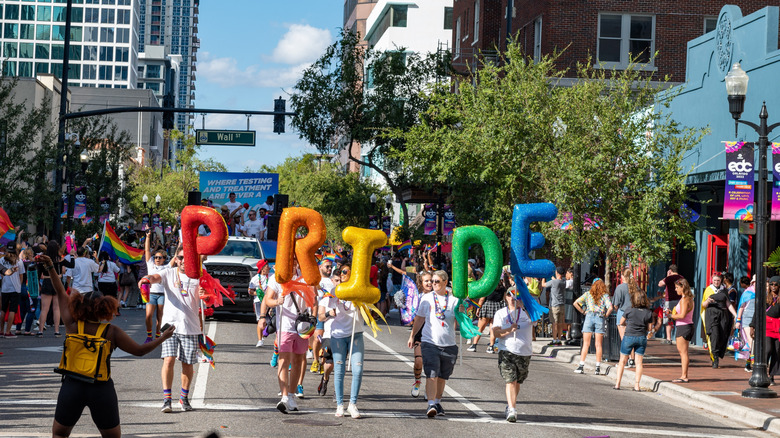
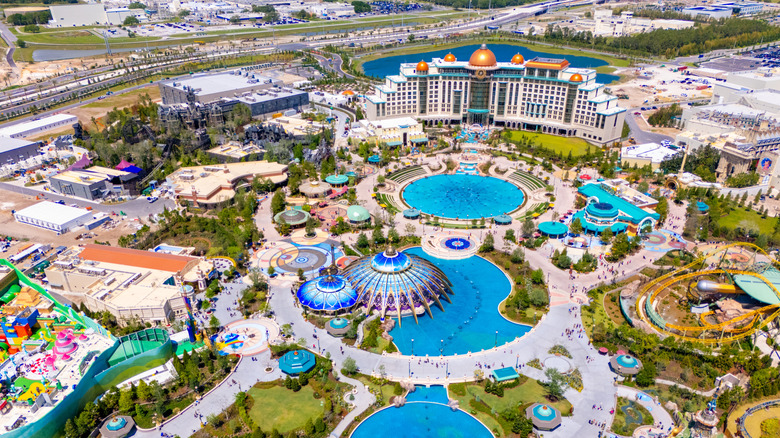
Visitors might only know Orlando for Disney World, but the Central Florida city goes beyond Mickey Mouse and thrilling rollercoasters. It has a well-connected residential community that thrives off feeling seen. Between ethnic cultures and an openness to all sexualities, Orlando is the perfect city to wrap up our list. It has a rapidly increasing, diverse population of more than 334,800 people, as reported by the U.S. Census Bureau in 2024. 35.4% are Hispanic or Latino, 23.4% are Black, and 24.2% are two or more races. In fact, Niche awarded the Orlando suburb, Metro West — located 15 minutes from Universal Studios by car — the "No. 1 Most Diverse Place To Live in Florida."
Among its wide-ranging mix of neighbors, Orlando is filled with a dominant LGBTQ+ community; in fact, law enforcement has put forth an initiative for LGBTQ+ visitors and residents to feel safe. Officers provide decals to businesses around town that display accessible information and mark these entities as "Safe Places." The city also has The Center Orlando, a non-profit offering the LGBTQ+ community health service programs and food pantries. Furthermore, Visit Orlando has a list of local businesses that are owned by LGBTQ+ owners for residential support. With local resources nourishing the community, the city acts as a clear bridge to network neighbors in town, making Orlando Pride all the more exciting. If you really want to visit Disney, be sure to go Red Shirt Pride Day, which is celebrated in Magic Kingdom.
Did you know Orlando was named America's "Happiest Holiday Destination"? You can read more about it in our feature on The City Beautiful, with green spaces, sunshine, and walkable streets.
Methodology
To find the most diverse and inclusive Florida communities, our methodology had three main pillars: statistical data for diversity, traveler experience for culture, and quality of life for inclusivity. We used the U.S. Census Bureau to discover cities with rapidly growing minority populations as well as LGBTQ+ households. We also looked at reputable housing assistance and neighborhood review sites that honored these cities with awarding titles on diversity. Lastly, we checked out each city's official website to see if they had dedicated pages for minorities. These tabs add value, promoting community growth. This further showed us cities that have additional local government support, as well.
As someone who lived near some of these cities, I had experience in the local South Florida "gayborhood" of Wilton Manors. Furthermore, YouTube videos and travel bloggers helped paint a picture for each area's environment. Visitor websites provided a well-rounded view of leisure and entertainment around each metropolis, revealing title-worthy events, like the largest Florida Pride in St. Petersburg. This easily tied into each city's quality of life.
Each city promoted business-and resource-focused events that either magnified minority owners or, in turn, assisted minority groups. Customer-to-consumer connection proved to go far beyond the cash register, as different community sites promoted and supported their neighbors. With a combination of statistical data, traveler experience, and situational relevance, we came to the conclusion that Wilton Manors, Sunrise, St. Petersburg, and Orlando are the most diverse cities with inclusive communities and vibrant cultures in Florida.