
5 American Cities That Feel Small Despite Having A Large Population

The U.S. is home to some iconic cities, places whose size and power you feel right away. Just one gaze across New York's imposing skyline tells you that you're entering one of the world's great metropolises, and to look down upon the endless tapestry of lights that makes up Los Angeles at night may inspire awe. Meanwhile, the starkly rising skyscrapers of Chicago — whose breathtaking forms are best viewed from this underrated peninsula — are the physical embodiment of modern America's urban prowess. It makes sense that these are the nation's three largest cities, because when you go there and experience them, they truly feel big.
The country, however, is also home to other major population centers, urban areas that don't outwardly project their size. They may, in fact, feel like small towns at times, but when you look at the numbers, you might find yourself shocked to learn just how many people live there. These dark horse cities are found all over the country, massive hubs of humanity that never quite feel as big as they truly are. While there are plenty to choose from, here are five that regularly come up when people discuss this topic in the media or online.
Phoenix, Arizona
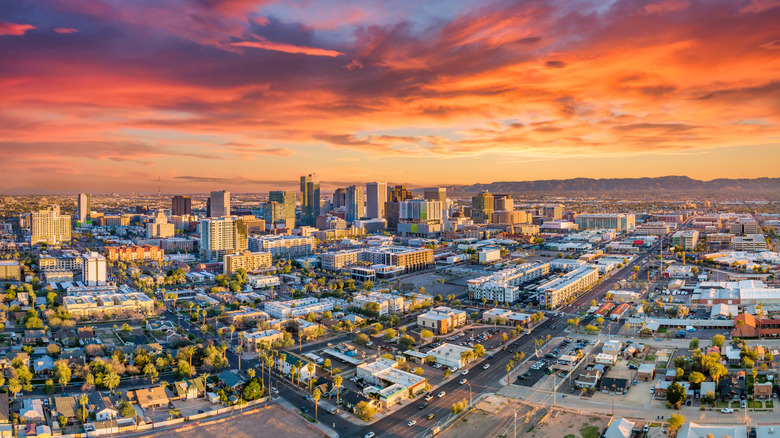
At first glance, Phoenix's downtown skyline makes it look like a mid-sized American city at best, but when you actually tally up its residents, it comes in 5th in the country, with 1.7 million people. If you add up the remaining suburbs, the metro area is home to over 5 million, which while not even in the country's top 10, is still pretty massive. "The actual Phoenix skyline still reminds me more of a Milwaukee or Columbus sized city, not a >mil city like Houston, Philly, or San Diego," wrote this urban observer on Reddit. "It really doesn't have the skyline to match the population."
The skyline comment is apt, as Phoenix is famous for its sprawl. While a drive across town may show you just how big it is, the city can often feel like an upscale, chilled-out suburban desert enclave. Much of the time, you only see other houses on the block or the shopping center and convenience stores you pass on your commute (with beautiful mountains in the distance). This low-density urban planning doesn't exactly bring a big city feel with it, but that's also why many people come to Phoenix, including one commenter on Reddit. "I moved here from Houston and the small town feel is one of my favorite things about Phoenix," they posted. "I don't feel the hustle and bustle I used to and I love it."
As for the relatively tiny downtown, it has enjoyed a resurgence in recent years, with new restaurants, cafes, museums, and more springing up, giving Phoenix more of an urban feel. As local resident Cindy Dach told AZ Central, "Downtown Phoenix's increased density with new development, and so many more people on the street make the area so much more alive."
San Jose, California
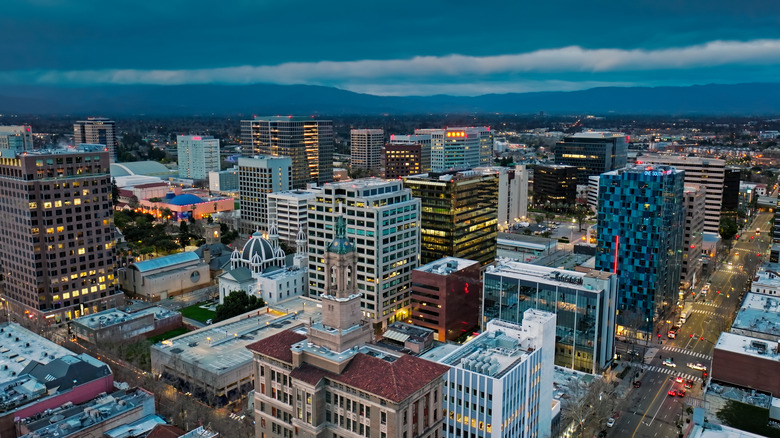
It may surprise many to learn that San Francisco is not the largest city in Northern California. Sure, the Bay Area as a whole — with some 7.7 million people — is clearly one of the most thickly-populated regions in the country, but within that, the city of San Jose boasts the largest population. This Silicon Valley hub counts around one million residents within its city limits, while San Francisco proper is home to about 800,000, and between both lie plenty of suburbs, like Redwood City, a spot that boasts a burgeoning restaurant scene.
And yet, despite pushing a million residents, San Jose doesn't feel like a major city in the way that nearby San Francisco does. This mainly has to do with the lack of a big buzzing city center. "Our downtown has very low numbers of residents and employees," Scott Knies, the executive director of the San Jose Downtown Association, told public radio station KQED. "You know, the densities aren't there." This sentiment was echoed by San Jose writer and native son Russell Graham in a post on Medium. "The buildings don't impress with height or historic grandness, and rarely for their architecture," he wrote. "There is also a sense of emptiness due to broad expanses paved for parking and scarce retail to draw people."
Even though it may not feel large, San Jose does grapple with plenty of big city issues, such as homelessness, urban blight, and crime. That said, it's also a dynamic town that's home to one of the most creative, well-educated, and affluent populations in the country, most of whom come to work in the engine of technical innovation that is Silicon Valley. This all counts for something, at least according to Graham. "San Jose is a real city," he affirmed, "even if it's not noticeably dense and glossy cool."
Greenville, South Carolina
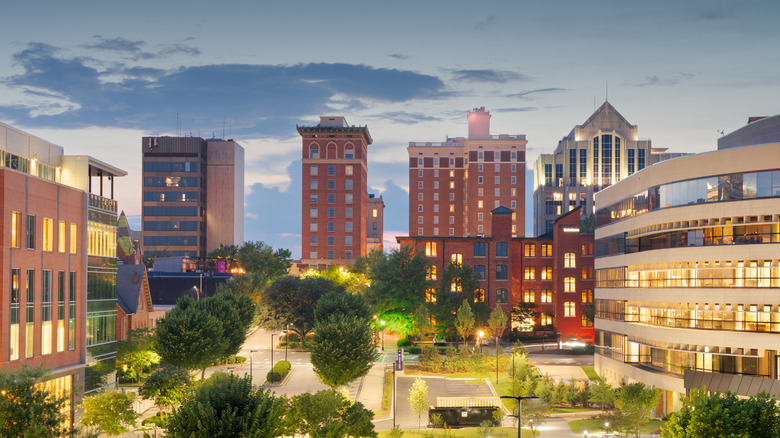
With just around 72,000 people, Greenville — home to a flower-filled downtown park with a river, falls, and trails —would hardly qualify as a big city in the US. However, when you include the surrounding Greenville County, that number shoots up to nearly one million people, making this laid-back southern town a population juggernaut. South Carolina's strict annexation laws make it difficult for municipalities to expand, keeping the size of cities in the Palmetto State modest. This phenomenon was confirmed by one observer on Reddit, who wrote. "72k is just the city limits. South Carolina's cities are ridiculously small compared to the metro areas."
Despite the large numbers of people in Greenville County, the town possesses plenty of sophistication while maintaining its down-home splendor. In a Raleigh Mag article titled "Small Town Charm/Big City Feel," writer Lauren Krutchen observed, "The onetime industrial town has transformed into a beautiful mecca of fine eateries, upscale hotels, hip breweries, and a destination for the arts and cultural activities." She also addressed the area's continuing growth, saying, "Though the city is rapidly growing, its core Southern hospitality remains intact, with an atmosphere that's welcoming to visitors from near and far."
It's true, Greenville is quickly growing, so much so that it's one of the most popular cities in the US for relocation. With this comes change, as well as fear that the frenzied boom in new residents is transforming Greenville into a city that feels like it has a million people living there. "It feels like there is a new housing complex going up every single day at every single available piece of land," griped one Reddit user, and on Facebook, a long-time resident said, "I hate it! Everybody coming here takes away the real southern small town feel."
San Antonio, Texas
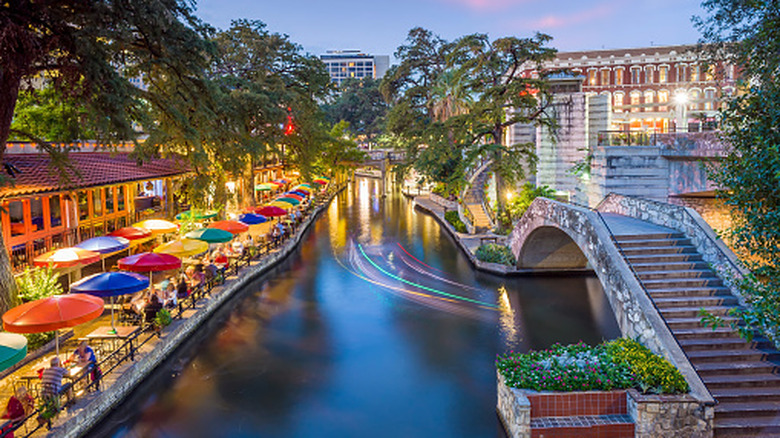
While San Antonio certainly isn't some unknown backwater, this historic Texas town — famous for its scenic and iconic River Walk and the Alamo — is a lot bigger than it seems. This especially rings true when you consider that its modest skyline is surrounded by a metropolis that's home to 1.6 million people, making it the 7th largest city in the country. Still, it doesn't quite feel like it. Part of this is due to the fact that while it ranks high as a city, San Antonio's metro comes in much further down the list, at 25th, making it more of a moderate than massive town.
Still, the Alamo City is a big, sprawling place, one of the fastest-growing metropolises in the country. But, despite this growth, San Antonio also manages to maintain a small-town feel in places, like the walkable neighborhood of King William, which boasts Victorian vibes and good eats. While this somewhat sleepy atmosphere has caused some to label San Antonio as "boring" — especially when compared to Texas' other big cities — some residents have come to wear the label with pride.
"Even as we grow and get bigger, San Antonio will always be a small city at heart," wrote one local on Reddit. "People don't move here because we're hip and eclectic, they mostly come here to raise a family... So when folks say SA is a boring and quiet old world tourist city, we need to just accept and EMBRACE it! Last thing we need to do is become another Austin or Dallas."
Columbus, Ohio
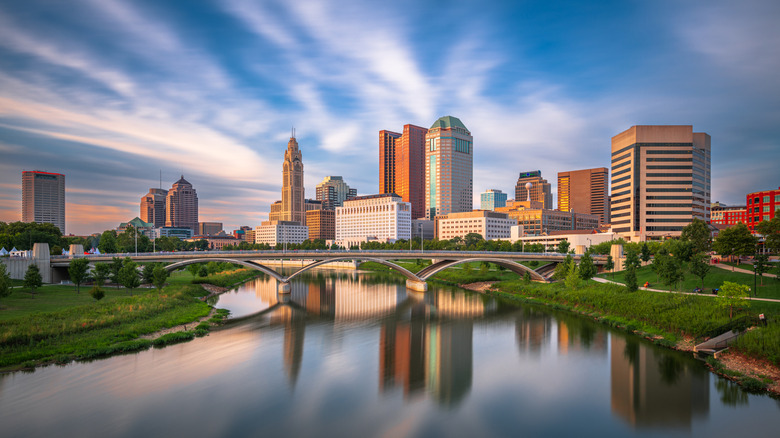
With nearly one million residents, Columbus — which is also a hot foodie destination — definitely qualifies as a big city. And when you add the metropolitan area, the population ticks up to just over 2.2 million. Despite this, Columbus is sometimes called the "Biggest Small Town in America" due to the fact that it doesn't feel like a major metropolis. This may have to do with its small downtown, its underwhelming skyline, or the fact that the city is very spread out. It does, in fact, take up more than double the space of Cincinnati and Cleveland combined, the result of aggressive annexation of neighboring municipalities.
There are, of course, many pluses to the city's lack of deep urban vibes. "Columbus retains that 'small town' feel," states the "Living in Columbus Ohio" section of the Ohio State University website, "You'll find that, despite its size, Columbus is easy to get around in, affordable, and populated by friendly, outgoing people. Traffic is rarely a problem, and you won't typically find the endless lines, non-existent parking, and throngs of people that characterize many U.S. cities."
This mix of ease of living with real city amenities has made Columbus an attractive destination for millennials, who have been moving to the city in large numbers in recent years. "I fell in love with this city. I cannot really describe why, but it feels like home," remarked one recent transplant on Reddit, while another simply stated, "Columbus is an amazing place to be."
Methodology
In selecting five American cities that feel small despite having a large population, we looked at those with more than 900,000 residents. While, in most cases, we limited this to the city's official boundaries, we also considered the metropolitan area for one of the entries. We then examined a variety of media articles as well as discussions on online forums such as Reddit. With this information, we made the decision as to which cities to include on this list.