
5 Texas Destinations With Blue Ridge Mountains Vibes
The Blue Ridge Mountains may be America's most extraordinary natural setting east of the Mississippi River. Stretching from Pennsylvania to Georgia — and hitting their peak (literally) in the timeless mountains of North Carolina — the Blue Ridge are among the oldest mountain ranges on Earth, displaying a soul-satisfying blend of forested summits, deep valleys, and ancient geological formations that predate the dinosaurs.
Not only are they a terrific destination for hiking and scenic driving (thanks to the Blue Ridge Parkway), but the Blue Ridge also host some of the nation's best-reviewed camping spots. As a one-of-a-kind natural wonder, the Blue Ridge Mountains don't have true doppelgängers elsewhere in the country. However, if you don't feel like traveling all the way to North Carolina, you can find remarkable places that share a few key Blue Ridge Mountain qualities. One of these places, surprisingly enough, is Texas.
On paper, the Texas landscape seems miles away from the temperate Appalachian forests of the Blue Ridge Mountains (understandable, since it is). The popular image of the Lone Star State broadly consists of rugged desert terrain, expansive grasslands, and open prairie more evocative of the Old West than Appalachia. Yet Texas has several prominent mountain ranges, woodlands, and geographic features that echo specific Blue Ridge highlights for travelers looking for an Appalachian-style escape. Though Texas — like the Blue Ridge — is a unique wonder in its own right, these five destinations are your best bet for experiencing a slice of the Blue Ridge scenery without booking a flight east.
Sabine National Forest
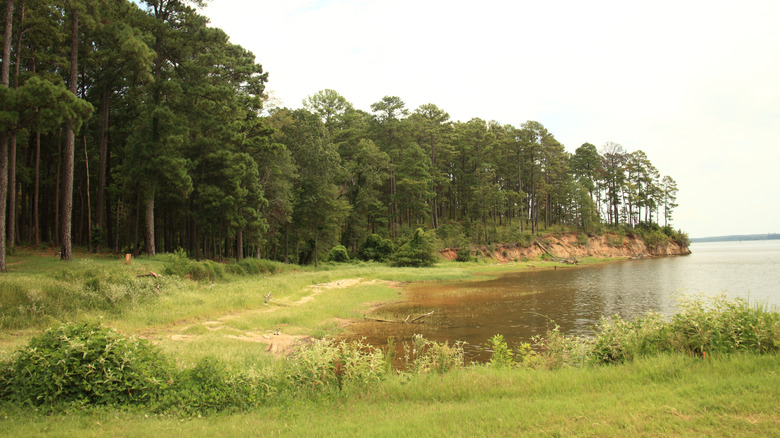
Texas is so closely associated with desert landscapes that many outsiders forget the state also has extensive forests. Along its eastern edge, the land blooms in a rich expanse of woods and wetlands that starkly contrast with the rocky deserts to the west. This woodland region of East Texas is home to four remarkable national forests. The easternmost of these is Sabine National Forest, which may offer the best analog of an ancient Blue Ridge Mountain forest within Texas' borders.
Much of the national forest land in East Texas centers on the Piney Woods region, a distinctive forest ecosystem dominated by longleaf and loblolly pines. These trees are more closely associated with the Gulf Coast than the hardwood forests of Appalachia. However, Sabine National Forest's 160,600 acres near the Texas-Louisiana border do include preserves of deciduous trees that foster a clearer "Blue Ridge Mountain" vibe. For example, parts of the forest contain hardwood stands of maples, oaks, and beech trees, creating a more East Coast-style canopy. Similarly, Sabine's Mill Creek Cove has one of the country's largest old-growth preserves of American beech trees, of the same kind you would find in the Blue Ridge Mountains.
The biggest difference is topography. East Texas is largely flat compared with the Appalachian Mountains. Still, some areas around Sabine contain gentle hills that, though not nearly as high as the Blue Ridge Mountains, add a bit of elevation to the verdant forest scenery.
Gorman Falls and Colorado Bend State Park
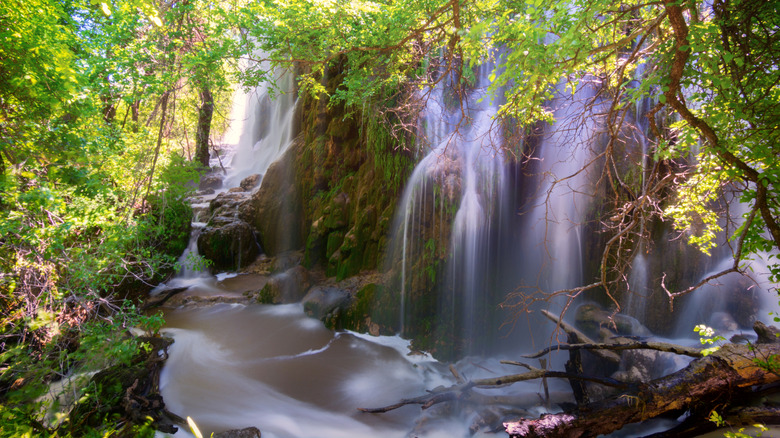
Throughout the Blue Ridge Parkway, drivers can find plenty of spaces to pull over and enjoy a magical waterfall hike, like the short and scenic Erwins View Trail to North Carolina's Linville Falls. Remarkably, Texas has a few amazing waterfalls of its own, none more worthy of Blue Ridge comparisons than Gorman Falls in Colorado Bend State Park. Gorman Falls is not actually the highest waterfall in Texas — that distinction belongs to the 175-foot Capote Falls, which is on private property and inaccessible to the public. Like the best waterfalls in the Blue Ridge Mountains, however, Gorman Falls' main draw is quality rather than quantity.
Colorado Bend State Park sits in the scenic heart of the Texas Hill Country, about 2 hours northwest of Austin. The park lies within the broader Llano Uplift geological region. Its hilly terrain mimics the Blue Ridge Mountains in topography, if not in appearance. However, the park's centerpiece, Gorman Falls, is just as eye-catching as any wonder you'd find along the Blue Ridge Parkway.
At 70 feet high, Gorman Falls certainly stands out as a natural wonder. And yet the falls' exquisite appearance transcends its basic measurements. Plunging down a dramatic limestone cliff and through a green canopy of vegetation, it features an intricate network of natural rock sculptures and a tapestry of veil-like cascades. In short, it's both a beautiful reminder of the Blue Ridge Mountains and a wholly unique geological wonder of its own.
Lost Maples State Natural Area
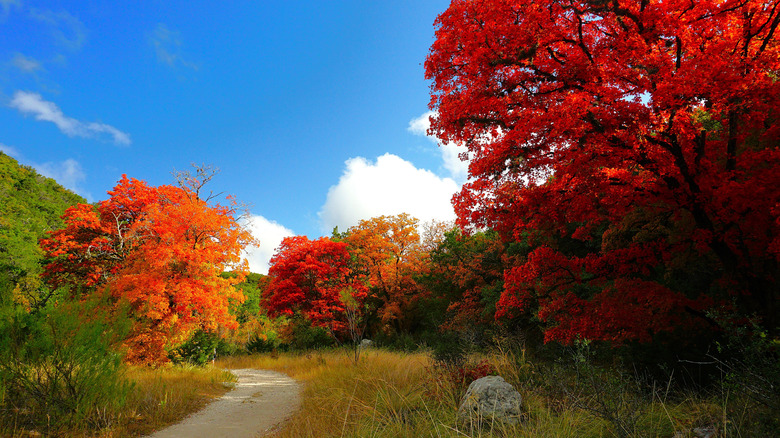
As with old-growth forests and waterfalls, fall foliage is not something that Texas is normally associated with. Much of the Texas landscape is generally too arid and too lacking in deciduous trees to display any notable coloration when the autumn months hit. However, nature preserves like the ravishing Lost Maples State Natural Area do showcase rich polychromatic displays of fall colors that rival the best autumnal views in the forests of the Blue Ridge.
The Lost Maples State Natural Area takes its name from a gorgeous grove of bigtooth maple trees deep within a Texas-style canyon on the Sabinal River. In this setting, Lost Maples is something of a perfect blend of Blue Ridge-style hardwood forests and rugged Texas scenery. While the forest is Appalachian-esque, the park's maple trees stand within a cloister of limestone canyons, natural springs, and open-sky grasslands far more indicative of Texas.
These resident maples are as prone to erupting in vibrant autumn colors as the more famous fall foliage trees in Appalachia. As such, Lost Maples State Park has become Texas' premier destination for leaf-peeping in the autumn months, rivaling the best spots for fall foliage along the Blue Ridge Parkway. Prospective leaf tourists should note, however, that the timeline and quality of the park's fall colors can vary from year to year, depending on the weather. The park offers a helpful fall color report that is updated regularly during the season. Of course, Lost Maples State Natural Area is a beautiful destination throughout the year, even if your visit doesn't coincide with peak fall colors. If you're not a "leaf peering" person, Lost Maples also parallels the Blue Ridge Mountains for its magnificent stargazing opportunities under skies largely free of light pollution.
Alpine and the Davis Mountains
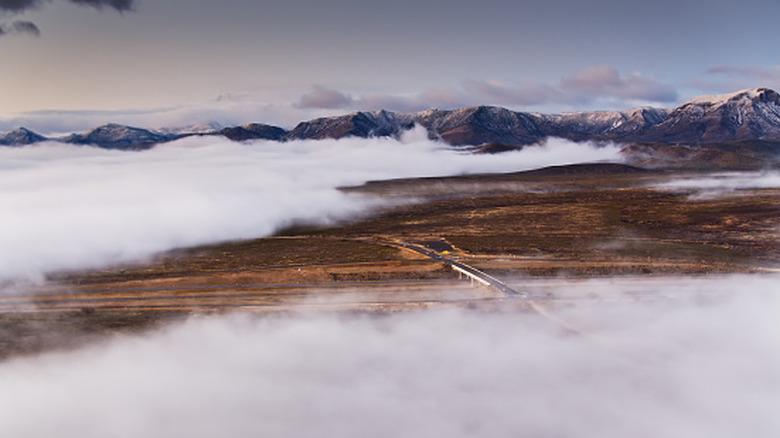
The Davis Mountains bear the prestigious nickname of "the Texas Alps." This alone should give you a good idea of how well these stunning, yet overlooked, West Texas wonders match the splendor of the Blue Ridge Mountains. The Davis Mountains actually have the Blue Ridge beat in terms of elevation. The range's highest peak, Mount Livermore, tops out at 8,382 feet (by comparison, Mount Mitchell, the highest point in the Blue Ridge Mountains, is 6,684 feet high).
While the Davis Mountains offer the towering grandeur of the Blue Ridge Mountains, their outward appearance is a bit different. The Davis Mountains formed from volcanic activity around 35 million years ago, leaving them with a rockier and more Southwest aesthetic than the famously lush Blue Ridge. However, the Davis Mountains' eye-grabbing sky island appearance in the midst of the West Texas desert, combined with their intricate geological composition and complex history, provides just as much scenic impact as the Blue Ridge Mountains. Essentially, the Davis Mountains look like the Blue Ridge Mountains dressed up like the American Southwest for Halloween.
Many of the tourist-accessible areas of the Davis Mountains are located within Davis Mountains State Park, Fort Davis National Historic Site, and the Davis Mountains Preserve. While these natural and historic sites match the Blue Ridge Mountains for worthwhile day trips, the Davis Mountains also rival the Blue Ridge when it comes to lovely mountain towns. Most notably, the range sits about half an hour away from the charming Texas town of Alpine and its walkable, mural-rich downtown. Alpine is also a prime gateway to Big Bend National Park, giving visitors two remarkable natural wonders in one small-town trip.
Guadalupe Mountains National Park
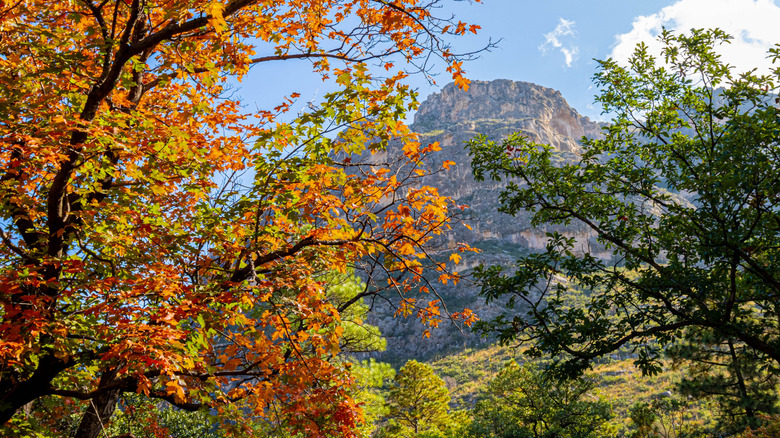
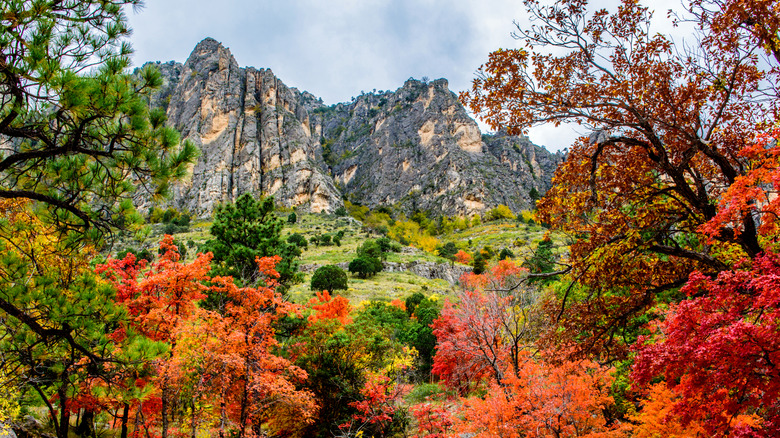
If your standard for "Blue Ridge Mountain vibes" is simply the size and prominence of a mountain range, then the mighty Guadalupe Mountains would probably be your preferred Blue Ridge alternative in Texas. After all, this monumental range in far West Texas includes many of the Lone Star State's highest peaks, including 8,751-foot Guadalupe Peak. Sitting in the Chihuahuan Desert, however, the Guadalupe Mountains have a much different topography than the ancient tranquility of the Blue Ridge Mountains. Here, instead of lush forests and rolling, rounded summits covered in smoky fog, the Guadalupe Mountains display steep rocky facades, cliff-lined peaks, and the world's largest Permian fossil reef.
Though they look quite different from afar, however, the Guadalupe Mountains are just as ecologically rich as the Blue Ridge when viewed up close. Throughout the underrated Guadalupe Mountains National Park, daring hikers can find several intricate ecosystems spanning the park's many elevation zones, from arid desert environments to coniferous forests. Despite its outwardly barren appearance, the Guadalupe Mountain Range actually protects an outstanding diversity of plant life that mimics the equivalent biodiversity of the Blue Ridge—if you know where to look.
The range's complex blend of geology and ecology forges "mini" Blue Ridge Mountain Easter eggs hidden in places you'd least expect. Similar to the Lost Maples State Natural Area, Guadalupe Mountains National Park has an unexpected wealth of maples, oaks, walnuts, and other deciduous trees more indicative of Appalachian forests than Southwestern deserts. Most notably, the park's McKittrick Canyon and Pine Springs foster extensive groves of trees that put on more Blue Ridge Mountains-like fall foliage displays when autumn hits.
Methodology
Nothing in the Blue Ridge Mountains looks 100% identical to anything in Texas, and nothing in Texas looks 100% identical to anything in the Blue Ridge Mountains. This is actually a good thing, since a strong resemblance between the two areas would mean that neither of them is the decidedly unique natural wonder they are known to be. Still, this extensive diversity of scenery makes compiling a list of "top Texas destinations with Blue Ridge Mountains vibes" a bit of a challenge.
To arrive at this list in its current form, we ultimately decided to focus on identifying a single key feature that forms part of the much larger profile of the Blue Ridge Mountains, and then locating a similar feature in Texas. This way, we could make a strong case for a particular Texas destination exuding Blue Ridge Mountains vibes in one specific area, while still recognizing the dramatic and essential differences between the two locations.
Although the entire Blue Ridge Mountain province extends from Pennsylvania to Georgia, we focused our "key features" on elements that can be found along the Blue Ridge Parkway, as this is the most popular and well-known route for exploring the Blue Ridge. Though nothing in Texas is exactly like the Blue Ridge Parkway, we identified five key features with adequate analogs in Texas: biodiverse hardwood forests, hikeable waterfalls, fall foliage, charming and historic mountain towns, and prominent mountain summits. In Texas, these elements corresponded to the Sabine National Forest, Gorman Falls, Lost Maples State Natural Area, the Davis Mountains and the town of Alpine, and the Guadalupe Mountains, respectively.