
Ohio's Idyllic Park In Athens Is A Natural Wonderland With Scenic Trails, A Serene Lake, And A Unique Cave
You can stroll along the streets of Athens, Ohio, immersing yourself in its art scene and everything else that makes it a buzzing college city, but what do you do when you decide you need a nature escape? Just head to the city's outskirts to Strouds Run State Park, where outdoor recreation spans a wide range of landscapes. Covering 2,606 acres of verdant valleys, sandstone bluffs, lush forests, and a serene lakefront, this wonderland entices all sorts of enthusiasts. Campers bring their equipment to spend the night under the stars; hikers wander the winding trails; birdwatchers spot species like warblers, thrushes, vireos, and hawks; and bikers and equestrians ride over 23 miles of paths.
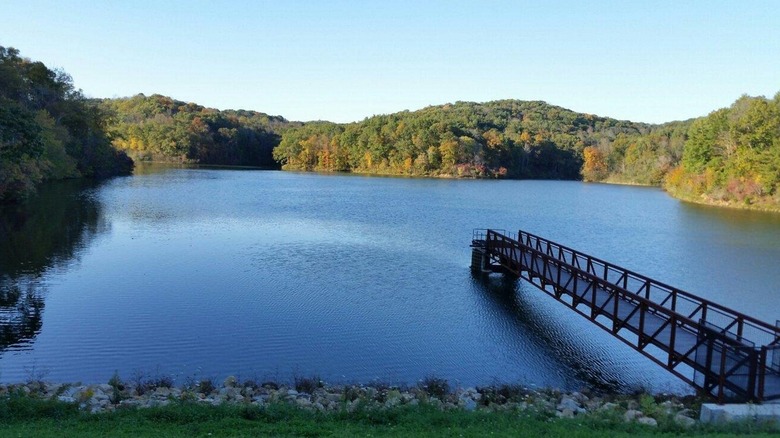
Originally home to the Adena Indians and Shawnee Nation, Strouds Run State Park was named after the Strouds family, who came to the region in the 19th century. After the state obtained the land, the park was established in 1953. Visitors are especially drawn to Dow Lake, where waterfront fun awaits. Named after C.L. Dow, who played a huge role in the reservoir's creation, the 161-acre lake was built in 1960. These days, the idyllic shoreline is frequented by anglers, boaters, swimmers, and those who simply wish to bask in the sun's rays.
Strouds Run State Park's geology is another reason why it's such a unique destination. With sandstone crags and rocky terrain around every corner, visitors can swap the lake views for rugged treks, possibly even ending up in a recess cave that's a product of frost action. To see it for yourself, all you have to do is drive 10 minutes east of Athens to arrive at the state park. The drive from Columbus, a hot foodie destination full of international flavors, takes one hour and 15 minutes.
Meander the trails at Strouds Run State Park
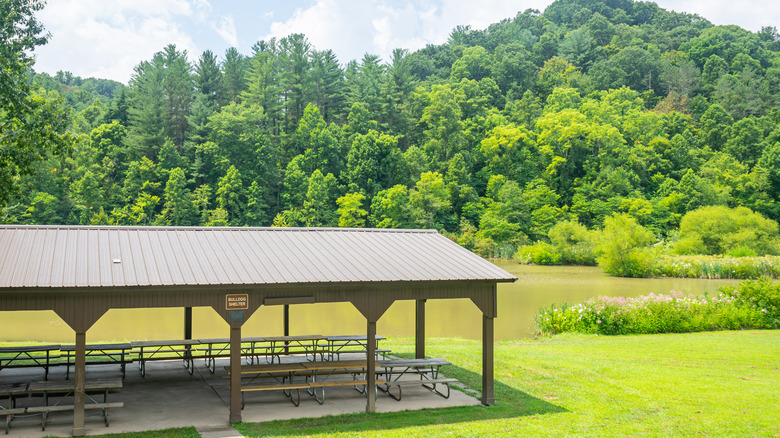
Boasting a 15-mile trail system, Strouds Run State Park has hikes for every skill level. The Dow Lake via Hickory Multi-Use Trail is a great start, allowing you to admire the waterfront on a 4-mile out-and-back hike. You can extend it to a 7.4-mile journey by making a loop around the entire lake, with only a little bit of uphill portions — it'll take you around three hours to complete in its entirety. The Trace and Finger Rock Loop, on the other hand, exposes you to other aspects of the park. For 3.3 miles, you'll climb on boulders and get lost in a forest where colorful wild mushrooms grow on the trees' bark.
The Athens Trail, with a trailhead located in Sells Park, is shared by hikers and bikers. This out-and-back 6.2-mile route has an elevation gain of 1,010 feet and can get quite steep. Meanwhile, the Sundown and Lakeview Loop Trail makes for a long trek but, with a gain of only 626 feet, isn't as steep as Athens. The 8-mile loop leads you through Dow Lake's northern banks and into the woods, providing lots of opportunities for birdwatching.
The scenic paths don't stop there; the White Pine and Vista Point Trail guides you to the heart of the forest, where you can marvel at the vegetation before you arrive at a gorgeous lookout. At only 2.4 miles long, you won't have to hike too far to reward yourself with picturesque views. The longer 7.3-mile Thunderbunny and Hollow Point Loop takes you from Dow Lake's northwestern tip deep toward the woodlands, where hickories, beeches, and more dominate the canopy. You'll also come across interesting rock formations dotting the area — just make sure to wear proper shoes to navigate the muddy track.
Splash around the lake and head to the cave
Those visiting during the warm season should bring their swimwear and take advantage of Dow Lake's offerings. In the summer, a designated beach area is open for visitors to lounge on the sand and cool off in the water. While some enjoy a beach outing, others don their scuba suits and explore the depths of the lake. You'll notice boaters making use of the provided ramp and mooring stakes, though vessels with engines greater than 10 horsepower are prohibited. As for fishing, you can cast a line from the shore or a boat; common catches include crappie, largemouth bass, channel catfish, and bluegill.
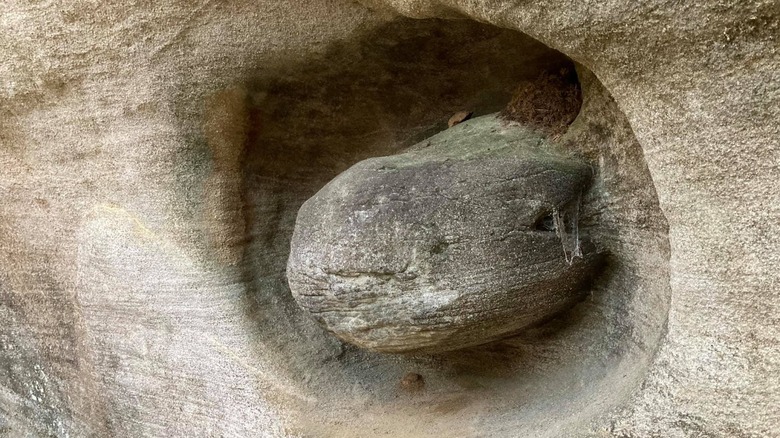
If the explorer in you needs a fresh adventure, Turtlehead Cave might satisfy your cravings. This natural site isn't technically classified as a cave, as the name implies, but as a rock shelter created by repeated freezing and thawing over the centuries. Eventually, the rock eroded, with only its top part remaining intact, giving it that cave-like appearance. As for why it's named "Turtlehead," the answer lies in a distinct formation found within. There, you'll find a turtle-shaped node, or "turtlehead," peering out from a fissure in the rock shelter.
To explore Turtlehead Cave, follow the 3.9-mile Rockhouse Trail and Athens Trail Loop. The Trace Trail and Finger Rock Trail Loop also brings you to the rock formation, though it's a longer, 5.7-mile journey. Alternatively, you can opt for the Athens, Trace, Lakeview, Hickory, Finger Rock, and Rockhouse Loop, a strenuous, 13.4-mile hike that also takes you to Turtlehead Cave and other impressive destinations. And this isn't the only peculiar attraction you'll find in the area; the subterranean Ohio Caverns, one of the most colorful in the country, are just a little more than a two-hour drive away.