
Once-Popular Airline Foods You Can't Get Anymore
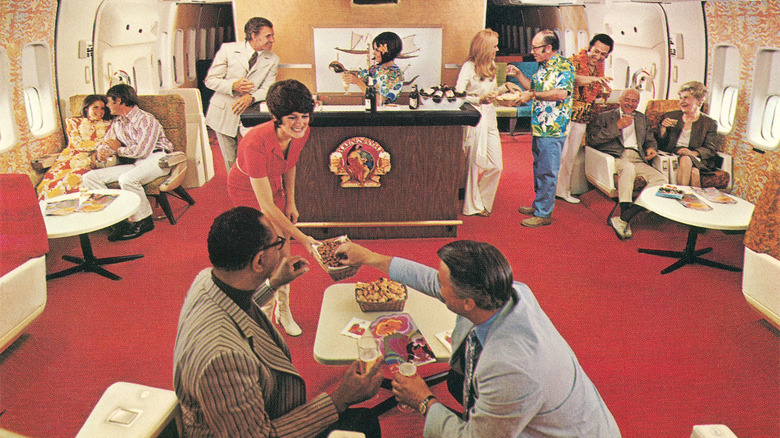
The golden age of travel in the 1950s and '60s gives us plenty to wax nostalgic over. People dressed to the nines, seats were wider, and onboard service meant a glamorous experience. Flying was scandalously expensive — a ticket from New York to London cost $350 in 1960,(nearly $4,000 in 2026 dollars) so only the wealthy could afford it. Case in point: American Aviation reported there were around 19 million air passengers who flew in 1950, a stark contrast to the nearly 80 million U.S. airline passengers in November 2025 alone, per the Bureau of Transportation Statistics.
But passengers got what they paid for, especially in airline food. While some airlines today offer excellent in-flight dining, airline food back then was on another level, even in economy. Onboard service included multiple-course meals and all-you-can-drink champagne; dishes like stuffed guinea hen, crab, and steaks cooked to order were served on real plates with real cutlery. "Airlines in that era were prohibited from competing on price, so the only way they could compete was on quality of service. You see a slew of advertisements in the 1950s about the quality of food on aircraft," Richard Foss, author of "Food in the Air and Space: The Surprising History of Food and Drink in the Skies," told Gastro Obscura.
Ultimately, financial problems, the recession, and the Airline Deregulation Act of 1978 slowly ended such air travel luxuries. Testimonials from former flight attendants, research by culinary historians, and vintage airline menus and brochures from the '50s to '70s make it hard not to feel shortchanged compared to today's bag of peanuts served in economy. From buffet-style spreads to holiday turkeys and fast-food hamburgers, here are the once-popular airline foods that have disappeared from today's flight experiences.
Steaks grilled onboard
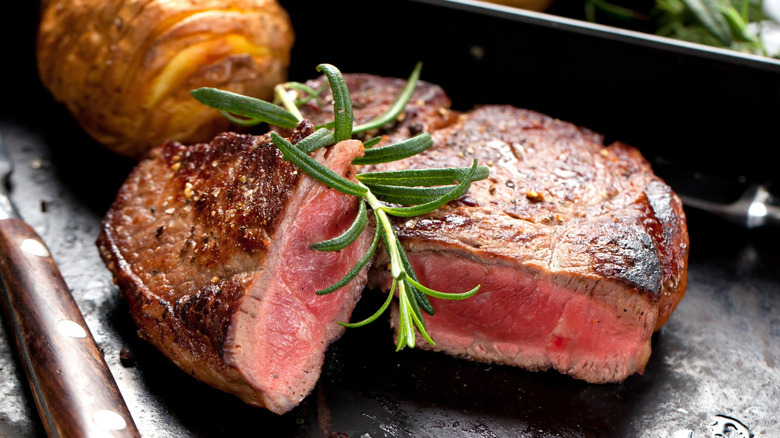
A steakhouse in the skies? As farfetched as it may seem now, steaks delivered to one's seat were offered in the heyday of flying, particularly if you flew Pan American World Airways (Pan Am), which collaborated with the restaurant Maxim's, an iconic mainstay of Paris' culinary scene. Trans World Airlines (TWA) was also known for their steaks.
Onboard steaks were the real deal: They were grilled and seared to order on the galley's high-temperature broiling ovens that could handle 16 steaks at a time in just seven minutes — and in varying degrees of doneness. "Then there always was some kind of roast, like a chateaubriand or rack of lamb or roast beef, and it came on the plane raw and we cooked it in the galley," Suzy Smith, a former Pan Am flight attendant in the 1960s, told CNN Travel. "We took it out on another cart and we carved it in the aisle."
That's not to say that steaks aren't being served today: Qantas, US Airways, and Delta still have steaks on the menu, but expect frozen and reheated cuts of meat, a far cry from the cooked-on-board steaks of the past. And you can bid goodbye to having your steak cut and served from the trolley — knives have been banned onboard since 9/11.
Buffet-style food served from islands and trolleys
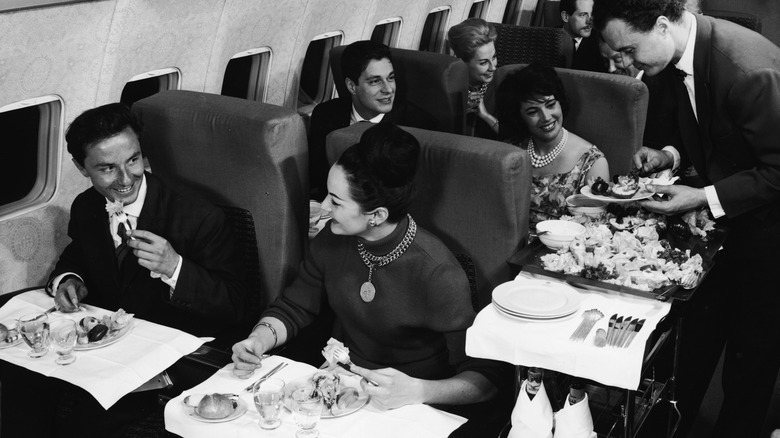
Between the 1950s and the early '80s, boarding a Scandinavian Airlines (SAS) flight held the promise of a delightful bounty of food brought to passengers on a trolley. A collection of images from the SAS Museum commemorating their 70th anniversary shows just how spoiled passengers were. Flight attendants wheeled trays heaped with fruit, cheese, charcuterie, and lobsters (with their shells still intact), served to passengers in first class on real china. From a veritable buffet displayed on a central island between the aisles, the chef would serve the passengers.
Similarly, Pan Am, Western Airlines, and TWA had meal and dessert trolleys. Aboard Air India, plated service was also the norm, with pre-plated meals still absent from the airline's meal planning. Richard Foss believes that this all stemmed from airlines wanting their reputations to stand out from their competitors. "There used to be 20 different meals served: A seafood platter, Hindu vegetarian, lacto-ovo vegetarian. You had a gigantic amount of choice and most airlines had their own catering service," Foss told Los Angeles Magazine.
Themed cuisines
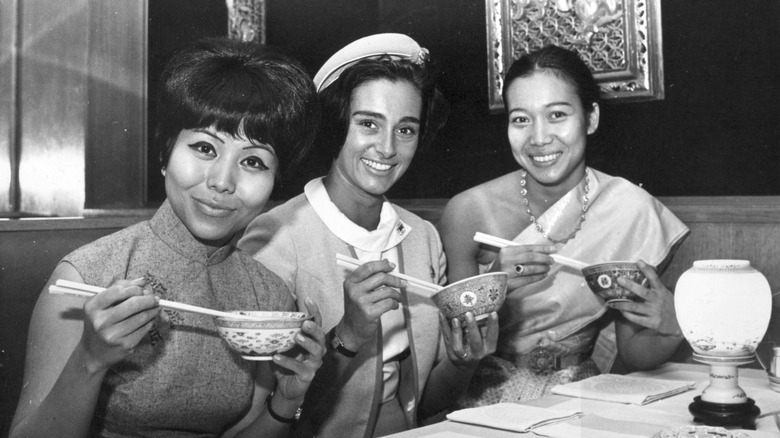
While airlines conjured gimmicky marketing strategies to get more people to fly with them, TWA launched their short-lived "Foreign Accent Service" in 1968, where flights took on an international theme for passengers flying domestically. Onboard menus reflected international influences: British-themed "Olde English" flights served kidney pie, whiskies, and broiled steak "fit for the Elizabethans;" Italian Accent flights offered Italian veal, Sicily salads, and ricotta-filled eclairs; and French menus had quiches and coq au vin.
In 1975, TWA introduced another iteration of the Foreign Accent Service with their Trans World Service's European-inspired campaign, touting a menu of quiche lorraine, lasagna, fish and chips, and wines from around the world. Meanwhile, the flailing New York-based Mohawk Airlines managed to draw passengers into their outdated planes by refitting them with a railcar-parlor theme and serving a menu consisting of beer, pretzels, and cheese. By the end of its run, 31,700 cans of beer and half a ton of cheese was consumed.
Not all airlines got their themed menus right, though. In 1955, Northwest Orient Airlines offered a (supposedly) Japanese-themed experience to passengers flying between Minneapolis and Seattle: bite-sized shrimp, cheese, ham, tomatoes, and fruit skewers on a pineapple base, served in the upper level of their Stratocruiser's "Fujiyama Room." More Tiki than Japanese, but being exclusive to US domestic flights, "there was little danger that many actual Japanese people would see it — the flights to Tokyo offered standard service," Foss noted.
Thanksgiving turkeys and other special-occasion meals
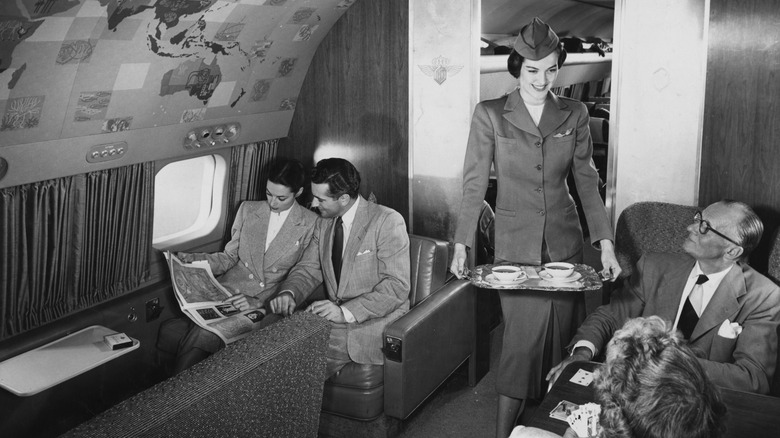
Traveling during the holidays can be calmer and cheaper, but in the golden days of air travel, this also meant getting a fantastic spread of food that would more than make up for missing a holiday on solid ground. Aboard Pan Am on Thanksgiving, passengers could expect a full turkey dinner, served onboard as early as 1949. On a 1967 Lagos to Accra flight, a Pan Am purser described a first-class passenger helping the frazzled air staff with meal prep by carving a full Thanksgiving turkey while the staff served potatoes, gravy, and cranberry jelly. In the early 1940s, American Airlines' Thanksgiving dinner consisted of fresh lobster, crabmeat, roasted young tom turkey, and individual pumpkin pies. For Christmas, Transcontinental & Western Air served a festive spread of roast Vermont turkey, English plum pudding, and Hawaiian candied yams.
Flying United Airlines on St. Patrick's Day guaranteed a green-themed meal including emerald fruit cups, parsley potatoes, minted peas, and a clover leaf roll; while spooky Halloween menus served orange and black foods like deep-dish pumpkin pies, brown bread, carrot sticks, and orange muffins. Easter meals featured bunny cookies and salads with edible flowers; Valentine's Day passengers feasted on hearts of celery and lettuce salads; and Independence Day passengers had salads with "liberty" dressing and deep-dish youngberry pies.
McDonald's burgers, nuggets, and milkshakes
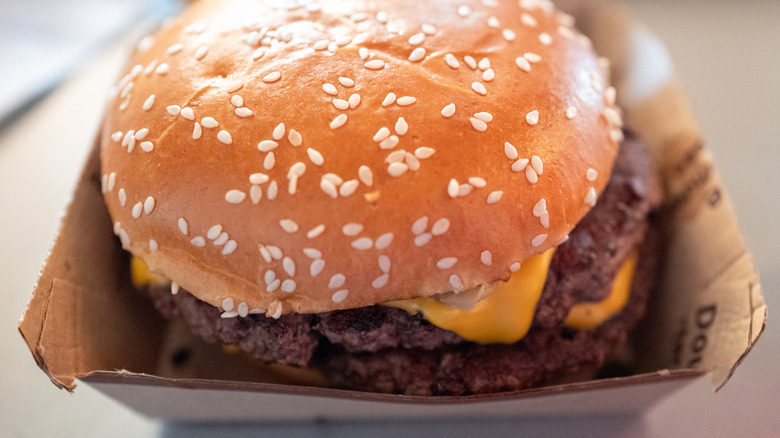
Many airlines have strategically set themselves apart from their competitors with groundbreaking partnerships, but one unlikely collaboration in the '90s brought a familiar fast-food meal to the skies.
The partnership between Swiss regional airline Crossair, Swiss travel company HotelPlan, and the iconic fast-food chain McDonald's resulted in the McPlane, a ketchup-red MD-83 series aircraft that made its maiden voyage from Basel, Switzerland to Heraklion, Germany. While not as polished as the meals of the golden era of travel, the menu was completely in sync with the times: Passengers were served various McDonald's burgers, chicken nuggets, sodas, and milkshakes. Wanting to avoid any fires in the sky, the fast food's staple French fries were excluded from the in-flight menu, according to a 1996 article by The Independent.
With families as their target audience, McPlane also offered souvenirs, toys, and onboard activities for children. Had the McPlane flown the skies today, it would have undoubtedly become a viral airline trend on TikTok, because who could resist the novelty of a chomping on a burger 30,000 feet above ground in a ketchup-colored plane?