
Southern Oregon's Once-Thriving Mining Town Is Now An Eerie Abandoned Site With Scenic Trails
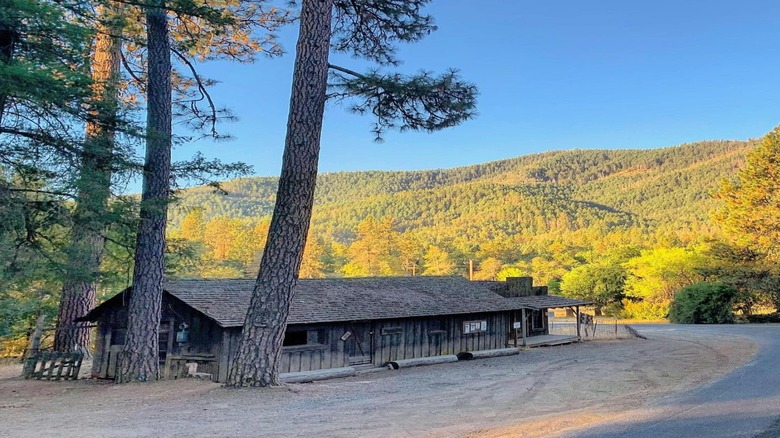
Oregon has no shortage of enticing destinations for visitors, but it might come as a surprise that it's also home to 200 ghost towns, according to Visit Oregon. The southern half is home to the noteworthy town of Golden, considered one of the five best abandoned ghost towns in the Pacific Northwest. But just over an hour south is Buncom, another of the state's forsaken towns with a mining past, situated within a scenic region ripe for exploration.
In its heyday, it was a booming mining base for prospectors who arrived in 1851 upon the discovery of gold in Sterling Creek. By 1896, the population was believed to be 175, and a post office opened despite never being incorporated. Years later, it functioned as a ranching and farming supply post for the Little Applegate Valley with a stagecoach line. Once the gold was gone and cars shortened travel time in the region, the town's demise began. By 1918, the post office had closed, the residents had left, and a wildfire later decimated much of what remained of the town.
However, there are remnants of Buncom still in existence today for those who venture to find it, which, combined with a breathtaking landscape, make for an ideal detour on a Southern Oregon road trip. It's part of the rural and picturesque Applegate Valley, 19 miles from Medford, an artsy Oregon city known as the "Heart of the Rogue Valley." The remaining buildings sit at the intersection of two paved country roads.
Here's how to visit the Buncom ghost town
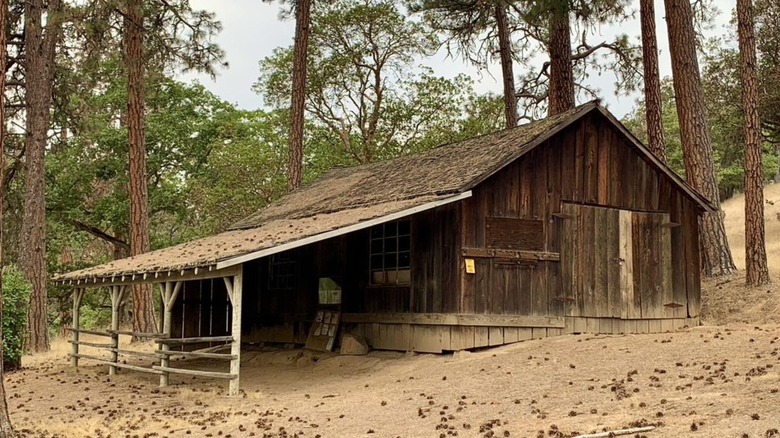
When you pass through Buncom, you will discover what little remains from the past – three historic 19th-century buildings: the bunkhouse, post office, and a cookhouse. During its prime, other infrastructure included a saloon and a general store. In 1990, in an effort to save the ghost town for visitors, the nonprofit Buncom Historical Society was created. Per the Oregon Encyclopedia, the structures sit on private property at the corner of Little Applegate Road and Sterling Creek Road, and visitors can view them from the outside, being respectful of their fragility. There is no formal museum or tourism framework in place, except for some signage and newspaper clippings about Buncom's past.
It's unclear if the historical society still operates, as our research couldn't yield an active website for the organization. A once lively annual fundraising and celebratory event and parade called Buncom Day no longer takes place. Both appear as indicators of its eerie abandonment, for a place known as one of Oregon's best-preserved ghost towns, per Travel Medford.
Even reviews are scarce for Buncom, proving how hauntingly empty it is, except for the towering pine trees encircling it and the wildlife amongst the moss-covered forest. Of the two Tripadvisor reviews, one user noted, "There wasn't anybody around when we visited, but we walked all around and peeked in the buildings. They are kept locked to keep out unwanted visitors, human or otherwise!"
Exploring the scenery and trails around Buncom
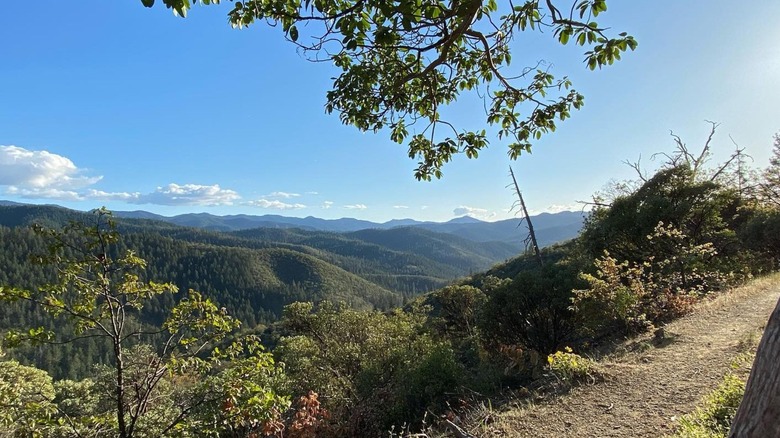
Once you've visited the historic Buncom site, there's plenty of time to engage in some outdoor recreation, given the beautiful terrain. This is best done through the Sterling Mine Ditch Trail System, managed by the Bureau of Land Management and the Siskiyou Upland Trails Association. The trail, which was the first officially designated state scenic trail in Southern Oregon, spans 21 miles for hiking, mountain biking, and equestrian riders. The year-round route wanders along the ditch, which supplied water to the historic mine, with stunning vista views of the Siskiyou Mountains and Applegate Valley.
There are seven trailheads that connect pathways of varying lengths, totaling 45 miles to explore, for all levels of nature lovers. Shorter treks include the 4.8-mile Bear Gulch Loop and 2.3-mile Armstrong Gulch Loop, both of which AllTrails reviewers noted offer striking mountain panoramas, dense forest sections, and colorful wildflowers during spring. You're also likely to encounter some birds and wildlife along the way. The BLM website offers a downloadable map and brochure detailing the entire network and access points. One Redditor described the area, saying, "The old mining trails that the miners used are well-maintained hiking trails and are full of old relics and mines. They are fascinating."
While in the area, continue 1.5 miles south along Little Applegate Road to Wild Wines Winery & Tasting Room to sample locally crafted wines. The vineyard is one of many in the area, and it's just 14 miles from the historic, charming wine-country gem of Jacksonville, Oregon.