
The 5 Longest Rail Trails For Scenic Views In The Midwest, Ranked
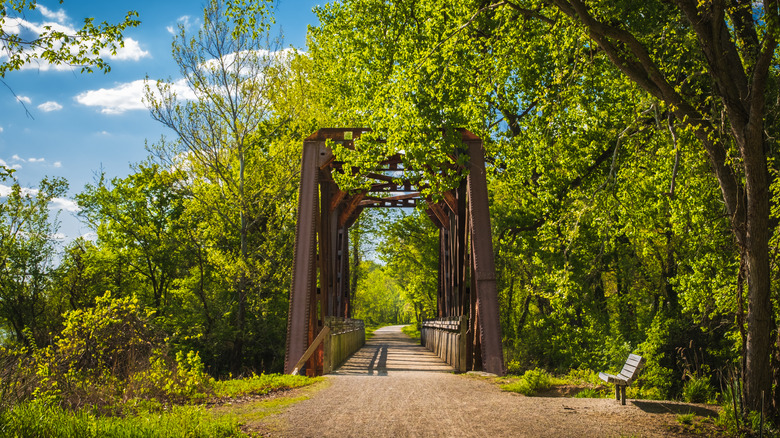
The U.S. boasts more than 21,000 miles of rail trails, a concept that was first road-tested in the Midwest. The first time a community transformed an abandoned railway into a path was in rural Wisconsin, so it's no surprise that this region of the country is rife with these pedestrian thoroughfares. At first, builders conceived of the Elroy-Sparta State Trail as a "linear park" only for walkers, but they soon realized that cyclists would benefit from the level terrain as well.
It's fitting that some of the longest and most beautiful trails are located in America's breadbasket. Many perceive this vast region as flat and empty, barely worth a road trip, much less a bicycle tour. Yet Midwestern trails are long and dynamic, cutting through scenic countryside and picturesque towns. Several make our list of the best rail trails in North America.
These multi-use trails, fit for cyclists, hikers, joggers, cross-country skiers, and often horses and snowmobiles, are a great way to see this underrated region of the United States in all its glory. We consulted user reviews from websites like TrailLink and Tripadvisor, along with the Rails to Trails Conservancy, to rank the Midwest rail trails that were not only the longest, but also offered beautiful landscapes.
5. Paul Bunyon State Trail (Minnesota)
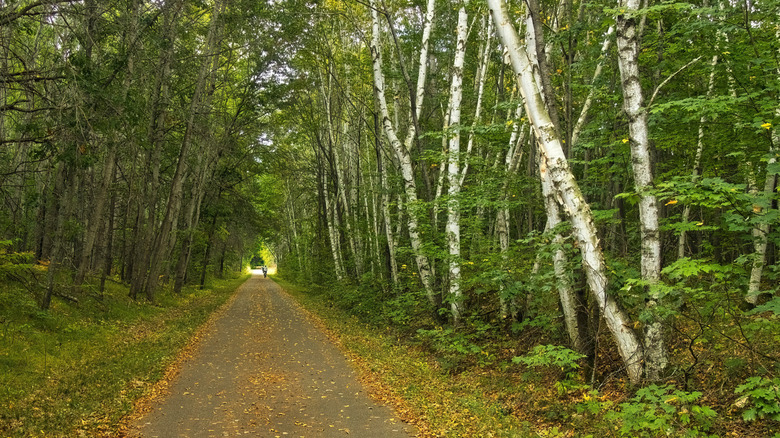
Paul Bunyan is the subject of timeless tall tales — and the Paul Bunyan State Trail might sound like one of them. This 115-mile route slices through the very middle of the state, connecting multiple parks and 15 "trail towns." This is a section of Minnesota that few people have reason to see, including most Minnesotans. The trailhead in the town of Brainerd stands about 135 miles north of the Twin Cities, and the only reasonable way to get here is to drive. If you decide to walk or ride the whole trail, though, you'll find a convenient chain of hotels, inns, and campgrounds along the way. Brainerd itself is tucked into the heart of Minnesota's lake country, and it's a thrilling retreat with golf, go-karts, and pontoons.
The rural route is heavily forested and mildly hilly in places. Because this is Minnesota — the land of 10,000 lakes — the trail naturally skirts 21 bodies of fresh water. Most of the trail is paved, which generally means smooth sailing for cyclists, although users have reported cracks and decay in certain stretches. The Paul Bunyan Trail intersects with several other trails, giving riders a chance to branch off and explore. "We rode the Walker Loop, a great 22-mile loop that includes the Paul Bunyan, Shingobee, and Heartland Trails," wrote one cyclist on TrailLink. "Some steep hills, but not a problem on our e-bikes."
4. Cowboy Trail (Nebraska)
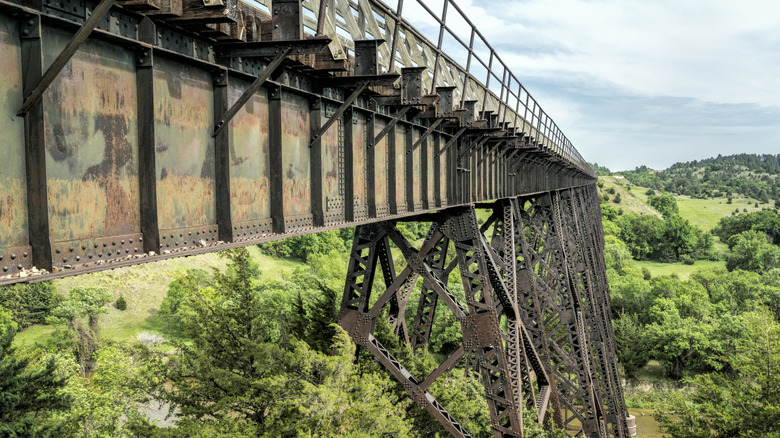
The Cowboy Trail is still a work in progress, but it promises to be one of the longest rail-trails in the U.S. When complete, this route will parallel most of the state's northern border, a 317-mile stretch between the towns of Norfolk and Chadron. The project has already taken more than 30 years, and many sections remain impassable, but riders can enjoy smooth passage over 187 miles of crushed limestone and 200-plus bridges along the way.
This swathe of the Great Plains is a mix of farms and wild grasslands, rivers, and forests. It's easy to imagine what early pioneers saw as they colonized these lands in the 19th century — all the more so for equestrians, who are welcome to ride their horses alongside the trail. History buffs will find a scattering of significant landmarks, such as the old Neligh Mills (where flour was once processed), and the epic Valentine Bridge, which hovers 148 feet over the Niobrara River. "The views are pretty amazing!" reported a traveler on a Tripadvisor review. "We went late in the evening, and it was nice and cool; several people were out walking/jogging. If you're in Valentine, it's worth the trip out to the bridge for the experience."
Most multi-day bike tours start in Norfolk and head west. The Valentine Bridge is one of the Cowboy Trail's most scenic viewpoints, and at the moment, it stands at the very end of the route. In time, it should stand roughly in the middle, as you'll have about 1,600 additional miles to enjoy along the route.
3. Katy Trail (Missouri)
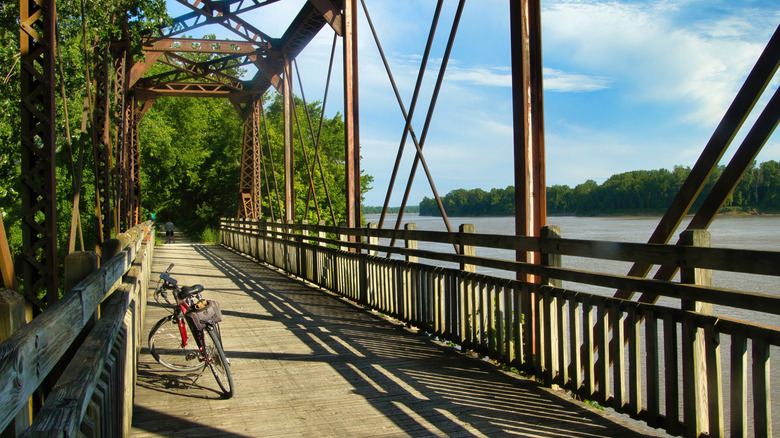
Katy Trail State Park has an impressive claim to fame: It's the longest continuous rail-trail in the country at 240 miles. What does this mean? Well, other routes may be longer, but they're divided into distinct sections that link up. The Katy Trail follows the S-curves of an old railway, nearly spanning the whole state from east to west. The trail is designed for hikers, cyclists, and horseback riders, and you can start off from 26 trailheads. Note that very little of this route is paved.
About half of the trail parallels the Missouri River, which can be a beautiful and comforting presence for multi-day travelers, but it's also a key to the region's heritage. Early American explorers Lewis and Clark took this same route in the early 1800s. Most of this landscape is rural, tethering together small towns across the Show-Me State, with woods, bridges, and tunnels peppered throughout. The trail passes through the suburbs of St. Louis, so it's technically possible to bike to the trailhead from the famous Gateway Arch, if you don't mind pedaling 25 or so extra miles. If you're bringing your own bike for a multi-day trip, an attractive option is to take an Amtrak train to the station in Sedalia, as the trail cuts right through town.
The Katy Trail also has dozens of campgrounds, which are nicely distributed along the route. "I've been riding the entire length of this trail yearly since '92," recounted one Tripadvisor reviewer. "Awesome and lengthy and beautiful scenery. If in good bike shape, you can do it in 3-5 days quite easily. Some great small towns to visit along the way, of course."
2. Ohio to Erie Trail (Ohio)
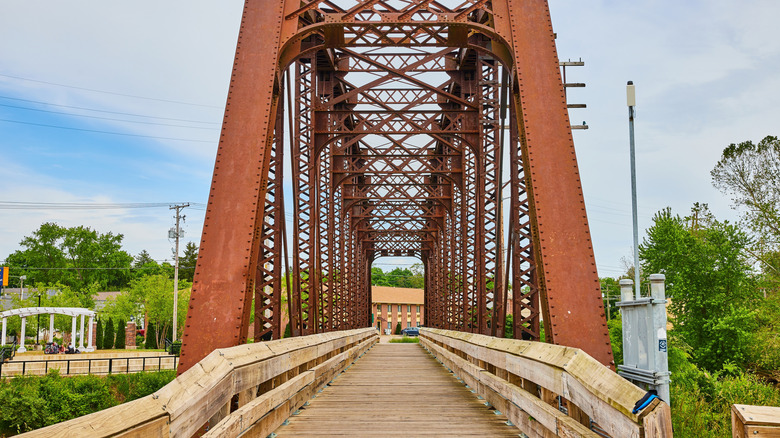
On a map, the Ohio to Erie Trail seems to cut a perfect diagonal line across the Buckeye State, from Cincinnati to Cleveland. In actuality, the route is a little more complicated. Several distinct trails come together to form the Ohio to Erie, and some sections are missing as you head northeast from the town of Fredericksburg. These are some of the reasons that this 326-mile transect isn't always considered "longer" than the Katy Trail in Missouri. That said, the Ohio to Erie is a glorious asset for cyclists and hikers, and it's hard to imagine a better way to explore the state. The trail connects three large cities, including Akron, as well as Cuyahoga Valley National Park, and the vast majority is paved.
If you're not sure what to do in rural Ohio, the trail's website is drenched in fascinating roadside attractions, from Amish enclaves to covered bridges, public art, Indigenous monuments, and the Mt. Vernon Dog Fountain, which is just as adorable as it sounds. The site also keeps a comprehensive list of bike shops and lodging options all along the way. If this isn't motivation enough, there's also a "326 Club," where cross-country cyclists can register their completion of the full route. Then again, just spending time here is its own reward. This is a landscape of farms, woodland, and river-spanning trestle bridges. As one TrailLink says, "Astounding experience: add to your bucket list, now!"
1. Grand Illinois Trail
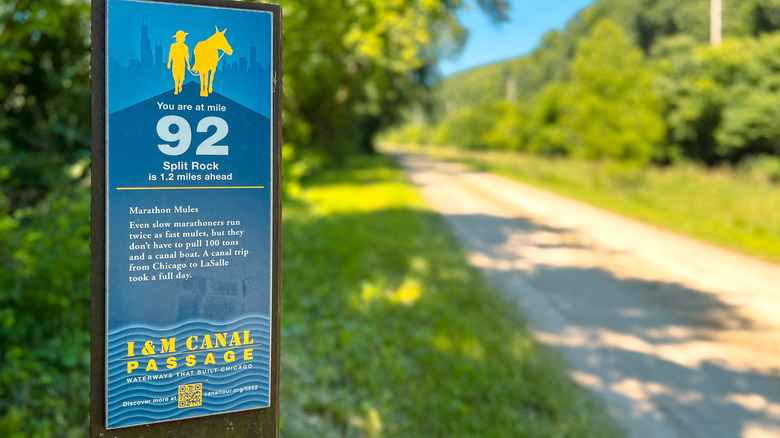
The Grand Illinois Trail is 535 miles long, an incredible distance across the Prairie State that connects two of America's most famous bodies of water, Lake Michigan and the Mississippi River. The Grand Illinois Trail is a hodgepodge of smaller trails and about 200 miles of backroads, so it isn't a single, unbroken entity, but unlike all the other routes on this list, it forms a loop, ultimately leading cyclists back to their points of origin. You can begin just about anywhere along the circuit, but a popular springboard is the Lake Michigan shore in Chicago.
The GIT is made up of the Old Plank Road Trail, the Illinois Prairie Path, and the I&M Canal State Trail, the last of which is a 61.5-mile path along the old waterway and its 15 stone-built locks. The surfaces along these different segments vary widely, from crushed limestone to smooth asphalt, so a versatile bike is best. Segments between major towns are between 40 and 82 miles, which can be a long way to pedal, even on relatively level ground.
This route will become more important in the years to come. Designers plan to incorporate 190 miles of the GIT into the Great American Rail Trail, which will offer cyclists and walkers over 2,000 miles of scenic car-free adventure. This, combined with the Cowboy Trail (above) and other existing routes, will one day help connect the country from coast to coast.
Methodology
To compose this list, we started with the states that are officially designated as the "Midwest," according to the U.S. Bureau of Labor Statistics. We then compiled rail trails that are the longest, in terms of total mileage. Many of these routes are composed of multiple trails, but users must be able to reasonably walk or bike from beginning to end, without the aid of mass transit or a motor vehicle. We then ranked them in ascending order.
There are many long trails that could have made the list, but were ultimately wedged out due to falling a bit short. Indiana's longest rail-trail is a scenic, historic gem, with a length of 62 miles, and Kansas' Flint Hills Trail is a fantastic way to explore the Sunflower State, at 118 miles. For an exhaustive guide to these converted lines — in the Midwest and across the United States — spend some time on the Rails-to-Trails Conservancy website.
The third qualifier, the "scenic views," is much more subjective. As noted above, we consulted user reviews across Tripadvisor and TrailLink, seeking a general consensus for each route. Needless to say, all of these rail-trails have beautiful viewpoints, and are some of the best ways to explore the less-trafficked hinterlands of each state.