
The World's 5 Busiest Airline Routes Show Where Travelers Flew Most In 2025
Pull up a social media app, and chances good are you'll have a travel-related post pop up on your screen. It seems like everyone's jetting off to glamorous destinations, but where, exactly, are people traveling to the most? Aviation data platform Official Aviation Guide (OAG) compiled seat capacity data from January through December 2025 to answer that question, revealing that domestic short-haul flights dominated the world's busiest airline routes of 2025.
Even more surprising was that the top five flown routes took place in Asia — four in the Asia-Pacific region and one in the Middle East. With the exception of an Oceania route, nine of the top ten busiest air channels were also in Asia, including flights in Japan, China, and India, a sharp contrast to domestic air travel in the U.S. and Europe. The U.K.'s domestic flights have been cut by half over the past two decades, according to aviation analytics firm Cirium. France's 2023 ban on short-haul flights to destinations reachable by train in under 2.5 hours proved traveling by rail to be the faster, more convenient, and more sustainable option for domestic trips. Stateside, a Talker Research study of 2,000 American travelers revealed that more than half of respondents preferred cross-country journeys and road trips in their cars compared to the 30% who chose domestic flights.
So what's driving Asia and Oceania's domestic travel boom? Chalk it up to a combination of geography, growing interest in domestic travel, economic and political uncertainties, and the boom of low-cost airlines, which rake in more revenue than legacy carriers. Based on OAG's seat capacity data, along with information provided by travel-related websites, here's a closer look at the five routes that saw the most air traffic in 2025.
Jeju International to Seoul Gimpo
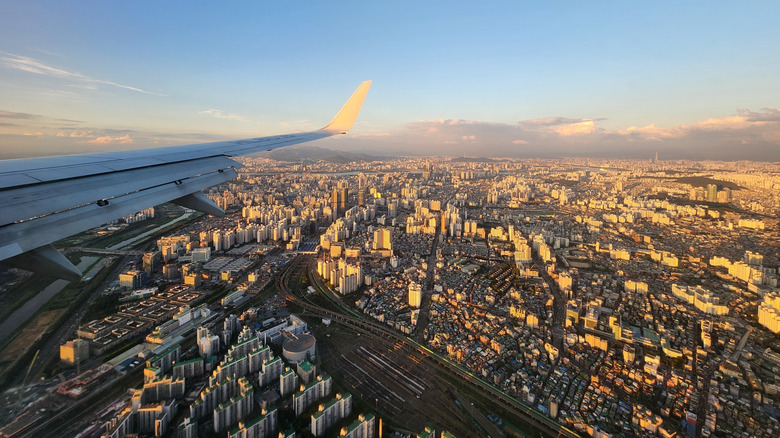
Travel Weekly Asia reported that 18.7 million people traveled to South Korea in 2025, and many ventured beyond Seoul. The Seoul Gimpo-Jeju International route topped of OAG's list with 14.4 million scheduled seats in 2025 — that's almost 39,000 passengers traveling daily on the eight airlines operating between the capital and South Korea's mesmerizing island destination, and vice versa.
While you can travel by train, bus, and car ferry, flying is still the most convenient and cheapest way to get to the island and back. Direct flights are less 1.5 hours long, and you can score tickets for as low as $11 — a steal for quick and affordable access to two destinations packed with contrasting attractions. Seoul teems with history and modernity; a burgeoning capital where 14th-century palaces and traditional bathhouses are as much of attractions as its bustling food markets, neon-lit streets, and the famous Gangnam district, aka the mecca of K-pop. Meanwhile, Jeju Island operates at a much more relaxed pace with its coastal charm, tourist resorts, and its distinctive volcanic landscape, whose features earned it a UNESCO World Heritage Site designation.
If flying isn't your cup of tea, traveling by land and sea does offer a unique cultural travel experience, if you've got six to eight hours to spare. The time factor is why flying is still the most popular and convenient way to travel this route. As one Redditor wrote, "Seoul to Jeju is the busiest air corridor in the world. So you won't be short of cheap flights."
Sapporo New Chitose to Tokyo Haneda
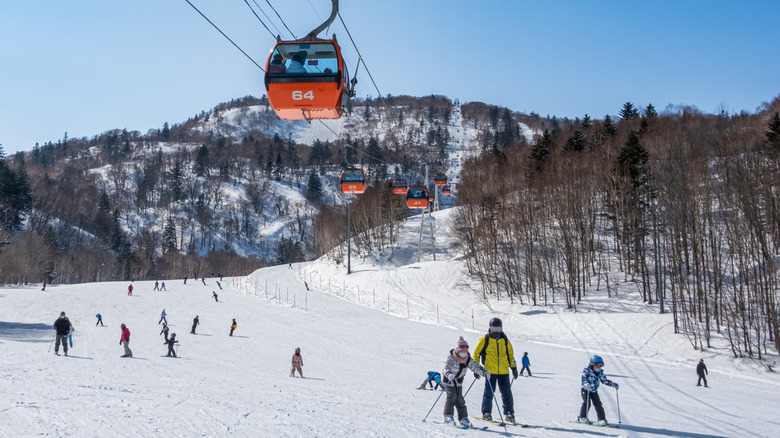
Trailing behind South Korea, Japan's Sapporo Chitose-Tokyo Haneda route was deemed the second busiest in 2025. Just 3% shy of its pre-pandemic numbers, the route sold 12.1 million seats, showing strong recovery for the 1.5-hour direct flight connecting bustling Tokyo with Sapporo, one of Hokkaido's most popular ski destinations.
Located just 40 minutes from downtown Tokyo by car, Haneda makes a strong case for passengers flying to Sapporo versus using Narita International Airport. The availability of low-cost airlines and full-service carriers offers travelers a range of prices, with some good deals available outside peak travel periods or when booking in advance. But winter travel between the two cities tests Japan's reputation for punctuality, as snowy weather tends to cause flight delays and cancellations.
Yet the pull of Sapporo — an underrated Japanese destination likened to a calmer version of Switzerland's Zermatt — is irresistible to Tokyoites or visitors, weather be damned. It's not just the ski factor, either; Sapporo is a foodie's heaven, a place where one can feast on the freshest seafood, Hokkaido beef, soft-serve ice cream made from local dairy, and bowls of cold soba in hot broth. Between boat cruises across Lake Toya (weather permitting), dips in its numerous onsens, and, yes, the skiing, it's no wonder this route is so popular.
Fukuoka to Tokyo Haneda
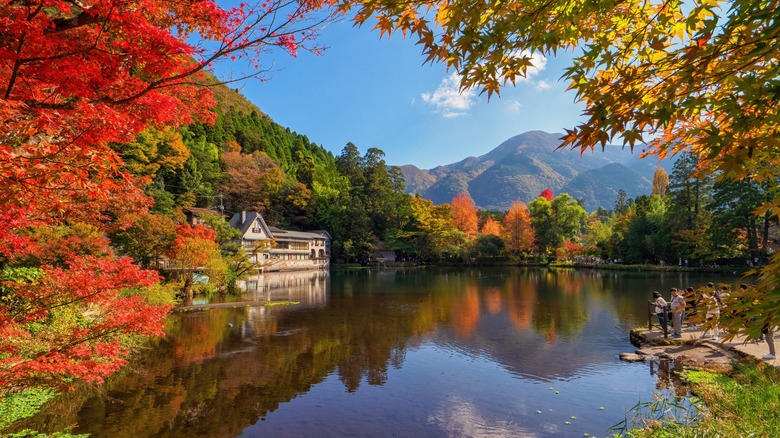
Another flight route from Tokyo Haneda claimed the title of the third busiest global flight route of 2025, this time by heading southwest, toward Fukuoka. Seat bookings soared to 11.5 million, surpassing the flight route's pre-pandemic numbers. Among four airlines — All Nippon Airways (ANA), Japan Airlines (JAL), and low-cost carriers SkyMark and Starflyer — there are 56 daily flights that shuttle passengers between the two cities.
Travelers get to swap Tokyo's big city vibes for Fukuoka's laid-back coastal atmosphere in just two hours, allowing them to hit the ground running. Visitors can dive straight into the city's offerings, which range from solemn shrines and temples with gigantic reclining Buddhas to shopping malls and "yatais," the city's traditional food stalls. Alternatively, Fukuoka residents looking to catch up with the latest cultural happenings, restaurant openings, or trending hotspots in the capital don't have to travel far, either.
In addition to pleasure seekers, Fukuoka attracts its fair share of people who visit the city for business. As a designated National Strategic Special Zone, Fukuoka lives up to its reputation as a "startup city," attracting young, multicultural, and innovative residents and businesses. It's no surprise, then, that air traffic between Fukuoka and Tokyo — another designated Special Zone — remains plentiful and busy.
Hanoi to Ho Chi Minh City
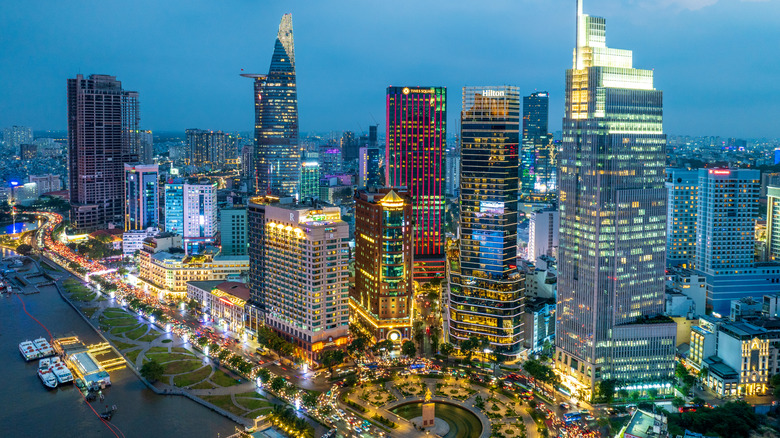
Vietnam's Hanoi to Ho Chi Minh route nabbed fourth place with 11.1 million scheduled seats in 2025. Six major and low-cost airlines fly the route, driving prices down to an average of $67 for a one-way ticket — an 11% decrease from 2024. With a lack of high-speed railways and a 36-hour train ride separating the cities, the two-hour and 15-minute flight is by far the most popular and convenient choice for business travelers and locals shuttling between the nation's political and economic hubs.
While many enjoy exploring this serpentine Southeast Asian country from end to end, flying the Hanoi-Ho Chi Minh route allows time-pressed tourists to experience both facets of Vietnam. Hanoi, the historic, landlocked northern capital, offers old neighborhoods, a serious coffee culture, UNESCO World Heritage-listed citadels, and immersive rural farmstays with authentic home cooking. Sunny southern Ho Chi Minh, on the other hand, captivates with bustling squares, heritage architecture, museums, and lively food districts. People also often escape the humid south for the cooler north (and vice versa) via a quick plane ride.
But the contrasts run deeper than attractions and climate. Rooted in tradition, Hanoi comes off as more buttoned-up than fun-loving Ho Chi Minh. One Redditor summed up their differences perfectly, stating, "Hanoians are often described as more bookishly introverted, while southerners are more often described as raucous extraverts."
Jeddah to Riyadh

The fifth most-frequented route in 2025 ran between Saudi Arabia's Jeddah and the capital city of Riyadh, with over 9.8 million seats booked. The only non-Asia-Pacific contender on the list shows how well its domestic air traffic has rebounded from the pandemic slump: OAG reported a 22% increase in seats sold from 2019. Three airlines — Flynas, Flyadeal, and national carrier Saudia — operate the route daily.
With the only other options being a 9-hour drive or a 12.5-hour bus ride from city to city, the two-hour flight is an obvious choice — at least until Saudi Arabia's planned high-speed railway is completed in 2034. Until then, travelers will have to contend with increasing domestic airfares, which have seen a 27% uptick since 2024.
Saudi Arabia opened to tourism in 2019, primarily attracting travelers to two of its key cities: Riyadh, the Kingdom's cultural capital, where souks and mosques rub shoulders with high-rises and entertainment centers, and Jeddah, a coastal, cosmopolitan city with seaside promenades, desert adventures, and snorkeling. The Vision 2030 program, aimed at transforming Saudi Arabia's socioeconomic landscape through tourism, development, and cultural projects, has made air travel between these two cities more essential than ever.
Methodology
The jumping-off point for this article was OAG's data on 2025's busiest global flight route results. Flight-related details, including flight durations, airlines, and ticket prices, were verified via FlightAware, ThePointsGuy, Google Maps, Skyscanner, FlyTeam, and Rome2Rio, among other sources. We also tapped into the reasons for travel between the cities and referred to each location's most popular attractions via sites like Lonely Planet, Condé Nast Traveller, IATA, EuroNews, and TimeOut, as well as official tourism channels.