
Colorado's 5 Best Hot Spring Hikes With Stunning Beauty, According To Travelers
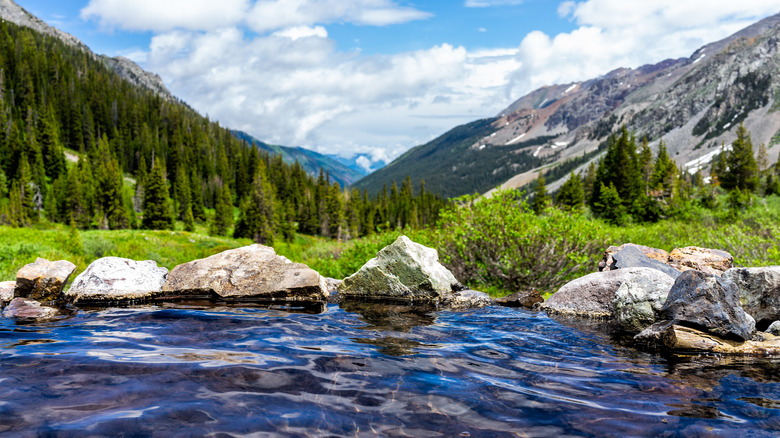
Renowned for the "Rocky Mountain High" of pop culture fame, Colorado hosts many of the highest 14er peaks in the lower 48 states. Oddly enough, the region's epic terrain also features a remarkably extensive collection of natural hot springs. While these kinds of hydrothermal features are more closely associated with Yellowstone or Arkansas' aptly named Hot Springs National Park, Colorado has complex mountain- and river-rich landscapes that protect many of America's best hot springs. Some of these spots have even been transformed into resort-style destinations all their own. However, in a state also known for its beautiful hiking trails and magnificent scenery, many of Colorado's best hot springs are the climax of a spectacular trek.
The journeys to these spots span the full spectrum of urban to wild, from well-developed multi-purpose routes along paved urban pathways to remote backcountry voyages through the rugged wilderness. What all of these trails have in common, however, is unforgettable scenery, including the natural thermal pools sightseers can find along the way. Using reviews from past visitors on AllTrails, we identified Colorado's five best hot spring hikes that stand out for their extraordinary vistas, abundant photo opportunities, and distinctive mineral pools.
Radium Hot Springs Trail
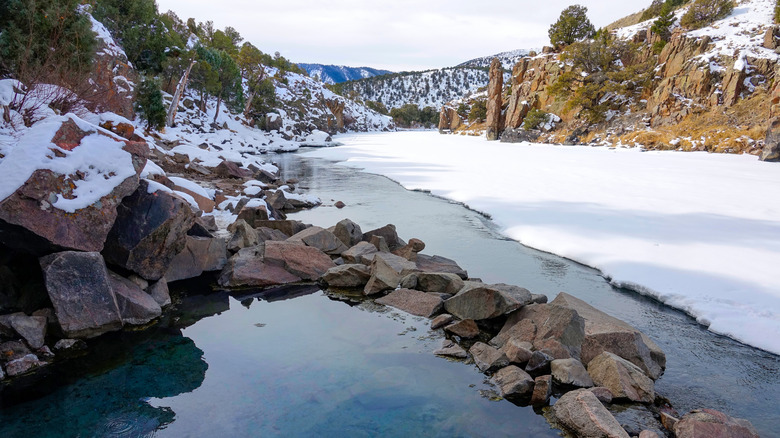
The trail to Radium Hot Springs is considered a gem among the Colorado hiking community. The full route follows a moderately challenging 1.5-mile path, with only around 300 feet of total elevation gain. The surrounding terrain sits in something of a "Goldilocks zone," offering plenty of scenic, rugged peaks but nothing too treacherous to create altitude-related hazards.
This particular trail is within the region's Warm Springs Trails network, which includes around 3.5 miles total of trails within the Bureau of Land Management-controlled Radium Recreation Area, part of the larger Upper Colorado River Special Recreation Management Area. This particular federal preserve protects the upper headwaters of the famed Colorado River as it descends from the Rocky Mountains toward canyons further south. The Radium Hot Springs route provides exceptional views of these sights, but high river levels can make the trail impassable in places.
Of course, the star of the show here is Radium Hot Springs, a lovely geothermal pool along the Colorado River. Technically a "warm spring" (despite the name), Radium Hot Springs generally stays at a pleasant 80 degrees Fahrenheit. As a result, Radium Hot Springs gets top reviews on AllTrails. One hiker reported soaking in the water "for an hour very comfortably," and another complimented the area's "great views." The Warm Springs Trail network and rugged nature of the area can make directions somewhat confusing, but the main trailhead is accessible off of Trough Road and BLM route 2710 in the small unincorporated community of Sheephorn. Just 16 miles away sits the "Sportsman's Paradise" of Kremmling, which provides access to three national forests and some of Colorado's best outdoor recreation. Note, however, that the Radium Hot Springs Trail may be prone to avalanches, so always check current avalanche conditions before attempting the trail.
Sheep Creek Hot Springs Trail
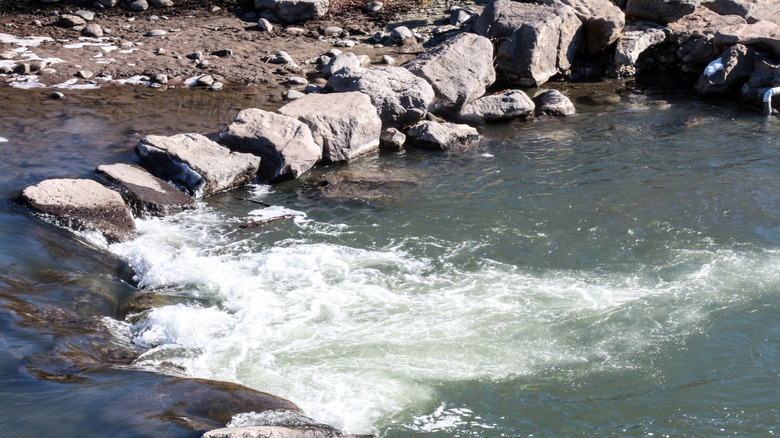
Southern Colorado's transcendental San Juan Mountains protect many of the state's best natural hot spring features. If you're looking for a hidden gem hot spring in this overall outstanding area, the Sheep Creek Hot Springs Trail may be your best bet. The trail covers a little over 3 miles through the San Juan National Forest to the natural hot springs along the Piedra River. Reviewers on all AllTrails consistently praise the hike's "beautiful" scenery along a "nice shaded trail among huge, old ponderosa pines."
Though steep in places (and with moderate avalanche risk requiring a diligent focus on current conditions), most experienced hikers agree that the Sheep Creek Hot Springs Trail is one of Colorado's easier hot springs hikes. The Piedra River along the Sheep Creek Trail actually has several natural hot springs along its banks. None of these springs is particularly large, though several are accommodating enough for a hiker to lie down and relax for a bit. The water in the natural pools generally hits average temperatures of a balmy 100 degrees. On occasion, the geothermal rocks underneath the springs can make the water too hot to comfortably enjoy! At other times, high Piedra River water levels (particularly during the spring when winter snow is melting) can flood the springs and make them too cold.
While a natural jacuzzi is certainly worth a hike, the Sheep Creek Trail also provides an abundance of prime Colorado scenery that you can console yourself with if the springs are too hot or too flooded. The trail is a 45-minute (and incredibly scenic) drive from the nearby town of Pagosa Springs. During your hike, you'll get unfiltered views of southwest Colorado's otherworldly San Juan Mountains, complete with alpine forests, multi-colored meadows, and snow-capped peaks.
The San Juan Riverwalk
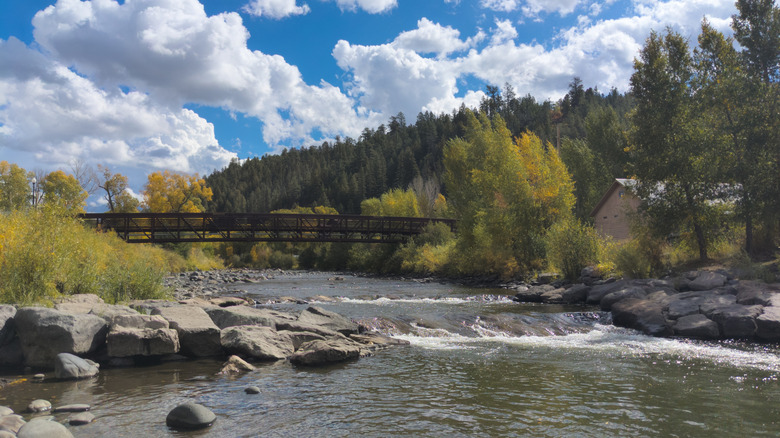
The Sheep Creek Trail to the Piedra River Hot Springs is a perfect way to explore the San Juan Mountains in a wild forest setting and remote backcountry roads. However, if you want to experience the region's vibrant hot springs in a much more urbanized setting, the San Juan Riverwalk in downtown Pagosa Springs is the perfect destination for you. The city of Pagosa Springs itself is a wildly underrated Colorado destination with adventure, craft beer, and (yes) hot springs. The town's extensive natural aquifer has produced what some consider to be the deepest hot springs on Earth. Regardless of whether that record holds, Pagosa Springs has plenty of opulent, mineral-rich hot springs resorts and natural spas with much-needed opportunities for rest and relaxation.
However, as this list is about hiking trails, the San Juan Riverwalk is the ideal spot to explore the town's phenomenal hydrological features on foot. The riverwalk is an easy, 3.2-mile urban walk along the town's lovely San Juan River, connecting top Pagosa Springs community parks like Town Park and Centennial Park. The route is paved and accommodating for most hikers, though there are also several spots along the trail where you can access the actual San Juan River for fishing, tubing, or just wading in relaxing waters.
Notably, the riverwalk passes several of the river's free "hippie dip" natural hot springs, where you can soak in for a while to give your feet a break. The riverwalk also passes many of the town's more developed (and more expensive) hot springs resorts, if you feel like a little more extensive pampering. Despite the trail's urban and commercial setting, reviewers on AllTrails still praise its "beautiful views," "easy access to water," and "plenty of wildlife."
Rainbow Hot Springs Trail
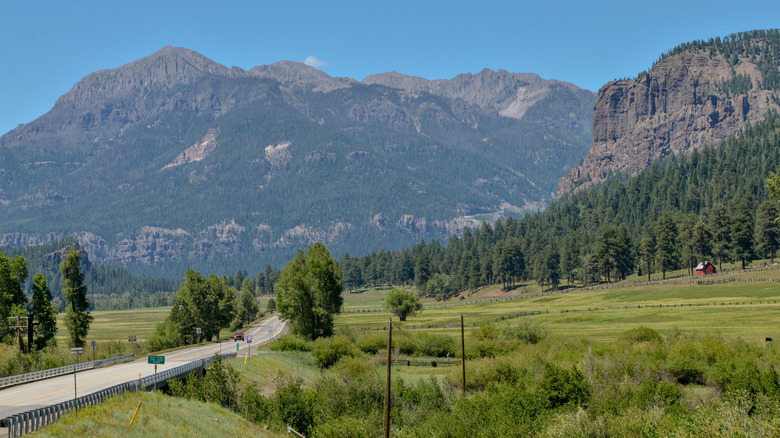
Sticking with Pagosa Springs and the San Juan National Forest, the sensational Rainbow Hot Springs Trail provides a vibrant tour of natural mountain beauty that more than lives up to its colorful name. With a 10-mile length and around 1,669 feet of elevation gain, the Rainbow Hot Springs Trail is a bit more challenging than others on this list. However, that effort will be repaid with unforgettable views of the marvelous Weminuche Wilderness, the largest and arguably most beautiful wilderness area in Colorado.
The Rainbow Hot Springs sit along the West Fork of the San Juan River (a wild and scenic tributary of the same San Juan River that runs along the San Juan Riverwalk in Pagosa Springs). Compared to those well-developed hot spring resorts, the Rainbow Hot Springs of the Weminuche Wilderness are primitive mineral springs lying in a spectacular stretch of the San Juan Mountains. With average temperatures of around 95 degrees and with rocky barricades constructed by previous visitors, the Rainbow Hot Springs are the perfect wild contrast to the commercialized spas and resorts you'll find in Pagosa Springs.
The Rainbow Hot Springs Trail has long been highly-regarded by experienced backpackers, travel journalists, and amateur reviewers on sites like AllTrails.com, all of whom recommend the trail for being "rigorous, exciting, and thrilling." One hiker praises the "unforgettable adventure of pushing deep into protected wilderness" on this trail. And though the path can become a bit unmanageable after heavy rains, virtually everyone agrees that the challenges are worth it when you get to relax your sore muscles in the climactic "primal hot springs beauty." Like other San Juan hikes, avalanches can be a risk, so hikers should stay updated on current conditions from the Colorado Avalanche Information Center.
Conundrum Hot Springs via Conundrum Creek Trail
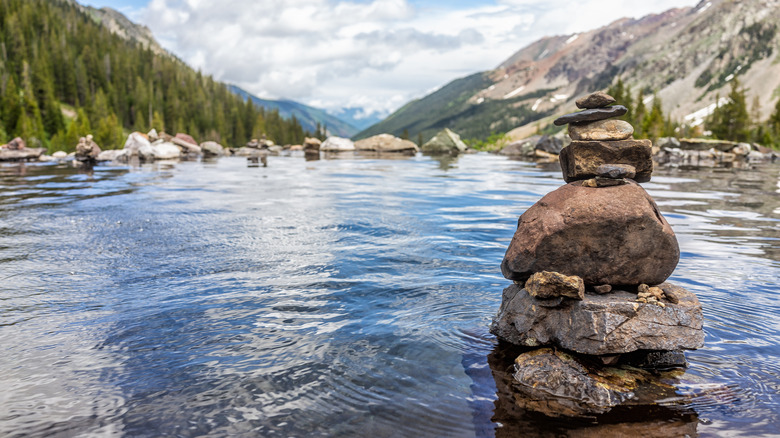
All of Colorado's hot springs trails show off the state's iconic beauty. However, the Conundrum Creek Trail and its Conundrum Hot Springs can boast what may be Colorado's single most famous view. Even if you've never been to Colorado, you've probably seen an image of the iconic Maroon Bells. These "bells" are three towering, bell-shaped mountains presiding above a heavenly mountain meadow. Around the famous single shot of the three main Maroon Bells are awe-inspiring panoramas of the picturesque Elk Mountains and the extensive alpine meadows and aspen forests of the Maroon Bells-Snowmass Wilderness.
A natural hot tub in the middle of this magnificent scenery sounds a little too good to be true. And yet, the Conundrum Hot Springs are a very real natural feature waiting at the end of a 17-mile round-trip hike on the Conundrum Creek Trail. Unfortunately, the trail's ethereal mountain scenery also means that this hike is no joke. Much of the trail covers almost 3,000 miles of elevation gain, with many steep sections, multiple creek crossings, and the risk of altitude sickness. There's also the added risk of avalanches, so hikers should once again pay attention to forecasts from the Colorado Avalanche Information Center.
If you don't mind these challenges, however, the entire trail is saturated with sublime shots of meadows, mountain streams, and towering snow-capped peaks long before you even get to the hot springs. Once at the Conundrum Hot Springs, you can soak in 100-degree water while gazing at majestic Maroon Bell mountains like the 13,943-foot Cathedral Peak, the 14,064-foot Conundrum Peak, and the 14,265-foot Castle Peak. As one AllTrails reviewer notes: "We had the springs to ourselves overnight and until we packed up camp the next day."
Methodology
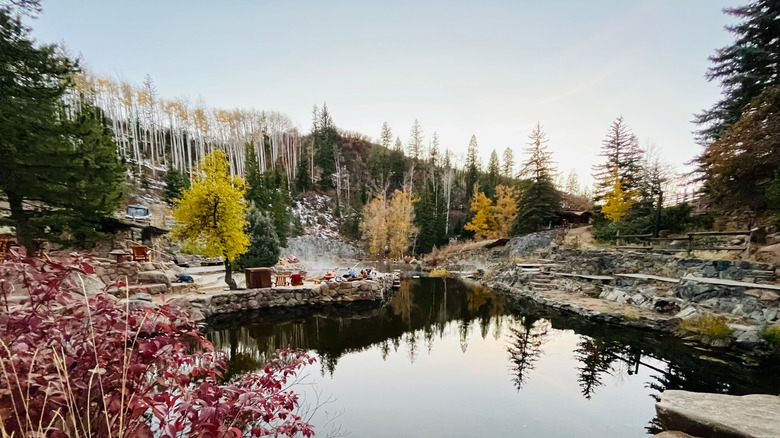
Colorado's geology provides the state with a wealth of natural hot springs in different areas, many of which are popular destinations for spa trips and self-care. However, many of Colorado's largest and most popular hot springs are not so much hiking destinations as they are self-contained resorts and wellness retreats. For example, Strawberry Park Hot Springs in Steamboat Springs is one of the more popular natural hot springs in Colorado. Yet it functions as less of a destination for outdoor hikes and more of a natural pool and spa center, similar to an artificial sauna or spa within a city. As a result, Colorado hot springs like these are not ideal for anyone who wants to combine hot springs with hiking.
AllTrails was a great resource in developing a methodology for finding the best Colorado hot springs along an actual hiking trail. The AllTrails algorithms allowed us to quickly identify well-rated trails that are both in Colorado and associated with a designated natural hot spring or group of hot springs. Once we had the larger list of hot springs trails compiled, we were then able to identify the five that have the best overall reviews from hikers. A trail's mean AllTrails rating shows how overall popular that trail is, while individual posted reviews helped us identify key highlights that make that trail stand out. Finally, AllTrails maps and trail descriptions helped us identify major sights and experiences along the trail other than its natural hot springs, which added to its scenic qualities. Aside from AllTrails, amateur reviews from personal blogs and other websites were also taken into account.