
5 Peaceful, Car-Free Islands For A Stress-Free Mediterranean Vacation
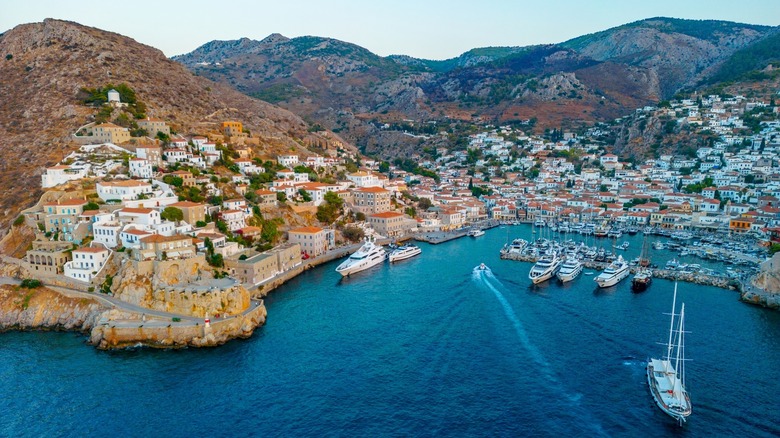
Tired of navigating your way through foreign roads in an unfamiliar rental car, or figuring out the best transportation methods for sightseeing during holidays? On these five peaceful Mediterranean islands, you'll find these to be the least of your problems — because they're delightfully car-free.
No honking horns and traffic fumes here. These idyllic pedestrian-only islands make their sun-drenched Mediterranean setting even more alluring, and perfectly in keeping with the region's ethos, where healthy food, friendly locals, and a good dose of Vitamin D set the stage for a healthier, stress-free lifestyle. Highways and tollbooths are swapped for cobblestone lanes and winding footpaths —and all that walking delivers what the Mediterranean lifestyle promises: it lifts your mood, clears your head, and has you sleeping better than ever.
So, leave your driver's license behind, because according to our research through tourism boards and first-hand visitor accounts, it's of little use on a Greek island where donkeys own the cobblestone streets, on a French isle where two wheels are better than four, or on the flat Spanish island that spans a mere mile. Without any cars, settle into the calm and quiet during an overnight stay on a Croatian archipelago, or while away a lazy afternoon along the harbor of an Italian island that has delightfully escaped the radar of most tourists.
Hydra, Greece
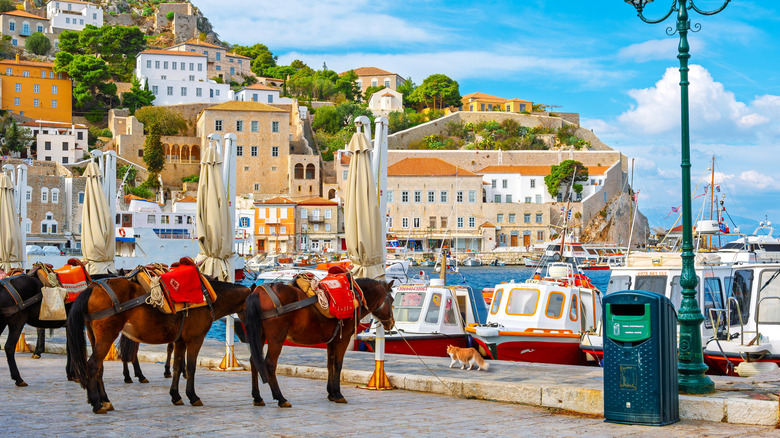
In car-free Hydra, donkeys, mules, and horses rule the streets. It's this kind of literal horsepower that's kept Hydra's architecture and timeless character intact, ever since a 1950s decree banned wheeled vehicles from its roads. Everyone's introduction to Hydra begins at the horseshoe-shaped Hydra Harbour, the heart of the island where shops, cafés, and restaurants congregate. The main town encircles the harbor from east to west, with tiered white houses hugging the slope of the terrain. From here, four roads climb away from the harbor, the most popular being Lignou Street, a stepped route that traces its way to Kiafa, the top of the hill for picturesque views. Between a smattering of historic 18th and 19th-century Neoclassical mansions (once owned by wealthy merchant captains) that host cultural, artistic, and academic institutions, numerous churches, and six monasteries, there are more than enough pit stops to make during your island meanderings.
Beaches like the pebbly Kamini or sandy Vlychos are easily reachable on foot. Meanwhile, the beaches of Nisiza or Klimaki require longer hikes (or a short boat ride), with quieter shores as a reward. Getting to Hydra is pretty straightforward. It's a quick 90-minute boat ride from Athens' Piraeus port to the harbor, and from there everything is a leisurely walk away. It's this accessibility that makes Hydra such an easygoing getaway. As Travel + Leisure writer Tony Perrottet observed, "The only traffic sound is the clip-clop of donkey hooves and the most stressful decision is which white wine to choose with dinner."
Porquerolles, France
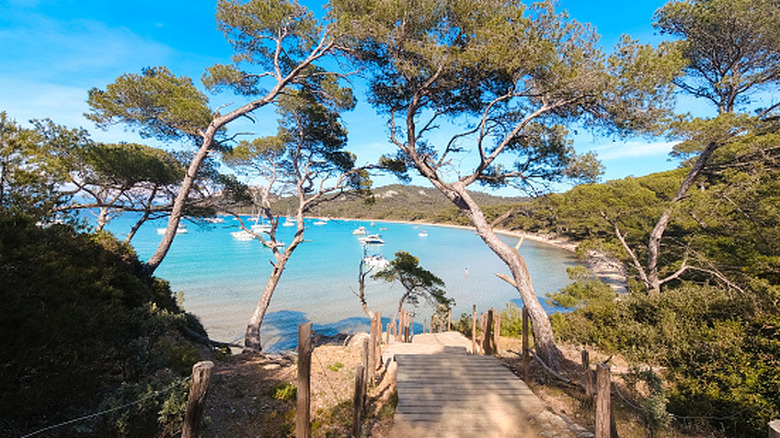
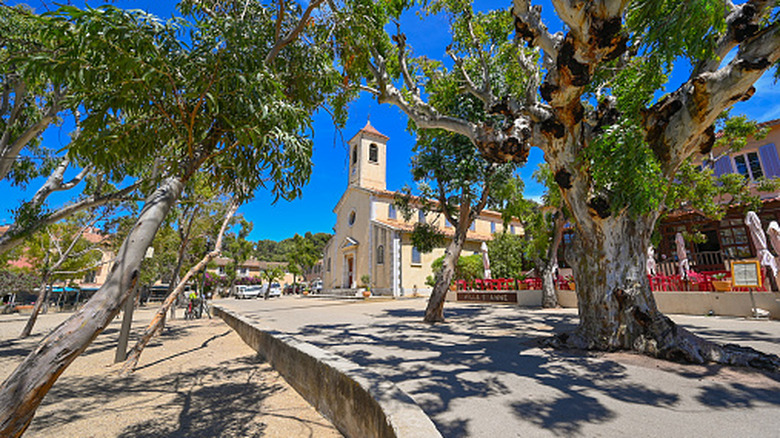
Stretching 5 miles from end to end, Porquerolles is the biggest of the three islands that sit just off the coast of Hyères, a sun-drenched town known for its flamingos and golden beaches. The crescent-shaped island couldn't be further from the glamour-laden reputation of neighboring San Tropez or Cannes. As part of France's national park network, Porquerolles is an unspoiled slice of nature surrounded by turquoise waters, dotted with pine forests, hidden coves, and cliffs. The cherry on top? It's refreshingly car-free, with bikes as the default mode of transportation around the island.
Getting to the island from Hyères is a stress-free affair. Boats depart from Hyères' Tour Fondue port throughout the day, getting you to the island in 15 minutes. The first order of business is renting a bike from the numerous rental shops around the port area. Some 32 miles of bike routes get you up close and personal with a tapestry of olive groves, vineyards, eucalyptus and pine forests, and sun-kissed coast.
A smattering of beaches await, but it doesn't get any more secluded than Notre-Dame Beach, a sliver of white sand and azure waters shielded by pine and oak trees — and no boats in sight. Visits to Fort Sainte-Agathe, a reminder of the Porquerolles' role as a strategic 16th-century stronghold, or the contemporary art museum Fondation Carmignac, add a historic and cultural dimension to the island. Tourists and locals alike cap off the day with a well-deserved glass of local rosé, followed by dinner in town. "I've yearned to find an unspoilt corner of the French Riviera — one with thyme-scented breezes and luminous beaches," wrote journalist Erin Henk for BBC Travel. "The Hyères Islands just might be it."
Isole Tremiti, Italy
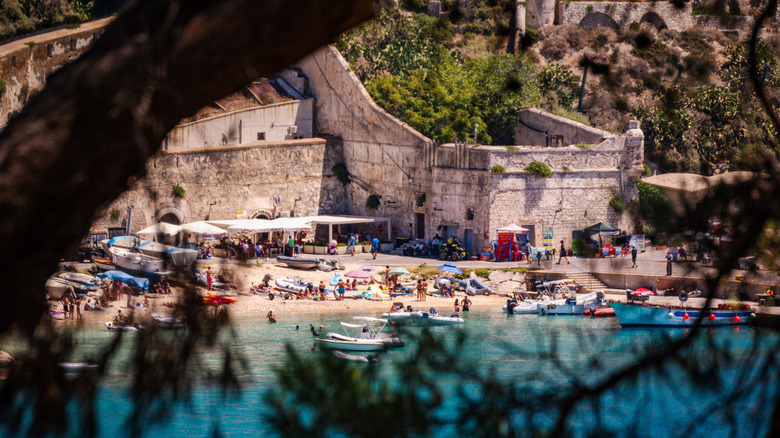
For travelers who are in on the secret, Isole Tremiti — an archipelago of five islands across the water from Puglia's Gargano Peninsula — hasn't quite reached the popularity of Sicily or Capri, and the islands are all the better for it. A refreshing escape of rugged coastlines and well-preserved nature, the archipelago is protected under the Gargano National Park and Marine Protected Area designations. Save for residents, cars are banned across the archipelago.
San Domino, the largest and greenest of the little archipelago, is the jumping-off point for visits. This Mediterranean island lives up to its "Garden of Paradise" moniker with lush Aleppo pine forests and a smattering of rocky coves and caves carved along its coastline. Cala delle Arene is the only sandy beach on the island, ideal for whiling away an afternoon on a sun lounger. A short boat ride away is San Nicola, the only other inhabited island among the five. The historic 13th-century Castello dei Badiali and 11th-century former monastery Abbey of Santa Maria a Mare are its biggest draws. A US-based Italian travel blogger familiar with the islands described San Nicola as "a place where you can live a life which is no longer known ... where days are marked by a relaxing routine."
And then there's the sea, undoubtedly the star of this island getaway. There are over 30 dive sites from the southern coast of San Domino to the depths off Capraia Island. Whether you're staying just for the day or longer, ferries and hydrofoils shuttle to San Domino or San Nicola from the ports of Vieste (2 hours) or Termoli (1 hour).
Tabarca Island, Spain
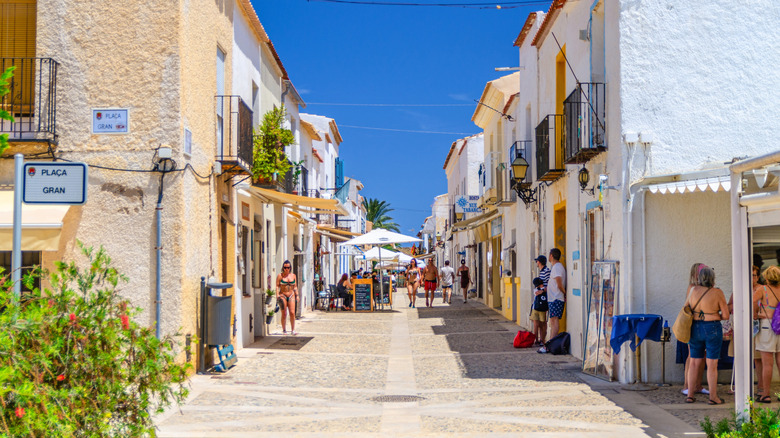
For its size, Tabarca Island is racking up some serious accolades. It's the only inhabited island in the Valencia region, became Spain's first Marine Reserve in 1986, and has been declared a Special Protection Area for birds according to the European Environment Agency. It also hosts several Blue Flag beaches, has zero cars, and a cat population that outnumbers its permanent residents, who, according to Spain's Instituto Nacional de Estadistica, numbered just 60 in 2025.
Historically, the island was established as an 18th-century settlement for displaced Genoese freed from captivity in Tunisia. Because it spans a little more than a mile from end to end, the island's geography is a quick study. The main town, enclosed by a fortified wall, sits on the western end, while a large swath of scrubland that houses a tower, a cemetery, and a 19th-century lighthouse occupies the eastern part of the island.
With the entire island loop clocking in at just an hour, the rest of the day is free for pleasure and leisure — which is exactly what most day-trippers come for. Visitors turn their attention to the sea, and rightfully so. The tiny island's rich underwater environment makes for exceptional snorkeling or diving trips, while solitude from the crowds can be found in the numerous coves and caves etched into the rugged coastline. Consider staying the night for "a little slice of paradise to yourself," as one Redditor put it — once the last ferry departs for the mainland for the day, you can witness a fantastic sunset as life on the island slows down once again.
Lopud, Croatia
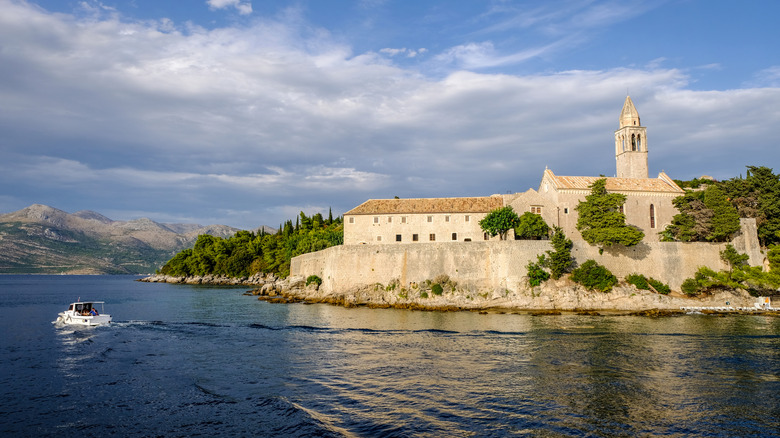
Flush with national parks for nature lovers, coastal cities steeped in historic charm, and a diverse culinary culture, Croatia has tourism covered on all fronts. But with 3,600 miles of coastline, it's the beguiling Adriatic Sea that draws most visitors to its shores. With tourism hitting 110 million visits in 2025, beach real estate has become a precious commodity, which is why the car-free island of Lopud, arguably the most photogenic island in the Elafiti archipelago, is worth escaping to.
Lopud Island is just under an hour away from Dubrovnik by ferry, which deposits visitors on a crescent-shaped waterfront lined with restaurants, shops, and hotels. Dominating the northern tip of the island is the 15th-century Franciscan Monastery of Our Lady of the Cave, recently converted into the luxurious five-suite Lopud 1483 hotel by Swiss art collector Francesca Thyssen-Bornemisza, while the more modest church of St. Nicolas, patron saint of sailors, reflects the island's maritime heritage.
Most visitors to Lopud make the 25-minute walk (or a shorter golf cart ride) across the island to the sandy shores of Šunj beach, a welcome departure from Croatia's otherwise pebbly coastline. The shallow water makes the beach particularly attractive to families with children. It's a steep climb to the remains of 16th-century Sutvrac Fortress, but the panoramic views from the top are well worth the effort. Seasoned traveler Ralph Hudson of Oh the Places We See perfectly sums up the island's charm: "Lopud Island offers something rare in today's world: genuine peace just an hour from a major city. From the car-free streets to the sandy Sunj Beach, this Croatian gem delivers the quiet escape you're looking for."
Methodology
To give you a wide choice of peaceful, car-free destinations, we selected one island from five different countries spanning the Mediterranean basin and its adjacent seas. After confirming their car-free status, we consulted official travel boards, travel blogs, travel publications like National Geographic, and first-hand accounts from Redditors to uncover each destination's secret sauce: a blend of atmosphere, natural beauty, historical landmarks, cultural charm, and accessibility that makes them peaceful, stress-free retreats.