
The World's Best Aquariums For Rare Creatures And Spectacular Displays
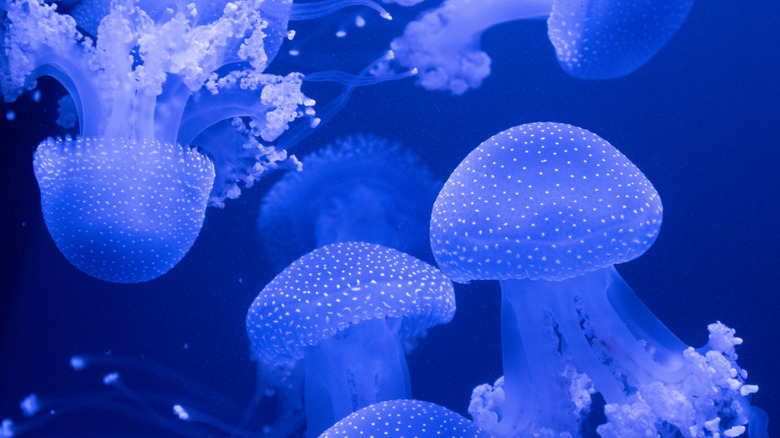
Thumb through any travel guide, and you'll probably find the local aquarium is relegated to a "kid-friendly activities" section. This arrangement runs the risk of obscuring the ageless appeal of a truly high-quality aquarium. How old do you have to be before watching fish stops being so soothing? At what age does the undulating bell of a jellyfish lose its luster? A good aquarium is so much more than a place to take the kids on a rainy day: It's a beautiful celebration of the ocean, which, mind you, covers 70% of our Earth's surface. Plus, in the best cases, an aquarium is also a force for good, spearheading species-saving research and conservation work.
That said, there are definitely some aquariums with more wow-factor than others. These are the places that house species you won't see behind glass anywhere else, design exhibits that boggle the mind, and work on the cutting edge of marine biology and conservation research. Even if you would ordinarily skip the aquarium when visiting a new destination, they're worth the space in your itinerary. Whether it's for their massive scale or their unique regional focus, these ten standout aquariums are all in a class of their own.
Atlanterhavsparken Aquarium – Ålesund, Norway
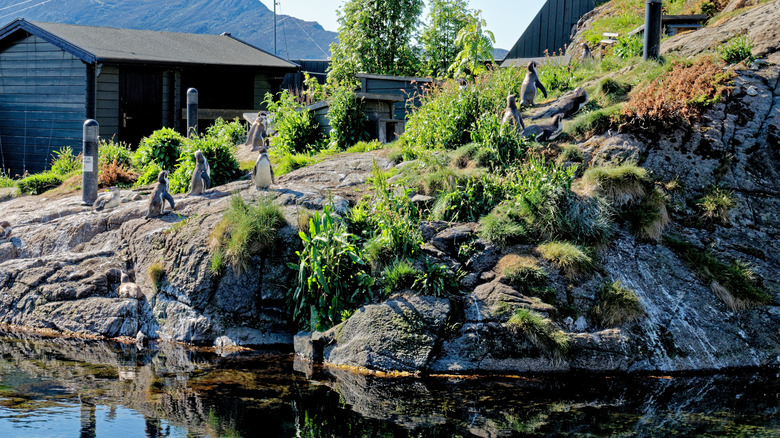
You'll probably have to make a long trek if your aim is the Atlanterhavsparken Aquarium. Tucked away in Ålesund, a port city on Norway's western coast in a spot along the shores of a scenic fjord, you're not likely to find your way here by accident. It's more than worth the trip, as you will arrive at one of the most unique aquariums on the planet, both in concept and in execution.
The Atlanterhavsparken Aquarium is, first and foremost, a showcase of Norway's bountiful marine life. Highlights include a colony of harbor seals housed in a natural enclosure along the shores of the fjord abutting the aquarium and the spectacular Atlantic Tank, where large cold-water fish like halibut and cod swim in over a million gallons of water pumped in from the nearby coast.
What's truly remarkable here is the aquarium's integration with its natural setting. Though there are aquariums exhibiting a larger and more diverse array of wildlife, this is one of the few you'll ever find where the natural environment is utilized to such harmonious effect. Untreated seawater, natural enclosures — it's all a part of this aquarium's effort to inspire the public with wildlife encounters while replicating their wild conditions as closely as possible. It's an admirable and singular mission executed to perfection.
Monterey Bay Aquarium – Monterey, United States
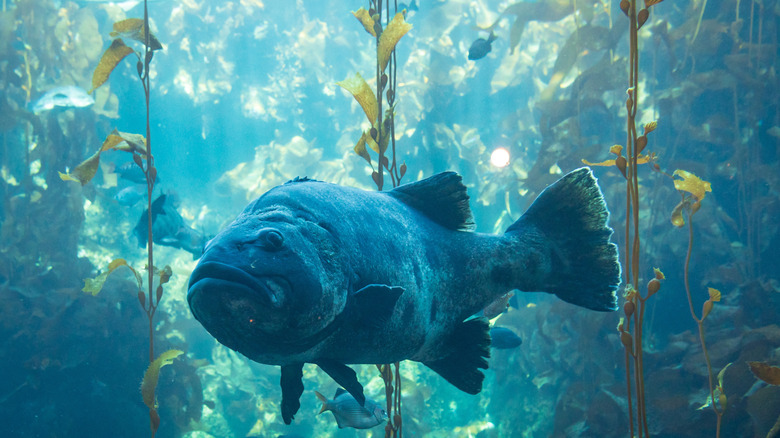
The uber-charming Central California town of Monterey, now one of the most beloved tourist spots on the state's central coast, was not always the bastion of marine biological excellence it is today: its original seaside industry was sardine canning. The environmentalist movement inspired a push to recognize Monterey Bay's extraordinary marine biodiversity, and in 1984, a unique institution designed to protect and raise awareness of that amazing ecosystem was born. Although the Monterey Bay Aquarium does not focus solely on local ecosystems and species, that legacy is still strongly felt in its strong research and educational emphasis.
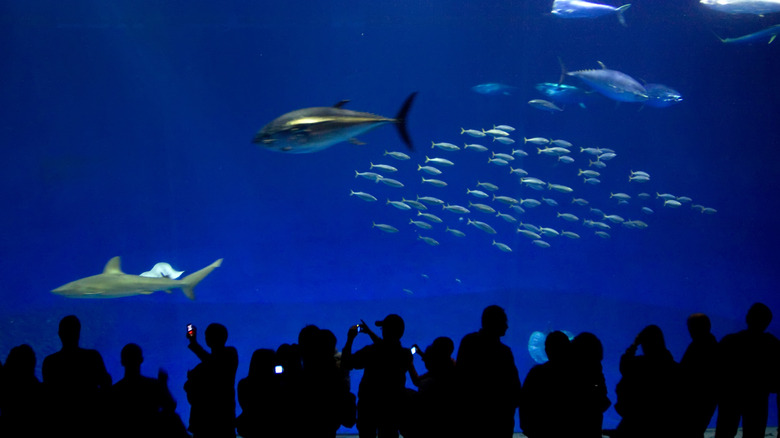
But this aquarium is not just at the forefront of scientific research and environmental preservation efforts. It's also a jaw-dropping display of why the environment is so worthy of preservation. One needs only to step into the bluish light cast by the afternoon sun through the 90-by-35-foot Open Sea tank, an expansive home for sharks and other large fish native to the vast, near-empty middle of the Pacific Ocean, to realize that.
Animal welfare and scientific merit are important considerations for us when evaluating aquariums, so it's impossible not to shout out this renowned conservation institution for those things alone. (Ever heard of the Seafood Watch campaign? That began right here in Monterey.) It inspires and educates in one of the most expansive and beautifully designed aquariums you'll ever set foot in. From pioneering research to thoughtful design, there's no area in which the Monterey Bay Aquarium doesn't excel.
River Wonders – Singapore
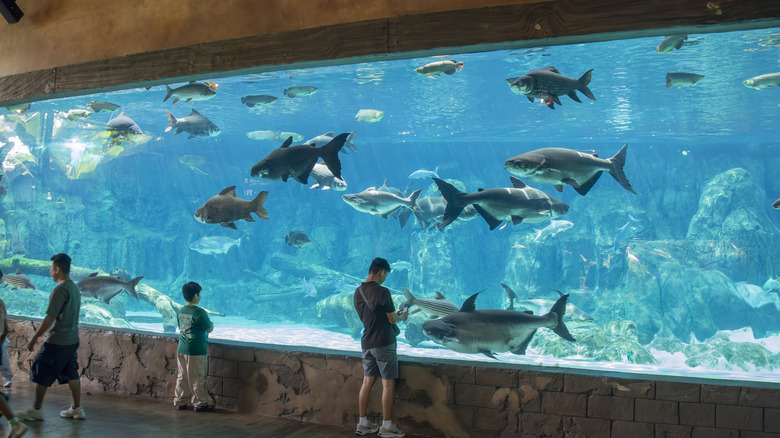
Saltwater isn't actually a requirement when it comes to designing a world-class aquarium. Just ask the world's largest freshwater aquarium. Singapore's River Wonders is a one-of-a-kind concept aquarium where rivers, and not oceans, take the spotlight. Although its star attraction is decidedly land-based (a pair of giant pandas), River Wonders excels in its naturalistic exhibits of river species not often found in competing aquariums.
River Wonders is part of the Mandai Wildlife Reserve, a sprawling complex of five wildlife care facilities ranging in scope from a nocturnal zoo to this high-concept freshwater aquarium. It's as huge as it sounds. The Magic Kingdom theme parks in Orlando might be the most apt comparison, though the Mandai Wildlife Reserve maintains a focus on education and environmental preservation that sets it apart. And while it might be easy to write off River Wonders, given its amusement-park-like setup, the thematic coherence makes it a truly excellent aquarium.
The park is divided into ten sections centered around the world's largest rivers. Critically-endangered sturgeon populate the Yangtze River exhibit area, while you'll find rare manatees and arapaima in the Amazon Flooded Forest section of the park. River Wonders' exhibits cover three continents and countless species and ecosystems, all with an attention to animal welfare and the facility's potential for groundbreaking research, putting River Wonders on even footing with some of the most renowned marine aquariums.
Oceanographic Museum of Monaco – Monaco
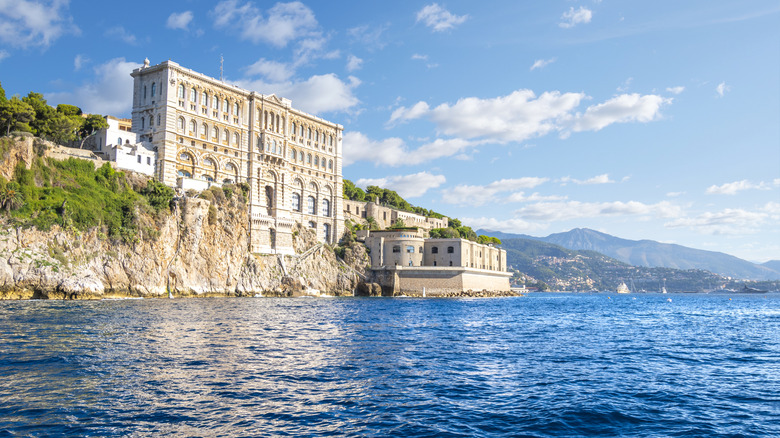
There probably won't be another aquarium on this list that can claim a pedigree like that of the Oceanographic Museum of Monaco. Opened in 1906 at the behest of the scientifically minded Prince Albert II as a place to study and exhibit the emerging science of oceanography, it is arguably better-known today as a museum helmed for several decades by legendary oceanographer Jacques Cousteau. That star-studded history is reflected in its quality today: The palatial cliffside museum building exhibits notable artifacts from the history of oceanographic research, and, of course, an equally impressive aquarium.
The history and architecture of this aquarium alone put it in the running for a spot among the world's best, but it lives up to that built-in wow factor, too. A focus on the Mediterranean ecosystems just off Monaco's coast is a unique standout, as is the nearly 20-foot-tall shark tank. And it's a rare aquarium founded as a scientific endeavor rather than a business venture: with a century-long history as a research institution, its commitment to advancing ocean science isn't just a marketing ploy.
With all of that going for it, the Oceanographic Museum of Monaco is a rare aquarium with significant crossover appeal for travelers who aren't usually big on animal attractions. It's worth a visit for the building alone, and it's got appeal for history enthusiasts as a chronicle of our efforts to better understand our oceans. Monaco may be a Mediterranean destination best-known for its glitz, casinos, and the absurdly high prices that make it one of the most expensive places on the planet, but the Oceanographic Museum is a truly elite cultural institution.
Two Oceans Aquarium – Cape Town, South Africa
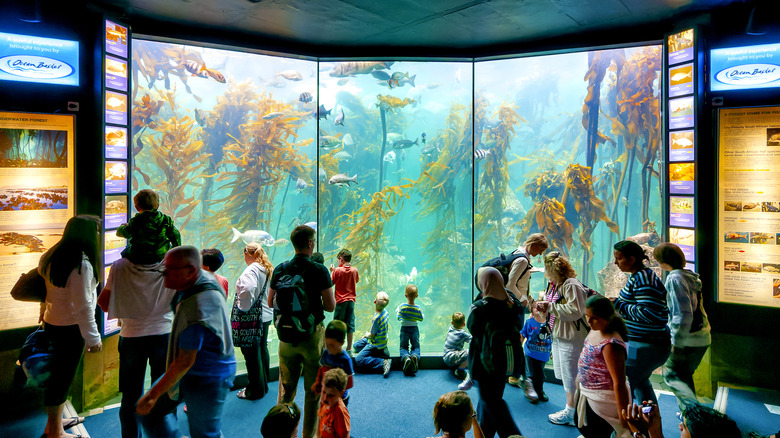
The Cape of Good Hope off the southern tip of South Africa is home to one of the most unique marine ecosystems on earth. The meeting of the warm currents of the Indian Ocean and cold currents of the Atlantic Ocean at the tip of the continent makes the area a highly biologically productive wildlife hotspot, made famous among animal lovers by Shark Week specials about the unusual behavior of its resident great white shark population. This is all to say that if there were any place on earth that would make a great candidate for the location of a world-class aquarium, Cape Town would be it.
That hypothetical comes to life at Cape Town's Two Oceans Aquarium, a gem showcasing the biodiversity of a fascinating marine ecosystem. With the aim of connecting locals and visitors alike with the local marine environment to inspire a lifelong passion for marine preservation, the Two Oceans Aquarium features a wide-ranging selection of beautifully designed exhibits showcasing the Cape of Good Hope's ecological diversity and vitality. Of particular note is the aboveground kelp forest tank, the only one of its kind in the Southern Hemisphere. Though nature isn't what draws most tourists to Cape Town, this region is truly one of the most ecologically vital and singular in the world, and it's worth a visit to the Two Oceans Aquarium for a starter course in what makes the Cape so special.
Oceanário de Lisboa – Lisbon, Portugal
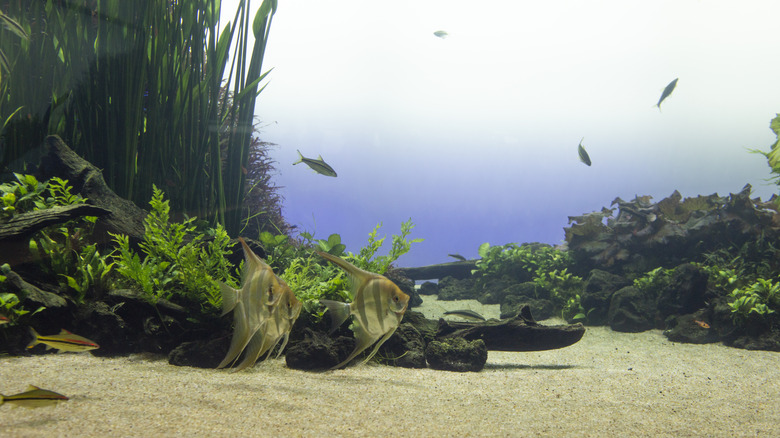
The Oceanário de Lisboa is another aquarium that has the potential to draw in audiences much broader than the typical animal lovers and families with kids, and that's largely thanks to its spectacular architecture. Portugal's most-visited cultural attraction consists of two interconnected buildings designed with baked-in symbolism reflecting the aquarium's messaging about the responsibility of every visitor to protect our oceans, splashy exhibits found nowhere else, and an aquarium experience renowned worldwide.
Start with the "One Planet, One Ocean" exhibit, a 1.3-million-gallon tank invisibly divided into four distinct sections representing different marine habitats, all within what appears to be a single aquarium. This kind of originality in exhibit conception and design isn't limited to the main event, though. Another draw for fans of underwater creatures and design alike is the Forest Underwater exhibit, a freshwater aquascape designed by renowned aquascaper Takashi Amano to resemble a tropical rainforest. Fans of Amano's singular creations, combining aquarium science, underwater landscaping, and design principles inspired by Japanese aesthetic sensibilities, will likely find the Oceanário worth a visit for that exhibit alone.
Innovation is the calling card of this crown jewel of European aquariums. After all, it's not only the animals you keep, but how you choose to showcase them. Taking cues from a strong organizational ethic of conservation, this aquarium uses innovative design to remind viewers of the beauty of the underwater world and the urgent need for each and every earth-dweller to protect it.
Cairns Aquarium – Cairns, Australia
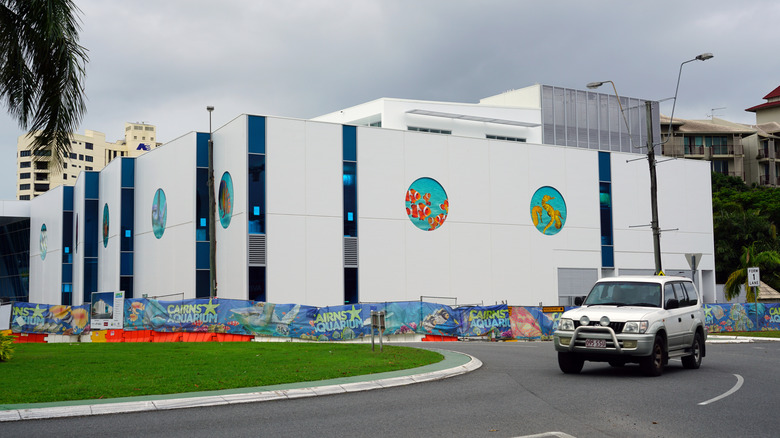
Snorkeling or diving the Great Barrier Reef is a bucket-list item for many. The next-best thing: a visit to the Cairns Aquarium. Cairns has long been the hub for Great Barrier Reef exploration, and its hometown aquarium is its best dry-land substitute for the countless reef tours that take off from its docks every day.
The Cairns Aquarium has a clear-cut focus. The aquarium aims to educate visitors about the ecology of the Australian state of Queensland, particularly the rainforests of the Queensland Wet Tropics and the Great Barrier Reef. This works in its favor, creating an experience that feels local and relevant — it's not just an exhibition of impressive creatures, but a way to better understand its setting.
That's not to say that Cairns Aquarium doesn't pull out all the same stops as its peers, though. Well-designed and educational exhibits are a given on a list like this one, but that isn't all Cairns Aquarium has to offer. A standout is its Turtle Rehabilitation Center, where rescued sea turtles are rehabilitated for release into the wild; the facility also aims to showcase habitats and species representative of 10 ecological zones in tropical northern Queensland, offering a comprehensive, visitor-friendly overview of the region's ecological treasures. Even if you do plan on seeing the Great Barrier Reef for yourself (and maybe stay at its only all-inclusive resort when you do), it's a great place to read up before you go.
Georgia Aquarium – Atlanta, United States
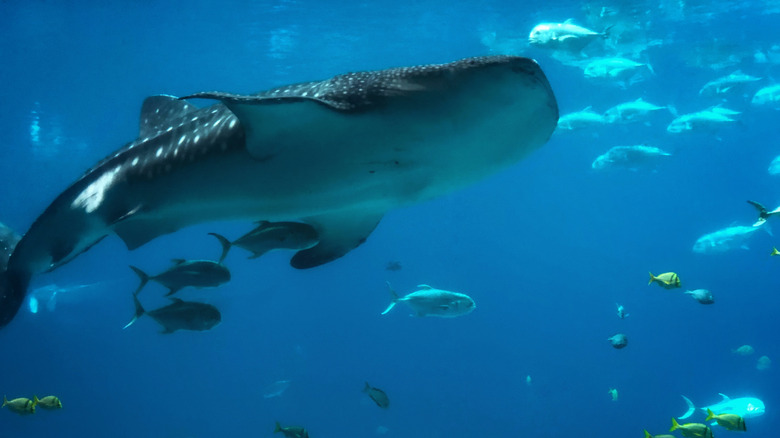
So far, every aquarium on this list has been located near, if not directly on, a seacoast. This is logical enough, but not actually a universal requirement for a world-class aquarium: You'll have to drive five hours inland from the coast to reach the Georgia Aquarium in Atlanta. This has not stopped this massive aquarium from reaching superstar status in the aquarium world.
The Georgia Aquarium's star attraction is unquestionably the Ocean Voyager exhibit, a 6.3-million-gallon tank designed for the express purpose of exhibiting whale sharks, but now home to over 50 species. These are the only whale sharks currently exhibited in an aquarium outside Asia, and that alone makes the Georgia Aquarium a huge deal. Also newsworthy are Cold Water Quest, featuring beluga whales, and River Scout, a unique freshwater aquarium focused on river-dwelling species.
The aquarium is also committed to using its resources to further marine science. Its initiatives span fields from veterinary medicine to coral biology research, and take full advantage of the unusually robust roster of animals under the Georgia Aquarium's care. A demonstrable focus on science, conservation, and animal welfare is one of the key things to look for in an ethical wildlife tourism experience. It's a test that the Georgia Aquarium passes with flying colors.
Okinawa Churaumi – Motobu, Japan
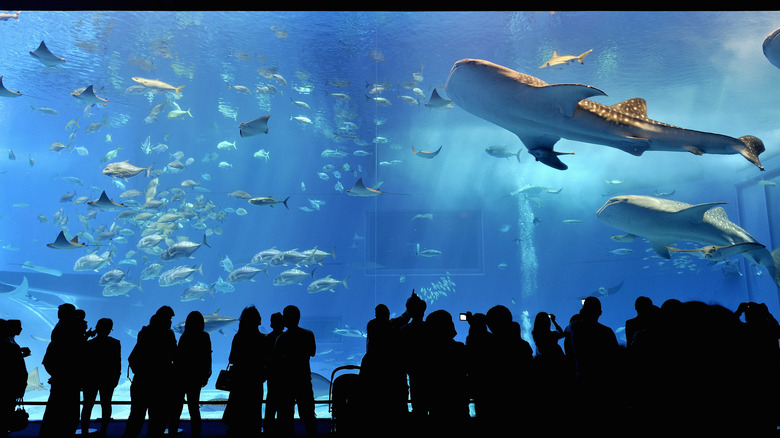
Speaking of the world's largest fish, you'll have to travel all the way to the white, sandy beaches of Japan's Okinawa to see the second set of whale sharks to feature on this list. Combining the local dialect's word for "beautiful" with the Japanese word for "sea," Okinawa Churaumi lives up to its name with three themed exhibit areas that represent different biomes found in the waters around the islands of Okinawa.
Okinawa Chiraumi's whale sharks draw the lion's share of attention. They reside in the Kuroshio Sea exhibit, a 33-by-115-foot showpiece tank that represents the open waters fed by the warm Kuroshio Current. With multiple available viewpoints, this showstopper is the reason for many a visit to the aquarium. Its two other exhibition areas depict the coral reefs surrounding many of Okinawa's islands and the denizens of the region's deep seas, which are notoriously hard to care for and rarely exhibited. The latter, while not as splashy as the massive Kuroshio Sea exhibit, is an especially unique draw.
If you've made your way to Okinawa, you're probably angling for some quality time on a beautiful white-sand beach. But what lies beneath the surface of its inviting tropical seas is just as rewarding, and Okinawa Churaumi is a showcase of those natural curiosities on a grand scale. Plus, its research is helping shed light on local species through studies that would be difficult, if not impossible, to replicate in the wild.
L'Oceanogràfic Valencia – Valencia, Spain
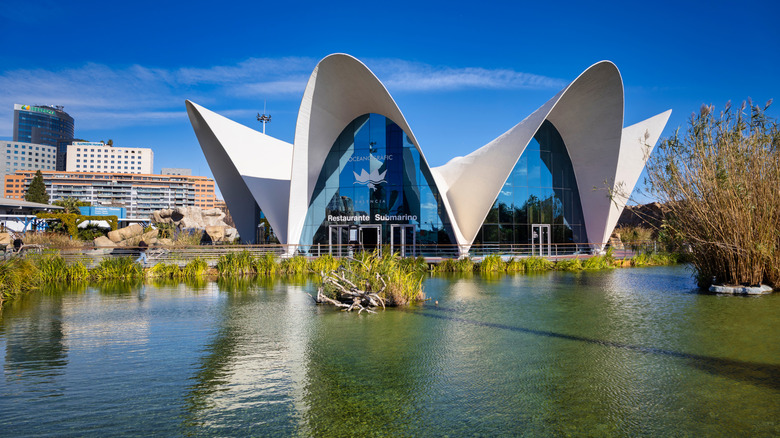
When you have over a million square feet of floor space at your disposal, you're bound to have a few things worth seeing — and L'Oceanogràfic Valencia has more than just a few. For a start, its 70-meter walk-through tunnel is the largest in Europe. Its architecture — within the setting of Valencia's City of Arts and Sciences— goes far beyond the expected tourist attraction look. It houses Europe's only beluga whales (outside of the naturally occurring population in far-northern Norway, that is). L'Oceanogràfic Valencia is an aquarium of superlatives, and it's no wonder the place is one of the most feted in Europe.
With a vast focus on the world's major oceans through numerous exhibits, this aquarium in one of Spain's most historic cities casts a wide net. What it catches is a diverse array of favorite aquarium creatures from sharks and penguins to the aforementioned family of belugas. On top of all of that, a strong track record of field research in conservation biology and educational outreach cement its status as a world-class animal care facility.
Methodology
There are many aquariums out there that feel totally interchangeable, displaying similar animals in similar settings. One measure of the best aquariums in the world is their sense of place: Even if they don't necessarily feature local species (although that did get aquariums special consideration), they feel distinct. Whether it's architecture, exhibit design, a regional focus, or the display of unusual species, all of the selected aquariums are unmistakable in their own special way.
But that isn't enough to be a truly great aquarium in our books. In a world of for-profit animal attractions, only facilities with excellent track records on animal welfare, where exhibits were naturalistic and species-appropriate, made this list. Beyond that, we looked for a true focus on giving back through research and conservation. A focus on using aquariums as tools for understanding and conserving wild populations was a must, as was an emphasis on education. The institutions that made this list did all of the above: They can impress, inspire, and work towards a healthier ocean all at once.