
Unwritten Rules To Know Before Hopping On A Ski Lift For The First Time
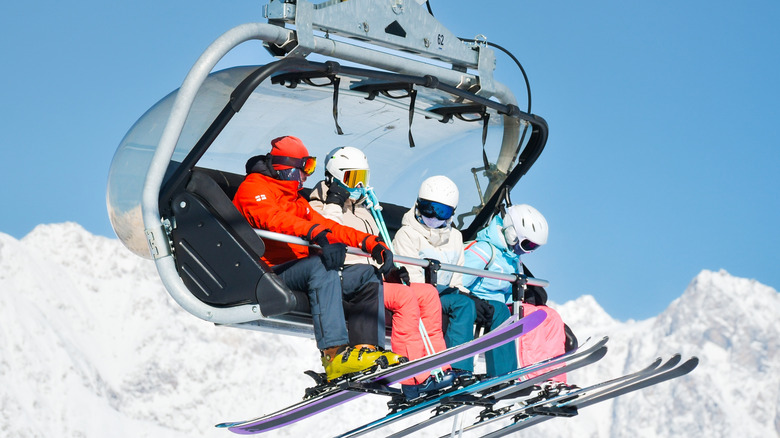
Athletes know that every sport has rules, whether it's three strikes and the batter's out in baseball or hitting out of bounds in golf costs you two strokes. It may feel like skiing and snowboarding have no rules, no time limits, and no referees — just a wide-open mountain with progressively more difficult terrain. However, skiing is a risky sport, and the National Ski Areas Association has a code promoting responsible skiing. It advises skiers to stay in control, yield to downhill skiers, and not stop in the middle of trails.
There also are unwritten etiquette rules on navigating the ski lift, which is often the source of greatest anxiety among rookies and expert shredders alike. It's not surprising, given the number of steps involved to safely hop on, ride, and disembark. There are a multitude of online videos breaking down the mechanics of this one step in skiing. "25 years of riding and 24 years of some PTSD when I get off a chair lift," reads one comment from Board Archive's YouTube video on "How To Ride a Chairlift." A psychologist on Facebook's Ski the Northeast group says that one trick to conquer the fear is to start with "low level exposure" and ride the lifts on the bunny slopes. Another commonsense approach is to watch others and educate yourself on the following do's and don'ts before hopping on a lift for the first time, whether your plans take you to Europe's iconic ski resorts in the Pyrenees or California's top ski destination of Mammoth.
How to get on a ski lift
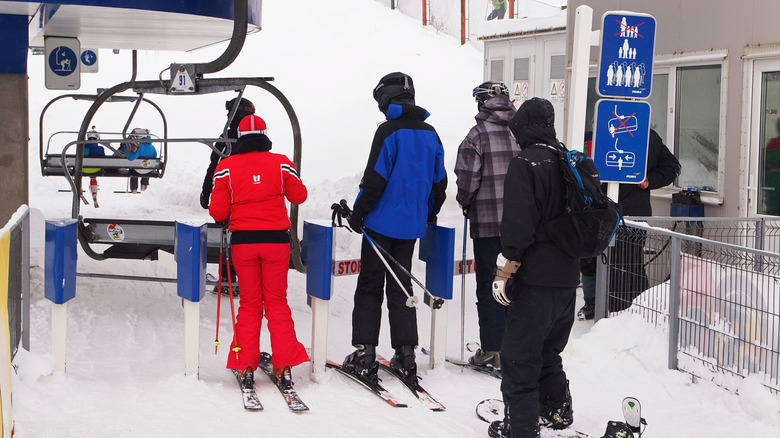
For the uninitiated, a chairlift feels like a ride in the sky to the top of the mountain. Seats hang from a cable attached to towers and rotate in a constant loop. So, how do you get on? When you're queuing for the lift, there may be multiple lines, and skiers will eventually merge. You may have to go through gates one at a time and scan your ski pass. As you get to the front of the line, make your way to the "Wait here" sign embedded in the snow. When the chair passes in front of you, that's your signal to shuffle forward to the "Load here" sign. If you miss the chair, another will follow. Transfer your poles to one hand, look over your shoulder as the lift moves toward you, feel it behind your knees, and plop down, scooting all the way back in the seat. Lift your skis up as you leave the loading area. Now you can confirm with everyone if you can lower the loading bar. Typically, you will ride with two to four people.
This is when you can gaze at beautiful scenery and admire the prowess of the skiers and snowboarders whizzing by. It's also when people like to take selfies, which isn't a great idea. If you take off your gloves and somehow forget to keep your grip on a ski pole, both may end up on the ground below. Of course, if you do lose a pole, an attendant can pick it up, or you can ski down to pick it up, but this only adds hassle to the day.
Getting off a ski lift

Soon enough, your ride will come to an end. This is a good time to find out which way your seatmates plan to exit so you don't crash into one another. As you approach the station, you may see signs like "Check for loose clothing" and "Raise the bar." Make sure your seatmates are ready, then lift up the bar. Newer carriers will automatically slow down as you get ready to exit. If not, you can also signal the attendant in the loading area. You will see the "Unload here" line in the snow, which will be a level platform where you can get out of the way and put your skis on. Keep your poles in one hand until you're out of the unloading zone. For extra support, parents will often hold onto their kids' hands until they're safely out of the way.
In theory, the process will go smoothly, but mistakes happen whether you're young or old. If you use your poles to get off the lift, they may get entangled with people's skis, and people will fall. Leaning back will also make you lose balance as you get off the chair, so lean forward instead. If you don't move quickly enough to get off, you may miss your window. If so, don't panic — just ride the lift back down.
Extra lift tips for snowboarders

Snowboarders and skiers both face unique challenges when hitting the slopes, but snowboarding etiquette is slightly trickier when riding a lift. It's important to get properly situated in line so boards aren't colliding during the lift ride. As you prepare to get on, kick off the extra snow on your board to make it lighter. If the ski gods let you ride a lift alone or with one other person, you don't have to worry about clanking your fellow seat-sharers. However, if the lines are busy and lifts are running at capacity, Reddit posters suggest that you should ask skiers to sit on one side of the lift, so you avoid bumping each other's gear. They also say self-deprecating humor and calling yourself clumsy never hurts. In addition, Redditors say snowboarders who have a "regular" stance (with their left foot forward) should stay on the right side of the lift, while "goofy" riders (those with their right foot forward) should sit on the left.
Boards can start to feel heavy as your leg dangles on a lift for much of the day, so try resting your board on the heel cup instead. Before the ride ends, it's a good idea to make a plan as to which direction you'll go when you get off the lift. To make things easier, you may let the others go first to avoid collisions. Another Redditor cautions snowboarders to watch out for skiers who may hit you with their poles when they disembark. The Board Archive's video suggests practicing your "skating" or one-footing skills beforehand to get comfortable hopping off a ski lift. Another tip is to keep your unstrapped foot close to your boot to help you steer your board.
Practice self-restraint in the lift lines
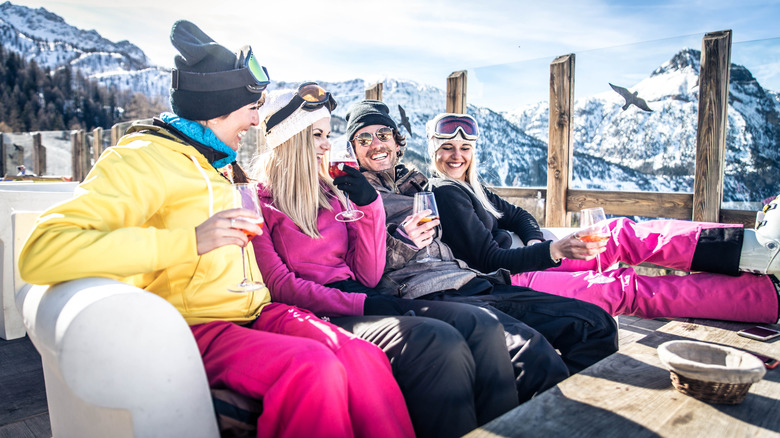
It's hard to imagine this needs to be said or written about in blogs, but skiers should behave themselves in line. That means no matter how pumped you are to be skiing on a workday, do not manifest your feelings with profanity. You're standing in line with people of all ages, and no parent wants noise pollution affecting their children's ears. That also applies to phones and music. People don't need to hear your personal conversations, so put phones away. They also don't want you to be their personal disc jockey, which means keeping tunes to a minimum volume on your headsets and refraining from skiing with speakers. Enjoy the sounds of nature or the silence of the blanket of snow. Cracking cold ones on the lifts is also not advisable. In some states, drinking and skiing is illegal, like in Colorado. Save the drinking for your more civilized apres-ski celebrations.
Learning the ropes of skiing only gets easier the more you do it. Another way to boost your chairlift mastery is to visit the top ski destinations for beginners, like Beaver Creek Resort in Colorado, which dedicates 28 percent of its trails to those new to the sport. June Mountain, in the under-the-radar lakefront town of June Lake, is a family-friendly spot ideal for beginners, offering free skiing to kids 12 and under.
If all else fails, there's no shame in asking for help when tackling the lifts. Attendants can answer questions and — if necessary — they can slow down the lift at the bottom or the top of the run and help you get on or disembark. Remember, most skiers have fallen, and you will fall when you ski. It's one of the best ways to learn.