
A Lesser-Known California Coastal Mountain Range Rivals Big Sur With Heart-Stopping Views
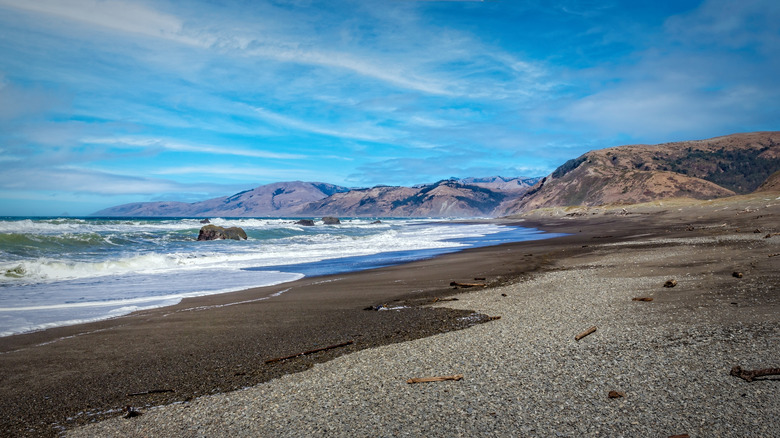
Big Sur is justly famous for its soaring coastal vistas. With steep mountains plunging toward the sea, the delicate ribbon of Highway 1 yields jaw-dropping views around every curve. However, visiting that famed coastline comes with a host of not-so-fun drawbacks, ranging from crowds and road closures to expensive accommodations and hard-to-get camping reservations.
For a little more effort and time behind the wheel, adventurous travelers can head for another wild California coastal mountain range, in a region that Sunset Magazine once dubbed "Big Sur on Steroids." Located 220 miles north of San Francisco on California's remote "Lost Coast," the King Range boasts those same dramatic views, but with much more rugged and hard-won access. The silver lining is that once you're here, you'll be seeing the California coast the way it's been for eons, in all its pristine, windswept glory.
Visit California states that the area is referred to as the "Lost Coast" because it was officially deemed too difficult to build a highway through. The campgrounds here are not the luxurious ones you'll find in Big Sur. Rather, they're the kind of rustic, utility-free campgrounds that require you to bring everything with you, including water. The dramatic scenery will make you feel like you're truly isolated, even if you're really just a day's drive from the city.
Hiking and biking in the King Mountain Range
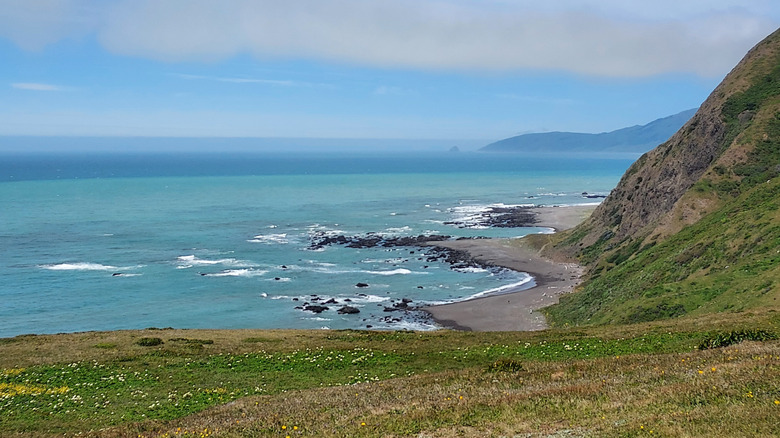
The King Range National Conservation Area contains over 80 miles of trails, including the starting point for a hike that's on every ambitious California backpacker's bucket list: the Lost Coast Trail. Often dubbed the best coastal hike in America, this challenging 25-mile point-to-point trek takes most hikers three days to complete, and it is not especially beginner-friendly, due to its remoteness, level of difficulty, and complex logistics. The trail takes you from beachy sections that must be navigated at low tide to the rugged mountainsides of the King Range. Mountain bikers flock to the Paradise Royale loop, featuring over 12 miles of flowy, forested track, which the MTB Project praises as "designed and built for a mountain bike optimized experience." Equestrians are also welcome to use the well-maintained multi-use trails.
Whatever your method of locomotion, nothing you've seen on the California coast can prepare you for the sheer drama of this landscape, which feels like you might have entered a magical land out of "The Lord of the Rings" or "Game of Thrones." You aren't likely to encounter a fire-breathing dragon or mammoth-sized spider here, but you might run into a curious black bear. For this reason, backpackers are required to carry all food in a hard-sided bear canister.
Camping in the King Range
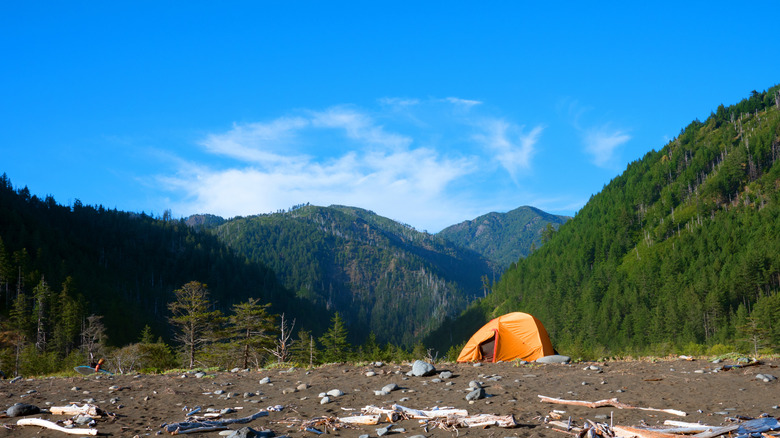
While scoring a reservation to camp at Big Sur can entail six months of advance planning, the King Range National Conservation Area's four small, intimate campgrounds are all first-come, first-served. If you arrive on a weekday, you're very likely to nab a site, even in peak summer season. At the time of writing, campsite fees are just $8 per night. These dry campsites have pit toilets but no running water, so you must bring everything you need for your visit, including water. Of course, even spontaneous mountain camping requires careful planning. Remember, you won't be dashing out to a convenience store if you forget the marshmallows.
The Mattole Campground is incredibly scenic, but it is windy and cold, which means it's better for van campers than those with tents. The tiny Tolkan Campground has just nine sites (four for tents, five for trailers) nestled in the forested mountains. If you're really adventurous, you can reserve a backcountry permit and camp right on the beach.
Getting to the King Range requires some effort. It's a four-hour drive from San Francisco to the Bureau of Land Management's King Range National Conservation Area Office, but the going gets very slow from there on out. The Mattole Campground, for example, is another 1.5 hours away on a narrow, winding road, and while the Tolkan Campground is closer, the road is extremely challenging. You don't need a 4x4, but you do need plenty of daylight, so an early start is essential.