
5 Walkable Downtowns In Indiana That Are Brimming With Midwest Charm, According To Travelers
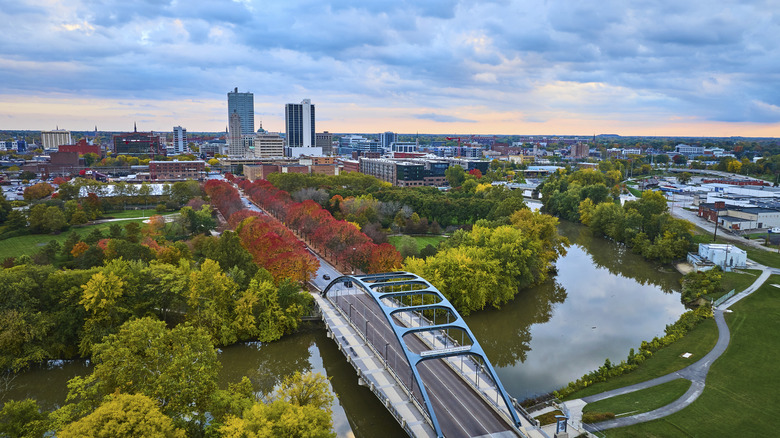
Indiana has a rich collection of tourist attractions spread across its Midwestern landscape. While the state capital of Indianapolis is known for its popular sports scene and strong dining options, the rest of Indiana offers plenty of worthwhile destinations of its own. This includes classic Midwestern small-town charm and less obvious spots like Indiana's surprisingly beautiful, sun-drenched islands. However, Indiana's urban appeal does not end at Indianapolis' city limits. Many of the state's cities boast inviting downtown areas filled with historic architecture, public art, and green space.
Virtually all of Indiana's smaller cities and towns have features that make for an appealing weekend trip. Five, in particular, stand out for their especially walkable downtown districts. Each offers a mix of historic squares, prominent landmarks, arts and cultural scenes, and urban park spaces. Based on the concentration of downtown attractions — including parks, historic sites, and public art — these five cities offer some of the state's most enjoyable urban adventures. Selections were also informed by traveler feedback cross-referenced from Tripadvisor and Google reviews, highlighting destinations frequently praised for their walkability and attractions.
Bloomington
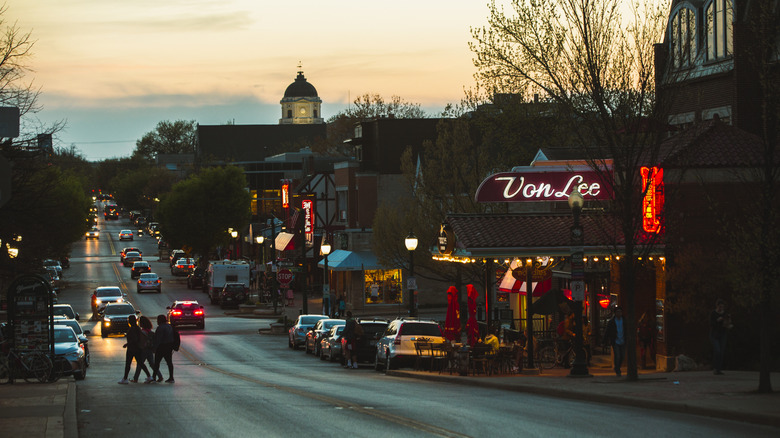
Many of Indiana's top cities are anchored by prominent universities, and Bloomington, in south-central Indiana, is no exception. In fact, the city is home to the flagship campus of Indiana University Bloomington, whose limestone buildings and gorgeous academic atmosphere are worth exploring on foot. But Bloomington is much more than a university campus. Downtown Bloomington offers visitors a thriving arts scene, diverse culture, and ample dining options.
Much of downtown activity centers along Kirkwood Avenue. Among students, it's notable for housing the famous Sample Gates on IU's campus. For everyone else, however, Kirkwood is a photogenic main street lined with lovely storefronts, diverse eateries, and cultural attractions, along with leafy trees and bicycles on seemingly every block. A walking tour of Kirkwood Avenue can include a stop at the historic Buskirk-Chumley Theater, a historic theater with "old-school charm," according to a Tripadvisor review, and a postcard-worthy marquee. Or, you can stop by one of the many boutique art galleries on and around Kirkwood. If you're lucky enough to visit on the first Friday of the month, you can join one of Bloomington's acclaimed gallery walks.
Downtown Bloomington also features several prominent historic landmarks that make excellent additions to your photo albums. This includes the Courthouse Square, where you can find the landmark Monroe County Courthouse and plenty of excellent dining options. If you're more into outdoor recreation, Bloomington's B-Line Trail is a 3.1-mile paved route through and beyond downtown, with many interpretive signs that further detail the city's history.
South Bend
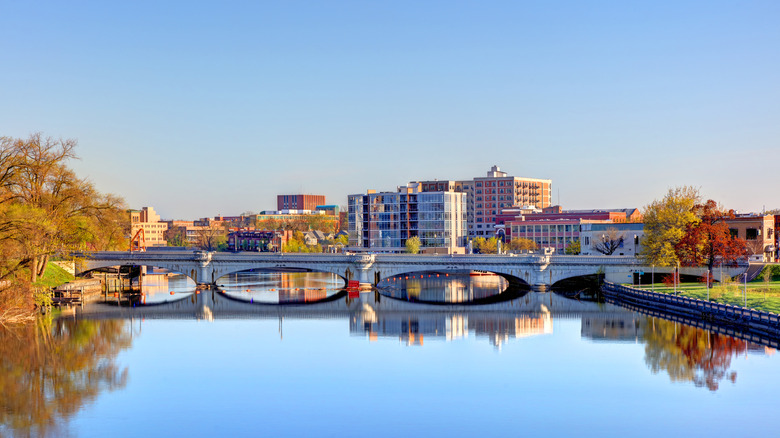
While Bloomington is home to Indiana University's flagship campus, the northern Indiana city of South Bend may be even more overshadowed by its resident university. As the home of the iconic University of Notre Dame, South Bend has long been one of America's best scenic college towns for a fun weekend visit. Although a trip to Notre Dame's campus is something of a pilgrimage for college sports fans and movie lovers alike, South Bend itself offers a similarly rewarding urban experience, with a downtown area that rivals even the university's esteemed Golden Dome building.
Reflecting the legacy of its neighboring university and industrial past, South Bend's downtown is packed full of historic buildings and landmarks that appeal to history buffs. The 38-room Oliver Mansion is arguably downtown's premier historical treasure. Dating back to the 1890s, the mansion was once home to industrialist Joseph D. Oliver during the Gilded Age. Today, it is part of The History Museum, which offers tours of the mansion and the surrounding Historic Oliver Gardens. Next door, the Studebaker National Museum offers a "fact-filled journey about American engineering and fortitude" and is a must-visit for car lovers, per a Tripadvisor reviewer.
South Bend is also rich in public art, with several prominent murals decorating the downtown area, thanks in part to the city's Mural Mania arts initiative. Outdoor recreation is available at Howard Park, which features playgrounds, trails, and seasonal ice skating. The nearby St. Joseph River also offers paddling and fishing opportunities, as well as urban whitewater rafting. Even if you don't want to get wet, South Bend's riverwalk hiking and biking trails provide excellent riverside views of the city.
Fort Wayne
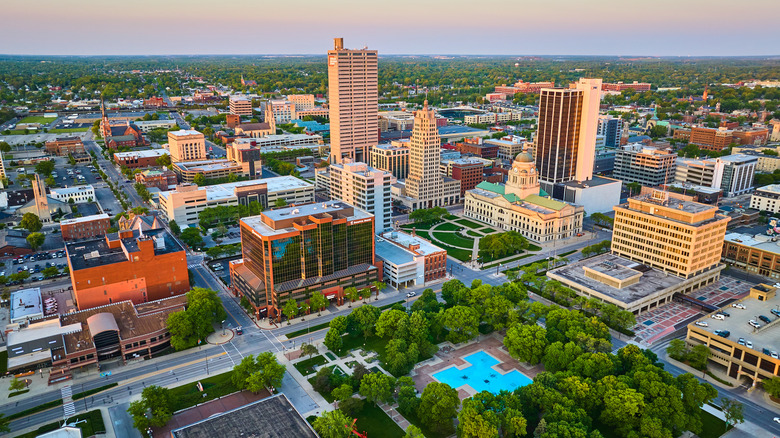
The riverfront city of Fort Wayne may just be the brightest hidden gem in Indiana. The underrated Midwest city has not just earned a reputation for one of America's lowest cost of living, but also for one of the region's most walkable and artistic downtowns. Compared to Bloomington and South Bend's art scenes, Fort Wayne has made urban art a core part of its downtown identity. The Fort Wayne Public Art Trail connects the walkable downtown with an impressive collection of murals, sculptures, and other creative installations.
Downtown Fort Wayne's artistic character is likewise seen in the exceptional Arts Campus Fort Wayne, the region's first state-designated cultural district. The area brings together several arts institutions, including the Arts United Center, designed by renowned architect Louis Kahn. Art lovers can also stop by the Fort Wayne Museum of Art to enjoy its extensive galleries of both contemporary and historic American artwork. According to a Google review, it offers a "really neat collection with something for everyone."
Downtown Fort Wayne also includes the aptly named Old Fort, a faithful reconstruction of the military installation built in 1815. More of the city's impressive architecture is visible on the Central Downtown Trail, where you can see Fort Wayne landmarks such as the Allen County Courthouse, the Lincoln Tower (Indiana's first skyscraper), and the Old City Hall (currently a history museum). Fort Wayne's location at the confluence of three different rivers gives it one of Indiana's best downtown riverfronts. Promenade Park and the Rivergreenway Trail provide superb opportunities for urban hikes, cycling, and sightseeing.
Terre Haute
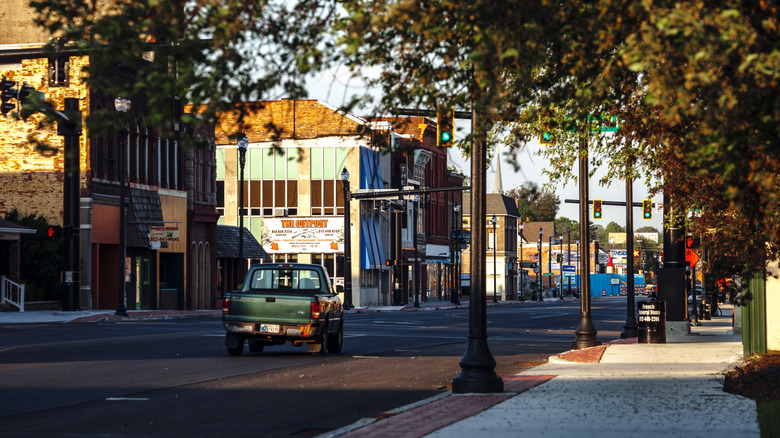
The name Terre Haute comes from the French for "high ground." Although the city sits in Indiana's Wabash River Valley, it definitely lives up to its "high" moniker in spirit. On the map, Terre Haute serves as a central nexus point between several more prominent cities in the Midwest, making it a convenient regional hub. Transportation significance aside, Terre Haute's downtown area offers enough attractions to make it a destination in its own right.
Like other notable Indiana cities, Terre Haute has heavily invested in public art. Much of the downtown area features eye-catching murals by local artists, and a comprehensive collection of public sculptures and monuments. Terre Haute's exceptional public art displays are all on view for urban hikers via the city's Wabash Valley Art Spaces trails, which a Google reviewer described as "an impressive sculpture collection that currently features 20 public pieces of art." Downtown Terre Haute's art scene extends beyond its wonderful public art to include several galleries, artist groups, and performing arts centers.
As artistic as downtown Terre Haute is, the city also boasts experiences and attractions for history buffs. Terre Haute's museum scene includes impressive history exhibitions such as the Eugene V. Debs Museum (at the former home of early 20th-century labor leader and politician Eugene V. Debs), the Candles Holocaust Museum and Education Center, and — for sports fans – the Larry Bird Museum, which honors the life and legacy of Indiana's favorite sports son. Urban explorers can also check out downtown Terre Haute's walkable historic districts, including the indulgent Brewery District (home of the Terre Haute Brewing Company) and the architecturally-rich Downtown Historic District and 12 Points Historic District, where you can experience some of Indiana's best urban walking tours.
Lafayette
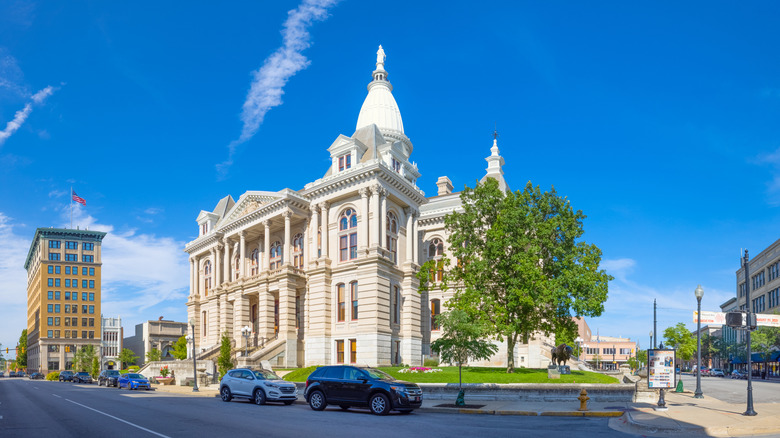
Like Bloomington and South Bend, Lafayette is closely associated with a nearby university. Across the Wabash River, West Lafayette is home to Purdue University. Still, Lafayette offers much more than a college connection. The city's historic downtown is rich in architecture, culture, and green space. Its historic core centers around the Downtown Lafayette Historic District, which protects several landmark buildings dating back to the mid-1800s. Interested visitors can even find resources for self-guided walking tours of downtown, including an architecture tour and a historic houses of worship tour.
On that latter point, Lafayette's downtown area is home to numerous historic religious buildings that make for appealing destinations to history- or urban-photography-minded guests. Most notable among these is Temple Israel, one of the oldest synagogues in the Midwest. Other historic buildings for history and architecture buffs include the James H. Ward House, the Judge Cyrus Ball House, and the Tippecanoe County Courthouse. Similarly, the Haan Museum, which, according to a Tripadvisor reviewer, is a "lovely addition to the Lafayette area," preserves historic and contemporary works by Indiana artists in a historic mansion that was notably relocated to Lafayette all the way from Connecticut.
Downtown Lafayette includes three distinct districts that make for excellent walking tours: the Chauncey Village District, the Wabash Riverfront District, and the Arts & Market District. Urban explorers can also take advantage of downtown's many excellent urban trails, riverfront parks, and neighborhood parks for some fun cycling or sightseeing tours of the city's green spaces. Columbian Park, just south of downtown, is one of the area's most popular family-friendly parks. Downtown Lafayette's vibrant shopping district features ample boutiques, specialty stores, and easy access to the city's diverse dining options.
Methodology
Because a city's "charm" can be subjective, our methodology focused on Indiana downtowns that combine walkability with a wide range of attractions. Each city on this list offers experiences that appeal to different kinds of visitors. Our research also cross-referenced traveler feedback from Tripadvisor and Google reviews to identify destinations consistently praised for walkability, attractions, and overall visitor experience.
Broadly speaking, the downtowns selected for this list offer three distinct categories of experiences: outdoor recreation and scenery, historic attractions, and public art. Fortunately for us, many Indiana cities have invested heavily in public art, with downtown areas in South Bend, Fort Wayne, and Terre Haute featuring particularly strong collections of murals and sculptures. Cities like Lafayette and Bloomington are also rich in historic landmarks, architecture, and districts that appeal to history buffs and urban photographers alike.
Finally, each destination benefits from nearby parks, riverfront trails, or other green spaces that allow visitors to enjoy outdoor recreation without leaving the downtown area. Several of these cities, particularly Bloomington, South Bend, and Lafayette, also sit close to scenic university campuses. Though this was not a major prerequisite for our list, these campuses do add an additional aesthetic enhancement to a walking tour of their nearby downtown areas.