
5 Once-Thriving Military Sites Transformed Into Scenic Escapes Now Worth Visiting, According To Research
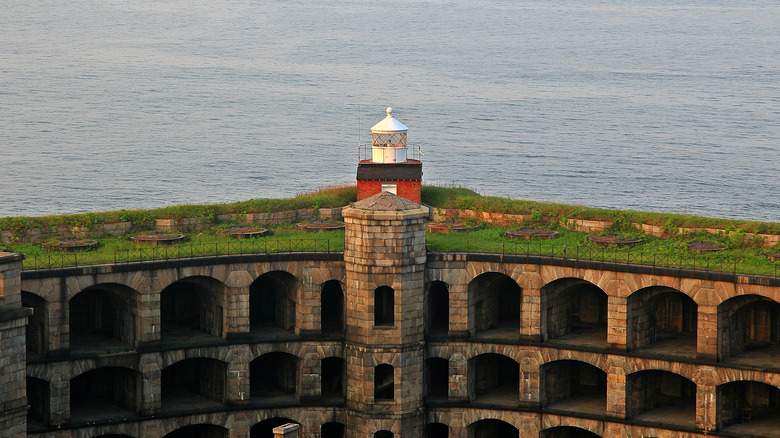
Even if you're not particularly interested in the tools of warfare or how the great battles of the past were fought, it shouldn't preclude you from visiting America's former military sites. Across the country, you can find old fortifications and defense bases — once heavily guarded, primed for battle, and protecting military secrets — that have been transformed into scenic destinations. Often this is thanks to the Base Realignment and Closure (BRAC) process, whereby military infrastructure is shuttered, repurposed, and opened to the public. As a result, infrastructure from the Civil, World, and Cold wars has been incorporated into its surrounding environment.
There are old naval yards in the Bay Area that now serve as leisure and commercial districts, and Cold War-era nuclear missile silos scattered across the Great Plains. In Washington, you'll find an artillery post turned state park, and in New York, a fort that's now a 226-acre recreation area overlooking the city's iconic harbor. While in Florida, an advanced missile site in the sprawling Everglades has now been integrated into the national park.
Often, the bellicose history of these spaces is at odds with the tranquility of their modern settings. But if anything, such juxtaposition makes them more interesting. The following five open-to-the-public sites, selected using information from local tourism boards and governing bodies, like the National Parks Service, are cases in point.
The Presidio, San Francisco, CA

San Francisco is known for many things: the Summer of Love, its championing of gay rights, futile escapes from Alcatraz, the tech bros of Silicon Valley, and the Golden Gate Bridge (America's most-visited national park site), among others. People don't generally associate the city with war. But San Francisco and the Bay Area have played their part in numerous conflicts over the past 300 years. Long before Al Capone was imprisoned there, Alcatraz was the most powerful fortress in the western United States, and batteries (emplacements for large guns) dotted the adjacent coastline.
The Presidio, meaning f a "military fort," was built in 1776 when San Francisco was under Spanish colonial rule. Then, during the 19th century, it changed hands from the Kingdom of Spain to a newly independent Mexico and ultimately to the United States, which put the fort to use in every major conflict from the Civil War through to the First Gulf War, when soldiers garrisoned there were sent to Iraq as part of Operation Desert Storm. The Presidio, designated a National Historic Landmark District in the '60s, has now entered a new phase of its life, serving as a multipurpose space in the Golden Gate National Recreation Area.
Amid the Presidio's 1,491 acres, you'll find beaches and manicured lawns with views of the Golden Gate Bridge, old gun batteries and preserved military architecture, and restaurants, museums, and galleries. Twelve trail routes weave through the area, some hugging the coast and traversing the headlands and bluffs, others winding through dense woodlands. Old buildings have been converted into accommodations, like the red-brick Lodge at the Presidio, a 130-year-old barracks that's on the Historical Hotels of America register. There's even an 18-hole golf course, with pristine fairways squeezed between avenues of eucalyptus and Monterey pine.
Minuteman Missile Site, the Great Plains, SD

During the Cold War, when the threat of nuclear catastrophe was at its zenith, America had 1,000 battle-ready nuclear warheads hidden throughout the Great Plains. Called Minuteman, these Intercontinental Ballistic Missiles (ICBMs) could be remotely launched in about a minute. Although 400 are still active, many ICBMs were decommissioned following the end of the Cold War. Between the tiny communities of Wall and Philip in South Dakota, you can visit facilities that were once part of the Great Plains missile field, together known as the Minuteman Missile National Historic Site.
There's a visitor center focusing on Cold War history and the role of nuclear armament in war deterrence. Here lies an inscription, adapted from Sun Tzu's The Art of War: "Someday, an ultimate class of warriors will evolve, too strong to be contested. They will win battles without having to fight, so that at last, the day may be won without shedding a single drop of blood." On a ranger-led tour, you can also explore the control center, 31 feet underground, with an eight-ton blast door covered in colorful wartime propaganda.
According to the National Park Service, which now owns and administers the land, this is the best place in America to understand Minuteman's role in the Cold War. The silo (an underground facility for storing and firing missiles), known as Delta-09, is in a fenced-off, open-to-the-public area amid this sprawling expanse of rural South Dakota. The wild beauty of the place contrasts with the reality of the now-decommissioned missile kept here, carrying a 1.2 megaton warhead, which was 66 times as powerful as the A-bomb that was used at Hiroshima. Hard to believe that the immensely beautiful Badlands National Park, one of America's best road trip destinations, sits on Minuteman's doorstep.
Fort Worden, Port Townsend, WA
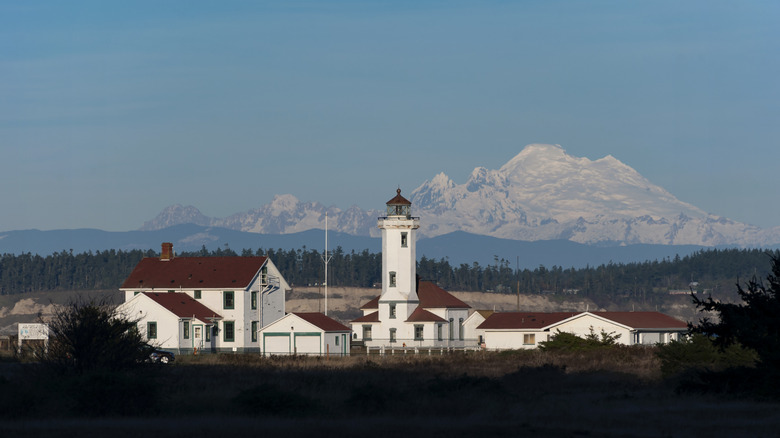
In Port Townsend, a storybook seaport getaway on the tip of Washington's Quimper Peninsula, sits Fort Worden, a former military base founded in the early 1900s. Overlooking the entrance of Puget Sound, its strategic position allowed it to be the first line of defense against would-be invaders. The fortress featured hulking steel cannons and fortified walls that were effectively invisible to seafaring enemies, but it was rendered obsolete within a couple of decades due to the advance of military technology during the First World War. Now a state park, Fort Worden offers views of the sound, Whidbey Island, and on a clear day, Vancouver Island to the north and Mt. Rainer to the south.
Less than two hours from Seattle, Fort Worden State Park is a popular spot for vacationing Washingtonians. Many of the 90 remaining original structures have been refurbished and put to new use, including the Madrona MindBody wellness center; Taps at the Guardhouse, a craft beer bar hosting regular live music nights; and lodgings in historic buildings, like the late-19th-century Alexander's Castle. Note, however, at the time of writing, only selected roofed accommodations in the park are open due to ongoing management issues.
At the marine science center and aquarium, you can learn about the ecology of the sound, where otters, seals, orcas, and sea lions have all made their habitats. Tufted puffins and other unique waterfowl also thrive here, which you can see on a summer ferry cruise that circles Protection Island. History buffs should explore the old bunkers where enlisted soldiers would try to stave off boredom, waiting for an attack that never came. Or if you prefer nature, walk Fort Worden's trails, connecting the campgrounds, forests, hills, beaches, and coastal batteries.
Fort Wadsworth, Staten Island, NY
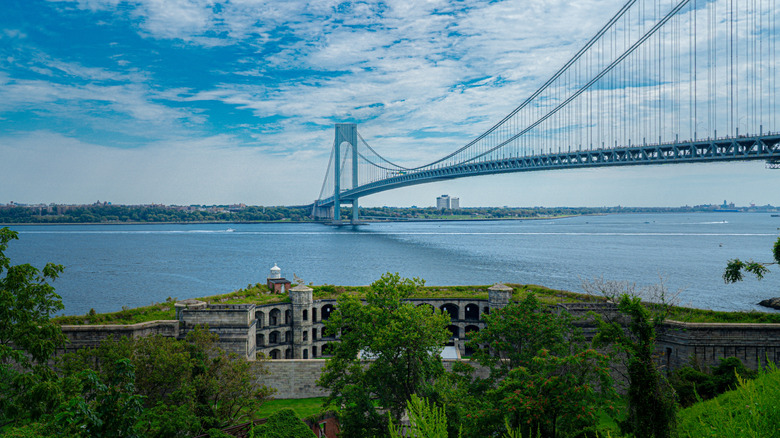
About six miles south of the Statue of Liberty, pinned to the mouth of the Hudson River on Staten Island, is a 226-acre site that hosts one of the nation's oldest military installations. Following American independence from the British Empire, protecting the city of New York, already a bustling urban center home to some 25,000 people, became of paramount importance. The Narrows, separating the Upper and Lower sides of New York Bay, was identified as a point of weakness, and batteries were erected on the site of Fort Wadsworth as early as 1800.
The old earthen forts were bolstered with granite during the Civil War era, disappearing gun batteries and long-range cannons were introduced by the late 19th century, and by the time the First World War rolled around, the fortification was kitted out with searchlights and then-advanced weaponry and communication technologies. It even hosted anti-aircraft guns during the Second World War and remained under military command until it was passed on to the National Park Service in 1994. Modern visitors to Fort Wadsworth, which is now part of Gateway National Recreation Area, can wander around the site and the old military structures. Battery Weed and Fort Tompkins, though overgrown and partly reclaimed by nature, are among the largest and best preserved.
Whether exploring Fort Wadsworth on foot or via the park's bicycle paths, you'll get stunning views of Manhattan, New York Harbor, and Hoffman and Swinburne islands, former quarantine zones that now serve as wildlife sanctuaries. The area is also popular with birdwatchers, who look out for oystercatchers, killdeer, woodcocks, herons, and ospreys whirling in the skies or plodding along the seashore. There are ramps for taking kayaks and canoes into the water here, while Moonbeam Marina can accommodate larger boats.
Nike Hercules Missile Base, Everglades, FL

The Everglades hosts another abandoned missile site that's worth penciling onto your travel itinerary. Granted, a 1.5 million-acre national park and wetland in southern Florida isn't the most obvious place to station nuclear warheads. Flooded with the warm waters of Lake Okeechobee, it has been protected because of its rich biodiversity since 1947, hosting populations of crocodiles, gators, snakes, geckos, and iguanas, as well as wading birds, freshwater fish, and a colorful array of insects and arachnids. But during the Cold War, its location became significant.
Cuba, where the Soviet Union infamously installed nuclear warheads in 1962, is only 160 miles away, making the Everglades a strategic place to install anti-aircraft guns and offensive weaponry. The Nike Hercules Missile Base, often shortened to HM-69, was completed a couple years later and still lies at the heart of the national park, about 90 minutes from Miami. There are 22 buildings on the site, including barracks, missile storage, and assembly facilities. During the Everglades December to March dry season, you can explore the base and see the eponymous missile either by yourself or on a ranger-guided tour.
The fenced-off site is now a little overgrown, though the buildings have been repurposed for visitors to learn more about the Everglades' role in the Cold War and inspect the launch plans and missile control panel. HM-69 is living proof of the fear that gripped America following the Cuban Missile Crisis, which is arguably the closest humanity has come to full-blown destruction. While visitors may dwell on the existential nature of that truth, all they need to do is look around them. The near-endless expanse of marshlands and mangroves making up the Everglades is a reminder that there is much beauty in the world, too.
Methodology
To identify which repurposed military sites were worth visiting we used two key criteria. Each location needed to have an interesting military history — as a functioning base or command post — and in the years since it was under military control, there had to have been a transformation, through civic or government planning, or by being reintegrated into its surrounding environment. All five locations were required to be open to the public and we also sought geographical diversity, which is why the sites are in five individual states, ranging from coast to coast.
To glean this infromation we used numerous resources, including the National Parks Service, which administers most of the sites, and in the case of Fort Worden, Washington State Parks. We also used site-specifc tourism and information resources like Presidio, Explore Washington State, and National Park Planner to create a more complete picture of what you can actually do at each location. We then collated all of this to create the non-ranked, non-exhaustive list above.