
Between Albuquerque And Santa Fe Is A Historic, Tribal Community With Traditional Festivals
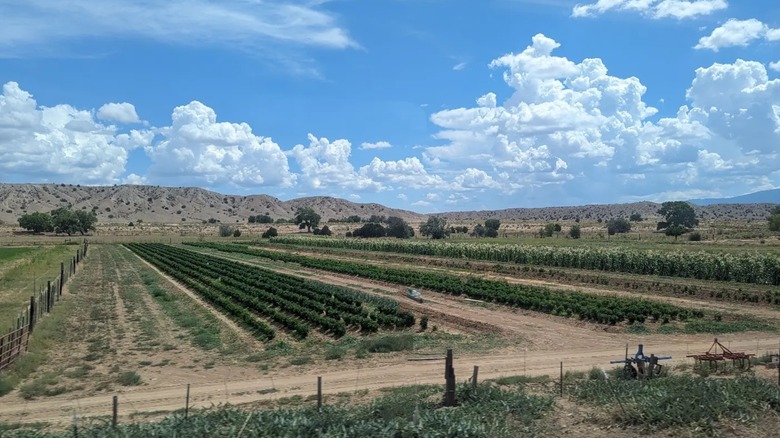
You might not see much of San Felipe Pueblo as you ride down Interstate 25 at 70 miles per hour. Few commuters between Albuquerque and Santa Fe will think to stop in this Native American community, roughly halfway between New Mexico's capital and its largest city. Most of this stretch consists of hills and desert pocked with scrub; the Southwestern landscape is beautiful, but the empty expanses can get repetitive through a windshield. If travelers pull off at a local exit, they're likely headed to Black Mesa Casino, a tribal-owned complex with more than 600 slot machines and other games of chance.
San Felipe is itself a private community of about 3,700 registered tribe members, who call it Katishtya. Most local residents are conversant in the Keres language, which is unique to their people and unrelated to other Indigenous languages. This group is smaller than better-known New Mexico nations — like their former rivals, the Navajo and Apache — yet the people of Katishtya have done an astonishing job of preserving their arts and traditions.
Just as foodies are road-tripping through New Mexico to sample the best of innovative Native American cuisine, curious travelers have stopped at the casino and wondered what this 68,000-acre municipality is all about. What they may find is a storied history and a culture that has bravely weathered outside influence. As with other pueblos in New Mexico, it is a self-governed, sovereign land where residents value their privacy. There are no services for visitors or tourists outside of certain cultural events.
The miraculous origins of the San Felipe Pueblo
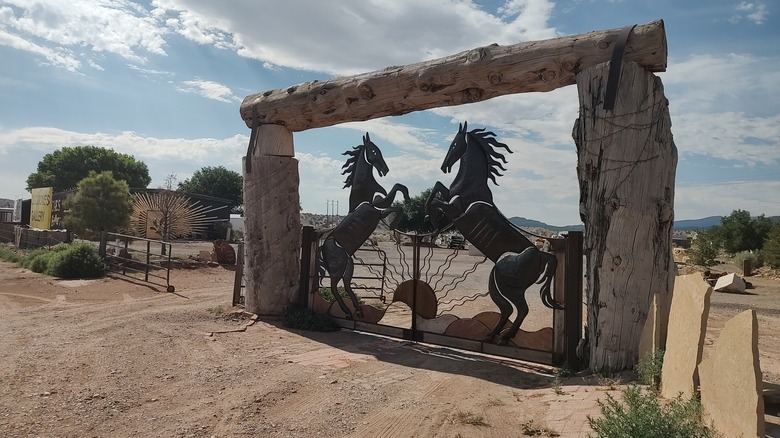
According to the San Felipe Pueblo website, "From time immemorial we have resided in areas known today to be Arizona, Utah, Colorado, New Mexico, and beyond, and have been at or near our current location for many hundreds of years." After the conquistadores of the 1500s, Spain allowed pueblos, or Indigenous communities, to govern their own land. They became part of Mexico in 1821 and then the United States in 1848. President Abraham Lincoln patented the Pueblo of San Felipe, legally ensuring that the land belonged to its residents. Today, San Felipe is a small community woven along the banks of the Rio Grande. Local institutions include a church, a library, and a municipal fitness center.
If you happen to be traveling through this part of New Mexico around May 1, consider dropping in for the annual Feast Day. This event draws Keresan dancers and crafters, and the Green Corn Dance is a massive ceremony held in a circular plaza. Feast Day is open to the public, inviting out-of-towners to learn about the community's heritage and culture. You might very well overhear the Keres language spoken among residents. Visitors are asked to always respect the tribe's privacy; generally, photography, sketching, or recording is prohibited without a permit.
The Black Mesa Fuel Center makes for a useful pitstop, and the Black Mesa Kitchen — inside the casino — serves Southwestern favorites and standard pub food. This is a great place to stretch on your way to Cochiti, New Mexico's sacred village with art, canyon views, and history.
Getting to San Felipe Pueblo and where to stay
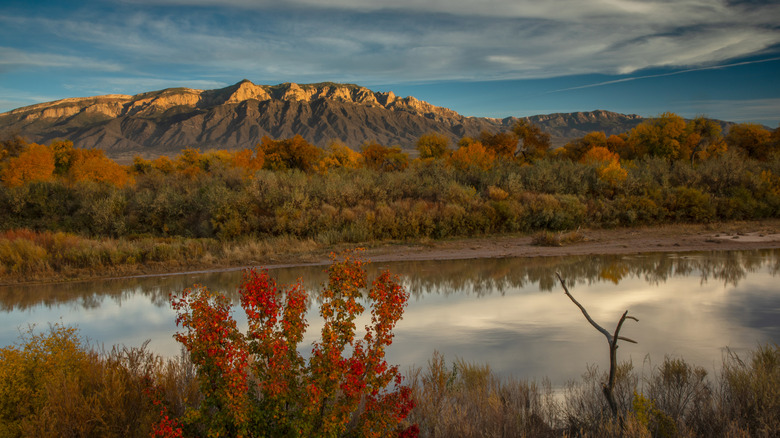
The only way to visit San Felipe Pueblo is to drive; it's about 35 minutes from downtown Albuquerque and 45 minutes from Santa Fe. Check the pueblo's website for times and dates of the next festival. If you're traveling along Interstate 25, the casino is a prominent landmark at Exit 252. The actual community is about 2.5 miles off the interstate.
San Felipe and the Black Mesa Casino are about 20 minutes away from Bernalillo, an Albuquerque suburb of about 9,000 residents. Bernalillo has many restaurant options, and it's the last commercial stretch before you venture into the desert. You'll find a handful of affordable hotels here as well, which are convenient locations both for staying in Albuquerque or before driving toward Santa Fe. When plugging San Felipe Pueblo into your GPS, make sure not to confuse it with San Felipe de Neri Catholic Church, a well-known historic building in Albuquerque's Old Town.
If you're itching for an inside look at pueblo life, consider a visit to Taos Pueblo, a 1,000-year-old, UNESCO Heritage Site. Even closer is Los Cerrillos, a near-ghost town with shops, art, and historic charm. This old mining town offers a stark juxtaposition to San Felipe's Indigenous past.