
Hidden In The Mountains Of Cibola National Forest Is A Mysterious New Mexico Historic Landmark
Among America's Southwestern states, New Mexico's tourism scene is largely tied to its culturally rich cities and towns. The state's major urban areas, like Albuquerque, Santa Fe, and Taos, resonate around the world with unique Southwestern cultural wonders and UNESCO-recognized historic districts, while underrated gems like Belén offer historic charm and food festivals (to say nothing of allegedly otherworldly towns like the infamous Roswell). New Mexico, however, is just as rich in natural wonders as neighboring states like Colorado and Arizona. And similar to these states, New Mexico also features secret treasures that showcase an intriguing blend of natural beauty and mystery. Nowhere in New Mexico exemplifies this quite like the mysterious — and controversial — Sandia Man Cave.
Caves generally promise a memorable tour of unique subterranean sights you won't see above the surface. On paper, the Sandia Man Cave is no different in this regard, offering a lovely rocky catacomb amid New Mexico's beautiful Sandia Mountains. Though this particular cave may not stand out among other famous show caves in the grand scheme of things, Sandia Man Cave comes with a much more interesting story. Depending on where you stand, the Sandia Man Cave is either an invaluable archeological window into North America's ancient past or the site of one of the biggest academic hoaxes of the 20th century. Regardless of which story you prefer, the Sandia Man Cave offers a memorable combination of mystery and natural beauty in the heart of one of New Mexico's most spectacular regions.
Why the Sandia Man Cave is one of New Mexico's most intriguing and controversial sites
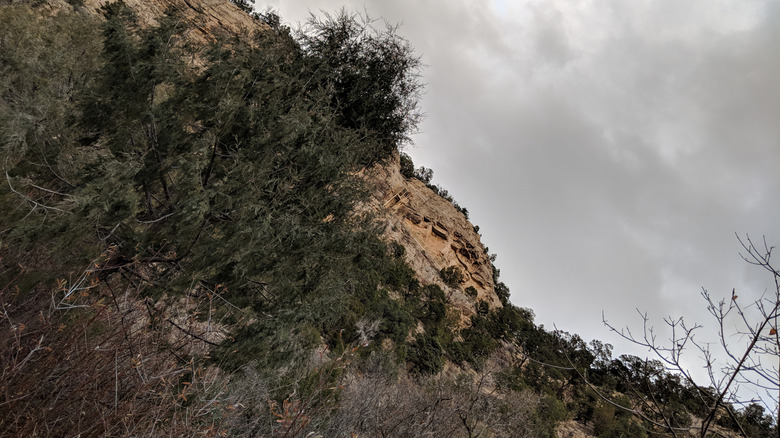
New Mexico's landscape has long been associated with caves, thanks largely to the astounding Carlsbad Caverns National Park. Lying below New Mexico's Chihuahuan Desert, the underrated national park has North America's largest accessible cave chamber, plus "side-quests" like the gruesomely-named Slaughter Canyon Cave. Compared to Carlsbad Caverns, the Sandia Man Cave is quite small, with a maximum expanse of a mere 20 feet. Still, the cave does sit high above the ground on New Mexico's Las Huertas Canyon, in a scenic stretch of mountains where the Sandia and Manzanita Ranges converge. In terms of scenery, you can do a lot worse.
Sandia Cave's fame, however, comes not from its views but from its history and controversies. In the 1930s, a University of New Mexico graduate student named Frank Hibben claimed to have discovered several human-made artifacts within Sandia Cave during an archeological dig. He identified these artifacts as originating from the Folsom Tradition, an ancient Paleo-Indian culture that inhabited North America between 10,000 and 12,000 years ago. However, Hibben then claimed to find even older artifacts from a 25,000-year-old culture, which he dubbed the Sandia Man Culture. With evidence of a North American culture nearly 15,000 years older than the Folsom Culture, Hibben's Sandia Culture discovery turned the world of archeology on its head.
That head would eventually turn back, however. Though Hibben became an archeological superstar, other academics began to cast doubt on the validity of his discovery. Later examinations of Sandia Cave artifacts showed evidence of manipulation and deliberate contamination to potentially obscure age and origin. As the authenticity of Hibben's Sandia Culture eroded, Sandia Cave's significance in archeological circles began to wane.
The Sandia Man Cave is a perfect introduction to New Mexico's beauty
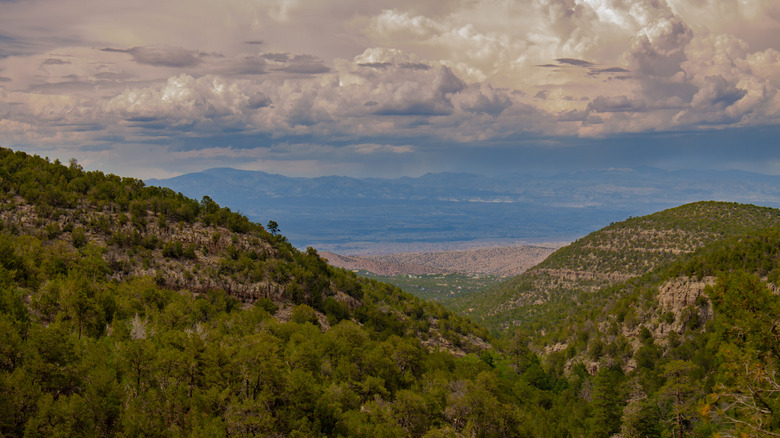
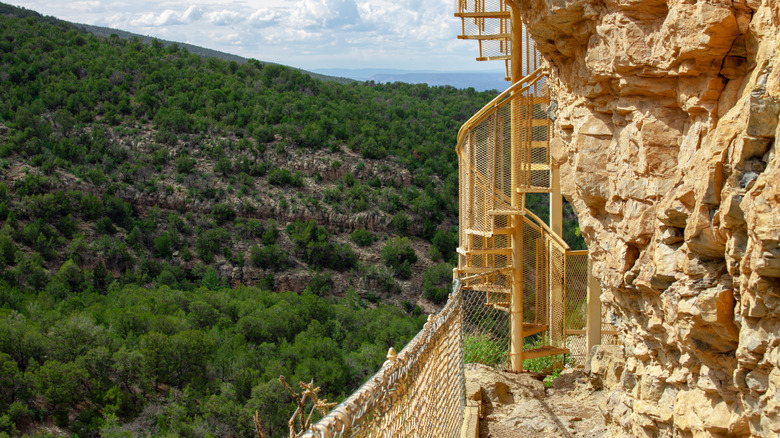
Today, the controversy over Hibben's Sandia Man discovery persists. However, regardless of what is or isn't true, the Sandia Cave is still a remarkable landmark with both incredible views and an interesting story. The cave is accessible as part of New Mexico's beautiful Cibola National Forest, itself an underrated destination where the state's mountains, deserts, and forest ecosystems all converge. The Sandia Man Cave is open to the public year-round (weather-permitting), though getting there is a bit of an ordeal. From the trailhead 30 miles north of Albuquerque, visitors must hike about half a mile to Las Huertas Canyon, climb a concrete staircase up the canyon walls, manage a precarious limestone ledge on the side of the cliff, and then climb up another, steeper spiral staircase to get to the mouth of the cave.
The full hike is only about 1 mile beginning-to-end, but the cave's location on the side of a cliff adds some vertical challenges beyond a simple point-to-point journey. Still, the average hiker should be able to get to the cave and back in 30 minutes to an hour. Plus, the U.S. Forest Service is overseeing ongoing trail renovations that should make access a bit easier.
Even if Hibben's "findings" were entirely fake and Sandia Cave has no real archeological significance, the hike there is still a superb way to experience New Mexico's unsung beauty. The Cibola National Forest is remarkably rich in ecology, especially for the infamously desert Southwest. Hikers can explore the vibrant biodiversity surrounding the 10,000-foot-high Sandia Crest and its mountain biomes. And who knows, maybe you discover some actual ancient artifacts in the cave and become an archeological celebrity (for real this time).