
5 Underrated Washington, DC Museums (That Aren't Part Of The Smithsonian), According To A Local
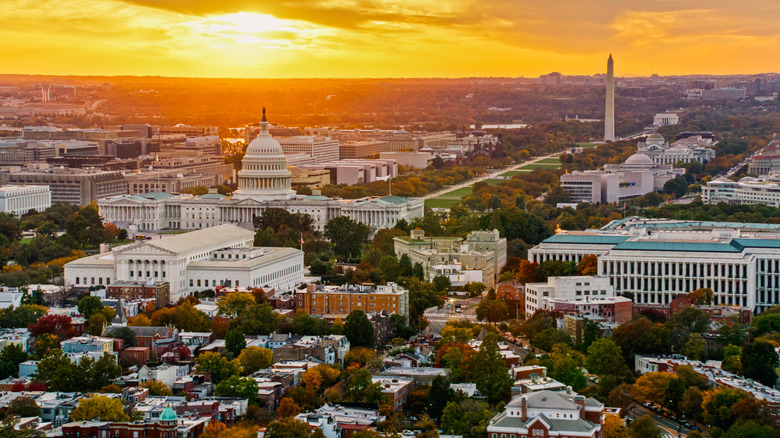
Washington, D.C. is not only the center of American politics — it's also one of America's central hubs for museums. Specifically, Washington's acclaimed Smithsonian Institute administers many of the country's greatest museums, on subjects ranging from art to American history to aerospace technology. As if its eclectic collection of premier museums wasn't enough, all Smithsonian Institute museums are completely free to enter. Thus, D.C. is America's "capital of free museums" for history buffs, art-lovers, aspiring scientists, and knowledge-seekers of all ages. However, D.C.'s museum scene extends far beyond its world-renowned Smithsonian Institute. All across the city, visitors can find plenty of lesser-known, but equally worthwhile, museums, many with unique exhibits and fascinating artifacts rivaling even the mighty Smithsonian!
As a long-time D.C. resident, I have been fortunate enough to visit many of the city's under-the-radar museums in person. Not only have these hidden museum discoveries given me plenty of fun experiences and intriguing knowledge on subjects I hadn't even considered beforehand, but by seeking out overlooked museums, I have also gotten to explore corners of the city I had previously known little about. My museum quests have opened my eyes to the remarkable intersection of D.C.'s historic architecture, unique blend of cultures, and seemingly bottomless reserve of academic resources. Based on my experiences as a D.C. resident and as a die-hard museum-lover, these five underrated Washington museums offer the best intellectual, cultural, and historical experiences outside of the popular Smithsonian.
The Museum at Dumbarton Oaks
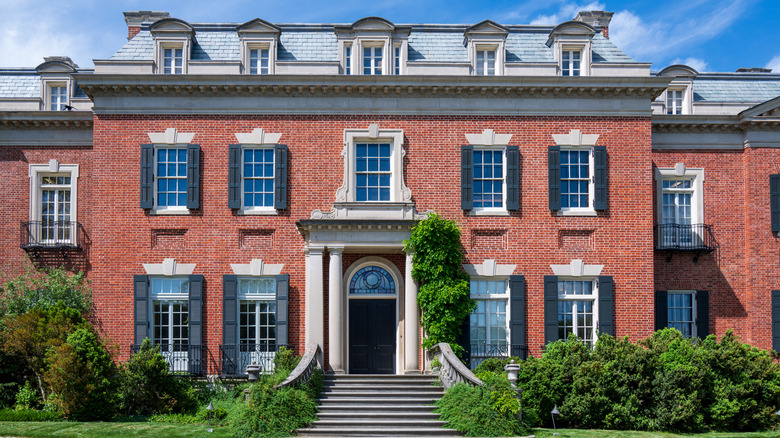
The Museum at Dumbarton Oaks is an interesting case study of one man's niche interests becoming a cultural asset for the general public. The Dumbarton Oaks estate is a historic mansion in D.C.'s affluent Georgetown neighborhood, and the former home of Robert Woods Bliss, an affluent diplomat for the U.S. Foreign Service in the 1920s and '30s. Much like the revered gardens and art of D.C.'s historic Tudor Place, a few steps away, Dumbarton Oaks transformed from a private estate to a research institute and museum, in this case, after Bliss donated the estate to Harvard University in 1940.
If Dumbarton Oaks provided nothing more than an architectural tour of its historic building and access to its gorgeous gardens, it would still rank among the best destinations for a D.C. day-trip. However, the Dumbarton Oaks Museum has the added benefit of inheriting the largesse of Bliss' dual historical interests. During his life, Bliss dedicated much of his money and free time to collecting art and artifacts from the Byzantine Empire and the Pre-Columbian Americas. Why these two civilizations appealed to him specifically is anyone's guess, but the result is a museum that houses one of the nation's best Byzantine exhibits and one of the best Pre-Columbian exhibits, all in a single historic mansion. As a lover of both legacy architecture and niche historical miscellany, the Dumbarton Oaks Museum seems almost perfectly tailored for my tastes.
The layouts of both galleries complement their respective collections quite well. The Byzantine wing's towering marble-white walls give a classical gravitas to countless thousand-year-old sculptures and Greek manuscripts, while the Pre-Columbian wing's wall-length windows provide ample sunlight to reflect off the gold and gems from Olmec, Maya, and Aztec civilizations. And entry to the Dumbarton Oaks Museums is free!
The DAR Museum
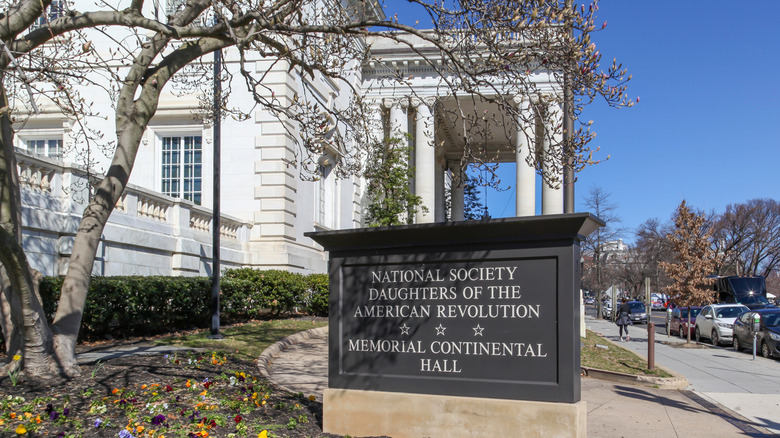
D.C.'s status as the nation's capital also infuses it with superb exhibits on American history. The Smithsonian's acclaimed National Museum of American History is the most famous, but D.C. has plenty of other, non-Smithsonian American history museums that are must-visits for history buffs. Of the many terrific American history museums I've visited in D.C., the Daughters of the American Revolution (or DAR) Museum stands out the most. While major U.S. history museums like the Smithsonian's showcase prominent icons from American history and culture (the Star-Spangled Banner flag, Dorothy's ruby slippers, etc.), the DAR Museum portrays American history through the much quieter, but no less important, American home.
Located just a few blocks from the White House, the DAR Museum's collection includes "over 30,000 objects reflecting the material culture and social history of the United States prior to 1840." These objects include early American decorative arts, quilts, needlework, textiles, furniture, and other items that graced American homes during the nation's formative years. In my experience, the DAR Museum's emphasis on small-scale decorative arts and design has the effect of actually transporting you to the past, rather than just teaching about it.
Walking through the museum's 31 period-accurate rooms, I felt like I was actually walking through an early 19th-century American home. The museum's expert exhibit design and intimate galleries helped me understand the actual personalities, cultures, and general atmosphere that drove early American history. And much like the Museum and Dumbarton Oaks, the DAR Museum is just as much about its building as its exhibits. The museum's Memorial Continental Hall is a picturesque masterpiece of Georgian Revival architecture that has served as headquarters for the Daughters of the American Revolution for over a century. And like the Smithsonian, the DAR Museum is free!
The O Street Museum
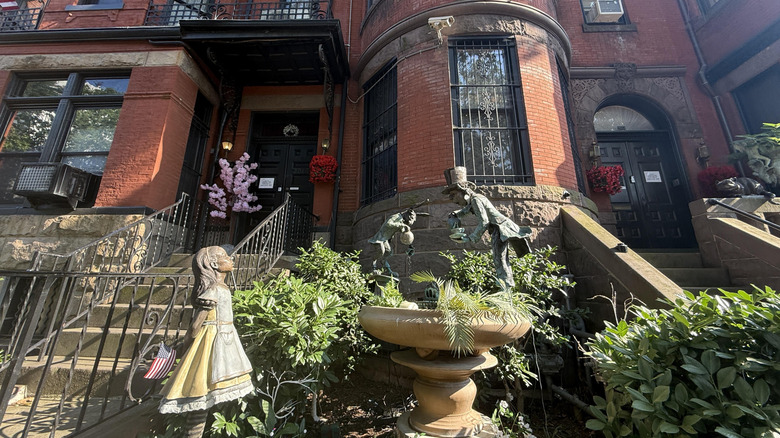
While debates rage over the "best" D.C. museum, the one-of-a-kind O Street Museum is, in my view, the most unique. Instead of a singular subject or genre, the O Street Museum portrays a more distinctive vibe. Officially, the O Street Museum (also called the O Museum in the Mansion) focuses on "the arts, music, sports, and science to educate, generate compassion, and fuel understanding." What does this mean for visitors? In my experience, it means an eclectic smorgasbord of distinctive exhibits that are unified not by a single subject area, but rather an underlying vibe of creativity. Unsurprisingly, the O Street Museum has long been one of Washington's most underrated, interesting, and immersive attractions.
The museum space is a converted group of row houses in D.C.'s historic Dupont Circle neighborhood. The 100+ rooms feature different exhibits, with each room usually dedicated to a specific theme. Visitors might encounter artwork both old and new, pop culture memorabilia, musical instruments (including over 60 signed guitars), interior design, rare books, and other unique artifacts from all over the world. The museum even includes an actual two-story log cabin, a suite dedicated entirely to John Lennon, and the room where civil rights legend Rosa Parks lived for over ten years.
What's remarkable about the O Street Museum is how unified it feels. During my visits to the museum, I always got the impression that I had been invited into the private home of an eccentric, yet kind-hearted, professor. The converted house space enhances the museum's "philosophy that champions discovery and individuality" much more than a traditional museum layout could. Though it's open to the public for $30-$40, the O Street Museum leans heavily into its "art students' secret clubhouse" vibe with secret doors, hidden passages, and unique nocturnal events!
Planet Word
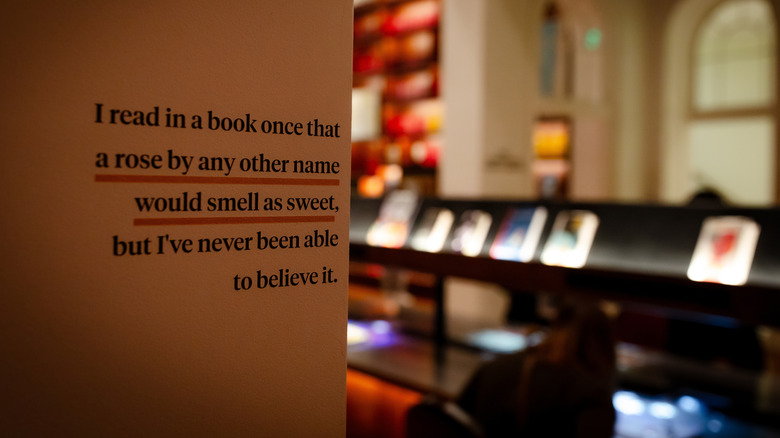
If the O Street Museum is unique for its highly eclectic collections, Planet Word is unique for its one-of-a-kind focus and presentation. If you didn't guess from its name, Planet Word is dedicated to "the appreciation of words, language, and literacy." As a former student of linguistics and a current language nerd, this museum was at the top of my D.C. to-do list as soon as I learned of its existence. However, I was curious how the museum would adequately present its subject. After all, words are intellectual abstractions, not material objects that can be displayed in a physical space. Yet when I visited for the first time, I quickly discovered how such a challenge ultimately gave Planet Word a means to express the sheer creativity behind its mission.
Planet Word bills itself as the world's first "voice-activated" museum. While I cannot verify that, I can say that Planet Word's unique presentation makes it by far the most interactive museum in D.C. Upon entering, I was greeted by the museum's visually and audibly lovely Speaking Willow, with 364 recordings of different languages from its aluminum "leaves." From there, Planet Word features three floors of interactive exhibits, including a "talking word wall" covering word origins, a karaoke-inspired exercise in songwriting, a visual wall that lets you paint words, a "word-sleuthing" puzzle-solving adventure called Lexicon Lane, and a comprehensive multimedia library exhibit that brings books to life.
Admission to the museum is also free (though there's a suggested $15 donation). Planet Word is located in D.C.'s landmark Franklin School, the flagship of the capital's public school system since 1869. As a long-time architectural and history buff, I got to explore a historic Washington landmark even as I enjoyed Planet Word's fun and interactive language exhibits!
The Phillips Collection
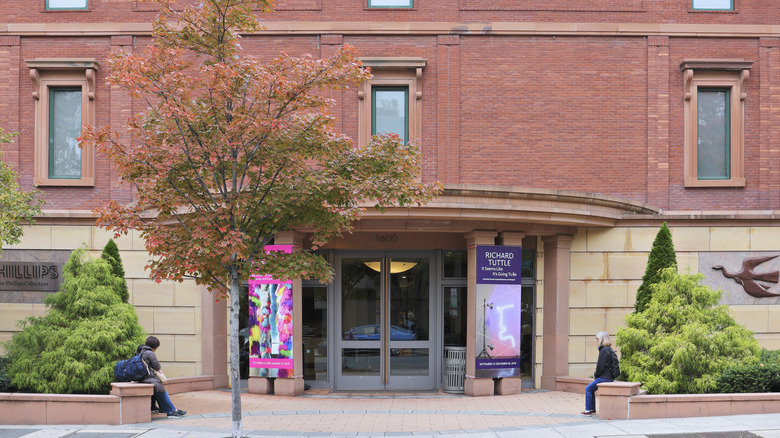
Though I lack the basest artistic skills, I have always enjoyed the visual arts. Whenever I'm in a new city, I often seek out local art galleries I can explore in my free time. Thus, the Phillips Collection was the first non-Smithsonian museum I visited when I first moved to D.C. In line with D.C.'s proud tradition of affluent philanthropy, historic architecture, and rich cultural gravity, the Phillips Collection is another impressive museum bequeathed by a prominent art collector and housed in said collector's opulent home.
The Phillips Collection comes courtesy of Duncan Phillips, an early 20th-century art collector and critic (and, like me, a transplant to D.C. from Pittsburgh). Phillips helped introduce modern European art movements like impressionism, post-impressionism, and expressionism to the United States in the 1910s. In 1921, he and his mother officially opened the Phillips Memorial Art Gallery (in honor of his recently-deceased father and brother), with Phillips' impressive modern art collection housed in his gorgeous Georgian Revival mansion in Dupont Circle.
Today, the Phillips Collection has (in my mind) the best D.C. art collection outside of the Smithsonian. Visitors can find paintings by Picasso, Van Gogh, Renoir, Monet, Cézanne, Matisse, and plenty of other artists, both historic and contemporary, across nearly 6,000 individual works. What I love about the Phillips Collection is how well it integrates its exhibitions with its (relatively) intimate space. You can see masterpieces by Picasso or Van Gogh hung above a fireplace, or framed near a stairwell, giving the impression that you've been invited to a private home, not a museum that's open to the public for $20. The museum still follows Phillips' unconventional curation approach by frequently changing the arrangement and displays of its permanent collection, ensuring that no two visits are exactly alike.