
California Has More National Monuments Than Any Other State. Here Are The Top 5 To See, According To Visitors
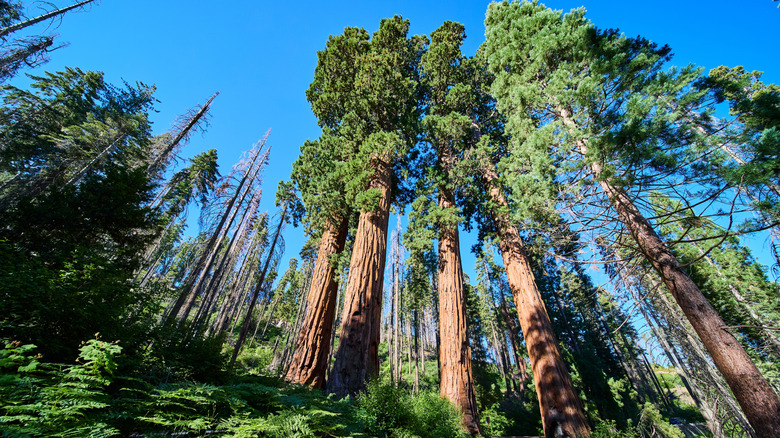
California has long been known as a protector of its lands — about 25% of the state, in fact. Preserved landscapes range from glacial valleys and alpine lakes to volcanic craters, salt flats, vast deserts, fog-covered forests, and sweeping grasslands. California also contains more national monuments – 22 in total — than any other state. While they're all remarkable in their own ways, a handful stand out as especially worthy destinations. As a longtime California resident, I'm admittedly biased — I think we should see them all, and I'm still working my way through the complete list. But using my own visits as a starting point and drawing on what travelers consistently praise across the internet — from Reddit to Tripadvisor, Google, and travel blogs — five national monuments rise to the top: historic Muir Woods with its towering redwoods; the surreal volcanic terrain of the Lava Beds; the unusual columnar formations at Devils Postpile; the sweeping landscapes and seasonal wildflowers of Carrizo Plain; and Cabrillo.
What's the difference between a national monument and a national park? Both are federally protected lands, but a national monument typically protects a specific natural, historical, scientific, or cultural feature and is established by presidential proclamation under the 1906 Antiquities Act. Monuments are managed by various federal agencies, including the National Park Service, Bureau of Land Management, and U.S. Forest Service.
By contrast, a national park is generally a larger landscape designated by an act of Congress and often protects a broader collection of natural features. Activities such as drilling or mining are typically prohibited on these lands, and some national monuments have later been incorporated into national parks (or vice versa). If you're planning a trip and need to prioritize, these five California monuments stand out as must-visit destinations.
Muir Woods
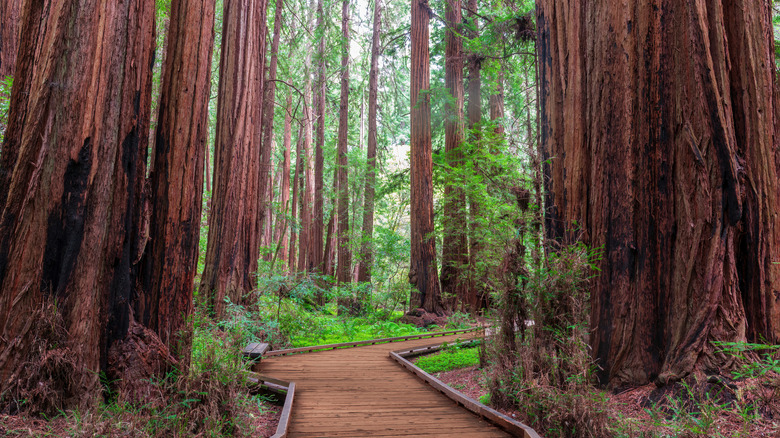
"Climb the mountains and get their good tidings. Nature's peace will flow into you as sunshine flows into trees," wrote naturalist John Muir, arguably the woods' most famous visitor, in 1901. "The winds will blow their own freshness into you and the storms their energy, while cares will drop off like autumn leaves." A stroll through Muir Woods — home to ancient coast redwoods, among the tallest trees in the world — offers total rejuvenation. These old-growth giants are some of the last of their kind, made all the more precious by their proximity to San Francisco, just 16 miles south. As you crane your neck toward fog-wrapped branches 300 feet overhead and breathe deeply of the forest's petrichor, you'll sense the same quiet magic Muir described.
This is the ancestral land of the Coast Miwok, who stewarded these forests for generations, hunting, fishing, and harvesting in what is now Marin County. In 1903, Muir famously took President Theodore Roosevelt on a Yosemite camping trip to advocate for federal preservation of natural lands. That journey helped catalyze the modern conservation movement, paving the way for expanded federal protections, including the establishment of the U.S. Forest Service and, in 1908, the designation of Muir Woods as California's first national monument.
Muir Woods is a worthy side quest for anyone visiting the Bay Area, with easy trails and timed entries. Reserve in advance, and be prepared to lose cell service. Not that it needs validation, but visitors consistently echo Muir's sentiment. It holds a 4.7 out of 5 stars on Tripadvisor and a 4.8-star on Google, with thousands praising its peaceful grandeur. "The huge, tall trees seem like they have spiritual powers," wrote a reviewer. "It feels like a fairytale woods when you're here."
Carrizo Plain
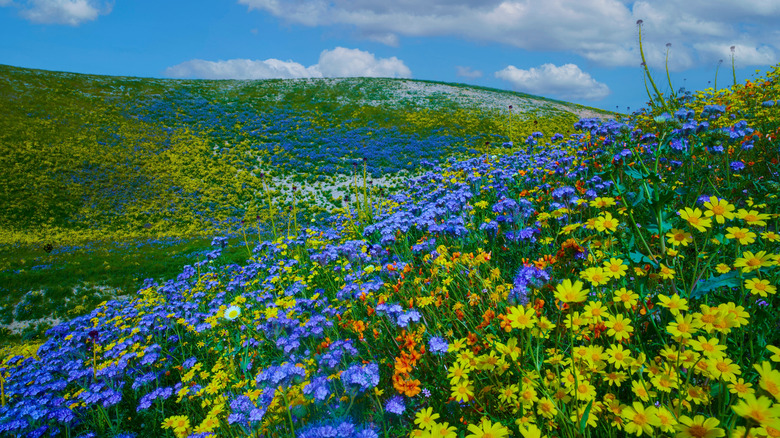
Designated by President Bill Clinton in 2001, Carrizo Plain National Monument protects roughly 250,000 acres of California's largest remaining native grasslands. Its wide, empty valleys and rolling hills offer a quiet escape that harkens back to the state's pre-agricultural past. In spring, the plain becomes one of the best places to see iconic California wildflower blooms — daisies, goldfields, fiddlenecks, and poppies spread across the grasslands in vivid displays. The Bureau of Land Management describes it as "one of the best-kept secrets in California," where visitors can experience rare quiet and wildlife. Sometimes called "California's Serengeti" for its roaming pronghorn antelope, black-tailed deer, and growing herds of tule elk, the monument also supports one of the highest concentrations of endangered species in the state, including the California condor and the San Joaquin kit fox.
The monument is located in San Luis Obispo County, 70 miles east of San Luis Obispo and 160 miles northwest of Los Angeles, between the Temblor and Caliente Ranges along the San Andreas Fault. One of its most distinctive features is Soda Lake, a bleached-looking dry alkaline lakebed covering roughly 3,000 acres that was once mined for salt. The landscape also holds deep cultural significance for Indigenous communities, including Painted Rock, a sandstone formation containing ancient Chumash paintings. Visitors can access the site via hiking trail from July through February, but a pass — obtained through recreation.gov – is required.
Carrizo Plain National Monument holds a 4.7-star rating on Google, with visitors praising its sweeping scenery and seasonal superblooms, but warning that most of the roads are dirt, rutted, and remote. "One of California's enduring jewels," wrote a visitor. "A truly wild National Monument," added another. "No cell service, almost no facilities, no water, few restrooms, no gas, so bring everything you'll need for a full day out."
Devils Postpile
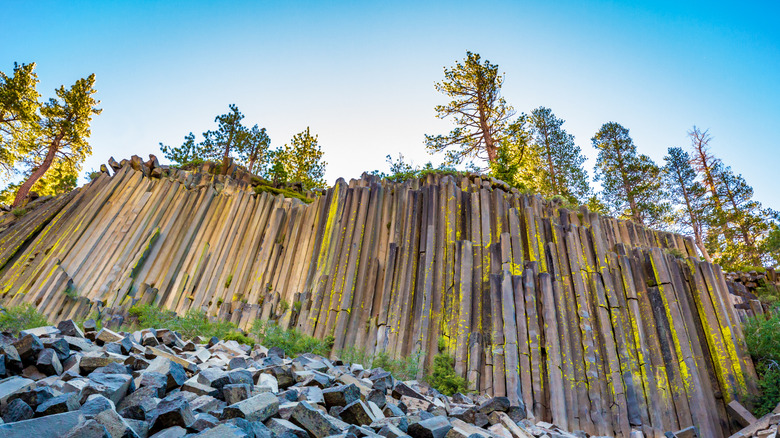
Among California's many natural wonders, few are as unusual — or as overlooked — as Devils Postpile National Monument, a mini version of Yosemite, without the crowds. Located in the high country of the Sierra Nevada near Mammoth Lakes, the monument's towering basalt columns form one of the most striking geological landscapes in the United States. Adding to its aesthetic, the monument is only open during the summer months, making a visit an even rarer treat. "One of the most unusual formations I've seen," wrote a visitor. "What a unique geological formation! Definitely a must, and you definitely need to hike down to lower Rainbow Falls," shared a Google reviewer.
It's not just called mini Yosemite: Devils Postpile was once part of the national park when it was established in 1890, but was removed in 1905 when boundaries were redrawn. The change came amid proposed railroad developments in the High Sierra, along with agricultural, mining, and dam-building interests. In 1911, President William Howard Taft stepped in and signed a proclamation to preserve roughly 800 acres of the Sierra Nevada, including Devils Postpile. For more than a century, the unique geological formation has drawn visitors to this striking landscape deep in the wilderness, as well as the nearby Rainbow Falls, which towers 101 feet above a pristine alpine pool. Moderate hiking trails abound, and a mandatory shuttle provides access to the monument, helping mitigate crowds and traffic.
With 4.7 stars across roughly 1,700 Google reviews and 1,000 reviews averaging 4.5 stars on Tripadvisor, Devils Postpile continues to remind visitors of California's most remarkable natural wonders. "If you're going to Mammoth ... be sure to stop at Devils Postpile," wrote a visitor. "The fallen pieces that look like giant broken pencils are truly amazing and one of a kind."
Lava Beds
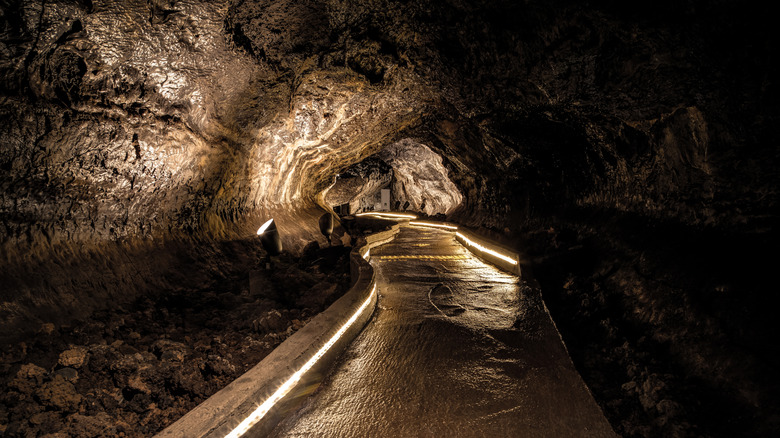
Boasting 4.8 stars out of nearly 2,000 reviews on Google, Lava Beds National Monument, established in 1925 by President Calvin Coolidge and located in the northern Cascades Range, is one of California's most unique national monuments. Encompassing nearly 46,700 acres and created by molten lava that sculpted caves, craters, and cones tens of thousands of years ago, one of its most notable features is the network of lava tubes — tube-shaped rock formations created when the outer layer of flowing lava hardened while molten rock continued moving beneath, resulting in a distinct, otherworldly appearance. "They are all so unique that it makes for an amazing place to explore," mused blogger California Through My Lens. "It is really out of the way when you are driving around California, but it is worth it to see."
A rugged landscape of desert brush and hardy plants like sage and western junipers supports wildlife like badgers and bobcats, while overhead, great horned owls, western bluebirds, and scrub jays patrol the skies. However, the real draw is the underground caverns created by the ancient lava flows. The National Park Service has kept things natural while making the caves accessible to modern visitors, but reviewers advise having flashlights in tow because only one cave, Mushpot, is lit. Others recommend bringing a change of clothes to protect bat populations when exploring multiple caves, as well as hard hats, which are also available to purchase at the visitor center. Don't miss Blue Grotto Cave, often recommended for first-time visitors, while more adventurous explorers can try the challenging Hopkins Chocolate Cave, Thunderbolt Cave, or the Catacombs — an especially long and complex labyrinth. No special spelunking gear is required, but visitors must procure a free caving permit upon entering the monument (standard entrance fee is $25 per vehicle).
Cabrillo
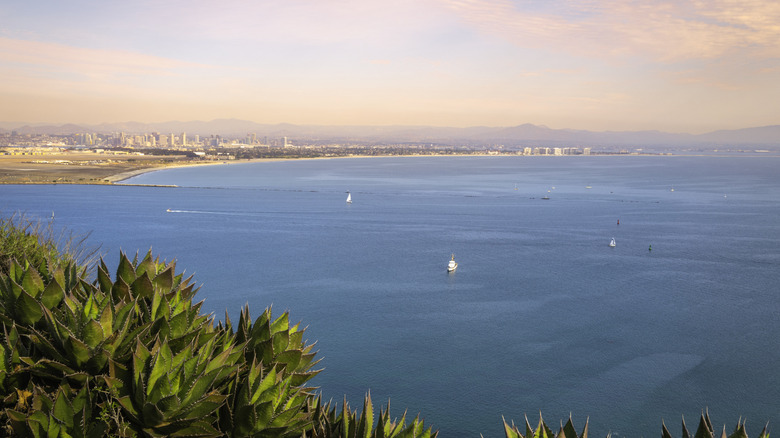
At the tip of the Point Loma Peninsula in San Diego stands Cabrillo National Monument, which commemorates the 1542 expedition led by Juan Rodríguez Cabrillo, the first European known to reach the West Coast of what is now the United States. The monument offers panoramic views of San Diego Bay, while visitors who descend the stairs to the stunning coastal trails can explore tide pools rich in marine life. In fall and winter, low tide often coincides with park opening times, making it the best time of year to visit — though the park is open year-round. With 4.8 stars from 13,000 Google reviews, it's clear visitors love it. "Spectacular views of the city and surrounding areas, and of course, the ocean and the bay," wrote one reviewer. "Beautiful trails along the coast, including tide pools."
Proclaimed a national monument in 1925 by President Woodrow Wilson and later expanded by President Gerald R. Ford, Cabrillo is the only national monument in Southern California to make this list, and the only one featuring sweeping views of the Pacific Ocean — one of California's biggest draws. The area also preserves U.S. military history, including the historic Old Point Loma Lighthouse, built in 1855 and one of the first lighthouses on the West Coast. Visitors can even peek inside the lighthouse on a self-guided tour using a downloadable audio guide from the National Park Service, or find a friendly ranger.
"Whether you're into history, nature, photography, or just want a peaceful place to soak in the scenery, Cabrillo National Monument delivers every time. Highly recommend!" raved one visitor. "This is the best place to visit in San Diego," noted another. "Amazing views from both the monument as well as the hiking trail."
Methodology
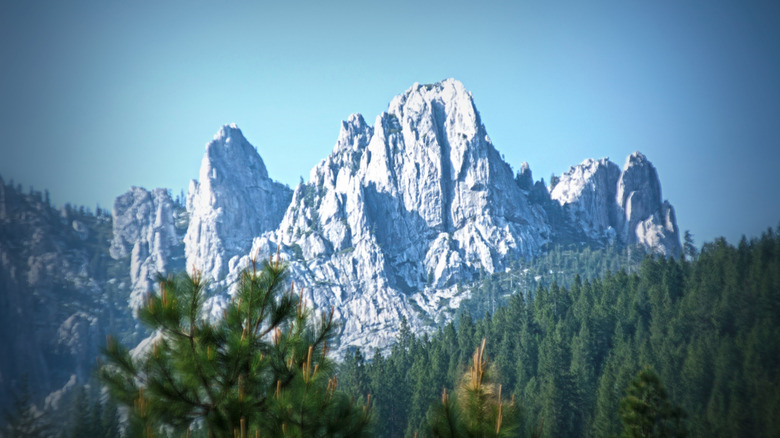
California is home to 22 U.S. national monuments, and narrowing down the list to just five was a challenge. As a longtime California resident, I've visited several of them over the years and have drawn on personal experience to help shape the selections, but to keep the process fair and consistent, visitor reviews have played a central role. We focused on monuments with ratings above 4.7 stars on Google, along with numerous highly favorable reviews on other platforms such as Reddit, Tripadvisor, and travel blogs. We also prioritized natural features that are rare or difficult to find elsewhere — from the coastal redwoods of Muir Woods and the stunning seasonal superblooms and rare wildlife of the Carrizo Plain to the striking geological formations of Devils Postpile, the incredible lava-tube caverns of Lava Beds, and the panoramic ocean vistas and tide pools of Cabrillo.
Geographic range was another consideration. We aimed to highlight monuments across the state, from Northern to Southern California, while also considering accessibility. Can visitors easily access these landscapes, or do they require strenuous hikes or specialized gear? In most cases, these destinations are accessible to a wide range of visitors, though some may require advance reservations or benefit from resources like four-wheel-drive vehicles or hard hats.
The result is a list with something for everyone — whether you prefer mountains, forests, oceans, caves, wildlife, or flower-filled plains. California is waiting for you.