
Just Outside Charleston Is South Carolina's Centuries-Old Natural Wonder That's Well Worth The Trip
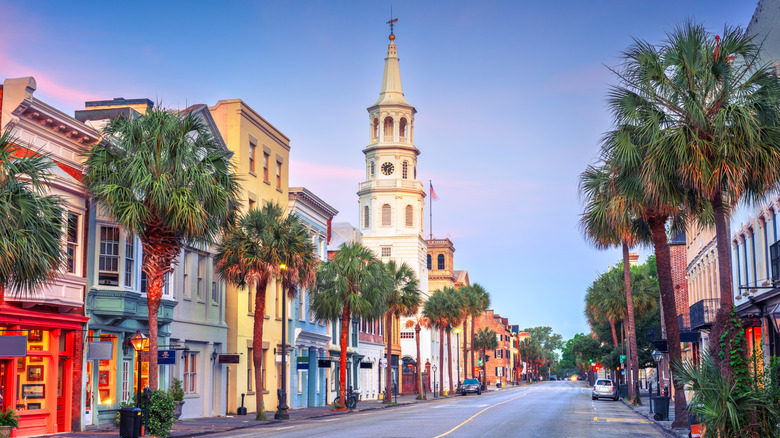
Charleston, South Carolina, is known for its prominent place in American history and its charming Southern aesthetic. Its downtown historic district features tourist-favorite pastel buildings on Rainbow Row, along with the Battery's mansion-lined promenade that looks out over the harbor that's seen so much, from British fleets during the American Revolution to the first shots of the Civil War. But it's not just the buildings that have seen a lot of history. There are pieces of the natural landscape that have been here even longer and still survive today, like Charleston's Angel Oak.
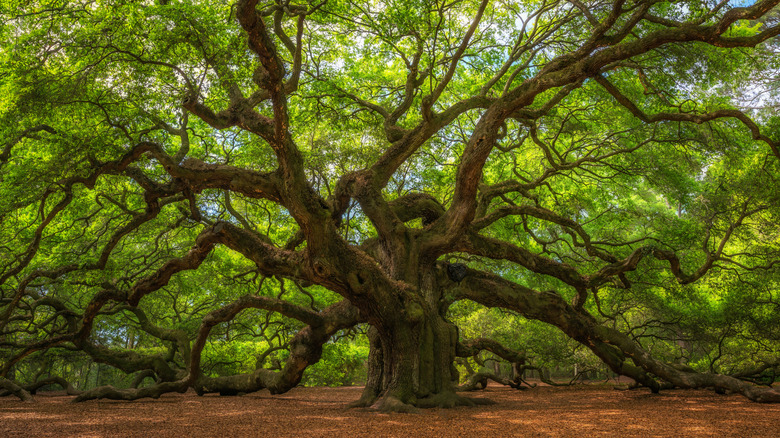
According to the City of Charleston, this massive oak tree is older than the country and "the largest live oak east of the Mississippi." Over 400,000 visitors flock to see it each year, cementing its place on Charleston's must-see list. Charleston is home to some incredible natural wonders, thanks to its warm, humid climate and its location where the Ashley and Cooper Rivers meet the Atlantic Ocean. There is always something in bloom here, and Southern live oak trees with their long strands of Spanish moss waving in the breeze give entire neighborhoods a unique, dreamy quality. But they're all dwarfed by the Angel Oak.
Angel Oak is worth the drive from downtown Charleston
The Angel Oak is tucked away in a small park on an unassuming dirt road on Johns Island, one of Charleston's fastest growing suburbs, a few miles from downtown. The drive to get here is on the way to Kiawah, Seabrook, or Wadmalaw Islands, but you need a rental car (or a tour) to sightsee in this direction. Yet it's one of the most popular tourist sites in Charleston.
There is no shortage of live oak trees in this area, but the Angel Oak is the oldest and the biggest. Scientific estimates put the tree at about 400 years old. Its age and even its height aren't the most impressive parts, though. That'd be its breadth, the shaded area that the tree's canopy covers. Angel Oak covers an incredible 17,000 square feet with a circumference of 25.5 feet.
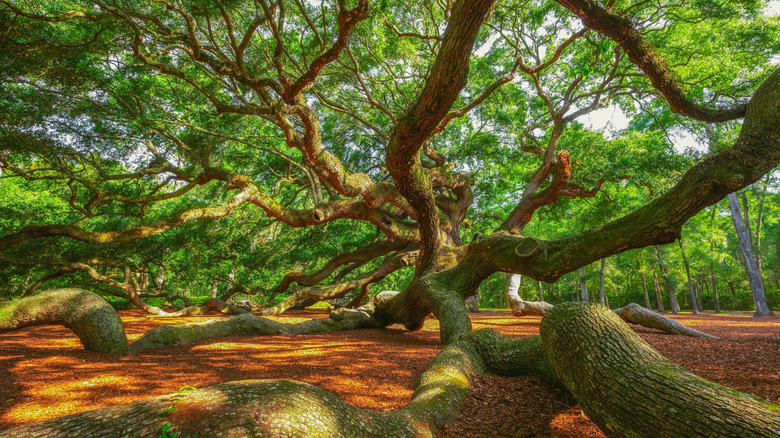
Its many branches stretch out from the trunk in roller coaster waves, sometimes dipping below ground before popping back up again a few feet later. As you circle the tree, you'll think you've strayed into a fairytale. Southern live oak trees are considered evergreen, so there's always soft, diffused sunlight through leafy branches, perfect for capturing photos for your vacation memories.
Avoid disappointment with a little preparation before your visit
Angel Oak is located inside a county park on Johns Island, a 30-minute drive from downtown Charleston. It's free to visit, but the park has operating hours and closes on some public holidays. Last entry is 10 minutes before closing time, but the gift shop closes 30 minutes before. A very tall fence encircles the park, and the gates close at exactly 4:50 p.m.
Parking can be a challenge on busy days, which is most of the year, thanks to the warm climate. Weekends will always have the worst crowds. There isn't a parking lot, except for a handful of handicap-accessible spots. Park in any open spot in between the trees along the dirt road. Just be sure not to block the road.
Once inside the park, there are a few strict rules to follow. Most are obvious rules that protect the tree: no climbing, no carving, etc. The photography policy is also strictly enforced. Photoshoots are not allowed without a permit. Tripods, blankets, and props are all forbidden on or around the tree.