
Hawaii's 5 Most Walkable Downtowns Make Perfect Bases For An Island Vacation, According To Travelers
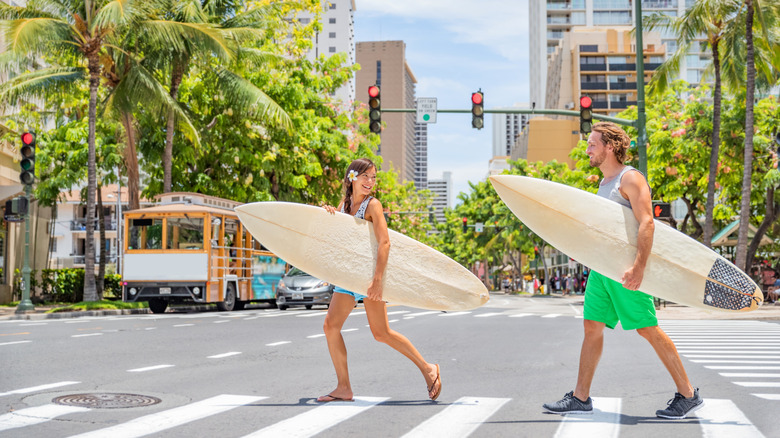
Because most destinations in Hawaii are best explored with a set of wheels, especially if you've got plans to fit the state's best bits into one gorgeous island-hopping route, most visitors resign themselves to navigating unfamiliar roads here in a car. But there's good news for those determined to go car-free: Hawaii has a handful of walkable downtowns that make cars optional — and they're delightfully compact, convenient, and charming enough to be a perfect base for an island vacation.
A chorus of travelers and experts notes that visitors to The Aloha State can still pull off an amazing, car-free holiday, so long as they keep their expectations in check. Bruce Fisher of Hawaii Aloha Travel, for example, argues that it's possible if you stay in areas that have shops, restaurants, and nightlife within easy reach. A Redditor on the r/MauiVisitors subreddit backed up this sentiment by saying, "You don't absolutely need a rental car to have an enjoyable holiday. Really think about what kind of trip you want to have, and how much driving you will need to do."
Taking this advice to heart, we consulted editorial travel guides, official tourism websites, and feedback from real travelers on platforms like Reddit, Tripadvisor, and Google Reviews to narrow down Hawaii's most walkable downtowns. From a laid-back Maui town perched at the entryway to the Road to Hana, to a charming — if reliably rainy — community on the Big Island, these are the Hawaiian destinations where the cars stay parked, and the exploring is done on foot.
Waikiki, Oahu
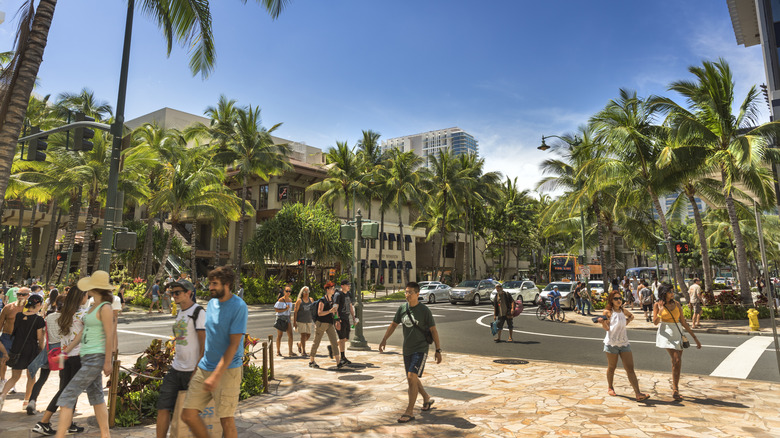
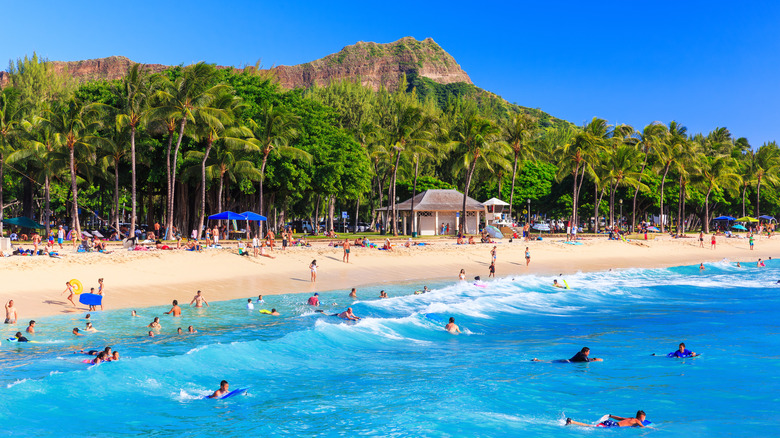
Beaches, hotels, restaurants, cultural attractions, and surfboard rental shops are aplenty in downtown Waikiki (Waikīkī), and they're all within walking distance. Add to that a 2-mile shoreline made up of seven beach sections that can be crossed on foot from end to end in under an hour, and you've got all the proof you need that downtown Waikiki makes a practical travel base even without a car.
Waikiki's waterfront strip, Kalākaua Avenue, lined with all the amenities one could need, is pedestrian-friendly and understandably busy. But there are gems to discover beyond the busy beachfront, like Gray's Beach, a secluded spot with a more intimate vibe, or the 3-mile Waikiki Historic Trail, which traces historic and cultural Waikiki landmarks through dozens of bronze surfboard-shaped markers. For indoor activities, a scenic stroll along the beachfront leads to the Honolulu Zoo and the Waikiki Aquarium.
But what makes it such a great home base? With accommodations ranging from hostels to five-star resorts, you're right in the center of everything the neighborhood has to offer. "Budget options are better in Waikiki," as one traveler pointed out in the r/VisitingHawaii subreddit, "and it [has] easier access to more things." For visitors without a car, this means spending your holiday relying on your feet, shared bikes, and ride-shares. Tourism and daily life are supported by the Skyline rail system and TheBus, transit systems that serve nearly the entire island, including the airport, cultural destinations, beaches, and scenic locations too far to walk to from downtown.
Downtown Hilo, Big Island
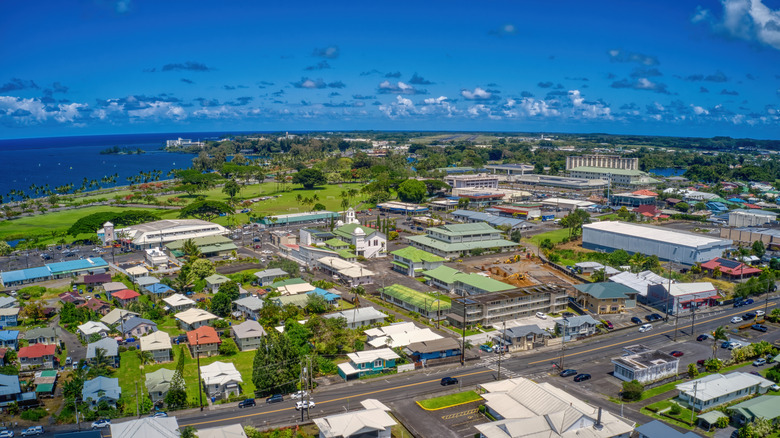
You can't talk about walkability without mentioning Hilo, a pedestrian's paradise — and a laid-back one at that. Hilo sits on the windward side of the Big Island, owing its small-town authenticity to a mix of natural landscapes and a small but well-appointed downtown. Its flat streets are well-suited to lazy island strolls and cycling, so Hilo is an affordable city and an underrated base for travelers looking to take it slow and savor the aloha.
Kamehameha Avenue stretches along Hilo Bay, lined with local shops, restaurants, and cafes. Roaming the town on foot gets you up close and personal with local life, like mornings at the Hilo Farmers Market browsing a colorful display of fruit, flowers, and local crafts. Visitors can also take a cultural dive into Hilo history via the neo-classical Palace Theater and the Pacific Tsunami Museum, both an easy walk from the bayfront. A stroll through the 27-acre Japanese-inspired Lili'uokalani Gardens or a trip to Wailuku River State Park's Rainbow Falls make great options for winding down the day.
Without a car, travelers can reach Hilo via the Hele-On Bus, which runs daily from Hilo International Airport to downtown; the same bus network also connects Hilo to the Volcano National Park. The only downside to Hilo? It's the rainiest city in the U.S., averaging 211 days of rain per year. " I didn't have a car when I was going to college in Hilo," wrote one Redditor in the r/MovingToHawaii subreddit. "As long as you're willing to get wet, Hilo is extremely walkable."
Haleiwa, Oahu
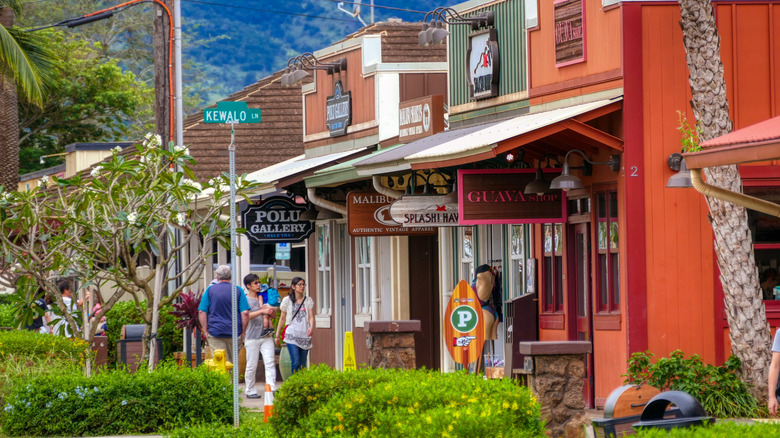
Located on Oahu's North Shore is Haleiwa (Hale'iwa), whose small-town atmosphere is a stark contrast to Waikiki's bustling, big city vibe. It was the site of a thriving sugarcane plantation industry in the early 20th century, and the architectural style of its downtown still reflects this.
Haleiwa's compact downtown — a commerce-packed strip along Kamehameha Highway that runs parallel to the shoreline — can easily be traversed on foot, with shops, grocery stores, a drugstore, art galleries, restaurants, and food trucks all within walking distance of each other. "Lots of boutiques and great art galleries, and of course surf shops," wrote one traveler on Google Reviews. "Fun to walk around and window shop and visit the stores and galleries. Great dining and food options abound, too. Easy to spend a day walking and sightseeing."
Ali'i Beach Park is a 20-minute stroll from downtown, practical for surfers planning to catch Haleiwa's massive winter waves, which are not for the faint of heart. According to Surfline, North Shore waves promise "a workout capable of kicking the crap out of anyone, no matter how accomplished." The waters are calmer in the summer, delivering an easygoing beach atmosphere. Haleiwa Beach Park, whose waves are moderated by a breakwater, wins families and casual swimmers over. Dedicated basketball, volleyball, and softball areas are also found within this 13-acre park for breaks from the beach. Beyond its reputation as a surfing mecca, Haleiwa also offers great snorkeling, trails, and island flavors, making it an ideal base for any itinerary built around beach time, good eats, and adopting the slow pace of Hawaiian living.
Kapaa, Kauai
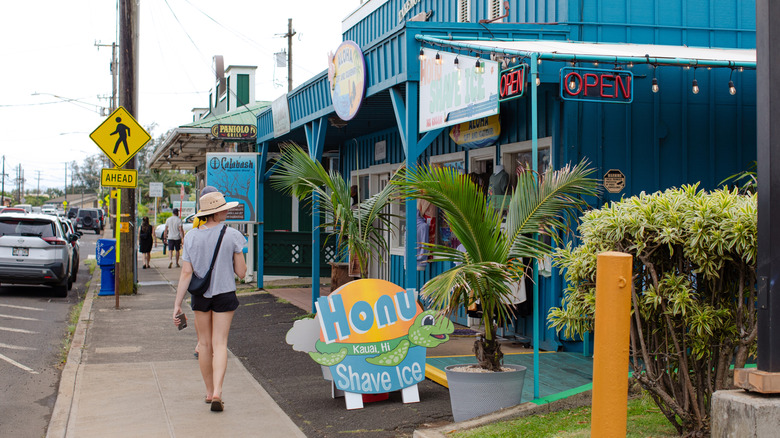
When it comes to ticking off a bucket list of Kauai activities, choosing where to stay matters more than you think — the island runs on a single main coastal road, and that road spells traffic between one attraction and the next. And while most visitors hem and haw between staying near the scenic valleys of the island's North shore or the resort atmosphere of its South shore, the small eastern town of Kapaa (Kapa'a) enjoys a central location between both, and a lively downtown that's easily navigable on foot.
Its downtown area encompasses the northern end of town along a stretch of Kuhio Highway just behind Kapaa Beach. And because locals actually live in Kapaa, the town has managed to hold on to its Hawaiian authenticity. This ups the draw for travelers looking to experience something other than resort life. "Kapaa is home to many locals," wrote one Redditor on the r/KauaiVisitor subreddit. "So it is less touristy and gives you more opportunity to meet and talk to locals, who we found to mostly be very nice."
Boutiques, restaurants, and cafes occupy plantation-era buildings, all within walking distance from each other. Art Walk, held every first Saturday of the month in Old Kapaa, is a much-anticipated event featuring food truck fare, handcrafted goods, and live music. The beaches of Fuji, Waipouli, and Kapaa Beach Park lie just a few minutes' walk from downtown. To get in some extra steps, the Ke Ale Hele Makalae Coastal Path offers 7.6 miles of flat, paved walking or cycling, weaving in pavilions, playgrounds, lookout points, and beach access along its coastal route.
Paia, Maui
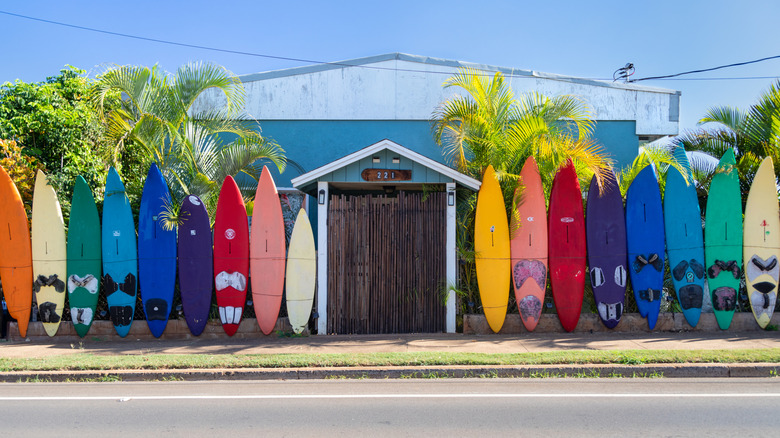
"If resorty and touristy aren't for you, Paia is a solid home base to hang and explore the rest of the island," a Redditor counselled to a hesitant first-time visitor to Hawaii on the r/MauiVisitors subreddit — a solid piece of advice worth taking. Paia (Pā'ia), a town nestled along Maui's North Shore, is a destination built for wandering. Anchored at the junction of Hana Highway and Baldwin Avenue are surf shops, funky boutiques, local eateries, yoga studios, and cafes that can be navigated on foot. This walkable core and the nearby Baldwin Beach Park and Paia Bay add up to what you'd expect a laid-back beach escape to be.
Paia's vibe is unmistakably bohemian, shaped by a strong windsurfing culture that draws free-spirited travelers to this stretch of Maui's North Shore. Surfers and windsurfers are usually found at Ho'okipa Beach Park, whose wind-whipped waves have earned it the reputation as the Windsurfing Capital of the World, watched by curious onlookers from the cliffside perch of Ho'okipa Lookout. Keep your eyes peeled for sea turtles, which tend to bask on the shore below the lookout point. Renting a bicycle will get you from downtown to Ho'okipa Beach in around 15 minutes, and you can also cycle the family-friendly Paia Bike Path, which runs all the way down to Kanaha Beach.
Paia is also a convenient base if you're planning to drive the Road to Hana (officially Hawaii Route 36). It's a scenic road trip that rewards those willing to tackle the nearly 65 miles of narrow roads and hairpin turns with some of Maui's finest landscapes — waterfalls, beaches, lookout points, and forests.
Methodology
We selected our walkable downtown districts by researching multiple sources and choosing those that met our criteria: a walkable core with enough amenities and attractions for a comfortable vacation. We consulted editorial travel guides, including Hawaii Magazine, official tourism sources, such as Go Hawaii and The Hawaiian Islands, and community feedback from travel bloggers, Reddit, and Tripadvisor, which offered tried-and-tested assessments of each destination's pedestrian friendliness. We also cross-checked locations on pedestrian-centric platforms like Walk Score to verify walkability claims.
These picks were then bolstered by reviewing public transit development, which included buses, rail systems, and bike- and car-sharing networks. For geographic range, we aimed to include a selection of destinations across the main Hawaiian islands — one each from the Big Island, Maui, and Kauai, and two from Oahu.