
These Are The 5 Deepest Lakes You Can Visit In Florida, According To Statistics
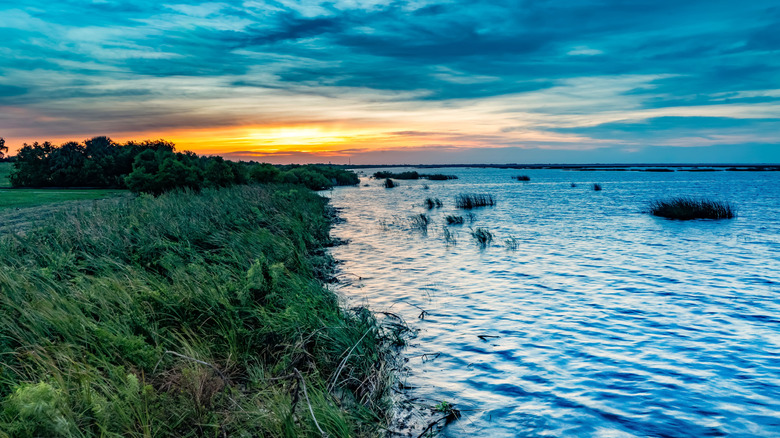
For less experienced swimmers, lakes provide a respite from a common fear of depth. After all, what are lakes except pools made by nature? Well, going for a dip in a lake in Florida may not allay those fears. The Sunshine State is one of the states with the most lakes, with over 35,000 making up 3 million of the state's 36 million acres, and you can't touch the bottom in many of them. In fact, the five deepest lakes you can visit in Florida are at least 50 feet in depth, but you'd have a hard time deciphering which ones just by looking at them.
Lake Okeechobee, Florida's largest freshwater lake and "inland sea," comprises 448,000 acres of blue, yet its average depth of 9 feet makes it the lake equivalent of a kiddie pool. Even the state's second-largest, Lake George, at 24 feet deep, doesn't come close to making the list. Turns out there's more to a lake than just its sheer size and depth. Some of Florida's deepest lakes live within a category of their own. In most cases, geology, time, and nature have combined to create cavernous waterholes.
Many on this list are sinkhole lakes, resulting from a natural phenomenon that occurs on much of the Sunshine State's karst terrain. Erosion, acidic precipitation, and thousands of years combine to dissolve the softer dolomite and limestone undergirding the terrain, opening holes that, combined with existing cavities or caves, can reach down hundreds of feet. While sinkholes have a reputation for causing sudden collapses below existing structures and land, some have been around for thousands of years, collecting water. In the end, a small depression in the ground becomes an uncannily deep lake.
Leeland Lake
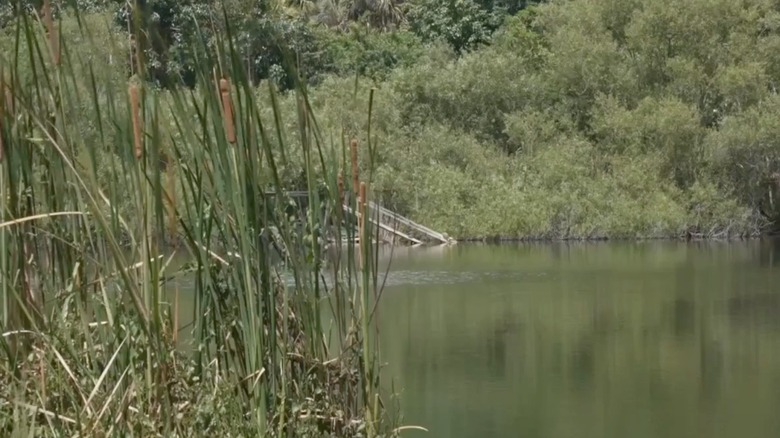
Leeland Lake, the grand dame of Florida's sinkhole lakes, lies in Lehigh Acres in Lee County, just off Joel Boulevard. Its 208 feet of depth contains a funnel-shaped plunge that's the only known sinkhole lake in the county, according to the U.S. Geological Survey. Over a decade ago, archeologists and researchers speculated that the circular hole may contain artifacts that date back 16,000 years. Those suspicions were confirmed in 2023, when divers found a skull and other parts of a skeleton in the lake's alligator-infested waters. "We weren't sure if it was a homicide victim," Captain John Kreatsoulas, who, along with his wife, found the bones, told local news crews. "We knew it was old, I just didn't know how old." Authorities determined the discovery could be of historic significance.
"People started telling me it was the deepest lake in Lee County, and some even called it 'a bottomless pit,'" said Ken O'Leary, who owned the property that contains Leeland Lake, according to the Lehigh Acres Citizen. The lake's property changed hands in 2024, when the Lehigh Acres Municipal Services Improvement District (LA-MSID) purchased it.
The lake-slash-bottomless pit was created about 2.5 million years ago. Its future, however, is as a public amenity. "It's going to be a place of serenity, you know, a real peaceful place," LA-MSID director Dave Lindsay told Fox 4 News in Fort Myers. The group's plans for walking paths and an interpretive center at the heart of a new park have been put on hold. You cannot enter the waters at this publicly-owned site — and with those gators in there, why would you? But you can get close enough to see it and wonder about the centuries of history hiding below the surface.
Deep Lake
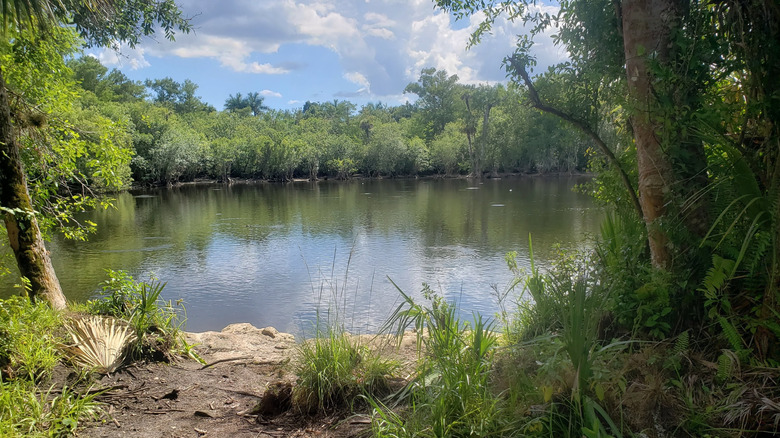
Big Cypress National Preserve is usually known for its cypress forest (obviously), alligators, black bears, and the endangered Florida panther, as well as over 700,000 acres of swampland. Yet, somewhere within America's first national preserve lies the Sunshine State's second-deepest lake, the 42-acre Deep Lake, which plunges down 90 feet into the Earth. While visitors can off-road, canoe, or hike across the preserve's 729,000 acres, they can also take a quick jaunt to a glorious waterhole with arguably the most on-the-nose moniker ever imagined.
The sinkhole lake has both literal and metaphoric depth, reaching down 90 feet while also layering unique history and natural phenomena. While it may be one of the deepest in the state, it technically can't claim to be the deepest freshwater lake, as the water is split 50/50, with the top half being freshwater and the bottom being saltwater. That knack for layers applies to the lake's history, which has seen various people drawn into, then forced away from, its depths. A litany of groups, from Seminole tribes to grapefruit magnates and conservationists, chanced upon Deep Lake, either exploiting it or trying to conserve it. Today, visitors can reach the lake via a 2-mile round-trip trail that runs along an old rail line.
"A very unique and mysterious place," wrote one Reddit user, echoing previous visitors. "It was weird seeing snook and other saltwater fish swimming with bass and gators. Definitely will go back soon."
Lake Verona
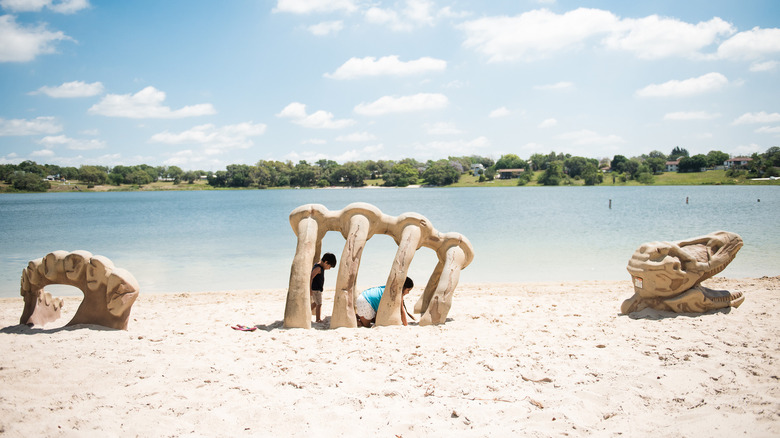
While it may not have the bottomless pit factor of its cavernous siblings, Lake Verona's 80-plus feet of depth are arguably the most accessible of Florida's deep lakes. The 41-acre expanse of blue is part of Avon Park's complex of green spaces and carries with it the usual amenities one would expect in a public space. On land, there's a mix of playgrounds, bathrooms, and viewing areas surrounding the park. The city of Avon Park has invested heavily in making the lake a green space worthy of an entire day out and about (yes, pickleball courts are also in the works).
There's fun to be had in the water, too. Boating enthusiasts and kayakers can enjoy its waters via a boat ramp. The lake also allows public swimming and scuba diving, with the occasional closure happening for public safety reasons. Anglers can also enjoy bountiful days out with a rod and reel. Largemouth bass and bluegill call Lake Verona's waters home.
Lake Tulane
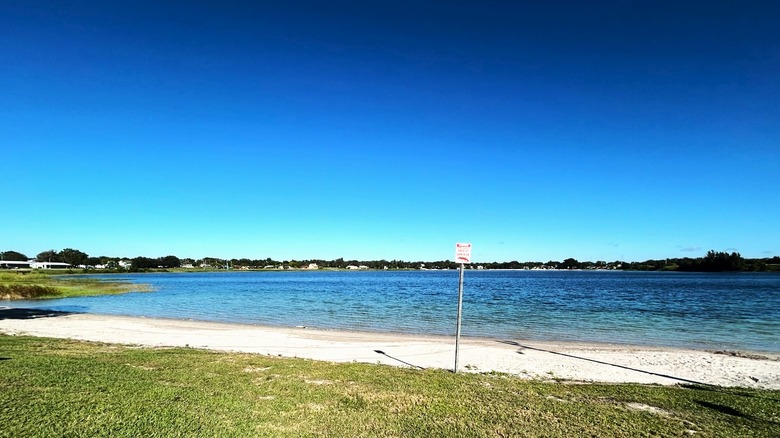
Credit Avon Park for making this list twice, with another uber-accessible, cavernous lake. Lake Tulane's 88 acres and 70 feet of depth rest five minutes from Lake Verona, offering visitors a double-whammy of lakeside fun. Enjoyed by locals and passersby alike, its eponymous park is a little humbler than its sibling, with pavilions and a sandy beach. Yet don't discount the humble offerings, which still pack a potent experience.
Lake Tulane's white sand beach rests along crystal clear waters that let you see down as far as 30 feet, depending on the day. It's ideal for a fun day at the beach, if you don't mind sharing the water with scaly green carnivores who double as an unofficial mascot for the Sunshine State. Yes, alligators swim in Lake Tulane ... and you can too, if you're willing to take the risk. You may not hop into the water, but you can float above it. Bring a rod and reel along the way, and you can hopefully reel in some of the lake's crappie, largemouth bass, or bluegill.
Anglers, swimmers, and families aren't the only groups flocking to Lake Tulane. Researchers have used the lake — the oldest in the United States — and its sediments to explore fire activity in the area, giving a sense of fluctuations in climate. The samples taken from the lakebed are some of the oldest in the eastern U.S. They also reveal the regularity of Heinrich events, when glaciers suddenly released large amounts of freshwater and altered weather patterns.
Lake Sirena
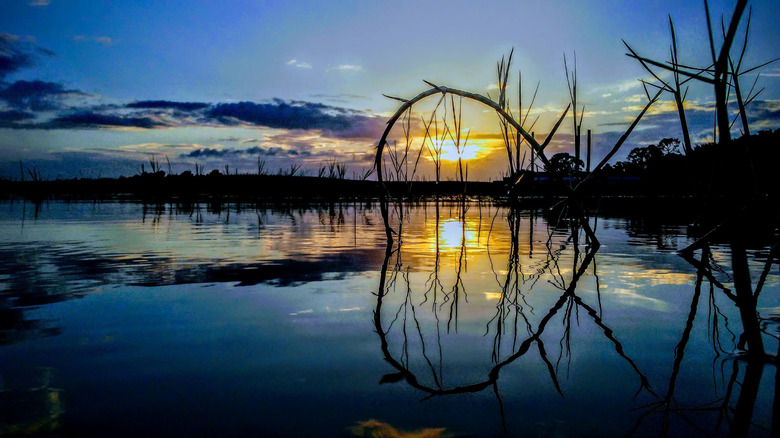
The 133-acre Lake Sirena sits at the southwestern edge of Lake Placid, an underrated "town of murals" packed with vibrant, historic art. While the other lakes offer a bit more accessibility, Lake Sirena is surrounded by private residential property and citrus groves, making broad access and beachfront days a nonstarter. Its waters, however, are open to only a certain class of visitors: boaters. Visitors can access Lake Sirena via boat, opening the door for anglers hoping to reel in the largemouth bass, bluegill, and tilapia swimming in its waters. The lake's glass-like clarity lets visitors see up to 20 feet below, depending on the day.
Some travellers have enjoyed the view above the lake as well. "Lake Sirena Public Access is a hidden gem providing serene water access amidst residential Lake Placid," wrote a travel blogger over at Blogger Bill. "The intimate setting appeals to those seeking a peaceful, uncrowded waterfront escape."
Methodology
Collecting the depth information for Florida's 30,000-plus lakes proved a daunting task, as no research or public agency offered a single source of data. First, lakes less than 1 acre in size were eliminated, since the odds of them reaching significant depths were exceedingly low. Whether or not they even merit the title of "lake" is a subject of debate among scientists and government agencies.
The first hurdle was accessibility. Many of Florida's lakes are closed off to visitors. Some sit entirely within private property lines, with no public shoreline, boat ramp, or designated viewing area. Others fall inside protected habitats or managed preserves with limited public access to protect wildlife, sensitive vegetation, or water quality. For this list, physical proximity was the threshold. A lake counted only if a visitor could reasonably reach it via a public park, trail, roadside right-of-way, or a public access point such as a boat ramp. The destinations must function as real-world stops, not just blue holes on a map. That information, available via online searches for private lakes and public beaches, collectively eliminated many options.
Depth information was then pooled from several sources, focusing on the maximum depth readings. Depth readings were checked on the University of South Florida Water Institute's WaterAtlas lake profiles, a statewide portal that aggregates data from various agencies. The database's 7,700 bodies of water provided a substantial starting point, though few of them made the list. Lakes outside the WaterAtlas were checked on their individual data sets via online searching, usually provided by the organization that manages them. Data for Deep Lake, for example, came from the National Park Service. The resulting list was then ranked by depth.