
The Most Common Mistakes You'll Want To Avoid At All Costs When Booking An International Flight

Booking an international flight can seem straightforward, but even experienced travelers sometimes run into unexpected snags when going abroad. For first-time international flyers, in particular, it's not at all uncommon to make mistakes with booking cross-border plane tickets. Cabin classes, baggage policies, seat selection rules, and connection logistics tend to vary dramatically between airlines, and overlooking certain details can cause you unnecessary stress during your trip. Timing is also important here. Booking too early or too late, for example, can cause you to spend extra money.
Then, there are factors like passport regulations, visa rules, and layover logistics to consider. It's really not hard to see how a seemingly simple flight reservation can lead to major travel day issues. The good news is that most of these errors are easy to avoid with a little preparation. And remember, you can prepare to avoid mistakes in the airport, too! Once you understand travelers' most common pitfalls when going overseas, you can save money and avoid last-minute surprises yourself, which is always a good way to start a vacation! Here, we'll work through the 10 common mistakes you'll want to avoid at all costs when booking your next international adventure.
Waiting to long to book

Waiting too long to book an international flight is one of the most common mistakes travelers make. While it may be tempting to hold out for a last-minute deal, international fares rarely get lower as departure dates approach. There are occasional latecomer deals to be had on sites like Skyscanner, but it's a huge gamble to wait until right before your planned travel day to book. In general, if you can even get a seat on your preferred flight, you will probably have to pay significantly more than you would have if you'd booked earlier, and your seating options will likely be quite limited. And, frankly, nobody wants to be trapped in a middle seat in economy for a 12-hour long haul.
Where you're traveling to plays a role in when you should book international flights to get the best rate. For flights from the United States to Europe, you should typically get serious about booking three to five months prior to departure for the optimal combination of seat availability and pricing. For stateside departures to Asia or Oceanic nations like Australia and New Zealand, however, it's wise to book as far out as seven months before your trip. Monitoring fares early and securing tickets within these prime booking windows is a great way to get your next international vacation off to a smooth start.
Booking too early without research

While waiting too long to book can be costly and frustrating, the flipside is also true. Booking international travel too early without researching pricing trends can also result in higher fares. Airline tickets are often available about a year in advance, but unlike when booking a cruise vacation, the initial prices aren't always the lowest. Airline fares fluctuate over time based on a wide array of factors, including overall demand, seasonality (spring break and holiday season flights can be more expensive, for example), and route popularity. To put this in layman's terms, it means travelers who book international flights immediately after they drop off may miss better deals later on. Another pitfall of booking overseas travel super early is that it can limit flexibility if your plans or travel dates change, especially with restrictive cabin classes like basic economy.
Monitoring fare fluctuations over a period of time is often the smartest strategy if you're looking for the lowest cost. There are numerous flight trackers available to consumers today, but Google, Kayak, and Expedia all offer trusted options that allow you to customize alerts and flight calendars. One of these tools can help you feel confident that you're getting the right fare for your budget. And, while there are some travel agent warning signs and red flags you should know, using a trustworthy professional to help monitor flight costs is a great way to alleviate stress when it comes to traveling abroad.
Ignoring layover logistics

If you fly domestically on a regular basis, you might feel like you have a pretty good handle on the worst U.S.airports for layovers, but layovers abroad are sometimes a different animal entirely. International itineraries sometimes involve unfamiliar policies and procedures. For example, on two different trips, my husband and I have had to go through a mandatory bag search and screening process at our gate when laying over in Istanbul. You may also need to go through immigration or customs (depending on the nation and your travel itinerary) or depart from a different terminal than the one you flew into. Due to these types of situations, international connection times that seem reasonable on paper may not actually leave you enough time to make your next flight.
It's also important to take extra care if you're booking a self-transfer rather than a standard connection. In Paris, for example, we've flown into Charles de Gaulle but caught our "connecting" flight at Orly on the other side of the city. If you decide to do something like this, you'll also need to factor in baggage claim time at the arrival airport, travel time, and security screening time at the second airport. In fact, if you leave the airport at all — whether to catch a self-transfer departure or to sightsee — it's imperative to give yourself ample time and do your research. Some destinations won't let passengers exit the airport for any reason without a visa. Reviewing the airport layout and local procedures before your trip is the easiest way to ensure a pleasant layover experience, no matter where in the world you're headed.
Skipping seat selection

On shorter domestic flights within the United States, some travelers choose to skip seat selection to save money and just live with whatever seat assignment they are given at check-in. On long-haul international flights, however, this strategy backfires more often than not. If you don't choose your seat in advance, you could find yourself dealing with any one of several unfortunate scenarios. First, if a flight ends up being oversold and no seated passengers miss the plane, those who opted out of seat selection won't be allowed to board. This could obviously throw a huge wrench into your travel plans.
Another major potential problem is that travelers who don't select seats frequently wind up with middle seats on long-haul, international flights. You definitely don't want to find yourself in that spot (literally!) Finally, not picking seats in advance could force you to sit away from your travel party for a lengthy period of time. Although some airlines charge for seat selection, it's a small price to pay to make sure you're comfortable throughout your journey. Window seats tend to be the best choice for those who want to take scenic photographs or get uninterrupted sleep, while aisle seats are great for travelers who tend to feel claustrophobic or know they will want to move around throughout the flight.
Not confirming passport validity requirements
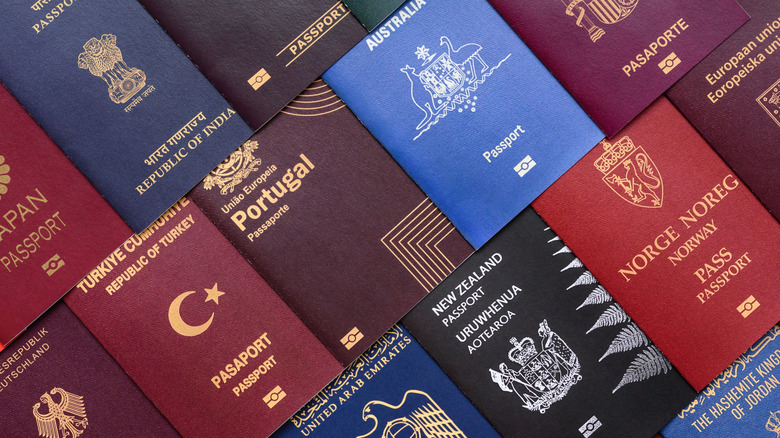
Passport validity requirements are easily among the most overlooked details when passengers are booking international flights. Just having a passport isn't always enough to enter another country. International governments often require that foreign visitors' passports have at least six months of validity beyond their planned departure dates. Singapore, Turkey, and the United Arab Emirates — home to Dubai, the world's safest destination for solo female travelers — are among these destinations. Other places, though, have shorter validity requirements. Many popular European travel destinations, including Germany, France, Italy, Norway, and Switzerland, have a three-month validity requirement. Still, other countries, like the Bahamas, allow Americans to enter as long as their passport is valid upon arrival.
The best way to ensure that you're compliant is to research passport validity rules well in advance of your trip, just in case you need to renew your documentation. Bear in mind that these policies don't necessarily only apply to your final destination. Some countries enforce passport validity requirements for transit passengers, which means you'll need to adhere to regulations even if you're only passing through an airport. Airlines are responsible for verifying travel documents, so if your passport expires too soon, you may not even be able to board in the United States. Major carriers like Delta and United make it easy for travelers to avoid mishaps with helpful guides.
Overlooking visa requirements
Some international destinations require U.S. travelers to obtain visas or electronic travel authorizations in advance, even for short trips or airport connections. Popular vacation destinations like Turkey, Indonesia, and Bolivia all have e-visa requirements, for example. A note on Indonesia, specifically: Ahead of an October 2025 Bali vacation, I discovered the online system frequently doesn't work. We were able to easily obtain our e-visa authorizations at the airport in about 45 minutes total, including waiting in line for a computer. Americans should also be aware of Europe's ETIAS travel authorization system, which is slated to take effect in the fourth quarter of 2026. ETIAS applies to Cyprus, Norway, and all Schengen Zone nations. The United Kingdom, meanwhile, has its own ETA travel authorization system for American citizens. This is generally a fast process. Personally, my ETA visa was approved about five minutes after I submitted my application through the official app.
Failing to secure the proper documentation for any international trip can seriously foil your travel plans. You could be denied boarding at your departure airport or, in serious cases, detained by immigration officials upon arrival until the issue is resolved. Visa requirements vary widely depending on the country, length of stay, and purpose of the trip, so doing research ahead of time is key. Carefully review entry requirements for every country on your itinerary, including layovers. In some cases, you may need a transit visa to simply pass through an airport. Taking the time to confirm whether you'll need a visa or travel authorization before you even book your flight is a great way to avoid stress later.
Failing to carefully compare cabin classes

When you begin seriously looking to book an international plane ticket, you'll quickly notice that basic economy and other restricted fares are the least expensive options, so it can be tempting to book these classes without doing further research. The true cost of seemingly low-cost fares, though, can be much higher once you factor in add-ons. These tickets frequently have limited, pricey seat selection, expensive fees for baggage, low boarding priority, and zero ticket flexibility. Travelers who choose the most restrictive cabin classes may end up paying additional fees for services and amenities that are included with standard or premium economy fares. On long-haul international routes, in particular, these differences can significantly impact the overall travel experience.
If you have to pay extra for checked bags, carry-ons on some budget airlines, onboard meals, and Wi-Fi, just to name a few, you might find that simply paying for a main cabin fare is the first place is the more economical option. It all comes down to how you personally view value. If amenities and inclusions are more important to you than saving money, a higher cabin class is probably the right option. If keeping the trip low-cost is your main goal, you may decide to live with the limitations of a restrictive fare. Since policies vary widely between airlines — we received two meals, a snack, cashmere socks, a toothbrush, and other toiletries in Turkish Airlines' basic economy class, for example — researching the cabin class options on your specific carrier is important.
Booking multiple tickets without proper planning

We briefly mentioned self-transfer itineraries in our layover logistics section, but it's worth taking a more in-depth look at these types of bookings, as they require additional planning. When a traveler books separate tickets for connecting flights instead of a single through itinerary, it can wreak havoc if anything goes awry. While these bookings are sometimes less expensive and can offer additional flexibility (if, for example, you want to spend a night exploring your layover city), they are riskier than airline-issued connection routes. Travelers who book separate tickets are 100% responsible for making their onward connection without any airline protections or guarantees. If a delay, cancellation, or missed connection occurs, airlines are typically not obligated to rebook passengers on separately purchased flights.
This means that travelers may need to buy a new (typically very expensive) ticket at the eleventh hour. They may also find themselves paying extra for things like baggage re-checks, meals, and unplanned overnight hotel stays. Once the flights themselves are sorted, travelers then have to deal with luggage, clearing security again before the secondary departure, and navigating unfamiliar foreign airport policies. If you are considering a self-connection, make sure to build in plenty of time between your arrival and departure times. In many cases, booking a single itinerary is the safe choice, but for those who want separate tickets for one reason or another, proper preparation is key to a positive experience.
Not considering time zone differences

It's very easy to overlook time zone differences when booking international flights. Though this may seem like a minor issue, not considering time zones can cause major confusion when your travel day arrives. Flight times are always listed in the local time of each airport, meaning your departure and arrival times may not initially make perfect sense, especially on overnight or long-haul itineraries. You might be leaving your departure city on one day and arriving in your destination the next, for example. It's not at all uncommon for travelers to misread dates or inadvertently infer an arrival time in the departure city's time zone. The issue doesn't stop at booking flights, though. Time zone confusion can also cause issues when managing your upcoming international trip.
Calendar apps and email confirmations sometimes auto-convert flight times into your home time zone, which can lead to incorrect reminders if you don't manually change them. I've personally had to do this in my Apple Calendar on more than one occasion! Another issue to consider is Daylight Savings Time. Some countries don't observe this practice at all, while others start and end their DST on different dates than the United States. To avoid any timing mistakes, always double-check that you're looking at flight times in the local time zone and confirm your departure details in your airline carrier's app when you check-in, usually 24 hours before your flight. Verifying flight times can help prevent missed boarding times and unnecessary stress when your trip arrives.
Disregarding cancellation and change policies

Every airline in the world has its own cancellation and change policies. These vary significantly among carriers, and even among different cabin classes on the same airline. Passengers typically focus on the base price when booking international airfare, but overlooking cancellation and change policies can lead to unexpected expenses. For example, some tickets may cost more upfront, but offer free alterations or cancellation within specified periods of time. Others, especially restrictive basic economy tickets, are likely to be nonrefundable or come with major fees to alter flight times or dates. Of U.S.-based carriers, Southwest and United tend to offer travelers the most flexibility after booking.
It is also, however, important to note that the U.S. Department of Transportation offers travelers some federal protection. If a flight ticket is booked at least a week before departure, airlines are legally mandated to let passengers make free changes within 24 hours of purchase. In some cases, after this one-day window passes, airlines may offer credits rather than refunds. These can have their own restrictions and expiration dates. Even if you don't anticipate changing your international travel plans, it's important to review the terms for every airline you plan to fly throughout your trip. Note that all of the advice here pertains to travelers changing or cancelling their flights. Different rules may apply if the airline itself makes changes.
Methodology

To put together this guide, I used my own knowledge of and experience with international flights. I also turned to official airline websites, guidance from the U.S. Department of State, and a variety of high-authority travel blogs, tour companies, and media outlets, including The Points Guy, Overland Summers, Travel and Tour World, National Geographic, Travel Made Simple, Travel +Leisure, and Allianz Travel.