
The 5 Most Popular Shoe Brands In The US For Hikers
We may receive a commission on purchases made from links.
Whether you're heading out into the wilderness for a months-long thru-hike, or you're just hitting the trail in your neighborhood to get your steps in, footwear is one of the most crucial gear decisions you'll make. Several of the most popular brands today are relative newcomers that make lighter, comfier footwear, while a couple are tried-and-true standards.
There's a common rule of thumb among backpackers, originating with the US Army Research Lab, that "one pound on your feet equals five on your back." For this reason, heavy leather hiking boots have fallen out of favor among experienced hikers in recent years. Lightweight trail runners have become the norm, even among backpackers on the Pacific Crest Trail (PCT) and Appalachian Trail (AT), according to recent thru-hiker surveys. It would be hard to go wrong with the brands most popular among these long-distance hikers. Of course, some hiking shoe choices are situational. The most popular choice for logging many miles on a groomed trail in the Pacific Northwest might be a lightweight trail runner, while canyoneering in the Zion desert might require a more rugged shoe.
To find out which popular hiking shoe brand is for you, there's really no substitute for trying on a variety of them — in the store and on the trail. However, we've looked through hiking websites, surveys of Appalachian Trail and Pacific Coast Trail hikers, and online reviews to give you a jumping off point. Of course, everyone's foot anatomy is different, so while the most popular shoe on the PCT (the Altra Lone Peak) is a good place to start looking, you may find out you're a Hoka person or a Brooks lover.
Altra
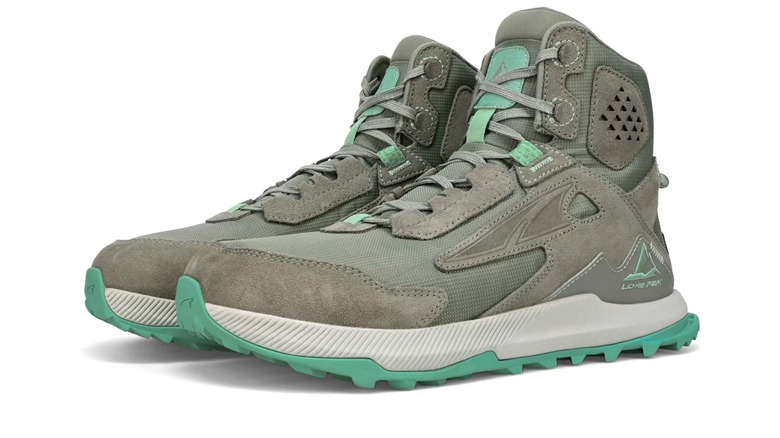
The Altra Lone Peak has been the darling of the thru-hiking community for some time, currently ranking as the single most popular shoe model on the AT and PCT. It has even topped the PCT list for nine straight years. Altra helped popularize the zero-drop athletic shoe with a wide toe box. The Lone Peak, introduced in 2011, is offered as both a low trail runner and mid hiking shoe. The wide toe box, combined with a standard-sized heel and mid-foot, allows the toes to splay out naturally, as opposed to the rounded boxes of most shoes that squeeze the toes together, contributing to bunions and blisters.
Most athletic shoes have a heel-to-toe "drop," meaning that the heel is slightly higher than the forefoot. The theory behind zero-drop shoes is that keeping the footbed level encourages a healthier gait and stride, more in line with how you would naturally walk or run barefoot. Anecdotally, some Lone Peak converts do report good results. "My hiking group all bought [Lone Peaks] when they went on sale at REI a few years ago, and we went from complaints about feet and at least one person with blisters per outing to zero," writes one Redditor.
Altra has since come out with the Olympus, which keeps the zero drop and wide toe box, but adds a high level of cushioning (not unlike the kind popularized by Hoka). Another Altra hiking shoe model is the Timp. "I love the Timps (I've had at least 4 pairs) and hike in them all the time," writes one Redditor, who hiked the Grand Canyon in them.
Topo Athletic
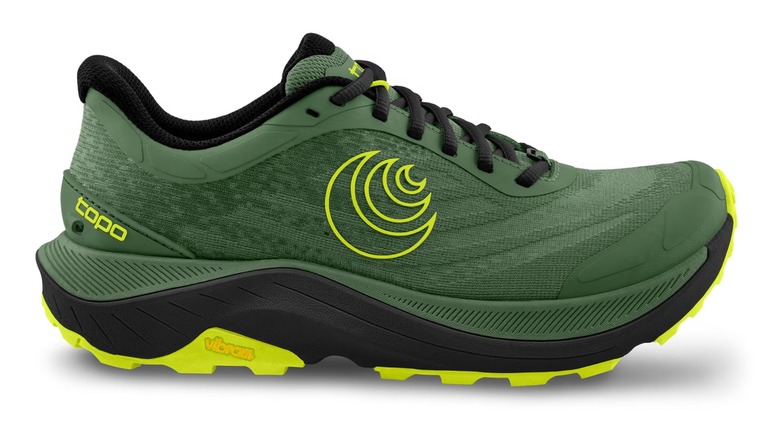
Like Altra, the Topo Athletic brand focuses on low-to-zero-drop shoes with a wide toe box, and it has been surging in popularity among thru-hikers. While the Altra Lone Peak remains the most popular shoe model on long trails, the Topo brand has unseated Altra as the most common brand on the AT. "I find Altra to be more comfortable, but Topos are better made," reports one Redditor, who says their Altras wear out at around 300 miles, but their Topos have lasted far longer — so your mileage literally may vary.
Topo makes several popular models of trail shoes, including the Pursuit (zero drop), the Terraventure (3-milimeter drop), the Traverse, the Ultraventure, and the Mountain Racer (all with a 5-mm drop). They're all lighter weight than the Altra Lone Peak, with the Mountain Racer weighing in at a feathery 17 ounces per pair. Each model has its adherents. "These shoes have quickly become my go-to for serious hiking," one Amazon reviewer writes of the Terraventure. "I've tried a lot of different big brands over the years, but the fit on the Terraventure 4 is in a different league." Another Amazon purchaser called the Mountain Racer her new favorite shoe after a 9-mile hike and run in the rain, writing, "I climbed loose rock, boulders, several water crossings [...] not once did I feel like I would slip." That makes this shoe one to consider when you decide to take on a wet, slippery hike like Hawaii's gorgeous but treacherous Kalalau Trail.
Hoka
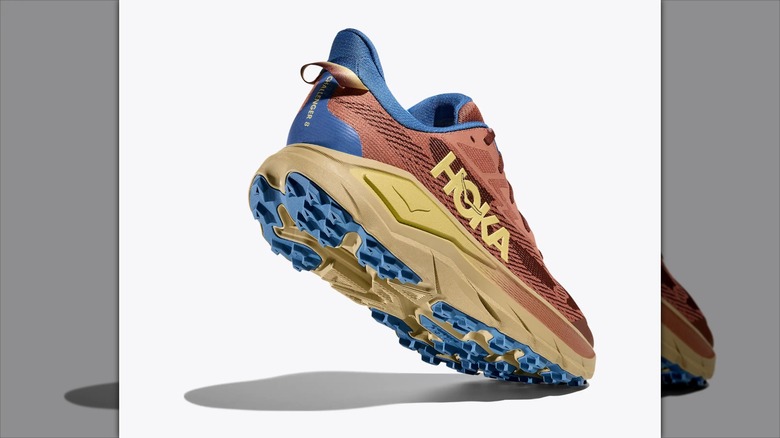
When the Hoka brand first hit the trail, the maximalist running shoes with a high level of cushioning turned heads for their unusual looks, but they eventually found a fan base among hikers. "I wore Hoka Stinsons for the entirety of the Appalachian Trail," writes one Facebook user. "Most other hikers needed to replace their shoes at 500 miles or so. My first pair of Hokas took me over 1000 miles, including the dreaded sharp rocks for the whole state of Pennsylvania."
Hoka's trail runners appear on many best hiking shoe lists, including the one from Outdoor GearLab, which singles out the Anacapa model for comfort and cushioning. Adventure Alan & Co. made the Hoka Challenger 8 — with its sky-high 42mm of footbed foam — their top Editor's Choice for 2026, citing the shoe's comfort, grip, and breathability.
In addition to trail runners, Hoka makes a variety of hiking specific shoes, like the rugged Kaha, which combines trail runner comfort with boot-like warmth, suitable for harsh conditions. "They're plenty tall, surprisingly lightweight, and did a nice job keeping my feet dry in a downpour," one Redditor writes in the r/hikinggear subreddit. You can also cut up the trail in a pair of Infinitis, Hoka's hiking sandals.
Merrell
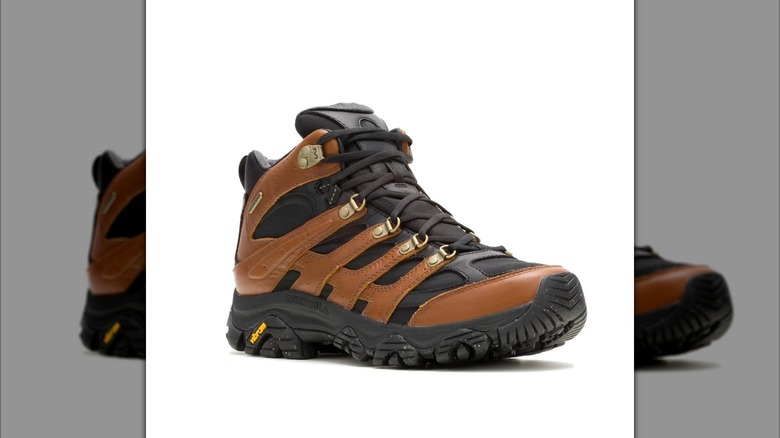
Merrell makes several different shoes suitable for hiking, but the brand is best known for the Merrell Moab, which has been a venerable classic on the trail for nearly 15 years, with over 20 million pairs sold. While the shoe is actually named after Utah's outdoorsy tourist town, a common joke is that Moab is actually an acronym for "Mother of All Boots." So, is it a shoe or a boot? The low-cut version passes for a shoe, while the "mid" version has a boot-like appearance without being stiff or overly heavy. Some versions of the Luxe Leather Moab are attractive and versatile enough to double as a travel shoe, perfect for when your plans include both hiking and sightseeing. "My wife and I travel a lot and the one pair of shoes I always wear for travel are these," writes one Amazon reviewer. "After a day of walking, hiking, whatever my feet feel fine."
Testers at RunRepeat sawed the shoes in half to inspect the build quality, before naming the Moab as their top hiking shoe for 2026, praising its comfort and sturdiness, especially for day hiking. "I'm on my 7th pair and I'll keep buying them," one hiker notes on Reddit. "I put about 700 miles on them before replacing."
In addition to being sturdy and versatile, the Moab is notably affordable, and the veteran hikers at Treeline Review singled it out as their top 2026 budget pick for a hiking shoe. Amazon often offers discounts on Moabs, and they have been spotted at Nordstrom Rack with a considerable discount.
Brooks
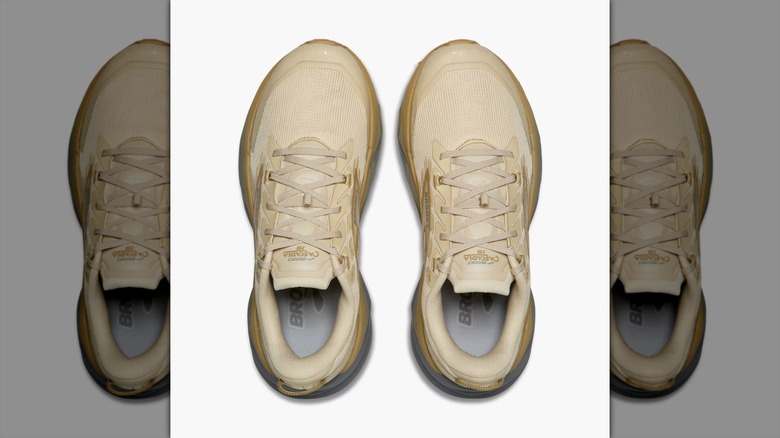
Before Altra, Topo Athletic, and Hoka came onto the scene, there was the Brooks brand. For a long time, the Brooks Cascadia was the go-to trail runner that hikers preferred. Introduced in 2004, the Cascadia has enough of a loyal cult following that the retro Cascadia 1 has been given a nostalgic re-launch (the regular 2026 model is the Cascadia 19).
Today, Brooks is holding its own as one of the top footwear choices among thru-hikers on the Continental Divide Trail, per Halfway Anywhere's survey of 2025 thru-hikers. The Cascadia is a true trail running shoe, of interest to hikers who may want to run all or part of a trail. Ultrarunner Scott Jurek set the AT speed record wearing pre-release Cascadias in 2001, completing the trail in a little over 46 days (most hikers take five or six months to walk it).
The Cascadia's mesh upper is another advantage. Most hikers agree that waterproof hiking shoes are seldom a good choice (the exception being in wet, cold conditions where frostbite is a concern). Breathable, lightweight footwear like the Cascadia will actually allow sweat to evaporate, and the shoes will dry faster when they do get wet (as in a stream crossing), keeping you drier and happier for more miles on the trail. The Brooks Cascadia would be ideal, for example, on a hike through an Arizona desert hike with multiple stream crossings.
Methodology
To determine which brands of hiking shoes truly are the most popular among hikers, we consulted The Trek's 2024 Appalachian Trail survey and Halfway Anywhere's 2026 Pacific Crest Trail and Continental Divide Trail Gear Guides, both of which include data-driven analyses of which shoes hikers on those trails used (and loved) most. We also consulted popular backpacking and hiking gear review websites like Outdoor GearLab, Adventure Alan & Co., and Treeline Review for expert opinions. Lastly, we looked at Reddit forums for individual, anecdotal user experiences with the most popular brands, and sites like Amazon and REI for user ratings and reviews.