
Texas' Deepest Lake Is A Scenic Oasis With Crystal-Clear Waters Perfect For Fishing, Boating, And Diving
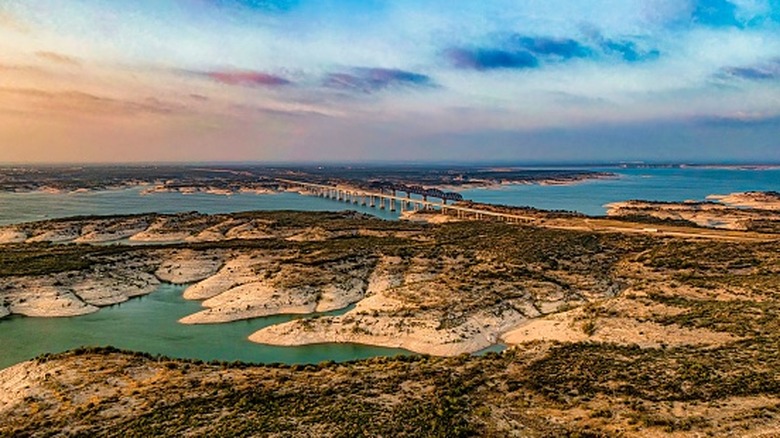
The stereotypical Texas landscape of tumbleweeds, cactuses, cow skulls, and wisps of sand became a staple in cartoons and Yosemite Sam territory, but has no basis in reality. Official deserts make up only a tenth of the Lone Star State. A good portion of it is quite wet. About 7,000 lakes exist within its borders. The 217-foot-deep Lake Amistad lies on the border with Mexico, about three hours west of San Antonio. It's a scenic oasis and one of the cleanest lakes in all of Texas that offers travelers crystal-clear waters that are perfect for fishing, boating, and diving.
The lake, also commonly known as the Amistad Reservoir, lies on the Rio Grande River, forming a natural border between two countries. The construction of the Amistad Dam, a joint project between the U.S. and Mexico, created the 64,900-acre lake. (Amistad, it should be noted, is the Spanish word for "friendship"). Today, that lake is an international reservoir, with buoys marking the split between the United States and Mexico. To Lake Amistad's north lies the Amistad National Recreation Area, a 57,000-acre veritable Eden of wildlife. Yet the lake itself is a big enough draw.
Often, a lake will be crystal clear or extremely deep. It's seldom both. Lake Amistad offers a rare exception, especially in winter. It can reach average depths of up to 50 feet in cooler months, with water temperatures around the low 50s. It's also when the water is clearest. The summer's heat brings balmly water temperatues in the mid-80s — ideal conditions for algae, which reduce the water's clarity. Those idyllic waters are well-matched by the lake's bucolic surroundings, which can be experienced in several ways.
Dive, fish, or boat in the crystal clear waters
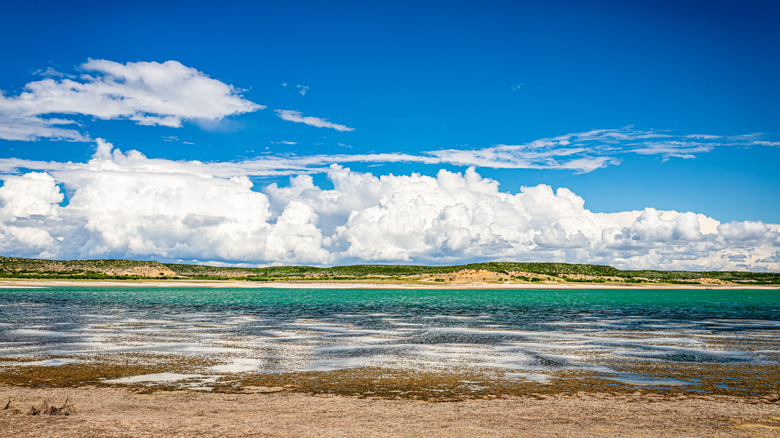
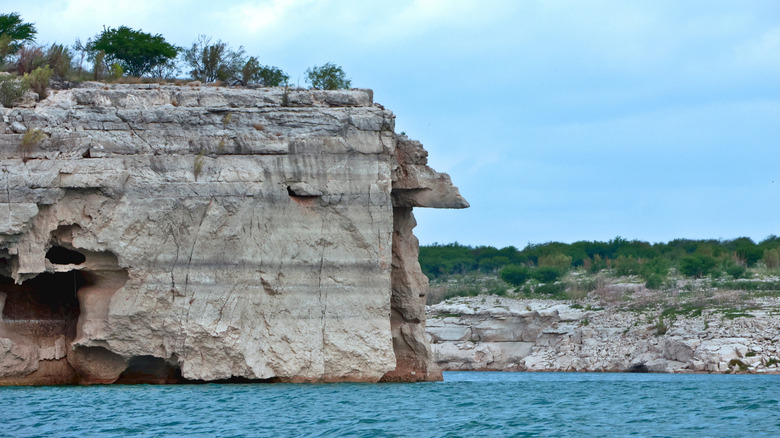
Those transparent waters and depths make Lake Amistad a joy for scuba divers of all experience levels. The lake's diverse ecosystem and designated diving areas let both novices and experienced bubblemakers explore different environments and depths without having to switch locations. The karst terrain creates extra-cool yet dangerous features like caves, though inexperienced divers without certification should stay away. Spearfishing for non-game species is also allowed. Those hoping for a decent catch don't need to bring their scuba gear.
Lake Amistad's waters are mainly fed by the Devil's River, one of the most pristine rivers in Texas. It gives anglers plenty of reason to cast a line. The water's vegetation includes pondweed and hydrilla, with the latter being an invasive species. Largemouth or smallmouth bass, striped bass, and catfish are among the potential catches for Texas fishing license holders. If you're feeling the heat and need to cool off, take a dip, as swimming is allowed at your own risk. But swimming and fishing aren't the only reasons to hit the water.
The lake's unique shape and geographic location reward exploration by boat, specifically paddling in a canoe or kayak (nothing wrong with a motorboat either, as several boat ramps let you bring your own). The river canyons, with their imposing walls, mixed with wide open stretches, offer enough of a change of pace to merit a day out on the water. Several paddle trails suggested by the National Park Service let you explore the many facets of the lake's U.S. side. Just beware, your cell phone won't be of much use, as coverage is spotty at best. And if you paddle over to Mexico's side of the lake, park rangers won't be able to help.
The logistics of visiting Lake Amistad
While an absolute gem of a natural destination, Lake Amistad is easy to get to. Its proximity to Del Rio International Airport, the nearest major travel hub, means you'll only need 30 minutes behind the wheel to reach it. Del Rio can also serve as the de facto hub for your journey.
Accommodations of all varieties can be found in the southern city, from chain hotels costing about $50 on up. The more adventurous can spend the night in one of the Amistad National Recreation Area's five designated campgrounds. You can enrich your trip with a stop at the Pecos River, an incredible, bright blue river winding through the canyons and mountains, leading to Lake Amistad.
Being in Texas, Lake Amistad has a few hard-and-fast safety rules that'll ensure a safe, worthwhile stay. Sun protection is a must, both in sunscreen and in clothing, no matter how badly you want a tan. Keep your eyes peeled as you traverse the lake and national recreational area. Dangerous species like the rattlesnake call it home. And as always, the stars at night shine big and bright in Texas, but so does dehydration. Pack as much water as you can stand, and then a little more.