
Missouri's Spring-Fed State Park Is An Ozark Haven With Clear Springs, Fishing, And Trails
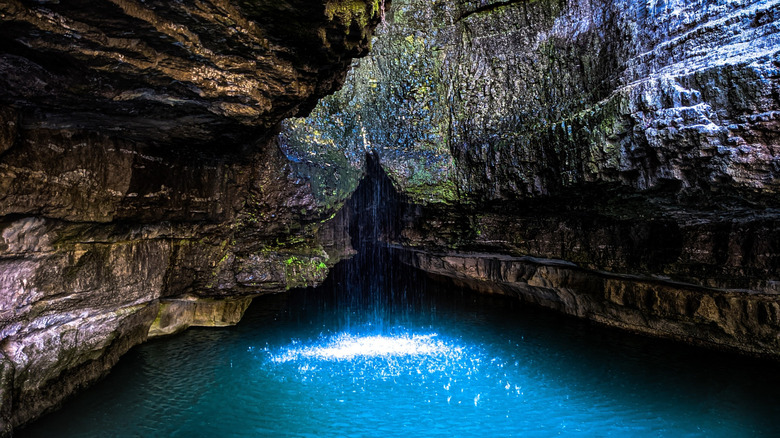
Some of the prettiest small towns in the Ozarks make for picturesque bases to visit the surrounding natural wonders. Those exploring Arkansas can set out on their adventures from Eureka Springs, a funky city with mountain charm. Better yet, cross the border into Missouri, and you can discover the scenic landscapes near Cassville — a mountain town home to the spring-fed Roaring River State Park. Renowned for its clear springs and dramatic scenery, this outdoor haven is a premier location for nature lovers. With 4,293 acres of fishing, hiking, and camping, this is the ideal place to get active or just relax and breathe in the fresh air. As one Tripadvisor reviewer described: "This place is just so beautiful and so peaceful."
Roaring River State Park is located one hour and 30 minutes from Springfield, considered Missouri's "Queen City of the Ozarks" that's brimming with big flavors and quirky vibes. Coming from Branson, another popular vacation destination, you'll arrive within an hour. Boasting crystal-clear springs (where divers set a 472-foot US record in 2021), Roaring River is a great choice for a day trip packed with hiking and fishing opportunities. However, it's worth camping the night here for an immersive wilderness outing.
There are three campgrounds at Roaring River State Park — one operates year-round, while the other two are open from late February to the end of October. The first campground features more than 70 sites — including electric and family spots — and comes with a restroom, showerhouse, laundry facilities, dump station, and a swimming pool. One of the seasonal camping zones is a smaller loop with amenities like a restroom, showerhouse, water, and a couple of accessible sites. The third (seasonal) campground is a larger area, also equipped with essential conveniences.
Hike the trails at Roaring River State Park
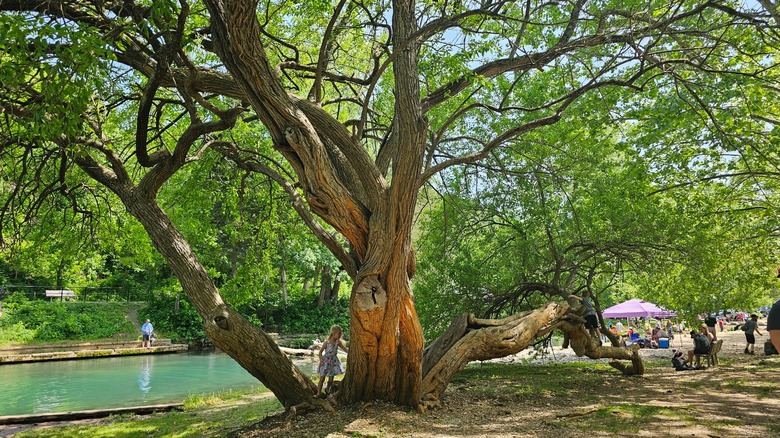
You can embark on seven different hiking journeys at Roaring River State Park, whether you prefer an easy trail or a decent challenge. Start with a moderate hike along the Devil's Kitchen Trail. Spanning just 1.6 miles, this loop takes you toward the limestone bluffs by the Roaring River — you'll walk past springs, caves, and ridges, all while spotting wildlife. This is a dirt path and may have some slippery sections, so have proper shoes on. You can also climb the rock formations for a fun side quest.
If you'd like to increase the distance, follow the Roaring River Fire Tower Trail. Also rated moderate, this loop is 5.7 miles long with an elevation gain of 679 feet — it can take up to three hours to complete it. As you meander the trail, you'll be exposed to quintessential landscapes of the Ozarks, such as steep hills, hardwood forests, sparkling springs, and sun-drenched glades. The tower itself dates back to the 1930s.
Those who wish to hike to the highest point of Roaring River State Park can take the Eagles Nest Trail. This 2.8-mile route is rated difficult, with a total vertical gain of 400 feet. Drive to the back of the second campground to find the trailhead (or use the access point at the third campground). The track has a natural surface, with exposed, high-drop-off edges and potentially muddy sections. Either way, expect to finish its entirety within 1.5 hours. The dense vegetation, along with the caves, river, and wildflower displays, make this a panoramic trek. Another short yet hard hike is the Pibern Trail, best experienced in the fall. Although it's only 1.7 miles long, the uphill route can be challenging, especially because of the dirt trail.
Cast a line to see what bites at Roaring River State Park
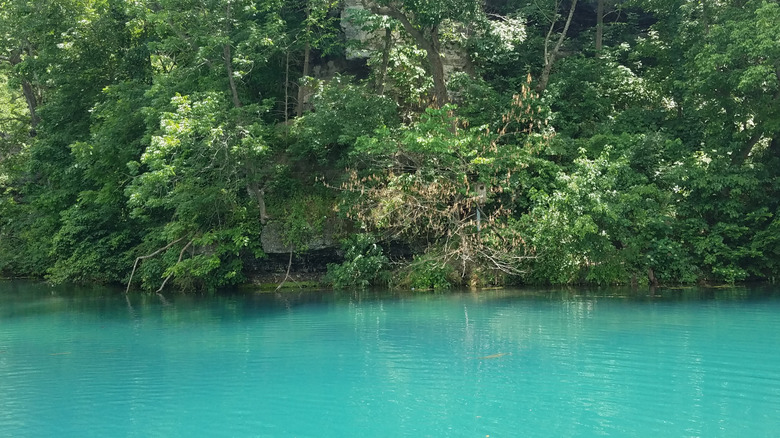
The turquoise spring that gives Roaring River State Park its name is the very source that attracts anglers — this is the state's longest-running fish hatchery. Roaring River is part of the three-park system in Missouri that stocks rainbow trout. Pick up your fishing licenses and tags at the park store, where you can also purchase equipment. Before you set your rod, there are a few things to keep in mind regarding fishing here.
The regulations at the state park vary by three zones. The first fishing zone is the stretch between the trout hatchery and the Dry Hollow boundary marker. Here, you can only use soft plastic lures and flies — paste, scented, or manufactured food-based baits are not allowed. The second zone consists of the area from the Dry Hollow Creek sign and extends to the old dam located at the bottom of the third campground. Here, you can only engage in catch-and-release fishing. Bring your swimwear too, as you can take a dip in the water. Meanwhile, the third fishing zone spans from the old dam to the state park's edge. All lures — including soft plastics and flies — as well as natural and scented baits are permitted.
Anglers may retain a maximum of four brown trout per day, provided they meet the 15-inch minimum length requirement. There's no legal length requirement for rainbow trout, though there is a possession limit of eight. The catch-and-release season runs from November to February. Before you leave, head to the viewing platform to marvel at the glittering spring, where the cave entrance is framed by lush ferns. Later, switch things up with water sports at the lesser-known Table Rock Lake, just an hour away.