
Between Jacksonville And West Palm Beach Is Florida's Scenic Lagoon With Fishing And Bioluminescent Waters
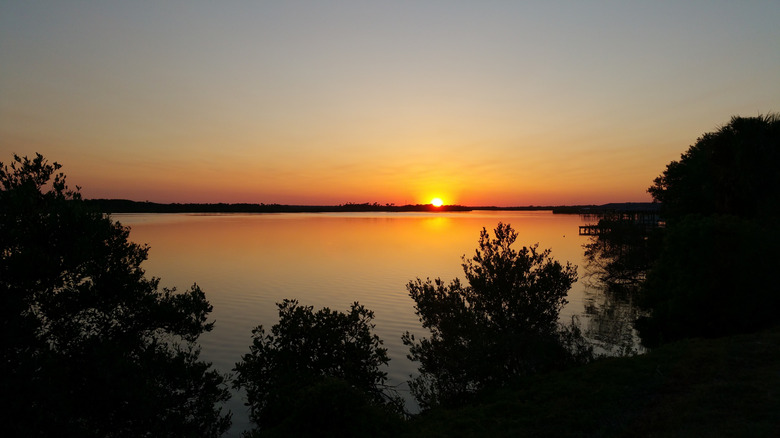
If someone invites you to Mosquito Lagoon, ignore the reflexive itch (no pun intended) to decline. Name aside, the scenic estuary offers legendary fishing and bioluminescent waters. It's a must-visit for adventurers in Central Florida, especially those visiting Oak Hill, a world-class fishing city with suburban charm that's on the lagoon's western shore. Although Mosquito Lagoon is just a two-hour drive from Jacksonville and an almost three-hour drive from West Palm Beach, visitors should consider staying overnight to catch the full breadth of Mosquito Lagoon's charm.
The 28-mile-long estuary is part of an ethereal gem on the Treasure Coast, the Indian River Lagoon, a biodiverse area with few rivals in the country. That diversity shows up in a unique mix of habitats, from mangrove shorelines to forests and salt marshes, which make up the lagoon's 36,000 acres. Its natural circulation and salty waters create a mini-ocean, letting aquatic species spend a lifetime there without leaving. It adds up to a destination that cures loneliness — even if you arrive by yourself, manatees, bottlenose dolphins, and various fish will offer a rotating cast of companions during your stay.
Oak Hill offers plenty of accommodations across its fish camps. The town's well-rated eponymous fish camp offers waterfront cabins and RV sites. If good fishing's your goal, aim for visiting during winter or spring, when the waters are clear and low, making it easier to sight-fish. If you want to reel in a trophy, you must endure the heat and humidity during the summer months, which is also the prime time to see the bioluminescent plankton. Remember to pack fishing equipment, and (in case the name wasn't obvious enough) you'll also need plenty of bug spray. If you're going on a longer journey by boat, some sort of GPS will help navigate the estuary's maze.
Cast a line and see the nightly glow in Mosquito Lagoon
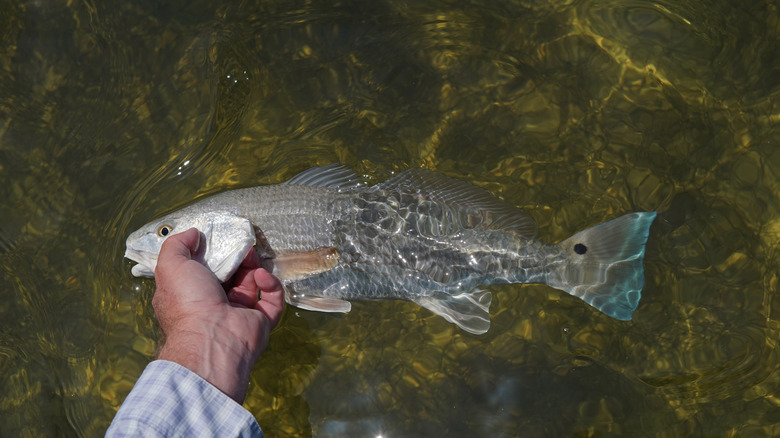
Mosquito Lagoon has earned a reputation among anglers as a honey hole, even considered by some to be the "Redfish Capital of the World" (though those who have been to Venice, Louisiana, a secret Gulf Coast fishing paradise, may disagree). The lagoon's sizeable trout and redfish are a year-round catch, occupying the shallow waters throughout their life — a rare constant for species that are otherwise transient. This gives fishermen a chance to reel in up to 50-inch redfish from the shore, sight-casting with precision. A local fisherman writes on Google, "It is a beautiful place to see extraordinary wildlife, birds, manatees, and more. Nothing like the excitement of beautiful redfish on your line as well!"
However, the lagoon is a multi-species fishery. Speckled trout and black drum also call its waters home. Follow the Pole and Troll Zones regulations: all internal combustion engines need to be turned off, and only boats with less than 12-inch drafts are allowed. While you may get most of your fishing done during the daylight hours, the nighttime offers its own charms.
Mosquito Lagoon's reputation for fishing is trumped by the water's otherworldly glow at night. The lagoon is well-known as one of the best destinations in Florida for mesmerizing bioluminescent waves. While waves on the lagoon are a rarity, the dinoflagellates within its waters leave behind glowing wisps of blue every time something passes through the water. For a mesmerizing experience, you can paddle out on a nighttime kayak adventure of the area from A Day Away Tours. The aquatic wildlife helps put on a show as well, with dolphins jumping out of the dazzling water and fish being tailed by glowing blue lines. Be sure your camera excels at flash-free photography and video to properly capture the experience.