
Between Naperville And Peoria Is A Once-Thriving Illinois Coal Mining Destination That Is Now An Abandoned Ghost Town
Every state in America has at least one ghost town, and Illinois is no exception. In fact, this heartland state has a slew of intriguing abandoned places, from urban explorer hotspots in Chicago to the National Historic Site marking where the town of New Philadelphia once stood. Another of the more than 80 ghost towns spread across Illinois was also named for a different, larger city: the former mining town of Cardiff, tucked between Naperville and Peoria.
Like many ghost towns, Cardiff started and flourished thanks to a single valuable resource. In this case, that resource was coal, which was discovered in the area in 1899. At its peak, the Cardiff mine produced more than 200,000 tons of coal a year, but that success was short-lived. The mine operated for only about 13 years, and the town that grew around it didn't last long after the reason for its founding disappeared.
Today, Cardiff is what Ghost Town USA classifies as a barren site. There are almost no visible traces left of the once-bustling community that occupied the area. Still, it remains a fascinating destination for anyone interested in Illinois' industrial past and how coal mining shaped the lives of the people who lived there.
Cardiff's swift rise and fall
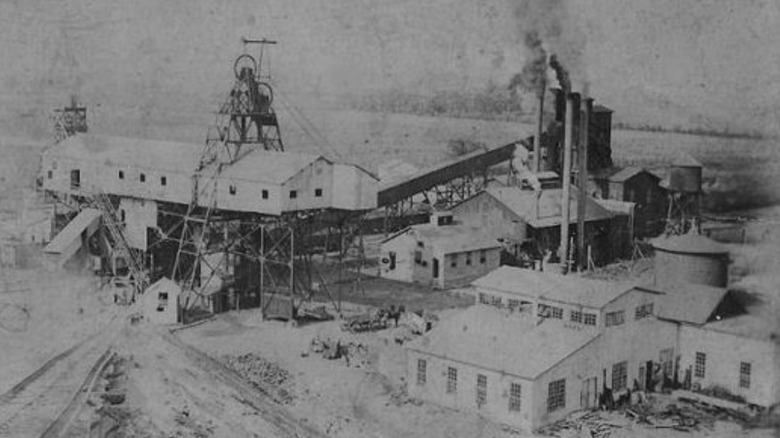
In 1899, the White Breast Fuel Coal Company wanted to mine coal near the Livingston County village of Campus. When Campus residents objected, the company turned its attention to undeveloped farmland known as Colopy's Corners, about 4 miles north. Work on the mine began in early May 1899, and coal was quickly discovered about 250 feet underground. By fall 1899, the mine was producing about 50 tons of coal a day. Buildings sprang up, and the new town was named Cardiff after the capital of Wales, which was a global coal hub at the time.
Cardiff grew to a population of more than 2,000 people, and not all of them worked in the mine. At its peak, the town also had two grain elevators, a soft drink bottling plant, and a two-story Schlitz Brewing Co. facility, along with an impressive 16 saloons and an array of other businesses. It featured relatively modern infrastructure for the time, served by two passenger rail lines, its own water system, and an electric light plant. It even had a semipro baseball team and car dealership — a rarity considering how new automobiles were.
But the first signs of trouble came early. A mine explosion in 1903 killed three men and trapped 12 others. Four more explosions in the following days brought the total death toll to nine and destroyed the mine. This wasn't the end of Cardiff yet; the company opened a new shaft nearby later that same year. However, by 1910, the quality of the coal had dropped, and the mine's main customer, the Wabash Railroad, stopped buying it. The mine closed officially in 1912, and residents left almost immediately. Even homes were relocated to nearby towns, and by 1920, the population had dwindled to 152 people.
Visiting the remains of Cardiff
Legally, Cardiff is still an incorporated village, but you won't find much when you go there today. The mine shafts were filled with slack in 1983. Two large hills of slag were mounded over the top, marking where the mines once were. As for the town itself, a few sidewalks remain, but no recognizable structures from its heyday are still standing.
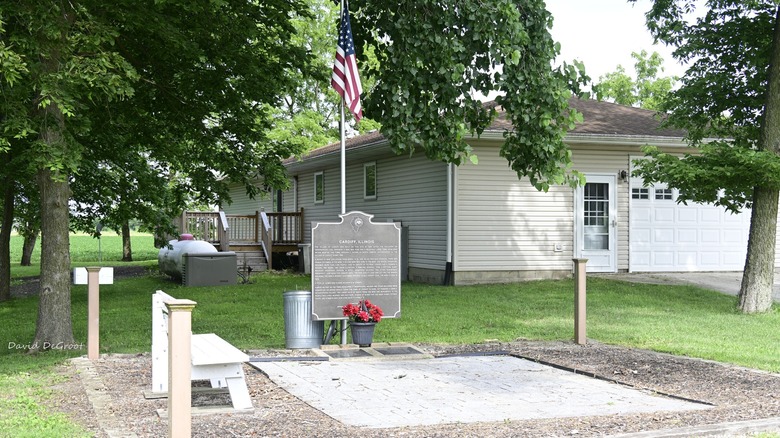
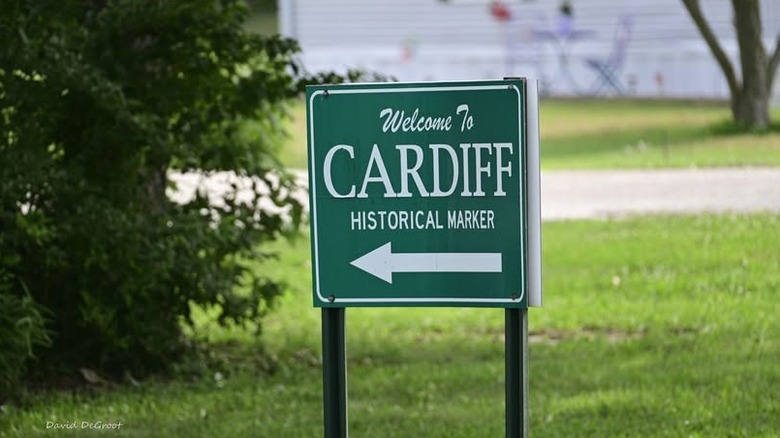
The main site to visit is the State Historic Site marker at the corner of North 3400 East and East 2900 North roads, which was created by the Herscher Area Historical Society in 2007. Along with a sign explaining the history of Cardiff, the ground beneath the marker has plaques honoring the 18 people who lost their lives in the town's mines, as well as bricks from the now-vanished community.
The best way to reach Cardiff is by car. It's about 90 minutes northeast of the lively and memorable city of Peoria, or roughly the same distance southwest of Chicago, the closest major transportation hub. Cardiff is in the northeast corner of Livingston County, a rural area in the corn and grain growing belts known for being home to some of America's most fertile farmland, so you won't find much in the way of shops and restaurants nearby. The closest place to grab a bite to eat or fill up your tank is the village of Dwight, about 10 miles northwest of Cardiff. There are also a couple of motels in Dwight if you need a place to stay the night.