
5 US Lakes And Rivers That Are Truly Shark-Free Destinations, According To Science
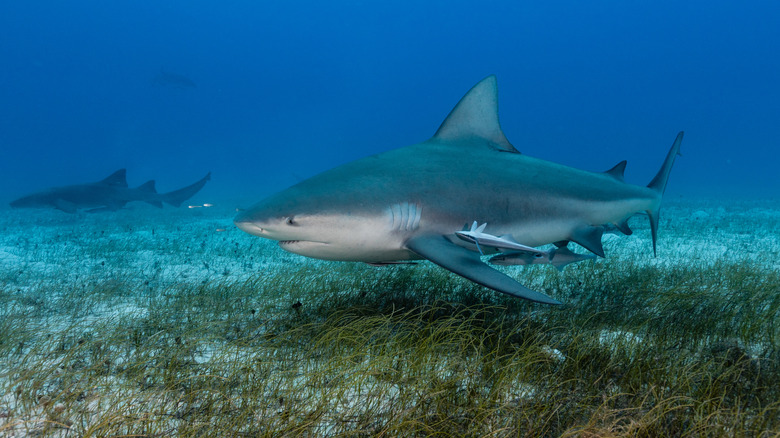
The world's most beautiful shark-free lagoon may be in the Cook Islands, but plenty of travelers may wonder how to avoid sharks while vacationing in the United States. Believe it or not, staying out of the ocean doesn't necessarily guarantee you won't come across a shark. That's because some species, such as bull sharks, can actually survive in freshwater. In fact, bull sharks often swim as far as 60 miles inland in rivers like the Mississippi, according to Oceana. In 2011, a Duke University graduate student observed an 8-foot-long bull shark in North Carolina's Neuse River, along with several others, which she wrote about for Southern Fried Science. (There are also some known species of freshwater sharks, but they live on the other side of the world, in Asia and Australia.)
This may sound concerning, but in reality, it's not that likely to run into a shark in inland waterways — and it's much less probable than spotting one off the coast. We previously rounded up America's top beaches to visit with the least shark attacks — but what about lake and river swimmers in the U.S. who want to stay away from these finned predators? To determine five U.S. lakes and rivers that are truly shark-free, we reviewed scientific data from agencies like the National Oceanic and Atmospheric Administration (NOAA), research from Marine and Fishery Sciences (MAFIS), and expert sources. Scroll to the end for a complete breakdown of our approach.
It turns out that travelers planning lake days, kayaking trips, or waterfront camping have plenty of U.S. destinations to visit where shark sightings are not only unlikely but essentially impossible. So read on for some of the lakes and rivers considered truly shark-free by scientists and experts.
The Great Lakes are scientifically considered shark-free
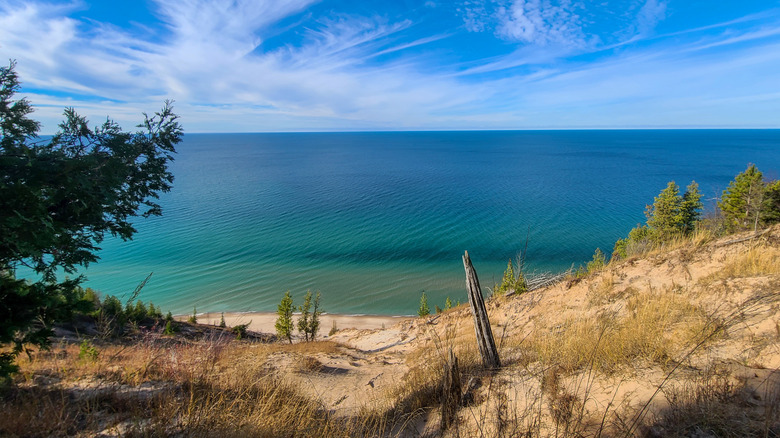
The five Great Lakes — Lakes Superior, Michigan, Huron, Erie, and Ontario — are among the most frequently discussed inland waters when travelers ask whether sharks are present. In fact, the topic came up on a 2019 "The Joe Rogan Experience" podcast when a guest mentioned that bull sharks had been observed in the Lakes before. And according to Great Lakes Guide, there have been tall tales circulating of bull shark sightings in the Lakes going back many years.
However, scientists agree that these lakes don't support shark populations. Politifact debunked the podcast claim, saying "experts told The Associated Press there's no documentation of bull sharks in the Great Lakes." AP News also confirmed that Great Lakes Fishery Commission data didn't mention bull sharks in any recorded catches from 1867 to 2015. Michael Heithaus, a marine ecologist at Florida International University, even told AP News that if a bull shark managed to swim all the way into a Great Lake, it would likely die due to the waters' cold temperatures.
Winter surface temperatures in the Great Lakes regularly fall below freezing, especially in Lakes Superior and Michigan. The Great Lakes also use a series of dams and locks that would make it even harder for a bull shark to actually enter the lake. For shark-wary travelers, that makes Great Lakes beaches, which actually have ocean-like waves, some of the best large freshwater swimming destinations in North America.
The Upper Mississippi River north of St. Louis is not viable shark habitat
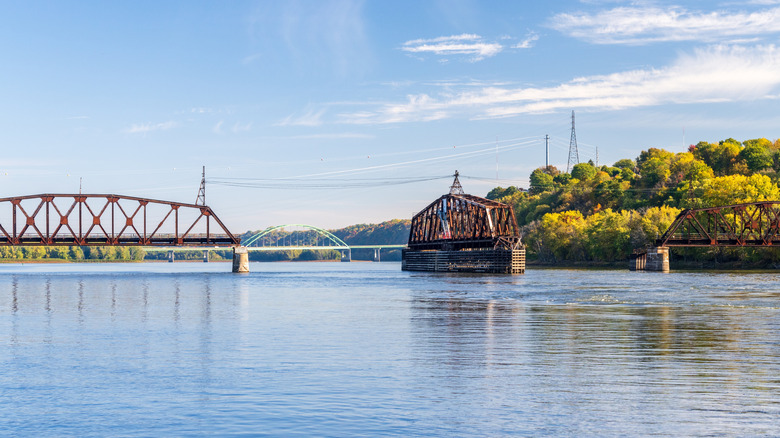
The Mississippi River is often mentioned in discussions about inland bull shark sightings, especially because one study (by Cincinnati Museum Center paleontologist Ryan Shell and Nicolas Gardner, a West Virginia University Potomac State College librarian) confirmed two historical sightings of bull sharks near St. Louis upstream in the river. There have also been bull shark fossils found in the river, but only in its lower portions.
While the scientists theorize that the bull shark could be evolving to travel farther north in the waterway, it's still a new and rare behavior — and no other sightings have been recorded north of these two exceptional ones. So that means that the river north of St. Louis is still officially shark-free, according to known data and observations. The study authors admit that more research is warranted into bull shark behavior in freshwater systems — but visitors to Mississippi waters north of St. Louis can rest assured for now.
The upper Mississippi River is also typically much colder than farther downstream, making it even less habitable for sharks. For travelers visiting riverfront cities like La Crosse, Dubuque, or Minneapolis, the Upper Mississippi offers boating, kayaking, and other river activities without shark activity. River islands, wildlife refuges, and scenic overlooks throughout the Upper Mississippi River National Wildlife and Fish Refuge make the area attractive for vacationers who want to avoid sharks entirely.
Lake Tahoe's elevation and isolation make shark survival impossible
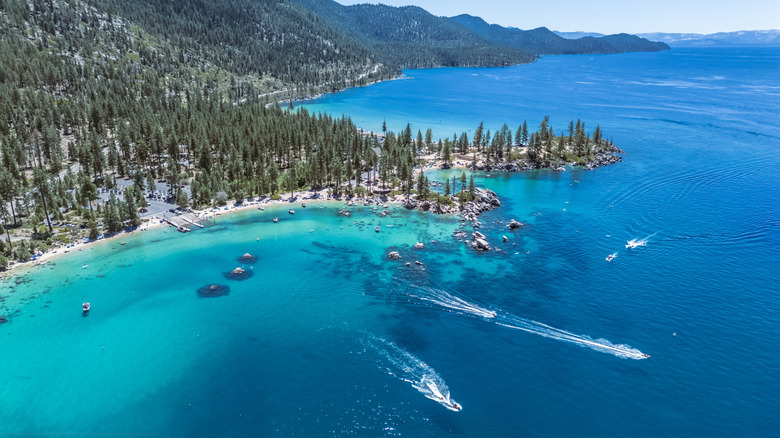
Straddling the border between California and Nevada, Lake Tahoe is North America's oldest lake and one of the clearest alpine lakes in the U.S. Lucky for travelers seeking peace of mind while swimming, it's also considered completely shark-free by scientists. Even though mysterious footage by Chase Petley in 2016 captured something "remarkably shark-like" in Tahoe's deepest waters, according to KCRA 3, it was most likely a giant trout.
That's because, sitting more than 6,200 feet above sea level and completely landlocked by hundreds of miles of mountainous terrain, the lake isn't accessible to any marine species, including clever, river-swimming bull sharks. Its frigid temperatures also make the waters uninhabitable for sharks. Its deeper waters stay around 39 degrees Fahrenheit, according to Keep Tahoe Blue. While its shallow waters can get warmer during the summer — around 60 degrees Fahrenheit or above — bull sharks tend to prefer waters in the 89 degrees Fahrenheit and above range. And even if the water became warm enough, no sharks could access it in the first place.
For travelers, Tahoe's shark-free status offers relaxed swimming, paddleboarding, and kayaking along popular beaches like Sand Harbor and Pope Beach. The lake's clear waters, often exceeding 60 feet of visibility, also make it as stunning as parts of the Gulf of Mexico and the Caribbean — sans marine predators. And while there may be an annual race in Lake Tahoe called "Sharkfest Swim," participants can rest assured it's completely sharkless.
The upper parts of the Colorado River are isolated from shark migration routes
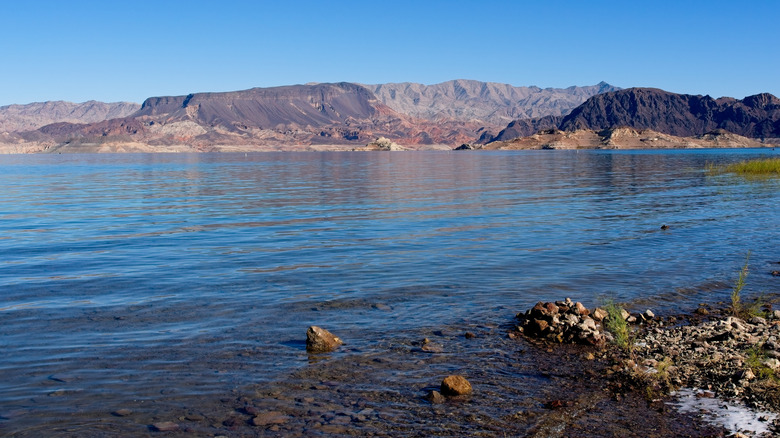
The Colorado River stretches more than 1,400 miles across the American Southwest, but segments of the river have been so heavily dammed that any shark migration upstream is effectively stopped in its tracks. Major hydrological barriers like the Hoover and Glen Canyon Dams not only prevent sharks but also stop other large aquatic species from moving upstream from areas once connected to the Gulf of California.
Beyond the dams, water demands from the nearly 40 million people who rely on the Colorado River system have contributed to parts of the Delta estuaries drying up before they can ever reach the ocean, something that was also observed on a NASA Earth Observatory satellite photo in 2000. In addition to cutting off even the potential for sharks to travel upstream, the overuse of the Colorado River, which began with the 1922 Colorado River Compact, has also made several of its native fish species endangered or threatened, according to the Public Policy Institute of California.
That means popular reservoirs for vacationers north of the dams, like Lakes Mead and Powell, are cut off from shark populations. These waters are popular with travelers for boating, swimming, fishing, and houseboat vacations, especially within spots like Lake Mead and Glen Canyon National Recreation Areas. The combination of stunning desert scenery and accessible marinas makes the upper Colorado River basin a reliable choice for travelers who want shark-free water fun.
The Snake River is geographically and environmentally unsuitable for sharks
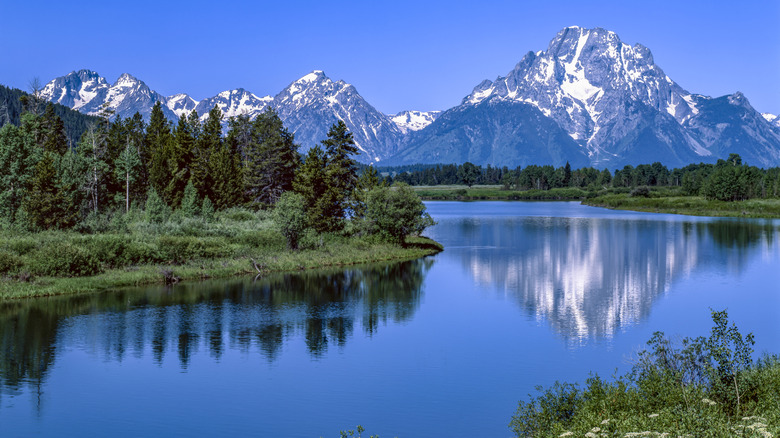
Flowing through Wyoming, Idaho, and Washington, the Snake River is another inland waterway considered scientifically incompatible with shark populations. The river's distance from the Pacific Ocean, combined with multiple dam systems along its length, would effectively prevent sharks from migrating into its upper reaches. In fact, the dams have already reduced wild salmon runs in the river by more than 90%, according to American Rivers. At its end, the Snake River merges with the Columbia River near Burbank, Washington. The Columbia empties into the Pacific, however, that's still over 200 miles inland from the coast and nearly 200 miles from Seattle's waterways, as the crow flies.
The shark-free status also goes for Idaho's Salmon River, the largest tributary of the Snake River. Also called the "River of No Return" because its rushing water once made moving upstream difficult and dangerous, the Salmon River strangely made headlines for a salmon shark found on its riverbanks in 2023. However, it was ultimately an elaborate prank, according to Idaho Fish and Game officials. KPTV reported that the agency said, "It is safe to assume that somebody dropped this on the shore for a good laugh." Local news outlet KMVT 11 also reported that, "Idaho Fish and Game wants to assure the public that there are no sharks swimming around in Idaho, and you are safe to continue to enjoy the Gem State's waterways."
Beyond Idaho, travelers exploring this waterway can combine Snake River rafting excursions with visits to nearby national parks, making it one of the most scenic inland paddling environments in the western United States. The river flows through Grand Teton and Yellowstone National Parks, where visitors should be more worried about "bear jams" than shark attacks.
Methodology
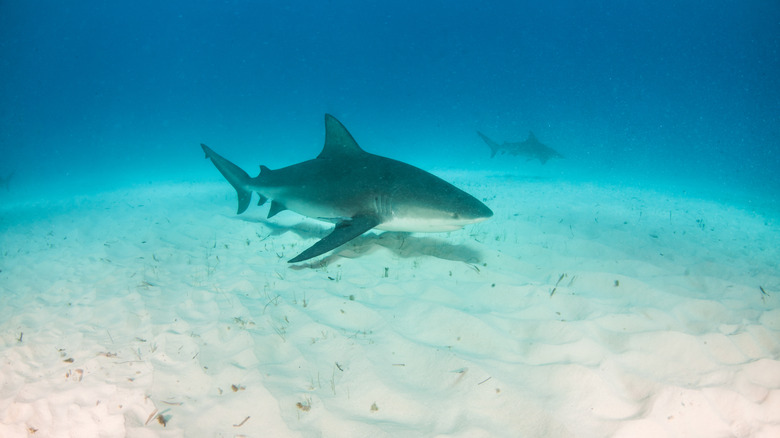
To narrow down a list of truly shark-free lake and river destinations in the U.S., we consulted scientific data from biology and ecosystem experts from sources like the Marine and Fishery Sciences, the National Oceanic and Atmospheric Administration, and published data on shark sightings in freshwater systems within the U.S.
Science consistently shows that only a few shark species — most notably the bull shark in the U.S. — can tolerate freshwater conditions, and even those species need pathways to migrate inland from the ocean. We consulted knowledgeable organizations for information on bull sharks, shark migration, freshwater survival, and other information. Some of the groups included Oceana, the National Wildlife Federation (NWF), and The Nature Conservancy. Additional information was gathered for context on shark sightings, as well as rumors and hoaxes, from local news outlets and state fisheries agencies.
Each destination included meets at least one of three criteria to be considered shark-free: physical isolation from ocean pathways, environmental conditions unsuitable for sharks, or the presence of barriers like dams and lock systems that prevent sharks from moving upstream. The Great Lakes, for example, are separated from migration routes by navigation locks along the St. Lawrence system, while alpine lakes like Lake Tahoe are geographically landlocked. We also included details on some attractions related to these waterways that make them attractive destinations for travelers.