
Texas' Jaw-Dropping State Park Is A Top Fishing Destination For Trophy-Sized Bass, Swimming, And Birdwatching
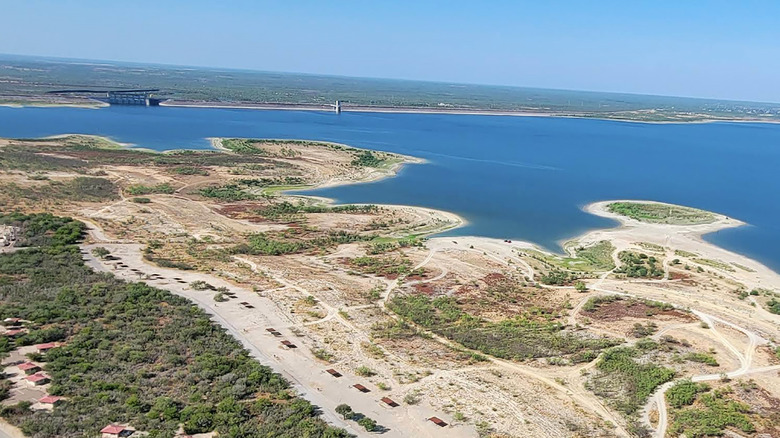
Straddling the U.S.-Mexico border just outside the small town of Zapata, Falcon Lake is the southernmost reservoir in Texas. Also known as the Falcon International Reservoir, the lake is shared by the U.S. and Mexico and was formed when the Rio Grande River was dammed in the early 1950s. Near the base of the dam, which also serves as an international border crossing, is Falcon State Park. This Texas state park offers anglers an opportunity to catch fishing trophy-sized bass. It is also a great destination for swimming and birdwatching.
Zapata, which is about 30 miles north of the park entrance, is the closest town on the U.S. side. It'll take about an hour-and-a-half drive in either direction to hit a city of any size, as the park sits about halfway between Laredo to the northwest and McAllen to the southeast. San Antonio, the nearest major metro, is about three and a half hours northeast. While this remote location makes Falcon State Park more challenging to reach, it is also part of what makes this spot so ideal for fishing and birding.
Regardless of what gets people to Falcon SP, the area's infamous heat coupled with the park's proximity to water makes swimming a popular activity for many visitors. The park, which features nearly 100 campsites plus screened shelters and cabins for overnighting, doesn't have a designated swimming area. However, visitors are free to swim at their own risk and there are plenty of access points. Just be sure to find a clear stretch of shore, as Falcon has a lot of flooded brush. Additionally, although it is downriver from the Amistad Reservoir, which is among the lakes with the cleanest water in Texas, Falcon's is typically less clear and often runs low.
Falcon Lake offers outstanding fishing
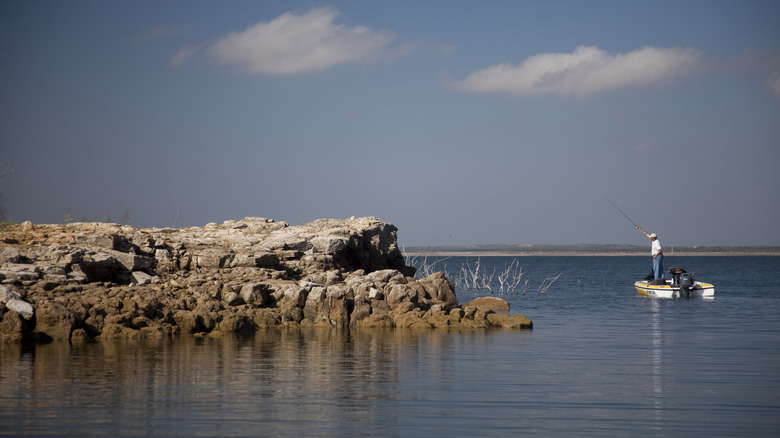
Despite often-fluctuating water levels, Falcon Lake consistently delivers outstanding fishing action. It's renowned as a largemouth bass fishery, with the current lake record being 15.63 pounds. It is also known as an excellent lake to target catfish and alligator gar. In fact, gar are so numerous in the lake that anglers here are allowed an exemption for the single fish statewide bag limit and are allowed to bag up to five. The largest gar to come out of Falcon to date tipped the scales at 249 pounds. Although that fish was taken with a bow, anglers do fish for them with rod and reel as well. Other species, such as crappie, are also in the reservoir, but their populations have declined a bit with the lower lake levels.
Anglers have the opportunity to bank fish throughout the park. As is the case with all state parks in Texas, anglers do not need a fishing license if they are fishing from land inside the park's boundaries. Fishers can also launch kayaks from shore or boats from the ramp in the park. Those who keep a few fish can utilize the park's fish cleaning stations.
When it comes to bass fishing on Falcon, the flooded brush that can sometimes plague swimmers is actually an enhancement for fishermen. One of the best ways to catch bass is working areas of flooded brush along the shorelines while throwing lures such as spinner baits, Texas-rigged soft-plastic worms, and crank baits. This is particularly true during the spring spawning season and the cooler autumn and winter months. Anglers can also concentrate on offshore structures such as humps and rock piles, as well as road beds and buildings that remain from the towns that were flooded when the lake first formed.
Go birdwatching at Falcon State Park
Given it is located in Texas' Rio Grande Valley, which is known to have some of the country's top birdwatching destinations, it is no surprise that birding is a popular activity within Falcon State Park. In fact, the park's Falcon Loop is the second stop on the Lower Texas Coast portion of the popular Great Texas Coastal Birding Trail. This route has over a dozen stops, including destinations such as nearby Santa Ana National Wildlife Refuge and South Padre Island on the eastern edge of the RGV, as the region is locally known.
Birders are able to explore nearly 3 miles of hiking trails that more or less follow the shorelines around the park's perimeter. There is also a pair of wildlife viewing areas, one on either side of the park, as well as driving loops, which visitors can traverse on foot or with bikes or vehicles.
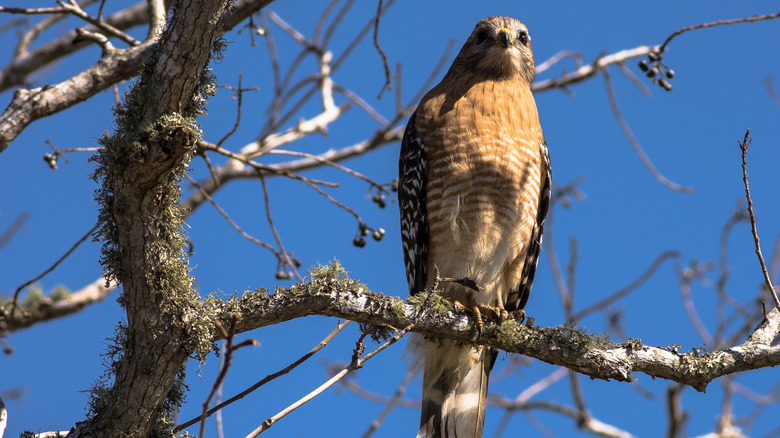
Throughout the park, there are numerous species birders can expect to see. To help keep track, it's a good idea to print or download the park's birding guide, which lists over 300 species. While a number of those species are rare sights in the park, dozens of others are commonly seen. The most regularly spotted species include desert-loving birds that range throughout the Southwest, such as roadrunners and verdin, along with waterbirds and shorebirds like cormorants, and green jays and other tropical species. There are also several birds of prey in the park, such as osprey and various hawk species.