
Between Los Angeles And Bakersfield Is California's Abandoned Military Fort That's Now A Scenic State Park
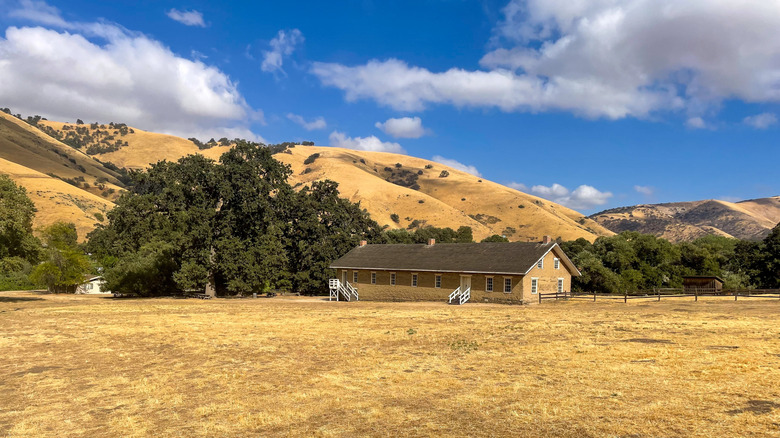
While covered wagons and the prairies of the Great Plains might be what come to mind when you think of American frontier life, California played a significant role in Western expansion, too. From prospectors to ranchers and railway builders, the Golden State has served as a backdrop for people of all types seeking a new life. One place where visitors can learn about the Californian frontier — and stroll beneath 300-year-old grandmother oaks – is Fort Tejon State Historic Park.
The fort's history dates back to just after California's Goldrush era, when the U.S. Army fortified the area to safeguard settler interests. "The foremost duties of the dragoons stationed here were to protect and control the native Emigdiano living on the Sebastian (also known as the Tejon) Reservation, and to deter raids by the Paiutes, Chemeheuvi, Mojave, and other desert-dwelling groups," per the park's brochure. Although the fort only remained occupied for 10 years, between 1854 and 1864, it now features a museum, restored adobe buildings, and other relics that hark back to frontier times.
If you're a native Californian, you've likely driven past Fort Tejon multiple times without even knowing it. The park is situated off the "Grapevine," an infamous stretch of highway connecting Southern California with the Central Valley and Northern California. It's about 40 miles from Bakersfield and 75 miles from Los Angeles, making it an ideal rest stop for anyone needing to stretch or with an overheating car on the Grapevine.
Things to do at Fort Tejon State Historic Park
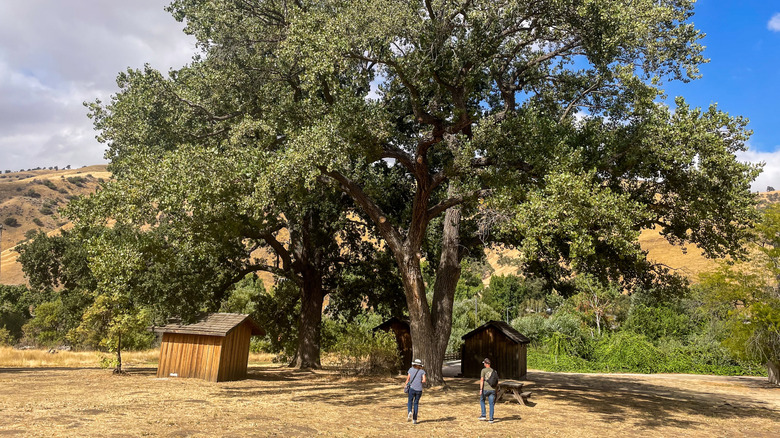
Many visitors say a stop at Fort Tejon State Historic Park only takes 30 minutes, but if you want to get to know the history, including finding out about the camel cavalry and the fort's role in the Civil War, you'll want to spend a bit longer in the area. Right up there with the prettiest destinations across Los Angeles for a picnic, Fort Tejon welcomes road-weary visitors with picnic tables shaded by heritage valley oaks, set against an arid backdrop of rolling hills.
A year-round creek cuts through the park, quenching the thirst of indigenous animals like blacktail deer, squirrels, bobcats, and opossums. If you look into the sky, you might spot a rare California condor catching a ride on warm air currents. You won't find extensive hiking trails, but you can stroll through the historic fort, passing by the restored jailhouse and other buildings.
Keep on going and you'll come across the oldest valley oaks in the park. From afar, it's hard to tell exactly how huge these trees are, but they are true giants of a bygone era. Next, keep an eye out for a polished gravestone beneath a particularly grand oak. This grave marks the resting place of Peter Lebeck, a settler killed by a bear. Stop by the visitor center, where you can learn about the ill-fated "camel experiment". After failing as a military transportation unit, a herd of camels briefly stayed at the fort, only adding to the post's colorful history.
Things to know before visiting Fort Tejon State Historic Park
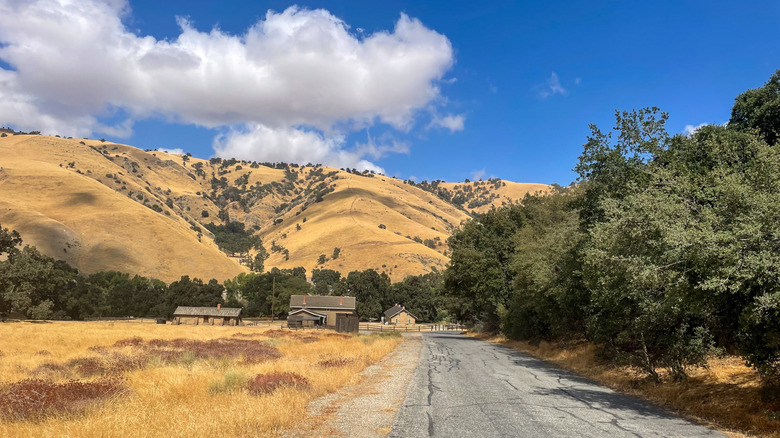
Whether you plan to spend the day at Fort Tejon or stop on a road trip to discover the best things to do in Southern California, there are a few things you should know. First, the park is open from sunrise until sunset. However, the visitor center and museum exhibits are only open from Tuesday through Saturday from 9:00 a.m. until 4 p.m.
While visitors generally enjoy the park on its own (it earns 4.5 stars on Google Reviews with over 1,200 reviews), the museum provides context for the buildings and ruins you'll see during your walkabout. Beyond the camels, the exhibits tell the story of indigenous and settler communities, as well as paint a picture of army life at the fort. For a deep dive into the history, you can book a guided tour in advance (at least three days) or be happy with the informative plaques.
Anyone from the Golden State will tell you this section of California gets very hot during the summer months. Temperatures reaching as high as 100 degrees Fahrenheit are not unheard of, particularly in July and August. Make sure to bring a water bottle with you, and stay out of the sun as much as possible during the hottest times of day. Finally, Fort Tejon State Historic Park only has a group campground. For individual campsites, you'll need to visit Frazier Park in the San Emigdio Mountains.