
Outside Spokane Is Washington's Scenic Wildlife Refuge With Trails, Birding, And Wildflowers
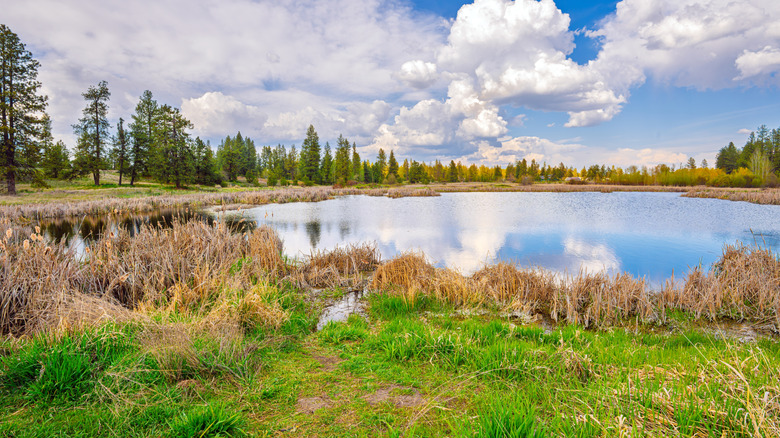
Washington's mighty Cascade mountains and magical Pacific coastline usually draw most of the attention when it comes to the state's outdoor destinations. Further east, however, Washington's underrated inland landscapes offer quite a few worthwhile outdoor attractions of their own. Though lacking the superlative altitude of Mount Rainier or the ethereal oceanside rainforests of Olympic National Park, eastern Washington's Turnbull National Wildlife Refuge is a remarkable preserve of the flora, fauna, and landscape settings that make this part of the country such a hidden gem.
Turnbull National Wildlife Refuge's 23,000 acres protect an interesting geographic space. Its landscapes are made up of marshes, wetlands, and ponderosa pine forests interspersed with eroded channels and outcrops of volcanic basalt rock. Even without the extraordinary heights of the Cascade summits, Turnbull has enough unique and photogenic spots for memorable sightseeing trips in the 3,300 acres open to the public.
Of course, being a wildlife refuge, Turnbull's main feature is its protected population of animals and the botanical ecosystems they call home. Turnbull's animal residents make for superb wildlife watching expeditions. In particular, the park's abundant populations of birds are ideal for birdwatching trips for experienced and amateur enthusiasts alike. On the floral side of things, Turnbull's forest and prairie ecosystems include wildflower views that rival even those of Mount Rainier's iconic alpine valleys. And, being just a 30-minute drive from Spokane, Turnbull National Wildlife Refuge and its many trails are excellent for relaxing day-hiking trips from eastern Washington's largest city.
A haven for eastern Washington's plant and animal residents
The wetlands and forests protected in Turnbull National Wildlife Refuge complement a much larger geographic region of eastern Washington called the Channeled Scablands, where the remnants of ancient Ice Age floods dot the relatively arid landscape in a striking series of buttes, canyons, and intricate rock formations. Turnbull highlights the overlooked beauty of Washington's "desert" region, with fertile wetlands and forests full of ponderosa pines and aspen trees.
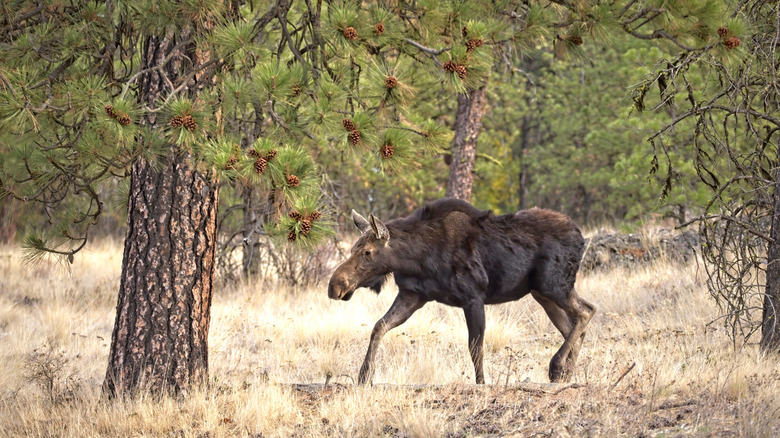
Turnbull's protected wetlands are a critical breeding ground for all sorts of waterfowl and migratory birds. With such a wealth of wildlife at hand, Turnbull — a U.S. Fish & Wildlife site — offers birdwatching opportunities comparable to some of the best national parks in America for bird lovers. Overall, Turnbull has around 200 species of birds, including diverse populations of hawks, owls, wrens, warblers, osprey, woodpeckers, hummingbirds, swallows, and plenty of waterfowl. Many of the park's waterfowl use it as an essential breeding ground or rest stop during migrations. The park's open spaces, trail network, and drivable roads also provide excellent spots for observing birds in their natural habitats. Beyond birds, Turnbull is also home to land animals like moose, elk, and otters.
The shrublands and prairies of the Channel Scablands are notable for significant populations of wildflowers, and Turnbull is no exception. The refuge's impressive spectrum of colorful wildflowers paints the park's landscape in a bright canvas of blues, purples, and yellows in the spring and summer. Though Mount Rainier's Skyline Loop is usually Washington's entry in the list of America's best wildflower-viewing trails outside of California, Turnbull's eye-catching collections of balsamroots, grasswidows, geraniums, yellow bells, and other wildflowers are all found along equally scenic (and less steep) trails. These wildflowers provide another reason to explore Turnbull's trails beyond its birdwatching opportunities.
Hike through an underrated side of Washington's scenery
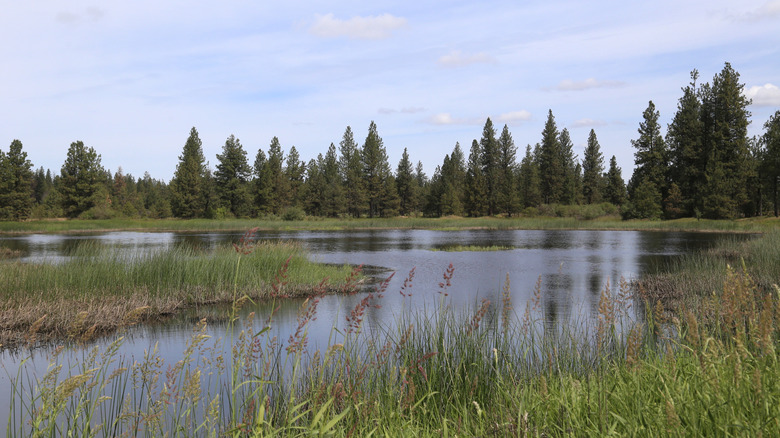
While its main purpose is the protection of critical wildlife habitats, Turnbull does have several great activities for (responsible) human guests to enjoy. With birdwatching and nature sightseeing so prominent in its appeal, Turnbull features several miles of scenic trails across many of its best birdwatching and wildflower-viewing areas. Unlike the precarious mountain hikes of Washington's Cascades, Turnbull's trails are rated at "easy" or, at worst, "moderate" difficulty on AllTrails. Most hikes are fairly short tours of bird habitats and picturesque ecosystems, with some trails even having great accessibility ratings.
The Pine Lake Loop Trail, for example, is a 1.13-mile path around Turnbull's Middle Pine Lake, with a broad, paved, even surface that can accommodate the needs of all sorts of hikers. Another short, yet scenic, hike is Turnbull's 1.79-mile Bluebird Trail through wetlands and ponderosa pine forests. Both the Pine Lake Loop and Bluebird trails showcase Turnbull's complex ecosystems (and associated birds) despite being shorter than 2 miles.
A slightly more challenging hike is available on the nearly 5-mile Stubblefield Trail. Passing through Turnbull's fertile Palouse Prairie and surrounding wetlands, the Stubblefield Trail is arguably the park's best hike for seeing wildflowers during the warmer months. No matter the trail, however, hikers will have ample opportunities for birdwatching from a well-maintained route. Visitors can even birdwatch from their cars on Turnbull's 5.5-mile auto tour route. If you are driving in, the adjacent town of Cheney is a great base camp. Even if you don't have a car, you can still get to Cheney via public transportation thanks to Spokane Transit's new fleet of double-decker buses for the Spokane-Cheney route. Regardless of how you get there, entry to the Turnbull National Wildlife Refuge is free.