
Washington's Historic State Park Overlooks The Columbia River With Camping, Rock Climbing, And Hiking
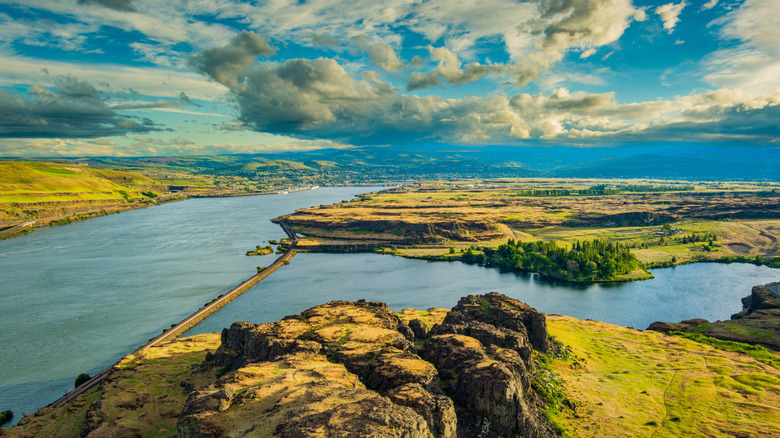
The Columbia River Gorge between Portland and Hood River, Oregon, is an iconic Pacific Northwest destination, with 80 miles of jaw-dropping scenic vistas. Quaint Hood River is internationally known for its world-class wind sports and vibrant wine and craft beer scene. But by driving just a wee bit further east and crossing the Columbia River, you can visit one of the Gorge's hidden gems, Washington's Columbia Hills Historical State Park. Here you'll find rock climbing, historic petroglyphs, superb hiking trails covered in wildflowers in spring, and a protected lake for swimming, paddling, and fishing.
East of Hood River, the gorge's lush forests and waterfalls give way to the blue skies, grasslands, and open buttes you'll see here. Columbia Hills Historical State Park is a sunny respite from the Northwest's typical rain. While the western gorge gets up to 80 inches of rain per year, the eastern gorge, where Columbia Hills is located, gets only around 10 inches (per the Trust for Public Land). The state park is 92 miles from Portland, or about a 1.5-hour drive.
The Lewis & Clark Expedition sojourned here, stopping at the historic native village that occupied the site of what is now Horsethief Lake. The 90-acre lake, formed when the dam was built, has a shallow entry with a soft, sandy bottom, and is ideal for launching a kayak or having a refreshing swim after climbing or hiking all day. You can camp here, too, at a small first-come, first-served campground with a handful of partial RV hookups.
Hiking and climbing in Columbia Hills State Park
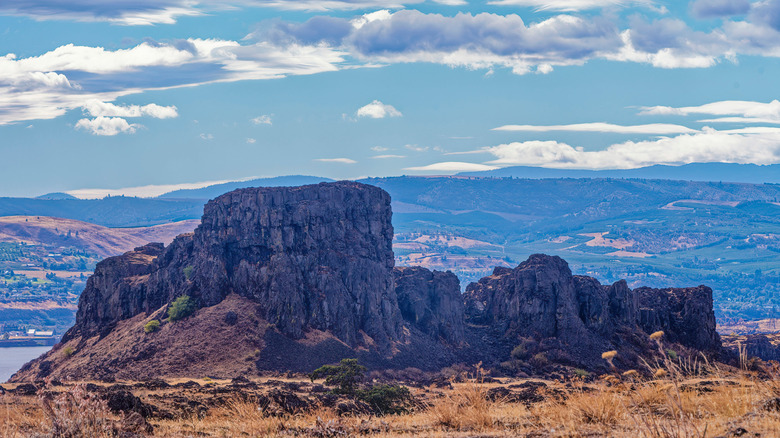
Portland-area rock climbers love to escape their city's damp shoulder season weather by traveling east to Columbia Hills' Horsethief Butte. Formed by dramatic columns of basalt jutting out of the Columbia River basin, the butte is woven with trails through steep-sided corridors of rock that provide opportunities for both roped climbs and bouldering problems on well-worn routes. Conditions here are ideal for beginners and kids to learn, and many outfitters offer classes if you'd like to take a beginning climbing lesson. It's also a perfect place to try out the skills you learned in the climbing gym on natural rock for the first time.
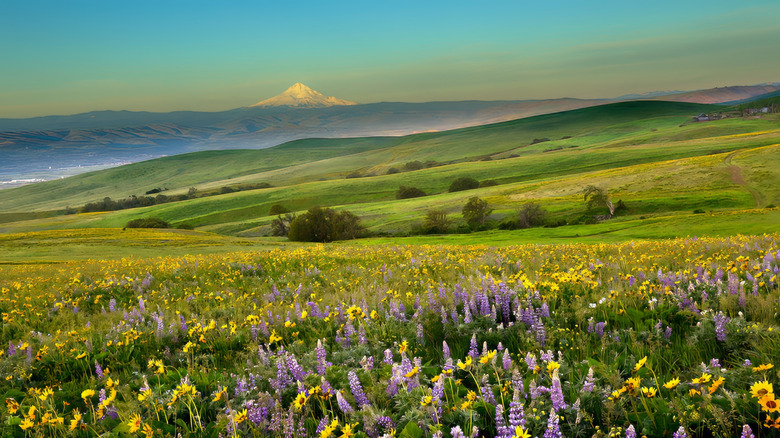
Columbia Hills offers one of the best spring hikes in the Gorge, with fewer crowds than the iconic Dog Mountain Wildflower hike. Head out on the Vista Loop hike that begins at the Crawford Oaks Trailhead. This is a 4.8-mile lollipop loop (per AllTrails) that leads to a butte overlooking the mighty Columbia River, offering a colorful riot of flowers set against a backdrop of the soaring, snow-capped Cascade Mountains. The views make it worthwhile any day of the year, but springtime is something else.
"There are so many flowers that at times it was as if I was wading through them," says one hiker in a trip report on the Washington Trails Association website. The views come at the expense of a steep climb to a high, windswept bluff and a shallow water crossing, so don't forget to bring that windbreaker and those trekking poles. To hike up another of the Gorge's stunning buttes, drive just one hour west to breathtaking Beacon Rock State Park.
Columbia Hills' Horsethief Lake camping and history
The tiny campground on the shores of Horsethief Lake in Columbia Hills Historical State Park is an oasis for RVers, with 8 sites with partial hookups. There are four regular tent sites and two primitive sites, too, but tent campers should be aware that the consistently strong summer winds can make for a blustery night. Campsites are reservable through Washington State Parks.
A highlight of any camping stay here is a tour of the park's collection of ancient petroglyphs. You can see a few of them on your own, but make time for the ranger-led Tsagaglalal (She Who Watches) tour to see others that are off-limits without a guide. As one Tripadvisor reviewer remarked, "Taking the tour is the only way to access the restricted area to see many pictographs and petroglyphs." You'll learn the haunting myth of the woman chief who taught the local tribespeople to thrive until Coyote, the trickster, came along and turned her into the stone figure you see today.
While Arizona's remote Horsethief Lake was named for actual horse thieves who used to drive their stolen livestock there, the origin story for this Horsethief Lake is a more innocent tale. According to the oral history of the area, U.S. Army Corps of Engineers workers building the dam gave the butte and the neighboring lake the name because it reminded them of horse thieves' hideouts in 1950s western movies. They had a point: there is something about the towering butte that is reminiscent of the Southwest's majestic buttes, although, as anyone who has visited it will quickly agree, the lush, dramatic landscape of the Columbia River Gorge is truly unique.