
5 Destinations Where You Can See Sea Turtles Hatching And Nesting In America
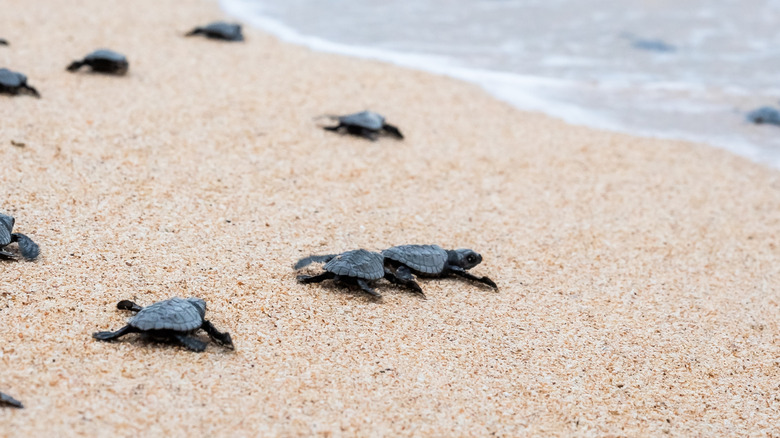
Growing up in South Florida, turtle nesting season had an understated excitement that felt palpable. From Fort Lauderdale to Miami Beach, I'd see stakes bordering nests in the sand and caution tape, keeping these endangered species safe. I even spent time volunteering in Crandon Park to help paint stakes used to safeguard nesting sites.
While those early experiences shaped my connection to sea turtles, Florida isn't the only place in the U.S. where you can witness hatchlings climbing out of their nests and flapping their way into the sea. Based on data expressed by state and federal agencies, community boards, and local conservation programs, we've identified five destinations across the United States where sea turtle nesting is most accessible to the public.
March 1 through October 31 is turtle nesting season, though timing can vary slightly by region. The turtles that nest in these areas include loggerheads, greens, Kemp's ridleys, leatherbacks, and hawksbills. Visiting during this period comes with responsibility. Beaches should remain clean and undisturbed, visitors should keep a respectful distance, and lights should be minimized at night, including avoiding flash photography. Disturbing turtle nests can result in fines or federal penalties under the Federal Endangered Species Act of 1973. The goal is for the turtles to make their way to the ocean safely without disturbance or disorientation. With the right timing and awareness, here are some of the best places in the U.S. to spot sea turtles hatching and nesting!
Fort Lauderdale, Florida
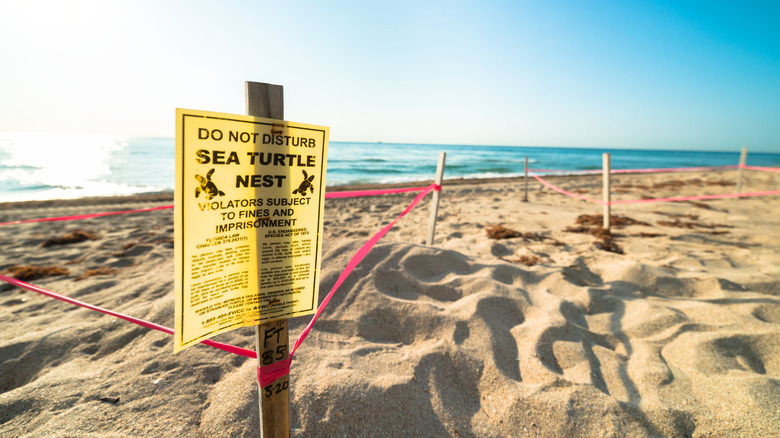
Born and raised in Fort Lauderdale, I'm quite familiar with turtle season. Nests are scattered along the shoreline (like in the image above), waiting for the hatchlings to emerge. According to Fort Lauderdale's government website, it's the second most popular nesting area in the world for loggerhead turtles. NSU Florida reported in 2020 that loggerhead nests reached around 3,000 in Broward County, including the Fort Lauderdale area. These turtles prefer warm sand and subtropical regions, which helps explain their strong presence along this stretch of coast.
While the season runs from March through October, peak season in Fort Lauderdale typically occurs at the end of June or the beginning of July. Hatchlings begin making their way to the ocean around this time, as it usually takes two months for the eggs to incubate beneath the sand. Conservation programs, like NSU Florida's Broward County Sea Turtle Conservation Program, not only help protect nesting sites but also offer opportunities for the public to observe hatchlings. For travelers wanting to watch these little guys make it home, you must pre-register and purchase tickets in advance.
Jekyll Island, Georgia
Not only has Jekyll Island been consistently rated among America's best beaches, but it is also a hot spot for turtles. Turtle nesting season on Jekyll Island looks a bit different from that in Fort Lauderdale. According to Jekyll Island's official website, their official nesting season begins in May and runs through mid-summer. Hatchlings usually emerge between August and October. Loggerheads are quite popular in this region, similar to Fort Lauderdale, and there was a record-breaking number of nests in 2022, reaching over 4,000.
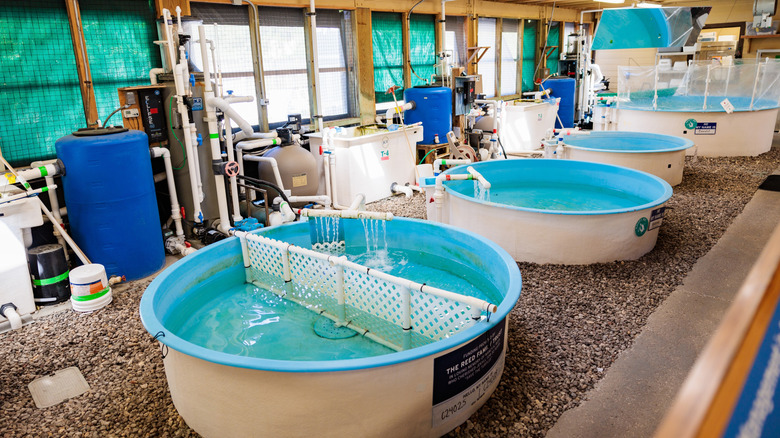
Visitors traveling to the coastal Georgia destination can visit the Georgia Sea Turtle Center (GSTC), the state's only sea turtle education and rehabilitation facility. The staff has a night patrol team that allows the public to ride along and get an up-close view of the nests. They also offer evening and sunrise walks, teaching participants about the shoreline's ecology. Beachgoers who want to be a part of the action can adopt a sea turtle nest, where the GSTC will provide updates on the nest's progress, as well as information on public hatchling releases. This is just one of many ways travelers can establish a connection with America's sea turtles.
Jupiter Beach and Juno Beach, Florida
According to Visit Florida, nearly 90% of sea turtle nesting takes place on the sparkling coastlines of the Sunshine State, so it's no surprise another Florida city made the list. Jupiter is filled with stunning nature parks, historic charm, and pristine beaches that sea turtles find ideal for nesting. The Jupiter Diver Center claims this coast to be one of the densest areas for sea turtle nesting populations in the nation.
We grouped Jupiter and Juno Beach, which is famous for sea turtle nesting, because these stretches of sand are within a 5-minute drive of each other and are both included in Loggerhead Marinelife Center's data. Additionally, it's where the center is located. In fact, the sea turtle and ocean conservation organization reported a record-breaking 25,025 nests in 2023 — the data includes both areas. The Palm Beach Post updated those numbers in 2025 to 20,872 nests, using the same organization's findings.
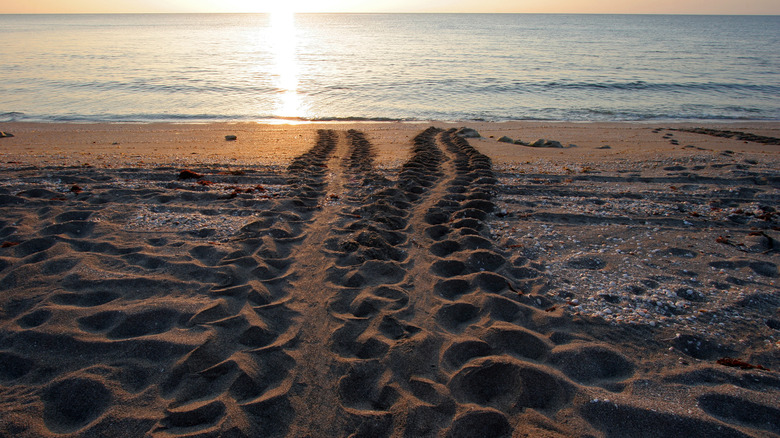
Visitors can spot sea turtle tracks along Jupiter's shorelines (which look similar to the photo above). The Loggerhead Marinelife Center allows the public (ages 10+) to view hatchlings being released based on nests excavated earlier that day. These viewings last approximately two hours and must be pre-booked in advance.
Miami Beach, Florida
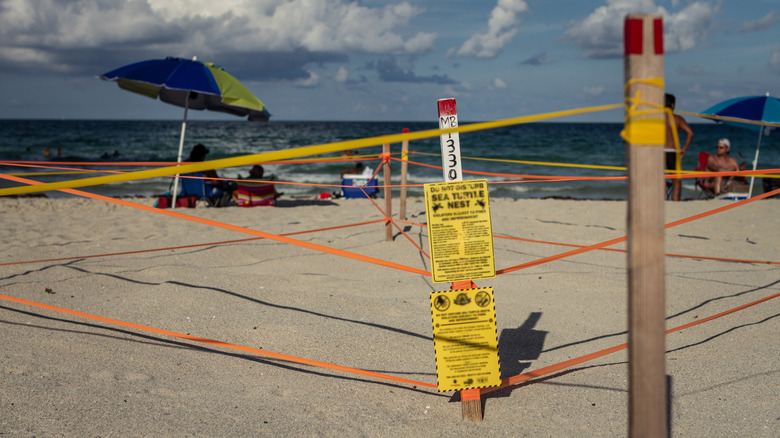
Miami Beach has around 19 miles of turtle nesting activity, spanning from Golden Beach to Key Biscayne. Seasonally, more than 600 nests are recorded in the Miami-Dade area alone. Beachgoers will typically see a stake in the sand with neon or brightly colored tape to mark off the square where the nest is. They will have a warning tag on it revealing that it is a nest, so visitors can politely avoid the area.
Travelers to Miami can volunteer by painting stakes for the nests, as well as participating in beach cleanups during community-wide events like Turtlepalooza at Crandon Park. In Haulover Park, the county also celebrates World Sea Turtle Day, which kicks off events where visitors can contribute to conservation efforts. Staff even offer educational opportunities for participants involved. For those who miss seeing hatchlings emerge from the nest, Miami-Dade also posts to their sea turtle Instagram account, showing nesting and release updates. These efforts make Miami one of the most active and accessible beach destinations, not only for spectators but also for those looking to get involved.
Outer Banks, North Carolina
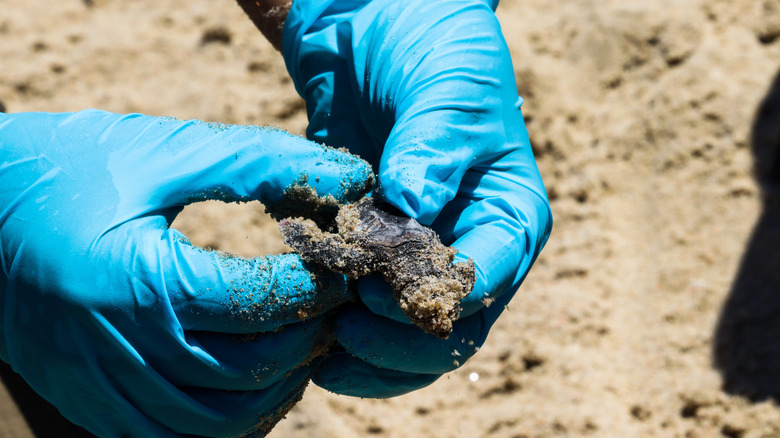
The Outer Banks (OBX) was not only ranked America's No. 1 trending destination on Google in 2025, but it's also quite popular in mid-summer for turtle nesting season. This North Carolina region is a bit more discreet about sea turtle nesting locations to help protect the species. The Network for Endangered Sea Turtles (NEST) staff note that nests are present, but it is largely up to the public to track timing and anticipate when hatchlings might emerge, typically 50 to 60 days after eggs are laid. While much of this activity is kept low-profile, community involvement is encouraged.
Cape Hatteras National Seashore is a popular location for sea turtles to nest. In late summer and early fall, visitors can watch nest excavations, where marine biologists observe what's left in the nest to see if any more eggs need to hatch. From each nest, about 150 hatchlings will emerge, making it an unforgettable moment for travelers. To spot when that might happen, you can head to the National Park Service website and social media pages for their scheduled excavations. Since nesting activity is intentionally kept low-impact in these areas, timing and patience are key for visitors hoping to witness this quiet stretch of coastline come alive with hatchlings.
Methodology
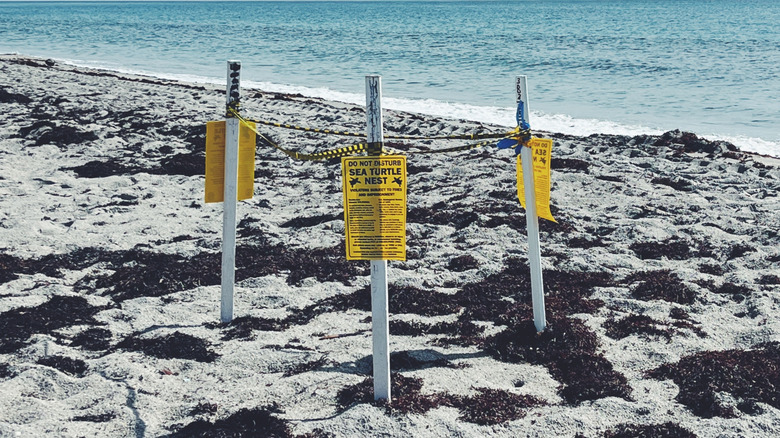
To identify these five destinations where visitors can see sea turtles across the United States, we began with firsthand knowledge of high-activity nesting areas. As someone who grew up in South Florida, I regularly encountered turtle nests along Fort Lauderdale's coastline, making it a natural starting point. This extended to Miami, where I had personally helped prepare turtle nesting sites at Crandon Park. From there, we drew on our own coverage from an Islands feature on Juno Beach, which led us to the Loggerhead Marinelife Center, a turtle rehabilitation center whose data also covers Jupiter Beach, allowing us to group both locations together. Recognizing the Atlantic Coast as a key region for sea turtle activity, we turned to Georgia, where Jekyll Island is home to the state's only sea turtle rehabilitation center. Finally, we looked to the Outer Banks in North Carolina, a coastal region anchored by federally protected National Seashore lands.
With these five destinations established, we conducted further research using state and federal agency resources to review foundational data on sea-turtle nesting and conservation efforts. We then cross-referenced each location with local government and conservation organization sources to gather information on nesting activity, hatchling emergence, and public engagement opportunities. This also provided insight into how each destination supports conservation initiatives and how visitors can responsibly participate in or observe these experiences. Lastly, we reviewed recent visitor reports and official social media updates to confirm current nesting activity during the active season at the time of publication. With these combined sources, we narrowed the list to five destinations where travelers have the highest likelihood of witnessing sea turtle hatchlings emerge.