
Vintage '80s Camping Gear That Needs To Make A Comeback
We may receive a commission on purchases made from links.
The 1980s were an interesting time for outdoor equipment. Field Mag marked it as the end of "outdoor recreation's golden era." Similarly, Foehn apparel makers argue that the '80s marked the end of small companies, when "problem-solving for climbers and mountaineers was becoming product strategy, spreadsheets, and scale." It felt like everyone had a Polaroid camera. It was also the first decade for fleece, culminating with the Patagonia Synchilla, which didn't make this list solely because it remains uber-popular to this day. Along with the hits, the decade featured its fair share of forgotten equipment, and that's why we're here today. We went deep into the closets and dug through a decade's worth of camping stuff to find a few great examples of vintage '80s camping gear that deserve a spot back in your pack.
But first, let's get to the bottom of why we should all care about old gear. For that, we can turn to Bruce "Old Gear" Johnson, who has dedicated his professional life to documenting the history of gear. A 2014 email from one of his readers does an amazing job explaining the role of old gear in the modern world. The email said, "Sure, nostalgia is part of this," but it argued that the real point of bringing back old gear is to preserve the "pioneers who sewed up the gear that started a revolution in backpacking, mountaineering and spinoff pursuits that continue to this day."
Amen to that. To keep the past alive, we spent weeks reading up on old-school camping equipment, digging through eBay listings, and listening to enthusiasts wax poetic about their favorite gadgets to come up with this list of vintage '80s camping gear that deserves a comeback.
Physical camping gear magazines
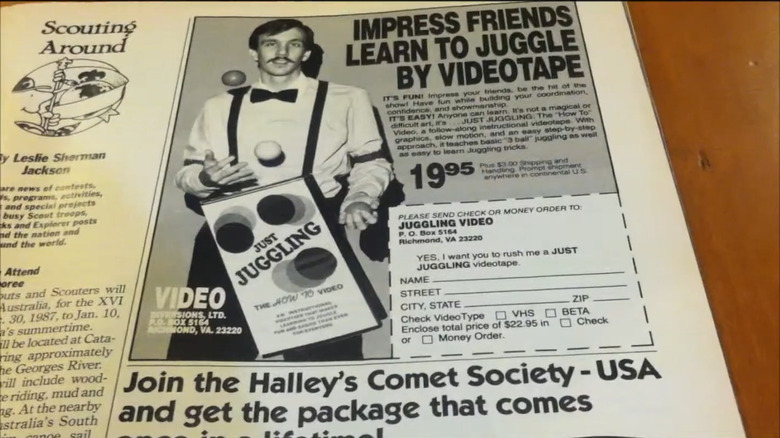
To start our search for vintage outdoor gear, we got our hands on 36 years of "Backpacker" magazines and headed directly to the December 1979/January 1980 issue. The decade's "Backpacker" issues show a transition from grainy, half-black-and-white at the end of 1979 to bright colors, two-page centerfolds, and, interestingly enough, a Scientology ad by 1989. Sifting through a decade of these periodicals made us realize that the magazines themselves were a piece of outdoor equipment that is worthy of a comeback.
Outdoor magazines introduce you to what gear to buy, so in a sense, they're the gear that generates all other gear. At least, they were in the 80s. The Economist argues that the 1980s saw the last golden era of magazines. In 1990, magazines of all categories held remarkable sway. Studies at the time claimed that 56% of men and 48% of women used them as their primary source to discover new products. Today, they clearly don't have that same pull, but outdoor magazines are gearing up to make a comeback. And it's not just us who think so.
In 2024, Country stars Eric Church and Morgan Wallen bought the rights to Field & Stream magazine, which had been a physical source of outdoor and camping gear coverage for over 100 years before ceasing its print magazine in 2020. The men behind the country duet "Man Made a Bar" immediately reintroduced the print version of the magazine, with Eric Church tweeting that Field & Stream magazines were "my Bible." He said, "It is the honor of my life to make sure that legacy carries on."
Moss Tents
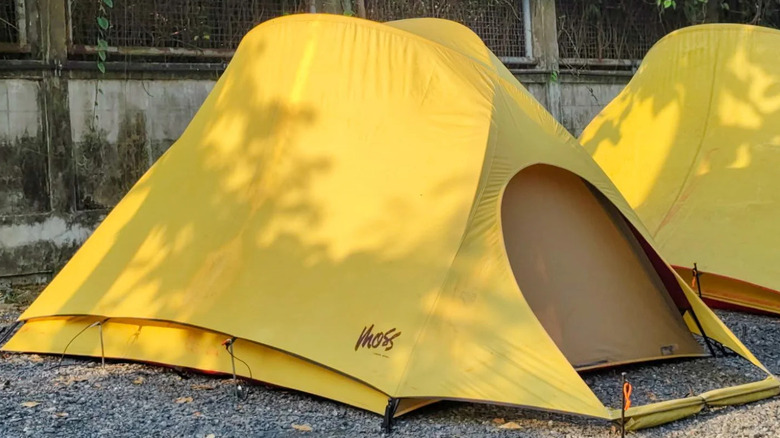
Bill Moss' tents are true unicorns. They were both technically advanced, four-season shelters and bona fide works of art. In 1982, the "Star Gazer" (pictured above) was displayed in the Louvre and the Museum of Modern Art. Today, happy users are still broadcasting images of their original Moss Tents standing strong through winter camping conditions.
Just take one look at the Moss Sydney, modeled after the Sydney Opera House, and you'll understand why it needs a comeback. The original tents from the 1980s frequently go for hundreds of dollars on eBay, especially those with a tag signifying they were made in Camden, Maine. One reason why Moss made such great tents was that he absolutely loved the art of tent design. Various publications have quoted Moss speaking of tent-making as a blend of architecture, art, and outdoor equipment. He called tents "sculpture you can get into," and he even slept in tents for months at a time during the Maine summers.
Eventually, Moss Tents was sold to REI, absorbed into MSR, and quietly disappeared. However, hope for a comeback is gaining some momentum. In 2019, Solo Star Japan licensed the Moss Tents name in Japan, China, South Korea, and Taiwan. As of 2026, Moss Tents does have a presence in Japan and an online website where you can order a "Stargazer" tent featuring the original colors and upgraded materials for around $1,500. Of course, that's a lot of money for a tent, so you can always stick to one of these camping tents you can buy on Amazon for under $100 in the meantime.
Eddie Bauer goose down face mask
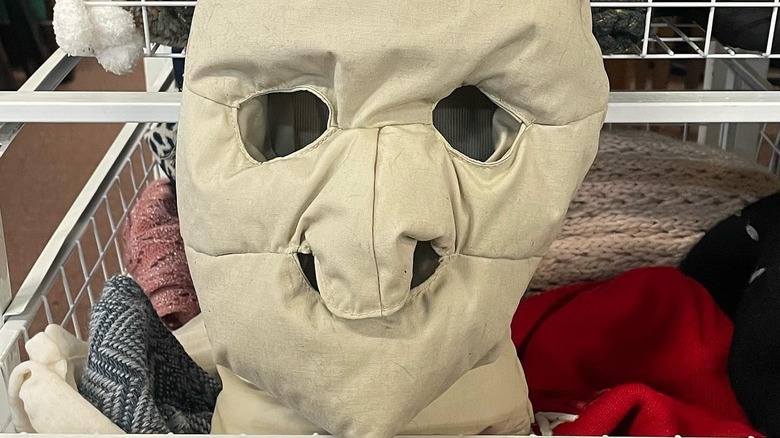
The Eddie Bauer Goose Down Face Mask provides complete face protection while making you look like a cross between a plague doctor and Squidward. It might look like something out of a Halloween movie, but apparently, the full goose-down protection serves as a legitimate piece on especially cold days. One reviewer on Trailspace called the unique look an "elephant seal type nose flap [that] fully covers your sniffer." Another wearer has used his for decades to get him through minus-40-degree days and snowmobile runs.
It's hard to say this mask needs a comeback, as it doesn't seem to have ever been too popular. In hours of internet research, we couldn't find any photos of anyone actually wearing this mask in the 1980s. Many vintage collectors also seem stuck deciding whether this face mask is a fresh piece or nightmare fuel. Online retailer Milo Supply called the mask "terrifying, practical, all that good stuff." However, since this article isn't about "once-popular" camping gear but instead "gear that needs to make a comeback," we took a closer look.
The mask's stretchy back panel fits on just about every head and provides a level of warmth and face protection that would compete with any modern balaclava or ski mask. Looks aside, it's a legit piece of gear that warrants a comeback, and we're not the only ones who think so. Japanese streetwear brand Neighborhood clearly agrees, as it collaborated with Eddie Bauer to re-release the original face mask in crisp new colorways for winter 2025. Now, all we need is a Hollywood heist movie to mask its cast in these bad boys to spark a full-on comeback tour.
Dana Design backpacks
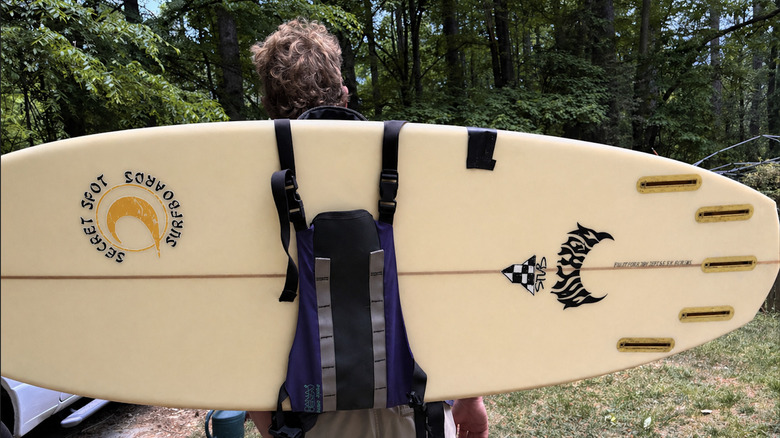
Referred to by one Redditor as "The Godfather of backpacks," Dana Gleason has built and sold bags under a few different monikers: Kletterwerks, Dana Design, and Mystery Ranch, which was recently bought by Yeti. From 1985 to 1995, he was arguably at his peak, cranking out hit after hit under the name Dana Design. As GearJunkie founder Stephen Regenold wrote in 2015, "If you're under 30 years old, you probably don't remember Dana Designs. If you're over that age, how could you forget?"
At the time of their release, Dana Design backpacks broke boundaries. As Outside Magazine reported in 2016, Dana Design's Terraplane ArcFlex (released in 1987) was the first backpack that could be customized to fit women. Decades after the last Dana Design backpacks were made in Bozeman, Montana, reviews are still talking about the packs' "bombproof" durability. One even wrote, "this one looks certain to outlive me." You can still spot them occasionally on eBay, marked by an iconic color scheme and running man logo that instantly catches your attention.
I have one of these backpacks, and while it might not be as light and nimble as a modern Osprey, as you can see from the picture above, it can hold an entire surfboard. The dang things are tanks, earning a cult following as a technical bag brand that can carry oversized loads and survive forever.
Nike Lava Dome Boots
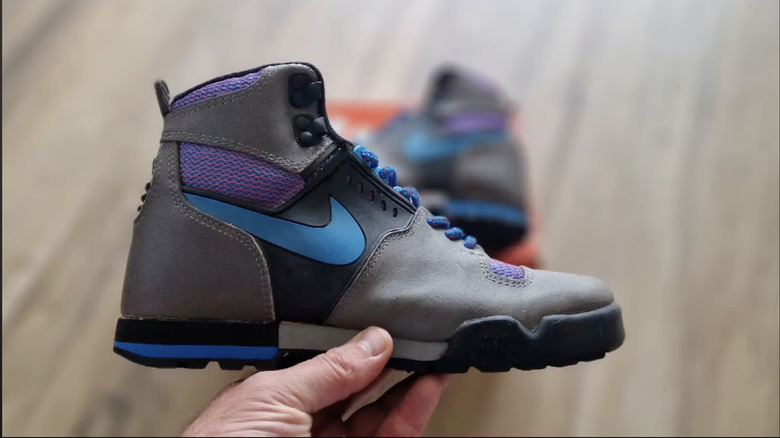
Dubbed by Proper Mag as "the original trail shoe," the Nike Lava Dome boots were a revolutionary release at the beginning of the 1980s. The shoe's story actually starts in the late 1970s, when an American expedition set out to become just the third group of summiteers on K2, a mountain only 779 feet shorter than Everest. In exchange for a free sweater with a Nike logo, two climbers swapped out traditional hiking boots of the era for Nike running shoes during their hike into base camp. The lightweight trainers were no match for the tough terrain of the mountains, but the breathable design showed promise.
The climbers sent in notes to Nike, and by 1980, the Lava Dome Boots were released. At the time, the shoe was revolutionary: bright splashes of color paired with lightweight construction, when neither was expected from a hiking boot. It gave Nike enough momentum to launch its All Conditions Gear (ACG) line, which still runs today. By the end of the decade, Nike had released the Son of Lava Dome as ACG's flagship model, and some sneaker historians still consider it one of the best releases the line ever produced. None of that could've happened without the grunt work of the Lava Dome.
The Lava Dome Boots have had a few revival runs, most recently in a 2016 model known as the Lava Dome Ultra, but for the most part, this sneaker has avoided the limelight of other ACG and Nike hiking models. Instead, the shoe retains a cult status as an approach shoe whose re-release won't need an overhaul to re-capture the hearts of adventurers everywhere.
Methodology
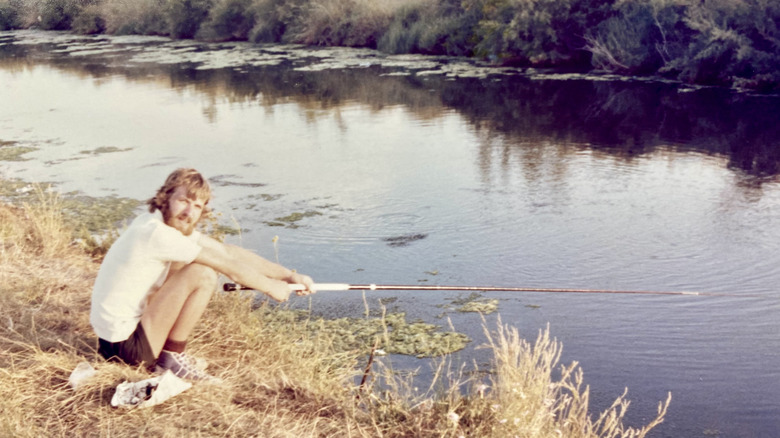
To come up with this list, we first compiled heaps of gear that might qualify. We scoured a decade's worth of outdoor gear ads, listened to collectors, and browsed vintage forums, message boards, and Reddit threads. We also checked press coverage from vintage media we could get our hands on and delved into outdoor companies' origin stories to see what gear led them to where they are today. Finally, we checked the secondhand market to see what items have a true cult following. Somehow, somewhere, the vintage items on our list fetch a pretty penny whenever they do pop up online, which is always a good sign of value.
To make the final cut, each piece of equipment had to do three things: be technically sound enough to work on trips today, be culturally significant enough to warrant a second chapter, and have a good story, because the best part of a comeback is the story behind it.
Ultimately, any piece of equipment is worth a comeback if it still works, so check out our guide on how to turn your next trip into a vintage treasure hunt and start your own renaissance movement.