
Thailand's Largest Lake Is A Breathtaking Body Of Water With Islands, Bird Sanctuaries, And Fishing
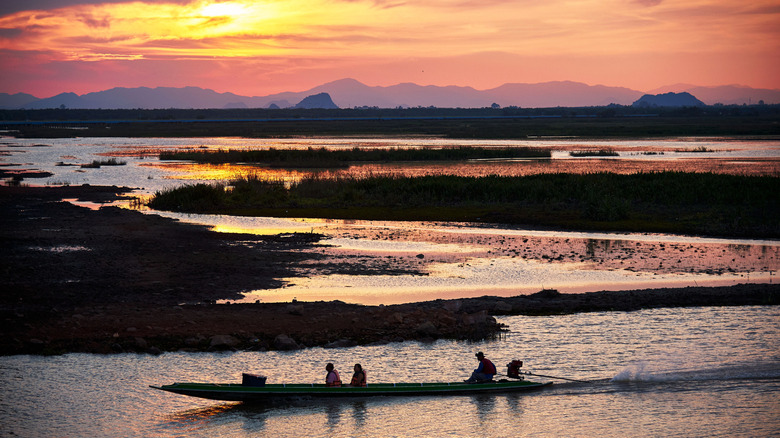
Thailand has no shortage of beautiful places. In 2025, 32.9 million people came to the Land of Smiles to lie on Ko Samui's white sand beaches, visit misty temples in Chiang Mai, and hunt for street food beneath Bangkok's neon lights. However, Thailand is also home to unsung destinations that few foreign visitors ever hear about, let alone see. One such place is Songkhla Lake, Thailand's only non-artificial lake and by default the largest.
For over a decade, I've split my time between the U.S. and Thailand, and I visited Songkhla Lake for the first time at the beginning of 2026. Situated in the far south of Thailand, Songkhla Lake takes its name from Songkhla province, but the lake itself spans three provinces. Technically, "Songkhla Lake" is three interconnected lakes. For reference, it took me about 2.5 hours to drive from the top of the lakes to Songkhla city at the bottom.
Although the sheer size impresses, what sets this body of water apart is its unusual ecosystem. Fresh water flows in from the Banthat and Sankalakhiri Mountain Ranges, while brackish and salt water from the Gulf of Thailand make up much of the lake, especially during the dry season. This convergence of waters has supported human and animal life for thousands of years, including 43,000 migratory birds that stop at the lake's sanctuaries. From the long-tail tour boats, you'll see flocks of herons and other waterbirds converge on muddy banks, while fishermen attend to hanging nets and sun-dry fish on woven baskets.
What to do and where to stay at Songkhla Lake
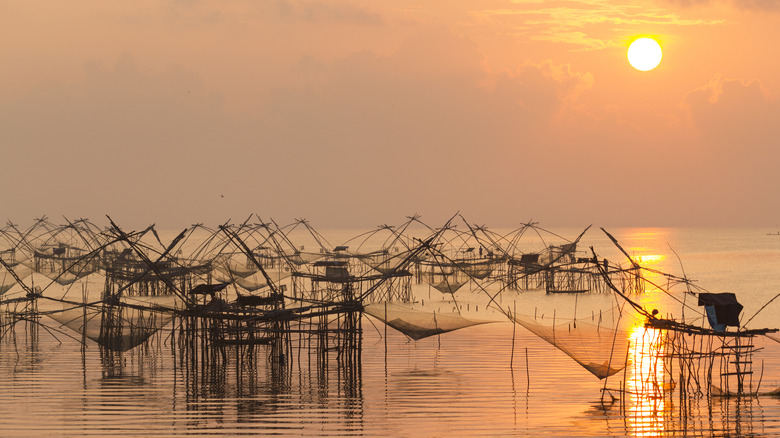
To fully immerse yourself in nature at Songkhla Lake, I recommend staying at least two nights in a homestay or family-run resort away from the development of Songkhla city. Situated at the northern end of the largest Songkhla Lake, Pak Pra and the surrounding wetland area offer dozens of stays you can book via Agoda or Booking.com, ranging from $20 to $130 per night.
Most of these accommodations sit directly on the water, offering prime sunrise viewing over the village's traditional fishing nets. Known as "yok yor" in Thai, these giant suspension nets hang over the water on a square-shaped bamboo frame when not in use. After heavy rain (or whenever fishermen suspect fish might be around), the net tender lowers the rig into the water, waits for an unspecified amount of time, then pulls up the net and anything caught inside.
From Pak Pra, you can secure a long-tail boat tour of Thale Noi, the smallest of the three sister lakes and a premier birding destination with over 180 species. The best time to visit is in the early morning (plan to be on the water at dawn) between October and March when migrating birds like purple herons and painted storks visit from China and Siberia. The Khu Khut Waterbirds Sanctuary also offers the chance to see Songkhla's birds up close, but I didn't visit here because recent Google reviews suggest the visitor facilities have fallen into disrepair.
Tips for planning a trip to Songkhla Lake
To reach Songkhla Lake, you can fly into either Trang Airport (TST) or Hat Yai International Airport (HDY) from Bangkok. However, it's a long way to travel for only one place, especially if you're coming from overseas. Instead, consider adding a stop at Songkhla Lake after staying on Krabi's affordable tropical vacation islands, like Koh Lanta. From Krabi Town, it's a three-hour drive to Pak Pra.
While I stayed in Pak Pra for the village experience, another jumping-off point for exploring the lake is Songkhla city. With a population of around 60,000, it's not a big city, but neither is it a nature getaway. However, you can easily reach Songkhla Lake's most famous island, Ko Yo. Instead of the secret sandy coves of Koh Chang, you'll find seafood restaurants and cafes overlooking vast expanses of yok yor nets. You can also visit the Folklore Museum, an institute dedicated to Southern Thai ethnic groups and artifacts.
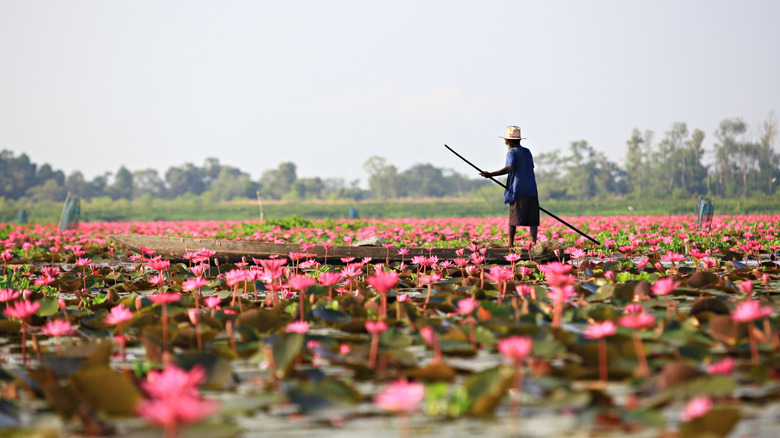
Songkhla Lake is a year-round destination, but there's a sweet spot around March when migratory birds still remain, and Thale Noi comes alive with thousands of bright pink water lilies. As the flowers and the fowl follow their own schedules, there's no guarantee you'll arrive during the peak of either event. Regardless of the month, visitors shouldn't expect the developed tourism you'd find in Phuket or Northern Thailand's vibrant Chiang Mai, but that's the beauty of Songkhla Lake.