
Texas' Audubon-Approved Bird Watching Haven With Rare Wildlife Is Under An Hour From Galveston
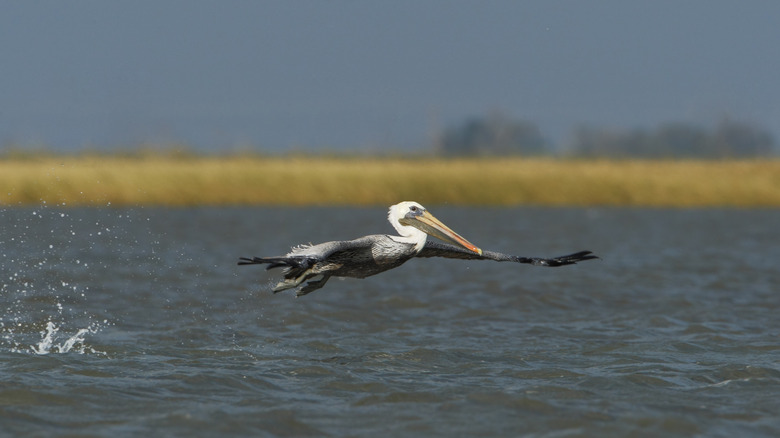
When it comes to birdwatching, Texas is pretty hard to beat. With almost 700 species of birds spotted across the region, it ranks among the top states in the country for birding, according to eBird. You'll find a range of winged critters on the Gulf Coast, which is a huge hotspot for birdlife because of its lush mix of habitats and prime position within major migratory pathways. Perched in the Upper Texas Coast along the Great Texas Coastal Birding Trail, the Bolivar Flats Shorebird Sanctuary is a favored haunt for roughly half a million seasonal and native birds each year, including rare varieties, among other wildlife.
Bolivar Flats, which is owned and operated by the Houston Audubon Society, celebrated a monumental win in January 2026, when it secured the last bit of land needed to protect the entire preserve against development. The coastal sanctuary now stretches for more than 1,300 acres along the base of the Bolivar Peninsula, a narrow strip of land that's flanked by the waters of the Gulf and Galveston Bay, about half an hour from Galveston by ferry.
Although you can walk onto the ferry, it's best to bring your car because the sanctuary is a few miles away from the landing. Just keep in mind that you need a permit to park on the beaches in the area, which you can buy at various businesses on the peninsula for $10 for the entire calendar year, at the time of this writing. You can find a complete list of places to snag a parking decal on Galveston County's website.
See the shorebirds and waders that call Bolivar Flats home
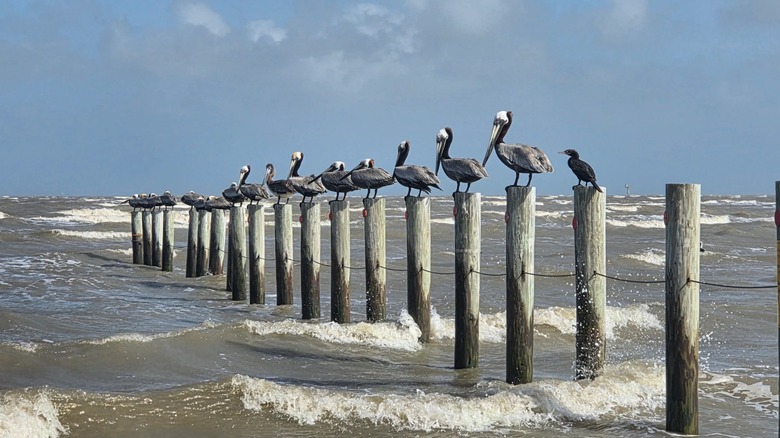
Recognized as a top-tier Globally Important Bird Area by the National Audubon Society in partnership with BirdLife International and as a Western Hemisphere Shorebird Reserve Network site of International Importance, the Bolivar Flats Shorebird Sanctuary rivals any of the best birdwatching destinations in America. The protected area's shoreline habitats are incredibly diverse, made up of coastal prairies, salt marshes, mudflats, and stretches of sandy beach.
The unique terrain is actually the byproduct of the North Jetty, a protective wall of granite blocks constructed by the U.S. Army Corps of Engineers in the late 1800s to safeguard the entrance of the Galveston Bay. A twin structure, aptly called the South Jetty, was built along Texas' bustling, beachy Galveston Island, too. As the name suggests, the lush landscapes of Bolivar Flats are a safe haven for migratory shorebirds, including endangered piping plovers, red knots, and black rails, as well as threatened snowy plovers.
More than 300 species of birds have been recorded in the preserve on eBird. You can spot a variety of waders, seabirds, and songbirds, from long-legged great egrets and bright pink roseate spoonbills to stocky brown pelicans and buzzy seaside sparrows. If you need any help identifying what you see or just want to jot down the various species of birds you observe throughout the sanctuary, you can download the Audubon Bird Guide App for free.
Other wildlife to see and things to keep in mind when visiting
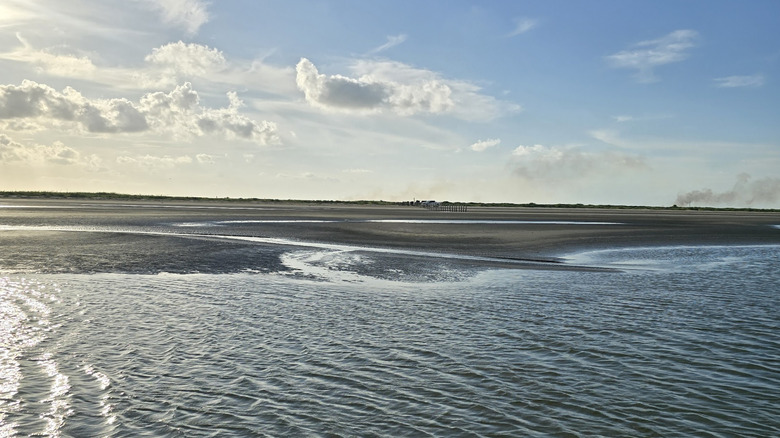
Birds aren't the only wild creatures you can expect to find around the Bolivar Flats Shorebird Sanctuary. The mudflats and marshes that stretch along the shore are also home to an array of fish and other marine life. You may spot some animals out in the surrounding waters, including bottlenose dolphins and crabs, so keep your eyes peeled. And although they're a pretty rare sight, coyotes and alligators have previously made appearances along the sandy beaches of the Bolivar Peninsula, too.
As you mosey along the sands, be sure to respect any wildlife you see. Always stay a safe distance away from the animals so you don't spook or harm them. And be sure not to trample through the vegetation because birds often build their nests there — not to mention, the wilds could harbor potentially deadly snakes. Want to see more native critters along the Gulf Coast? Texas' free-to-visit McFaddin National Wildlife Refuge is less than a two-hour drive up the coast.