
Not Yellowstone, Not Shenandoah: This National Park Has The Most Black Bears
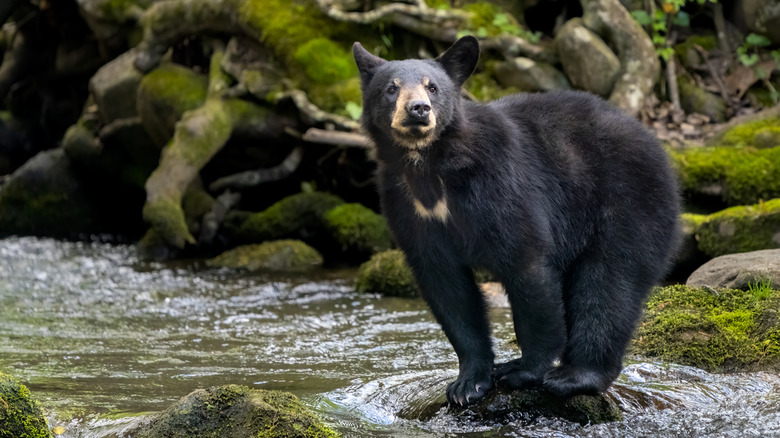
One of the appeals of a visit to a U.S. national park is the chance to spot bigger beasts. Whether you're coming face-to-face with a grizzly in the Rockies of Glacier or watching a bison herd graze the meadows of Yellowstone, meetings with majestic animals beckon all over the country. But when it comes to spotting black bears — the most common type of ursine in the United States — there's one place that trumps all others in terms of sheer numbers: Great Smoky Mountains National Park.
Yep, according to official National Park Service estimations, this vast reserve of forest-clad peaks counts a black bear population of at least 1,500 individuals. Meanwhile, Smokies Life, an educational publication that supports park preservation, puts the number closer to 1,900, which equals roughly two bears per square mile across the 800-square-mile park. Those numbers top other parks that are famed for their black bears, such as Virginia's Shenandoah, where there could be up to 1,000 bears, and Yellowstone National Park, where the bear population is split between black and grizzly bears.
If that's tempted any would-be bear spotters out there, then there's more good news. Because Great Smoky Mountains is America's most visited national park, it's also eminently accessible. The park spans two states, North Carolina and Tennessee. That means you could be cruising into this bear-stalked territory just 30 minutes after leaving Knoxville's McGhee Tyson Airport, or in just a touch over 50 minutes after leaving Asheville, North Carolina.
Where to spot black bears in Great Smoky Mountains National Park
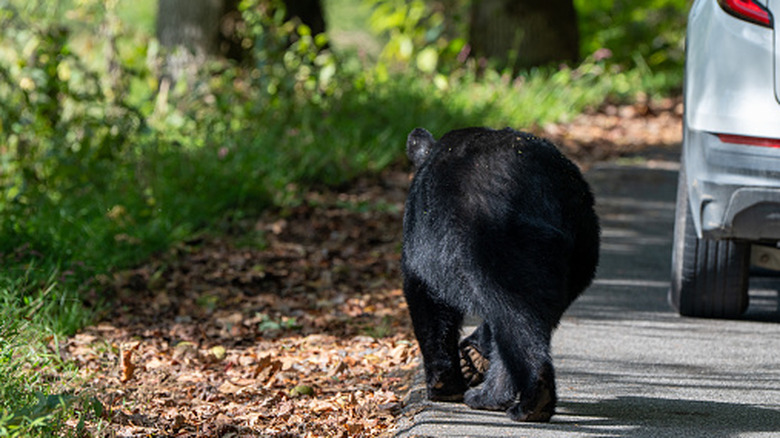
Black bears can turn up in any corner of the Smokies, but there are some locations that are really worth having on the radar if you're coming specifically for a sighting of one of these big animals in the wild. Wherever you go, bear in mind (no pun intended!) that bears are generally most active in the early morning and in the evening, with summer and fall the best times to spot them out and about.
The popular scenic drive through Cades Cove is regularly mentioned as a mainstay for bear watchers. It's a whole valley filled with bushes and meadows that make for particularly good feeding grounds for the beasts. What's more, Wednesdays are officially designated as vehicle-free days from early May through to late September. In the absence of loud car engines, bears are more likely to come out in the open, and multiple past visitors report multiple bear sightings on their Wednesday cycles through the area.
According to SmokyMountainNationalPark.com, the Roaring Fork Motor Nature Trail is another doozy for bear spotting. It's a 5.5-mile driving route that weaves its way through huge tracts of quintessential Appalachian old-growth forest. Be sure to glance up as you cruise — it's common for bear cubs to be spotted playing in the tree canopy overhead there.
Other parks with high black bear populations
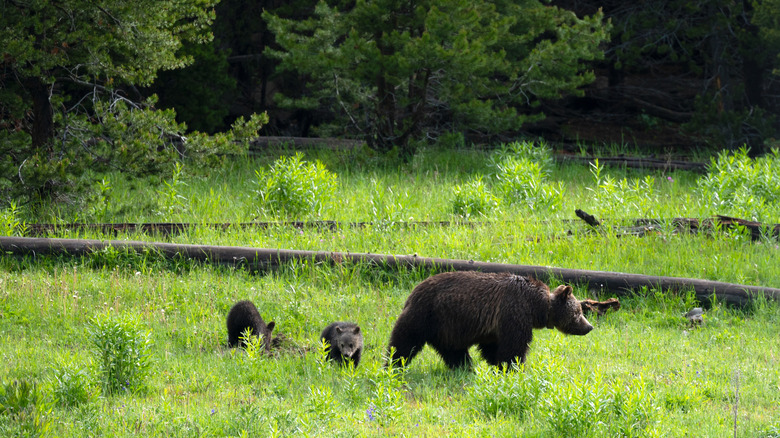
Of course, Great Smoky Mountains National Park isn't the only place with a healthy population of black bears. A-Z Animals, an online publication all about the natural world, offers a handy breakdown of the parks with the highest numbers of all sorts of bears. The Smokies take the top spot when it comes to black bears, while Yellowstone National Park slides neatly into second place with as many as 650 individuals in attendance.
The Tower and Roosevelt areas of Yellowstone are particularly well known for seeing black bears. It's an area that dominates the northeastern corner of the park, including the wildlife-rich Lamar Valley, an area that's even been dubbed the "American Serengeti" for its wealth of incredible fauna. Of course, you'll still want to rise early to give yourself the best chance of seeing black bears here — that's just one of the unwritten rules that folks should know before visiting Yellowstone National Park.
The accessible slice of paradise that is Shenandoah National Park is also worth a mention. With a black bear population estimated to be in the hundreds, it certainly can't beat the Smokies to the top spot. However, given its relatively small size — a mere 200,000 acres to the Smokies' 522,000 acres — Shenandoah does have the highest density of these bears in the whole country. The National Parks Experience blog recommends heading along the famous Skyline Drive for easy bear spotting here, or making for the wilder Big Meadows section of the park around dawn and dusk.