
This Sunny, Wildly Popular Vacation Hub Has Some Of The Most Venomous Animals In America
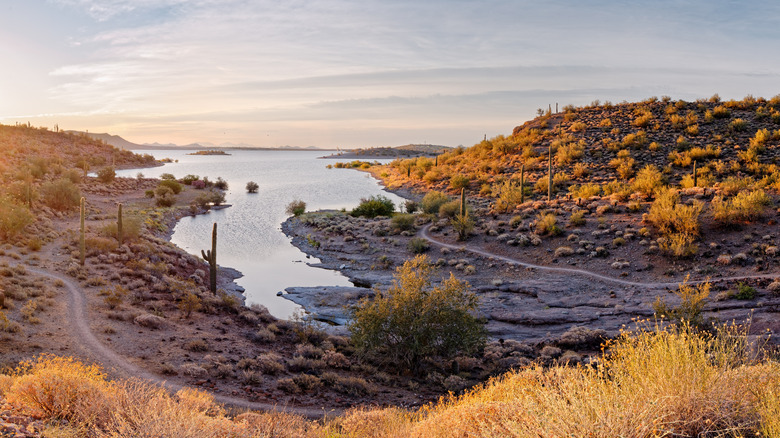
Arizona is a many-splendored place, and each year, tens of millions of tourists come here to experience the wonders of the Grand Canyon State. This is a land of red-rock cliffs, saguaro-studded hillsides, and sprawling Ponderosa pine forests. The bright skies are a major draw; pick any point on the map, and you can expect between 260 and 320 sunny days in a year. But the first time you spot a scorpion on the ground, the good vibes may evaporate. In fact, Arizona has one of the largest populations of venomous critters of any state in the U.S.
Despite its many swimming pools, golf courses, and restaurants, Arizona is very much a desert, and only the fittest wildlife can survive this unforgiving climate. Some of these species use venom to hunt and protect themselves, chiefly snakes, spiders, and scorpions. Naturalists are quick to point out what "venomous" actually means. Unlike "poisonous" plants and animals, which must be touched or ingested to hurt you, these species must bite or sting you in order to inject their venom. This may be small comfort if fangs and stingers already freak you out, but you'll probably have to frighten or antagonize an animal in order for it to strike. That said, you may be surprised to learn that bees are also considered venomous, per the Cleveland Clinic, and "killer" bee colonies are a common danger in Arizona.
The most famous venomous species in Arizona
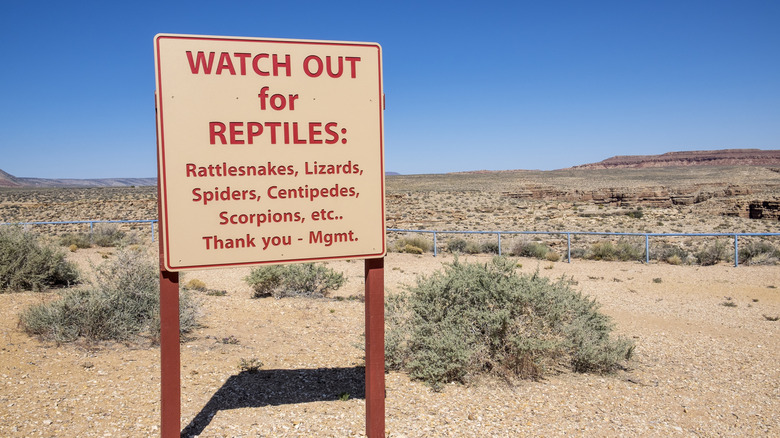
Scorpions are perhaps the most famous desert-dwellers. Arizona is home to over 30 species of scorpion, and they're extremely common across the state. A popular activity is to walk around the desert at night with a UV flashlight to see bark scorpions glow blue as they emerge from the darkness. As it happens, bark scorpions are also the most dangerous variety in North America; a sting is almost never lethal to adults, but a successful attack can cause pain and tingling, especially to small children. What's uniquely frightening about bark scorpions is their ability to climb; you might encounter one in trees or on fences, places that other kinds of scorpions can't access.
Snakes are another common source of nightmare fuel, and Arizona has no fewer than 14 venomous species. Several of these are rattlesnakes, which will likely alert you to their presence with an audible jiggle of their tails. One of the most famous is the western diamondback, which is also considered one of the most dangerous snakes in the country. While fatalities are rare, you should seek immediate medical attention if you're bitten by any kind of snake. Sleeping in tents is a common way to spend time outdoors in the Sonoran Desert, so here are some prime camping locations you should always choose if you want to avoid snakes.
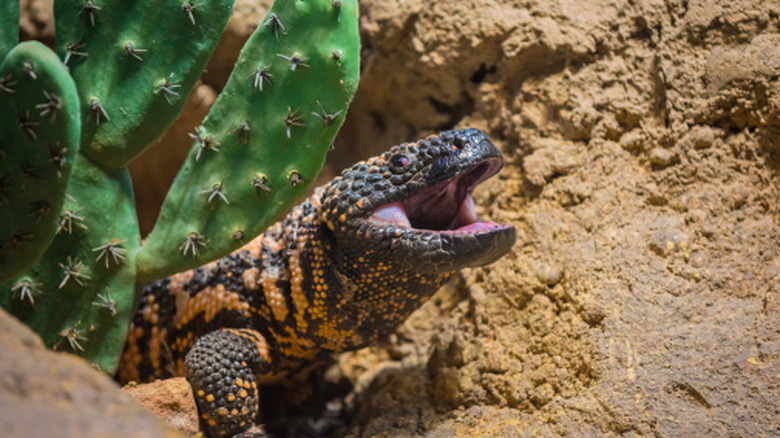
Arizona is home to other venomous creatures as well. The cute-slash-weird-looking Gila monster is pretty shy and slow-moving, but if it feels cornered, this lizard can inject venom with an agonizing bite. You could also encounter any of Arizona's three venomous arachnids: wolf spiders, the brown desert recluse spider, and the old-fashioned black widow.
How to deal with venomous species
The odds of getting bitten or stung are still pretty low; if visitors to Arizona were constantly dying of rattlesnake bites, tourism would grind to a halt. And this state is hardly alone: Florida's most snake-packed waters aren't for the faint of heart, and Texas is a popular southern state with one of the highest numbers of venomous spider species. But if you like to be outside, you might very well spot a rattlesnake while on vacation in Arizona, and scorpions can make an appearance just about anywhere, even indoors.
Visibility is helpful. Avoid thick vegetation and nooks and crannies that are partly hidden. If you're hiking, wear shoes or boots that cover your whole foot, and consider bringing along a snakebite kit. Avoid provoking a venomous animal, especially snakes. If you are bitten or stung, stay calm; call 911 and get to a medical facility as quickly as you can. Again, dying of a venomous attack in Arizona is pretty rare, but better safe than sorry.