
The American Southwest's 7 Most Breathtaking Spots For Camping In The Desert
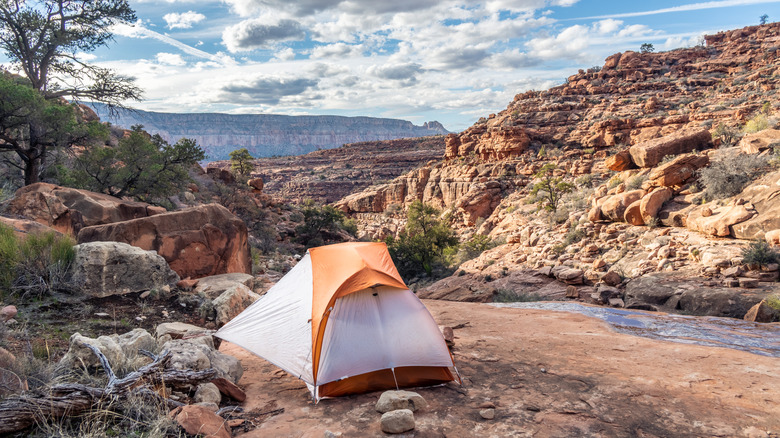
When you picture camping in the U.S., what likely first comes to mind is a tent in a misty evergreen forest in the Pacific Northwest or waterfall views from your RV in Yosemite. But if you're like me, an avid camper who lives in the Southwest, camping means something a little different. As someone who has called the Nevada desert home for nearly 15 years and has camped all over the American Southwest, when I think about camping, what comes to mind is pitching a tent among car-sized boulders in Joshua Tree or sharing a campsite with a family of kangaroo rats in Death Valley. It also means rarely having to worry about being rained out and always bringing a marshmallow roasting stick from home, as sticks in the desert are often in short supply.
While camping in the Southwest might mean forgoing traditional camp settings like dense forests or alpine lakes — though the Southwest has plenty of those, too — you'll get a few spectacular things in return, including miles of wide-open space, millions of stars twinkling above, and some of the world's most spectacular sunsets. In fact, the Grand Canyon was named the best place in the world to watch the sunset, according to Tripadvisor reviews. These are seven of the most breathtaking spots in the American Southwest to go camping.
The Grand Canyon
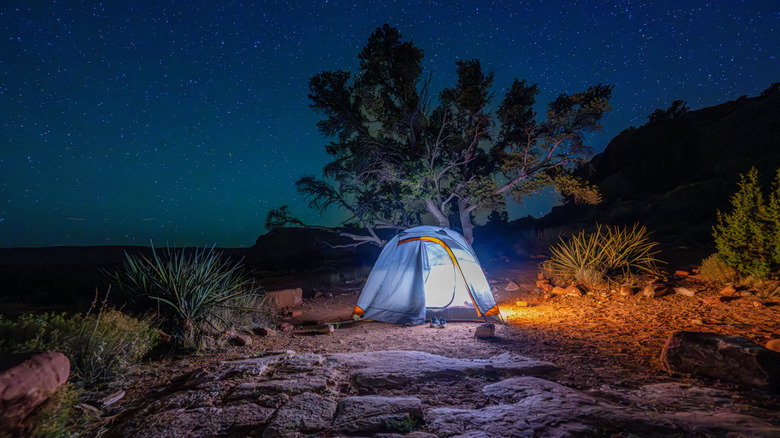
The first time I camped at the Grand Canyon, I was surprised to find the campsites were located inside a thick forest of pine and aspen trees. This was because I chose to camp at the Grand Canyon's quieter and more remote North Rim.
While the Grand Canyon attracts between 5 million and 6 million visitors a year, 90% of them visit the South Rim due to its closer proximity to airports and Arizona cities like Flagstaff and Phoenix. Like the popular Mather Campground, located about a four to five-hour drive away, the North Rim Campground offers flush toilets, hot showers, forested campsites, and breathtaking sunset views of the Grand Canyon — but with fewer crowds.
Joshua Tree
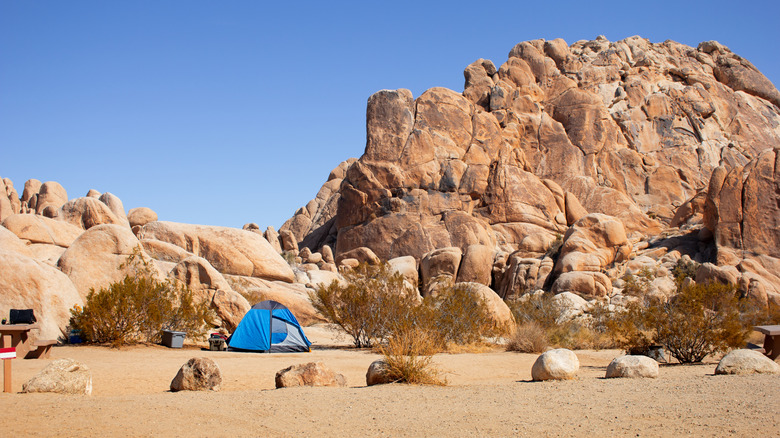
Out of all places to desert camp in the American Southwest, Joshua Tree National Park is my favorite. While many of the park's campgrounds are rustic and devoid of showers, water, or RV hookups, what they might lack in fancy amenities, they more than make up for in unique, otherworldly scenery. Once you've spent a few days sleeping among giant boulders and ancient groves of alien-looking Joshua trees, you'll find yourself itching to go back.
The park has eight campgrounds and three group camps, with 500 campsites available by reservation. Located just outside of Joshua Tree National Park is Twentynine Palms, an up-and-coming city with artsy attractions and options for camping on private RV campgrounds.
Capitol Reef National Park
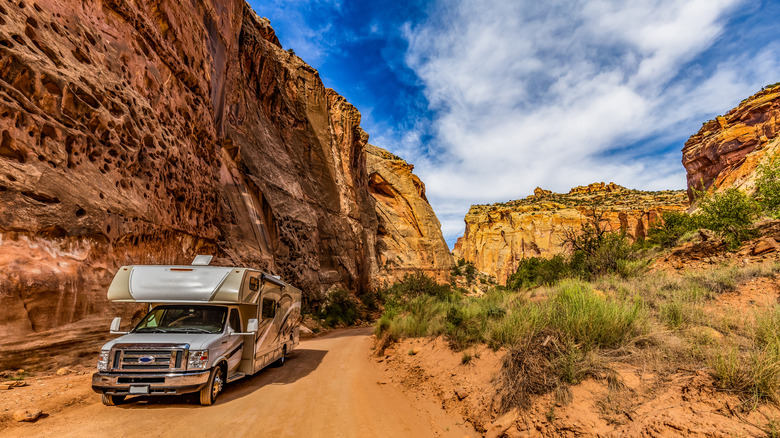
Thousands of fruit trees and grassy fields are two things you don't readily expect to find in the Utah desert, but the Fruita Campground at Capitol Reef National Park offers both. Visitors can purchase freshly baked pies in the local bakery and admire the towering Waterpocket Fold, a nearly 100-mile-long red ridge "reef" of rock that runs through the heart of the park. Campsites are available via reservation for both individuals and groups. You can also camp in a covered wagon in the nearby, uncrowded, and charming town of Torrey, Utah.
Bryce Canyon
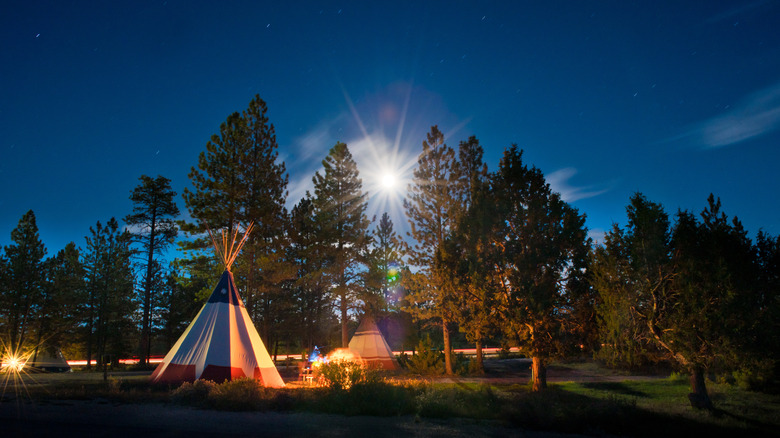
Bryce Canyon National Park, dubbed "America's Most Unique National Park," may be best known for its hoodoos and towering rock formations, but the park also makes for an ideal location for camping. Because Bryce Canyon sits at an elevation at or above 8,000 feet, daytime summer temperatures typically hover between the high 70s and the low 80s, providing a reprieve from the desert heat.
In addition to the park's 200 tent and RV campsites, the nearby Dixie National Forest also has developed and dispersed camping options. This is where I camped when I visited Bryce Canyon a few summers ago, opting to forgo the $30-per-night fee for tent and RV camping. The area also has fun glamping options that include cabins, star-gazing domes, and teepees.
Valley of Fire
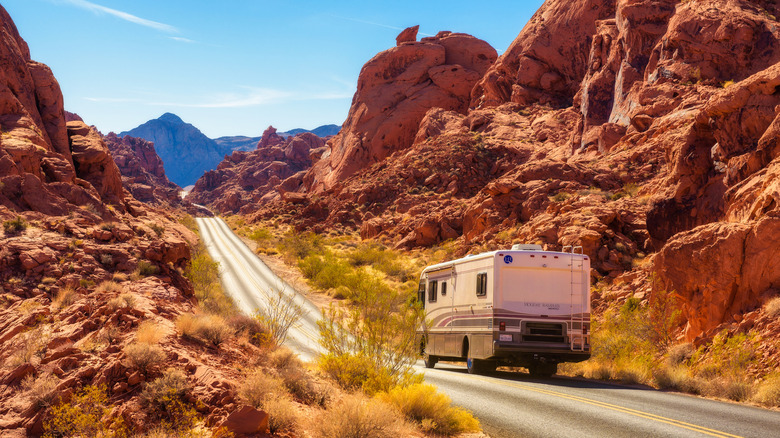
If you're looking for somewhere to camp near Las Vegas, the Valley of Fire has campsites surrounded by walls of red rock just a short drive away from over a dozen short, easy hikes that will take you past petroglyphs, a slot canyon, and even an old abandoned movie set. I've camped among the fire-red boulders and swirling hills of white and orange sandstone dozens of times over the years, and the Nevada state park's stunning scenery never ceases to impress me.
The park has two main campgrounds: Atlatl Rock and Arch Rock. Atlatl Rock is the larger campsite and has flush toilets, showers, and electric hookups for RVs. Arch Rock is smaller and more primitive, with vault toilets and no hookups.
Lake Havasu
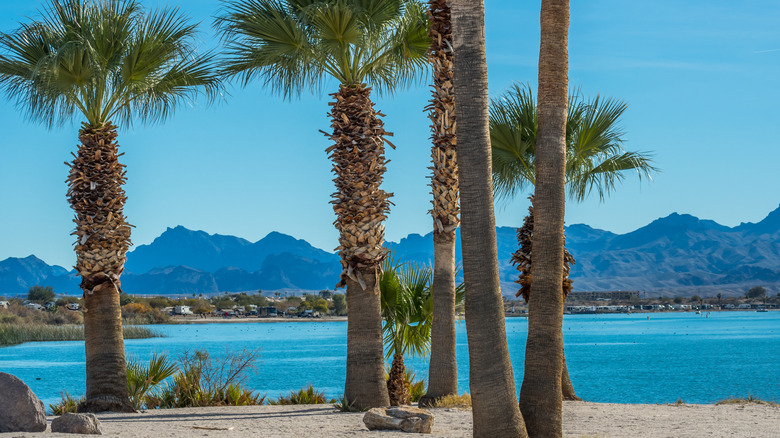
Camping along a white-sand beach might not seem like something you can do in the desert, but the waterfront campsites in Lake Havasu State Park allow you to do just that. Open year-round, each campsite has electrical hookups, flush toilets, and hot showers, and most sites have a covered pavilion you can use to escape the sun. Campgrounds include access to hiking trails, boat rentals, and a cactus garden.
If you're visiting in the summer months, the 13 beachfront cabins are equipped with air conditioning, which is a necessity when temperatures average more than 100 degrees. My favorite part about camping at Lake Havasu State Park is that the campsites are located just a 10-minute drive from the heart of the city.
Death Valley
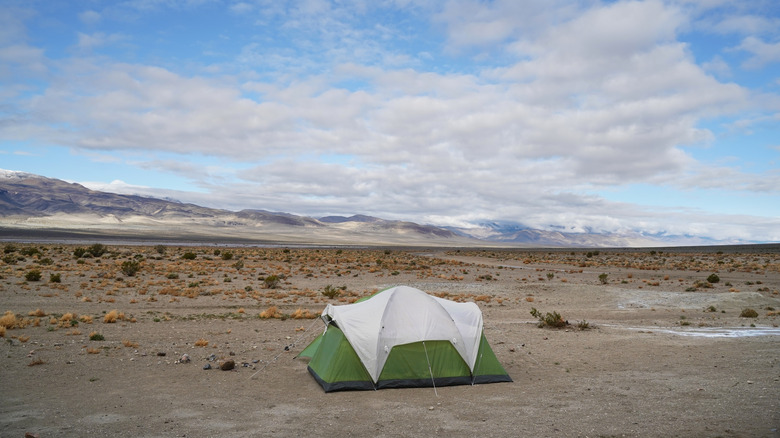
As the largest national park in the continental United States, Death Valley is massive, making it possible to spend several days exploring the park without running out of things to do. The park has sand dunes, a salt field, scenic overlooks, rolling hills of chalky pink, turquoise, and green rocks, and an endangered fish species.
The Furnace Creek Campground is Death Valley's most popular campsite, which is available both on a first-come, first-served basis or via reservation. The park also has primitive campsites for those with high-clearance vehicles, which is where I camped with the kangaroo rate the last time I overnighted at the park.