
Washington's Once-Thriving Coal Gasification Plant In Seattle Is Now A Picturesque Urban Park With Lake Views
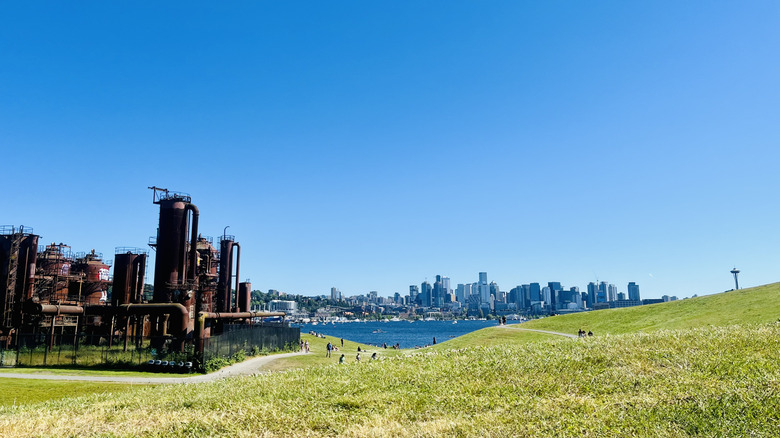
With 850 parks in Seattle, Washington, it takes a lot for a green space to stand out. Yet, Gas Works Park offers something not usually associated with waterfront views, rolling green hills, and children's playgrounds — it's a toxic waste site.
Sitting on the serene shores of Lake Union, this 19-acre park boasts impressive views of the Space Needle and other iconic buildings in the Seattle skyline. It's close to the University District, aka "the U District," and Fremont, so it gets traffic from multiple neighborhoods. Paved paths cut across lush lawns where people picnic, sunbathe, and gather with friends when the weather's good. However, a behemoth of rusted-out metal towers and other structures looms in the background, a steampunk-esque relic of Seattle's industrial past. As the last of 1,400 historic gasification plants in the U.S., the former Seattle Gas Light Company gasification plant has a dirty history of turning carbon-based solids (like coal) into their gaseous forms for use in the energy sector. From 1906 to 1956, the plant provided energy to the city while simultaneously polluting the soil and groundwater.
After the city purchased the land in the 1960s, a massive cleanup commenced. Although the soil still isn't pure enough to grow flowering plants, the park is considered a shining example of a former industrial site converted into a space the public can enjoy. With a 4.7-star rating across more than 11,000 Google Reviews, Gas Works Park is undeniably a Seattle icon for locals and visitors alike.
Relax and explore at Seattle's Gas Works Park
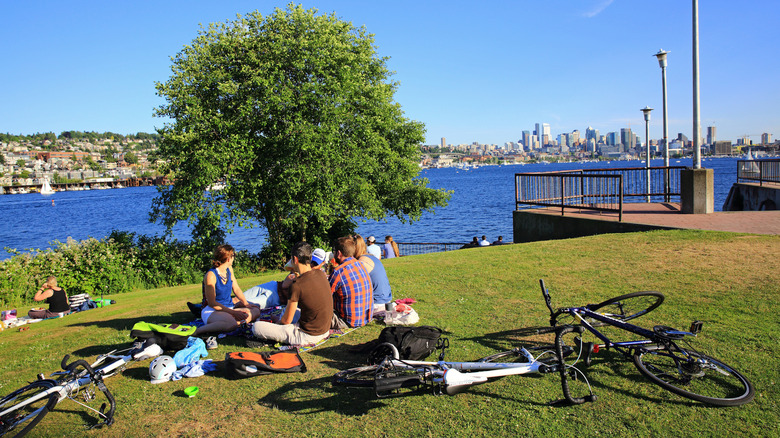
Besides the prime Lake Union location, what makes Gas Works Park stand out is how well architect Richard Haag incorporated the existing structures into the park's present-day design. His firm preserved all six imposing cracking towers and the railroad trestles that once ferried coal to the facility, while giving other parts of the plant new life. Visitors can have a picnic or use the grills beneath the shady awning of the converted boiler house, or relax on the grassy slopes of "The Great Mound."
Also known as "Kite Hill," this rolling chunk of green land is a local favorite for kite flying, lounging, and watching the seaplanes take off and land. On top, you'll find a giant sundial, but beneath the grass lies thousands of cubic yards of refuse that once made up the plant's foundation. The steel pipes and compressor of the pump house became "The Play Barn," an area where kids can climb over old, brightly painted equipment and experience the city's history as they play. Not to worry, the construction firm sealed and thoroughly cleaned all the components, ensuring a safe play area for growing bodies.
In 2018, Seattle Parks and Recreation added an industrial-inspired playground, complete with slides that look like huge pipes and a variety of web-like climbing structures. Additional facilities include the amphitheater, which hosts summer concerts and is a prime spot for watching the 4th of July Seafair fireworks show across the lake.
Planning your visit to Gas Works Park
Like a tour of the historic nuclear reactor outside Seattle, a visit to Gas Works Park doesn't cost a dime. It's open year-round (from 6 a.m. to 10 p.m.), but the best time to visit Seattle for the most ideal weather is between June and August. However, you can always reserve one of the picnic tables in the boiler house via Seattle Parks and Recreation. Featuring a family-friendly location next to the Play Barn, the venue has six covered tables and nine outdoor tables. As the number of tables is limited, make sure to book your spot well in advance.
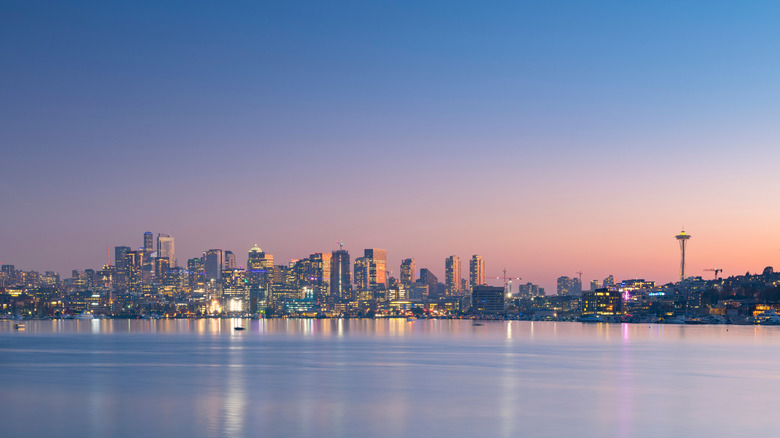
Frequent visitors recommend arriving at the park an hour before sunset, praising the incredible views and atmosphere. "Watching Seattle's beautiful skyscrapers turn yellow during the sunset is truly an experience," shared one visitor on Google Reviews. "If you've been thinking of asking someone out on a date, taking a walk in the park, or taking amazing skyline pictures, this park is perfect for you."
Visitors report parking can be difficult during high-traffic events, but it's free and usually plentiful. You can also reach the park by taking bus lines 31 or 32, or via the Burke-Gilman Trail. This 20-mile rail-to-trail path is popular among cyclists, joggers, and urban walkers. For another relic converted into a space people can use, visit Seattle's Waterfront Park that's the West Coast answer to New York City's High Line.