
Montana's Scenic State Park Boasts One Of America's Biggest Freshwater Springs, Fishing, And Hiking
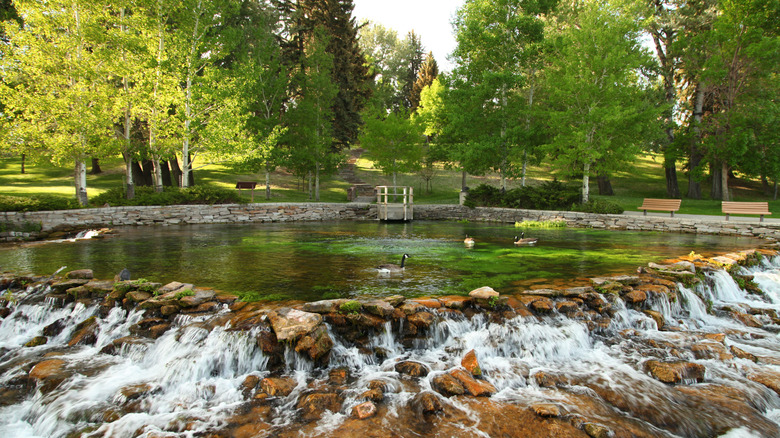
Montana has wowed generations of visitors with larger-than-life scenery. From the alpine lakes of Glacier National Park to the wide-open prairies of Yellowstone, the Treasure State lives up to its name. It's also home to one of the largest freshwater springs in the U.S., a natural wonder so grand it fascinated early explorers. Pumping out 156 million gallons per day, Giant Springs is the namesake and crowning jewel of Giant Springs State Park, outside Great Falls.
The Historical Marker Database notes that Indigenous tribes used the springs as a winter hunting camp because the water doesn't freeze. However, the first written account dates back to 1805 when the Lewis and Clark expedition stumbled upon the springs. The explorers marveled at their size with Meriwether Lewis writing in his journal, "I think this fountain the largest I ever beheld, and the handsome cascade which it affords over some steep and irregular rocks in it's passage to the river adds not a little to it's beauty."
Today, visitors can observe the spring flow into the Roe River, and eventually the Missouri. The tiny Roe is only 201 feet long and once earned the distinction of being the shortest river in the world according to the Guinness Book of World Records. Other park activities include strolling along the riverfront trails or picnicking beneath shady poplars and spruce trees. Fishing fans will find several spots to throw out a line, while the trout hatchery is a favorite among visitors and offers tours every day of the week.
Things to do on and near the water at Giant Springs State Park
Not only is the park a paradise for anyone intrigued by natural wonders, it also makes a great addition to any list of the best things to do in Montana. Visitors aren't allowed to swim or wade in the springs, but a walkway built by the Civilian Conservation Corps (CCC) offers close-up views of crystal-clear waters with a bluish tinge. Water plants like yellow monkey flower, speedweed, and watercrest grow just below the surface, while the spring water fills a huge man-made pool before cascading into the Missouri River, America's longest, as it travels through the Rockies.
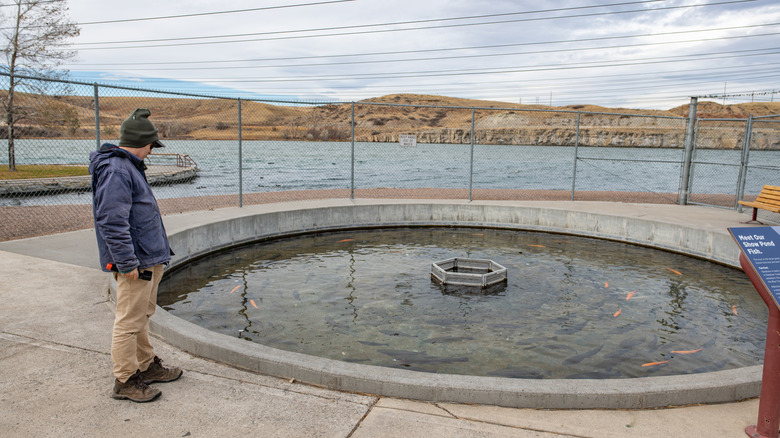
Fishing spots can be found along the river and on Roe Island, while a designated kids' fishing pond stocked with trout invites young anglers to dial in those casts. For those who want to learn about the fish they catch, there's an on-site state fish hatchery. Fed by the waters of Giant Springs, the hatchery raises over 650,000 rainbow and brook trout for release in waterways across Montana. Take a moment to check out the hatchery exhibits at the visitors center before feeding the fish in the show pond. Here, you can watch huge fish between one and five years old, including albino rainbow trout and blue rainbow trout.
Even visitors who didn't expect to enjoy the exhibits praise the trout hatchery. "The attached fish hatchery is fun to check out," shared a visitor on Google Reviews. "I enjoyed what they had to share, feel like it motivated me to learn more!"
Things to do on land at Giant Springs State Park
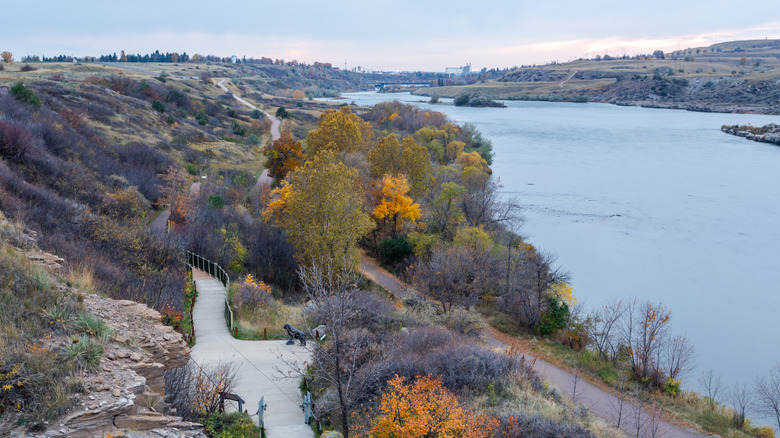
Giant Springs State Park is a day-use-only area. Every year, over 300,000 visitors come to Giant Springs State Park to escape Great Falls and to see a place of note along the Lewis and Clark Trail. Enjoy a picnic overlooking waterfalls formed by the dammed river, or decompress on the walking trails.
Locals recommend visiting the Lewis and Clark Interpretive Center, a 25,000-square-foot exhibition space located within the park's boundaries that earns 4.8 stars on Google Maps. Run by the U.S. Forest Service, the center tells the story of the explorers' journey and the Indigenous communities they encountered along the way. Several short paths snake around the center and through gardens of medicinal plants used by Native people. These gardens include over 30 interpretive plaques and flowering prairie plants, including Rocky Mountain bee plant, dotted gayfeather, and sunflowers.
Walkers and hikers can also enjoy 30 miles of trails, including a path that leads to the Lewis and Clark Interpretive Center. One way to see some of the park's best features is by joining a ranger-led hike. For instance, the "BioBlitz Hike" takes visitors along Colter Trail with the goal of identifying as many plants and animals as possible, while another guided hike leads adventurers over the Cochrane Dam via the River's Edge Trail. This 60-mile path runs along the Missouri and remains only partially inside the park. For another gem worth visiting, head just 46 miles away down the Missouri to experience Fort Benton and its storied past.