
Colorado's Once-Thriving Artificial Lake For Water Fun Has Dried Up And Become A Unique Wildlife Habitat
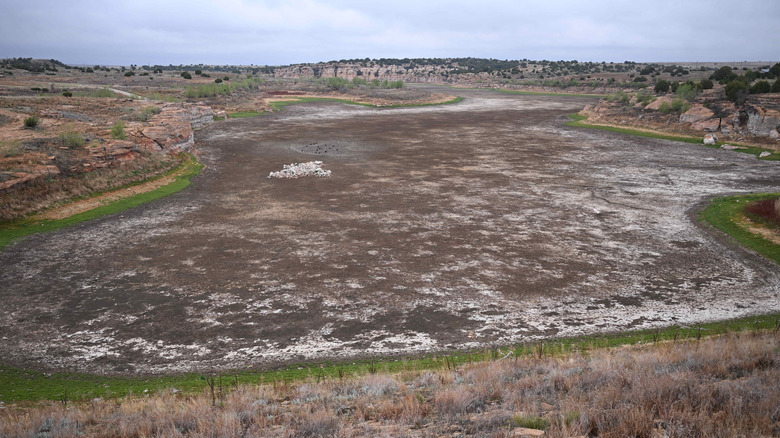
Tucked into the southeast corner of Colorado is a once-thriving artificial lake that was long a hot spot for fishing and boating in an area with few opportunities for either. But these days, Two Buttes Reservoir has run completely dry, sending boating and fishing enthusiasts elsewhere. Covering about 700 acres when full, Two Buttes Reservoir typically holds around 25 feet of water and supports largemouth bass, crappie, bluegill, and other species. With this kind of recreation available, this recreation area attracted folks from across the nearby borders of Kansas and Oklahoma.
The truth is, the reservoir has always occupied a precarious position because it relies almost entirely on rainfall to fill. With Colorado's current drought conditions, a particularly warm winter, and ongoing effects of climate change, it was only a matter of time before Two Buttes disappeared, and so it did in January 2026. Built in 1909 (by hand instead of machines, if you can believe it), Two Buttes Reservoir was originally meant to irrigate the surrounding land. But it could never provide as much water as it needed to, so it was sold to Colorado Parks and Wildlife (CPW) in 1970 and turned into a recreational area instead.
Today, Two Buttes is a State Wildlife Area already home to animals like reptiles, coyotes, and birds. In fact, it's known as one of the best bird-watching destinations – at least in this part of Colorado. With that in mind, CPW decided to take some unexpected measures to turn this empty reservoir into a unique wildlife habitat until the rain falls.
The transformation of Two Buttes Reservoir
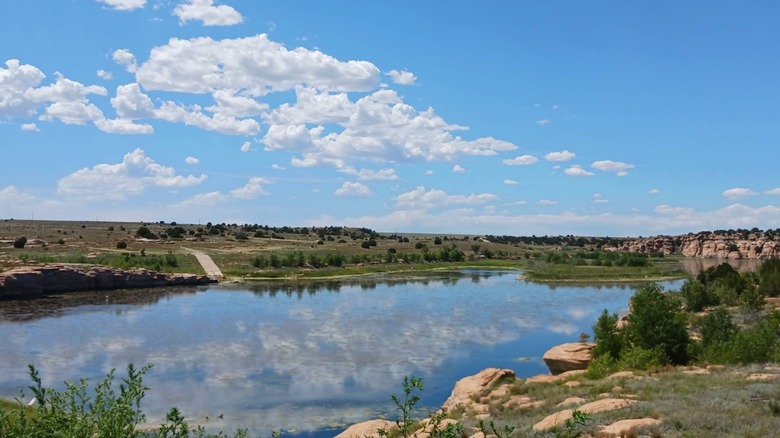
By nature, Two Buttes Reservoir goes through a cycle of filling up and drying out. The rain will come again; it's just a question of when. The reservoir needs specific conditions to refill, such as a heavy storm with several inches of rain to fill the stream that feeds it. From 2003 to 2025, the reservoir emptied four times, with dry spells varying from 1 to 3 years. But with a water crisis continuing across the West and water sources around Colorado drying up, it's unclear how long this dry period will last.
Before the reservoir lost all of its water, CPW enforced an emergency fish salvage. There were more relaxed fishing restrictions, allowing folks to take home more than usual, so fish wouldn't be left stranded on the exposed lake bed. The bottom of the reservoir isn't totally empty, though. Freshwater shrimp have burrowed into the mud, and once the water comes back, they'll be there to sustain the fish populations that CPW reintroduces into the reservoir.
In the meantime, CPW has turned the dry reservoir into a temporary wildlife habitat through aerial seeding. A plane dropped seeds of white yarrow, oats, sunflowers, and other plants into the nutrient-rich mud. That will hopefully attract deer, quail, and pheasants, making it an animal hub comparable to La Junta, site of southeast Colorado's yearly tarantula trek. Until those seeds grow, the reservoir has a somewhat eerie vibe, with abandoned items like beer cans and fishing gear scattered across the lake bed. But that transitional aspect is also what makes it unique: It's a liminal space in the process of becoming something new, with these ghostly remnants of its former self left behind.
What to know about visiting Two Buttes Reservoir
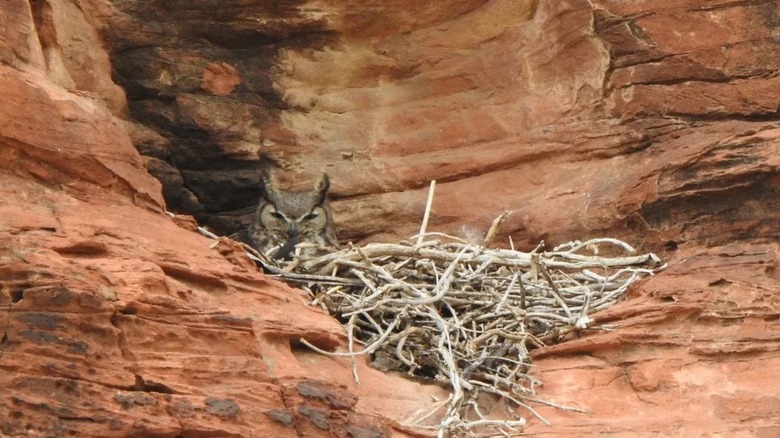
No matter the reservoir's condition, Two Buttes remains a strong destination for wildlife viewing, especially bird-watching. Colorado Birding Trail calls it one of the "crown jewels" of bird-watching in southeast Colorado, with opportunities to see ducks, owls, grebes, and even roadrunners. The area offers free dispersed camping with limited amenities, though bathrooms are available near the reservoir. There is cell service, but it's spotty in some locations.
Several visitors on Campendium strongly suggest using the official coordinates instead of following a map app, which may direct you down a rough road. Either way, you'll have to take a dirt road to the reservoir, which can become difficult after rain. To double-check directions and find the current water levels, contact the CPW office in Lamar. If you want to take a dip, you can head to the nearby Black Hole Pond, a favorite swimming hole behind the reservoir that still has water. However, officials urge caution around the site because several cliff-jumping fatalities have occurred there.
Two Buttes Reservoir is in a remote pocket of Colorado, so it's somewhat of a drive to get there. Colorado Springs, one of the U.S.' most underrated vacation destinations, is 3.5 hours away. While Colorado Springs does have a small domestic airport, the closest major airport is in Denver, a little under four hours away. So, consider including Two Buttes on an itinerary exploring the best of southeast Colorado, like the walkable and wildlife-filled town of Lamar, just 40 minutes from this recreational area.