
South Carolina's Abandoned Military Fort On The Coast Is Now A Historic Preserve With A Scenic Beach
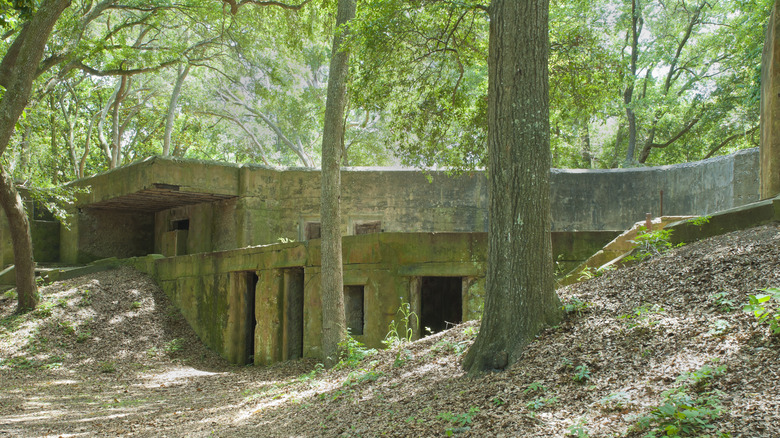
South Carolina's Lowcountry entices visitors with Hilton Head's beachfront golf courses, lush nature preserves, and miles of coastline. However, it's also a top destination for American history enthusiasts. For the chance to see one of South Carolina's last remaining Spanish-American War era fortifications, visit Fort Fremont Historical Preserve, a 15-acre plot 14 miles from Beaufort.
The fort dates back to 1885, when President Grover Cleveland ordered the land fortified to face the growing naval threat posed by Spain. Constructed in 1899, Fort Fremont was one of six outposts intended to defend the coastline during the Spanish-American War of 1898. What made Fremont stand out was its modern defenses, including two batteries that towered above the Lowlands and housed guns capable of striking targets 8 miles offshore. According to the Friends of Fort Fremont Historical Park, "Ft. Fremont represented the state-of-the-art military technology against the predominant threat of the era — seaborne attack by modern steam-driven battleships." Despite its impressive fortifications, Fort Fremont never saw action, and by 1911, the remaining troops were transferred to Galveston, Texas.
Situated on St. Helena Island, one of over 100 Sea Islands, the preserve offers views of Port Royal Sound from the beach. Further inland, you'll find the abandoned batteries covered in moss and vines. The preserve is also home to the Fort Fremont History Center in Memory of Pete Richards, a museum dedicated to the fort's mission and preserving Spanish-American War-era military architecture in South Carolina.
Things to do and see at Fort Fremont Historical Preserve
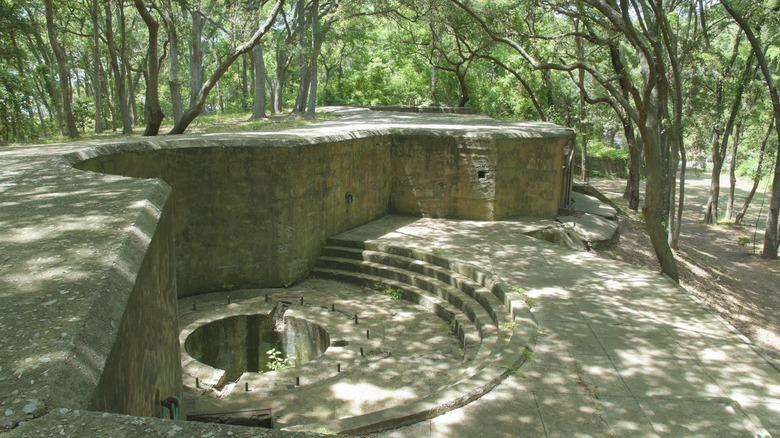
The canons have long been decommissioned, but Fort Fremont offers many sites to intrigue history buffs or anyone fascinated by abandoned spaces. Start your visit with a stop at the air-conditioned historical center, which is free and offers a docent-led tour every Saturday. Here, a diorama shows what the fort looked like in 1910, complete with the fort's three disappearing guns that recoiled so hard they vanished from view.
Next, explore the ruins themselves to see why St. Helena Island is a destination full of history. Hidden by dense maritime forest, you'll find two batteries camouflaged by magnolias, pines, and moss-draped oaks. "The historic concrete batteries, with their stone steps and towering form rising to almost treetop level yet surrounded by mounds of dirt embankments, reminded me of an ancient, vine-covered tomb or pyramid in the favorite Indiana Jones movies," per Bluffton Today. You can climb over the batteries and walk through tunnels, but be mindful of sharp drop-offs and rusted metal sticking out of the concrete. There are also paved paths, if you're feeling less adventurous.
Once you've had your fill of the ruins, head to Lands End Beach. Situated to the right of Fort Fremont, it features fine white sand and views of where the Port Royal Sound meets the Beaufort River. Visitors describe the beach as secluded, an ideal place to unwind in a beach chair, collect shells, or throw in a line for the simple pleasure of seeing what bites.
Things to know before visiting Fort Fremont Historical Preserve
When planning a visit to South Carolina's soulful Lowcountry coastline, make sure the Fort Fremont History Center is open. The center welcomes guests on Thursday, Friday, and Sunday from 1 p.m. to 4 p.m. On Saturday, the center opens at 10 a.m. and closes at 4 p.m. However, if you're traveling from far away, consider calling ahead of time to make sure someone is there.
Although you can visit the ruins every day from dawn until dusk, the center provides historical context that makes the visit more meaningful. Plus, the air conditioning is a bonus during the summertime when temperatures can reach over 90 degrees Fahrenheit.
If you plan to visit the beach, make sure to check the tide chart, as the sand disappears during high tide. Recent visitors on Google report fallen trees that make accessing the beach directly from the fort difficult. Instead, drive to the end of Triangle Road, and follow the path until you find the sand. To discover another Spanish-American War-era fort, visit the pretty beaches at Florida's hidden Fort De Soto.