
9 Secret Spots In Great Smoky Mountains National Park Most Tourists Miss
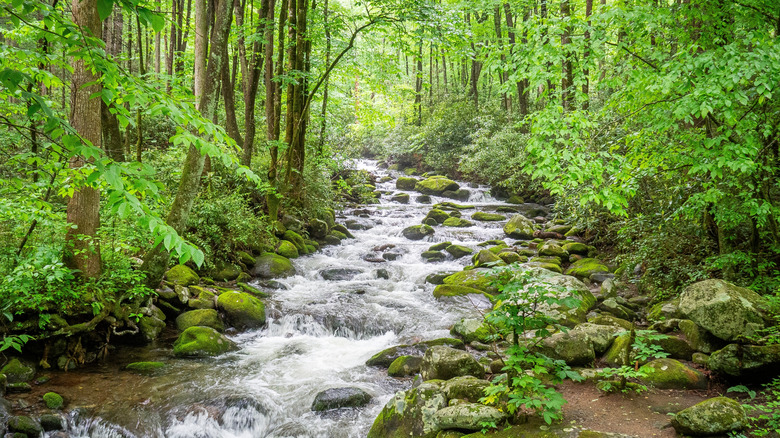
Protecting an ancient and ecologically diverse Appalachian ecosystem on the border between Tennessee and North Carolina, Great Smoky Mountains National Park is arguably the most magnificent sight to behold east of the Mississippi River (and some may argue it challenges even the more dramatic wonders further west). Being so close to several southern cities, the postcard-worthy views of the Great Smoky Mountains represent one of America's most popular national parks by far. Going by 2025 National Park Service data, Great Smoky Mountains National Park saw around 11,500,000 visitors, making it one of the most-visited national parks. Unfortunately, while this popularity is well-deserved, it also has the unpleasant side effect of bringing large crowds and heavy traffic to the park's most popular areas. The good news for anyone just looking for some peace and quiet is that the Great Smoky Mountains' crowds are not distributed evenly throughout the park. Popular as it may be, the park does have several lesser-known (and less crowded) areas.
Exploring these overlooked parts of the Great Smoky Mountains does not mean sacrificing amazing views or unforgettable forest hikes. Each of the secret areas of the park has the same incredible mountain views, deep woodland immersion, and natural tranquility that you would expect from a park with such a reputation. Many of these less-visited areas also preserve the overlooked human side of the park, complete with actual ghost towns rivaling those of the American West. While many under-the-radar areas of the ever-popular park have their own charms, these nine secret spots in the Great Smoky Mountains offer the best experiences without the crowds.
Elkmont
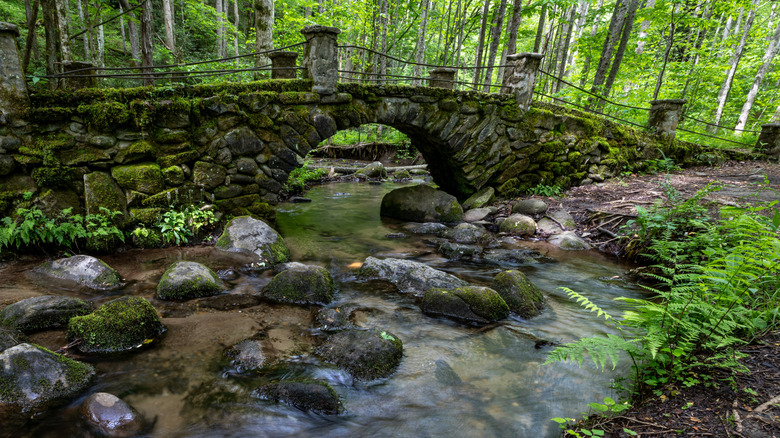
The once-thriving gold rush communities out west are now America's most famous ghost towns, but further east, the Appalachian Mountains have some ghost towns of their own. Elkmont is the most notable ghost town in Great Smoky Mountains National Park.
Established in the early 1900s as a logging town and resort before the national park was created, Elkmont is now the Great Smokies' resident ghost town. Visitors to Elkmont (which is near the Elkmont Campground) can explore a haunting scene of antique structures being reclaimed by nature — including the fairy tale-like Elkmont Troll Bridge shown above.
Mount Cammerer Trail and Lookout Tower
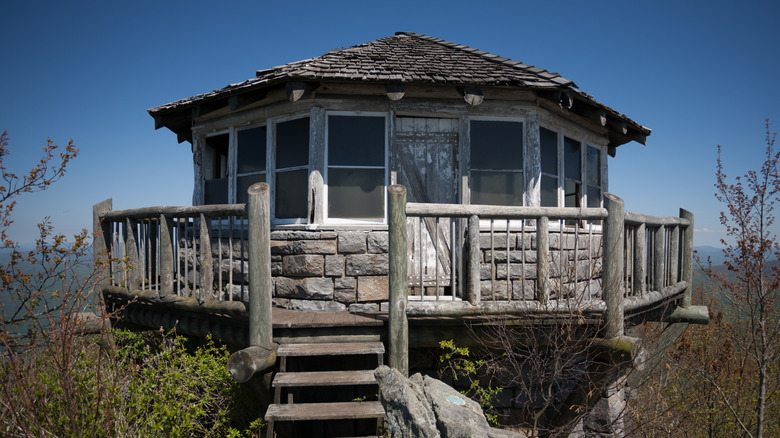
The Great Smoky Mountains, being "mountains," have several notable high-altitude lookouts. The most famous (and crowded) is the prominent Kuwohi Observation Tower. Mount Cammerer, however, offers a much less crowded mountaintop alternative.
Mount Cammerer's 4,928-foot-high summit has superb views of the Pigeon River Gorge from a steep mountain slope. The Mount Cammerer summit hike is much more strenuous than the short trail to Kuwohi, totaling 11 miles across steep terrain. The views, however, are worth it, particularly at the historic Mount Cammerer Fire Tower and its panoramic Great Smokies backdrop.
Quilliam Cave and Courthouse Rock
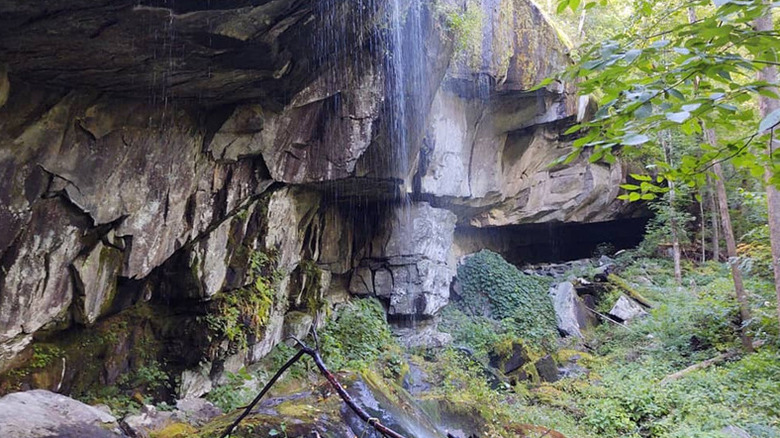
Though best-known for their summits, the Great Smoky Mountains also have intriguing rock formations. Notably, the Courthouse Rock Trail is a hidden gem hike that showcases the area's distinct geology. This 2.3-mile trail is so secret that it's not actually included in some maps, an oversight that often means fewer hikers.
Here, you can see the remarkable Quilliam Cave, one of the most notable geologic formations accessible via the Courthouse Rock Trail. Technically a rocky outcrop rather than a true "cave," Quilliam Cave is still an impressive stone monolith that often bears ephemeral waterfalls after rainstorms.
Little Greenbriar Schoolhouse
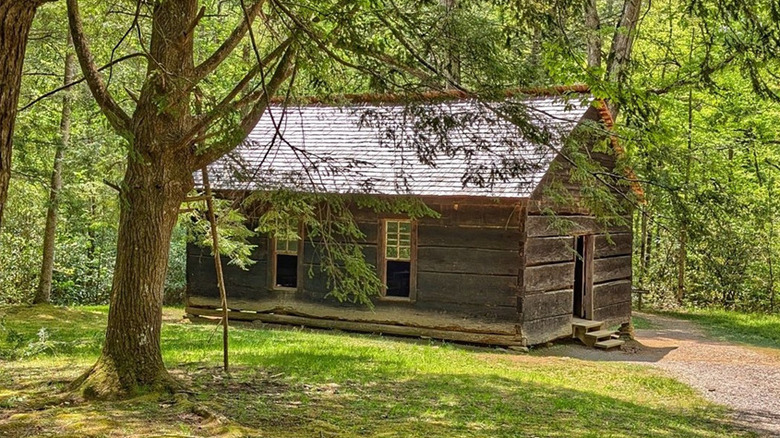
Similar to Elkmont, the Little Greenbriar Schoolhouse is a secret slice of the Great Smoky Mountains' history. Built in the 1880s, long before the Great Smokies were America's most popular national park, the Little Greenbriar Schoolhouse is a lingering remnant of the communities that once inhabited these mountains, today a reasonable hike from the Metcalf Bottoms Picnic Area.
If the above image looks slightly creepy, it may not surprise you that some consider the Little Greenbriar Schoolhouse to be haunted. So while you're unlikely to run into many other living tourists here, you may just encounter a ghost!
Porters Creek Trail and Fern Branch Falls
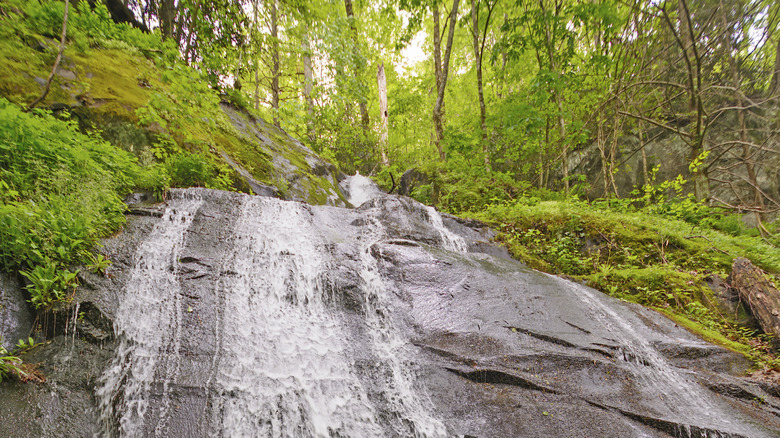
Fern Branch Falls is an overlooked jewel of the park's many waterfalls. As you can see, Fern Branch Falls is a photogenic cascade plunging 50 feet down a sheer rock wall in a bright green forest. However, Fern Branch Falls and its associated trail don't get the acclaim of Great Smoky Mountains treasures like Laurel Falls and Grotto Falls.
Fern Branch Falls is accessible via the equally underrated Porters Creek Trail. Located at the end of Greenbrier Road, Porters Creek Trail is a moderately difficult 4-mile hike with plenty of wildflower views to accompany its unsung waterfall.
The Sinks
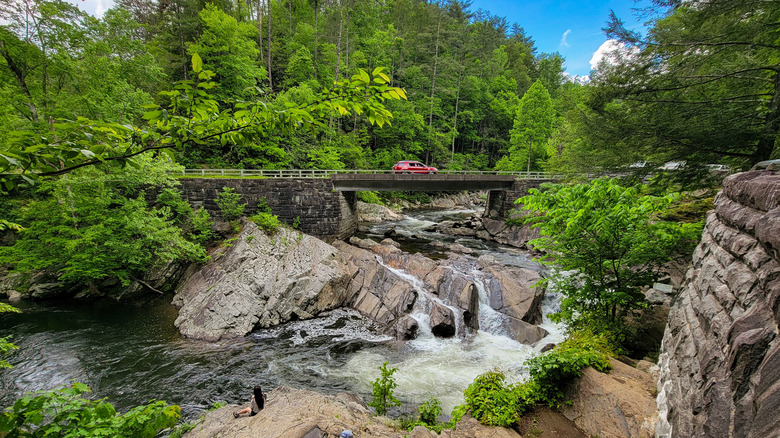
The Sinks is a great way to experience the Great Smoky Mountains' waterfalls in a more horizontal format. Located along the park's Little River Road, the Sinks is a short but powerful cascade emptying into a large drainage pool — i.e., a natural "sink."
The large pool downstream has been used as a swimming hole by some daring guests. However, repeated rescue attempts have prompted park officials to strongly advise against trying to swim in the Sinks. So, in the name of safety, this is one hidden gem you may have to enjoy with your eyes only.
Heintooga Spur Road
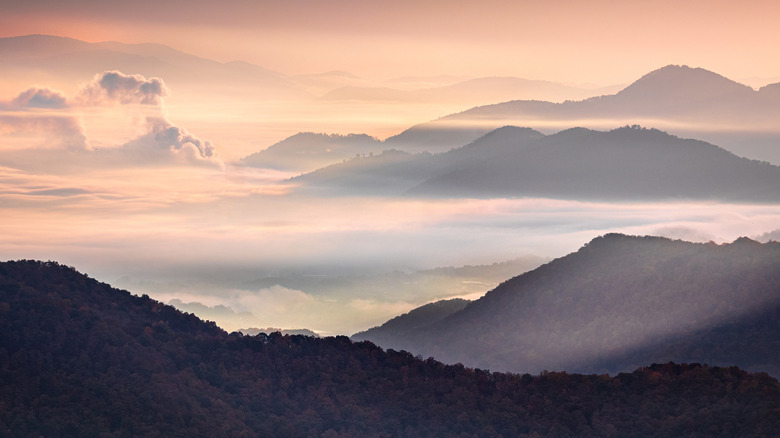
The Heintooga Spur Road is one of the most underrated scenic drives in the Great Smokies. Connecting to the nearby Blue Ridge Parkway, Heintooga Spur Road is only 9 miles long, but packs quite a punch in terms of views.
Open between May and October, the Heintooga Spur Road passes through gorgeous woodlands in a less-visited corner of the park before reaching breathtaking observation areas like Mile High Overlook and Maggie's Valley View. From the road's overlooks, you can see more famous Great Smoky icons like Kuwohi, Mount Le Conte, and the Balsam Mountains.
Ramsey Cascades
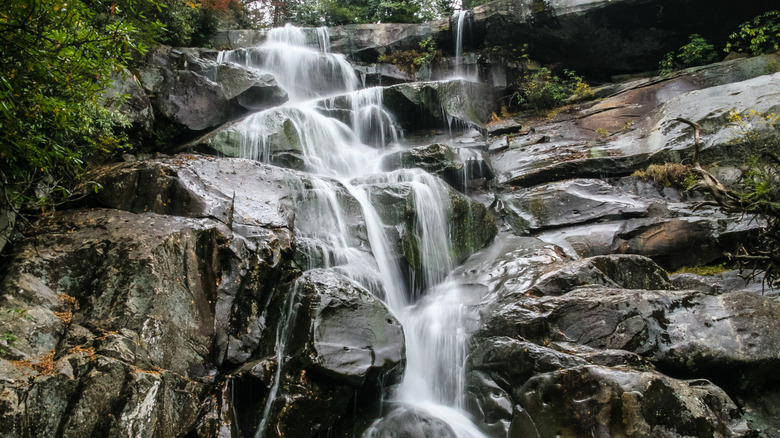
The 105-foot Ramsey Cascades is the highest waterfall in Great Smoky Mountains National Park. However, its challenging 8-mile trail often limits its crowds, making it a less-crowded alternative to easier-to-reach cascades like Laurel Falls.
If you're up for the hike and its 2,200 feet of elevation gain, you can reach the Ramsey Cascades trailhead from the Greenbrier Area entrance. Alongside its waterfall, the Ramsey Cascades Trail is also notable for passing through some of the Great Smokies' loveliest old-growth forests.
Rich Mountain Road
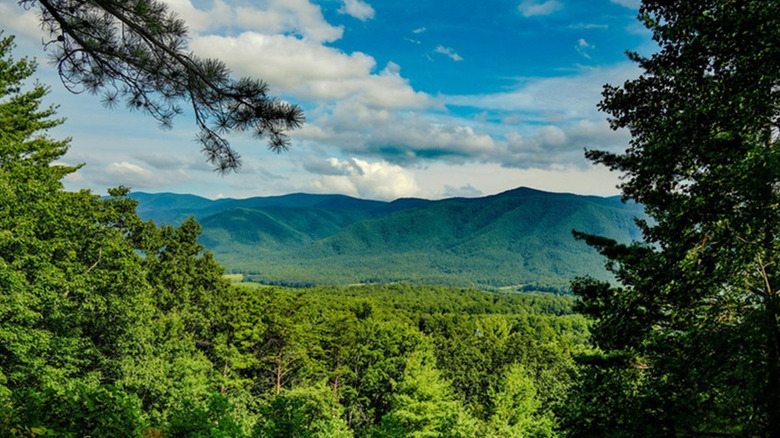
Compared to the popular Newfound Gap Road, the Great Smoky Mountains' Rich Mountain Road is an underrated scenic drive that most tourists miss. This is a shame, because Rich Mountain Road truly lives up to its name with impeccably "rich" mountain views, including breathtaking shots of Cades Cove as seen above.
Open between April and November, Rich Mountain Road is a small and less-trafficked alternative route out of the more popular Cades Cove Loop Road. The road's gravel makeup tends to discourage drivers, so you'll likely have the road's peaceful views (including mountains, waterfalls, and cliffs) to yourself!